
Suspect Photography
words and images from david george brommer
September 8, 2013
Casa Toscana and the Object Project
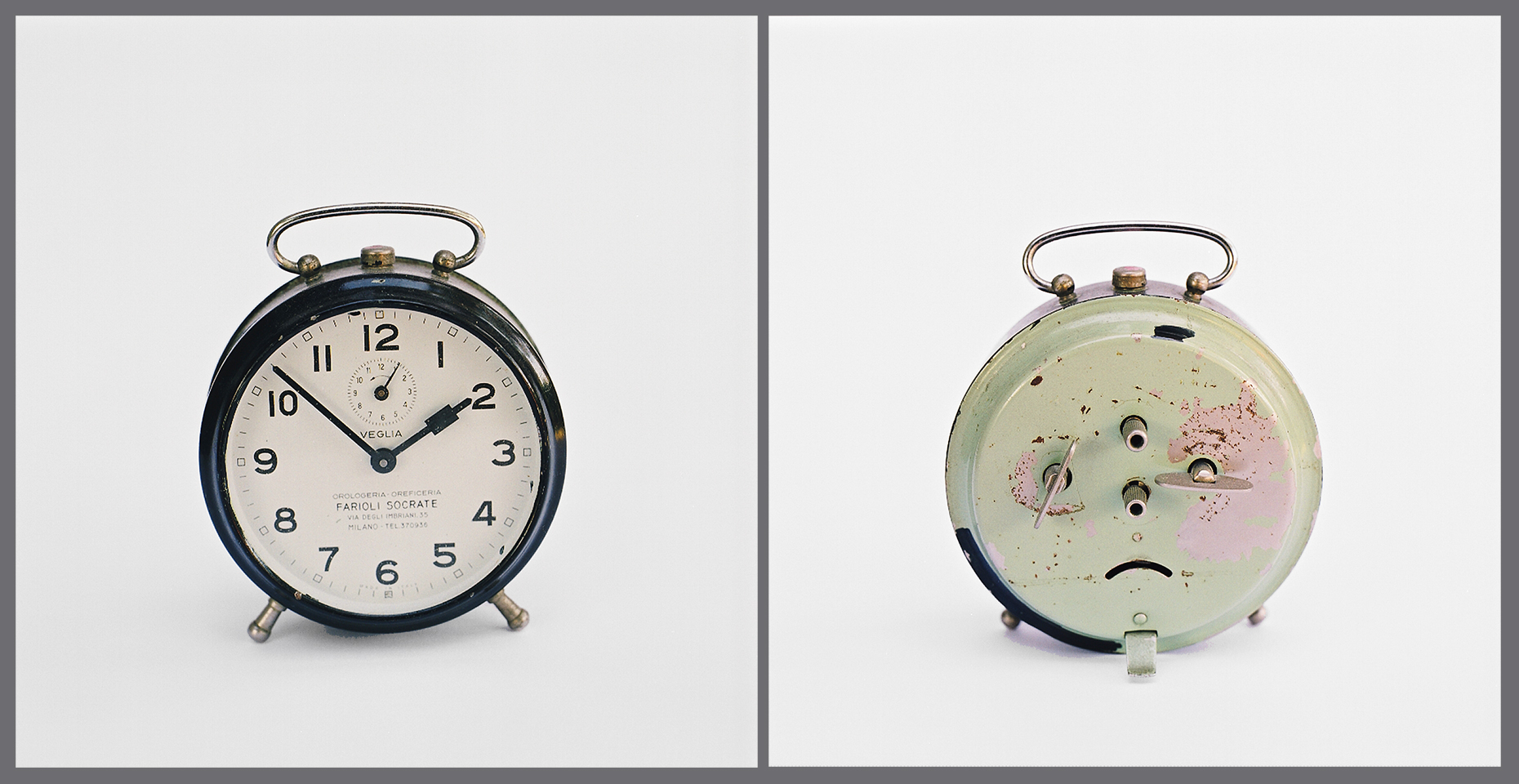
The Object Project:
Things, tokens, neat items, nick knacks, jewelry, ephemera, and other personal treasures or just plain stuff can make a great project with an interesting narrative. Follow your instincts on the selection of items, but make sure a strand of relativity is connecting to each object. Choose a background to photograph the subjects which can be something as simple as a colored seamless background, fabrics, a table or a wall. Use you have access too, even shooting straight down to objects laying on a soft bed of fresh cut grass might be interesting. What ever you choose as your background, make sure you use it for the whole series. Now photograph the items by utilizing a “still life genre” technique. Feel free to be explorative by adding other elements such as flower petals, rocks, wood, toothpicks, or anything that “works” with the subjects.
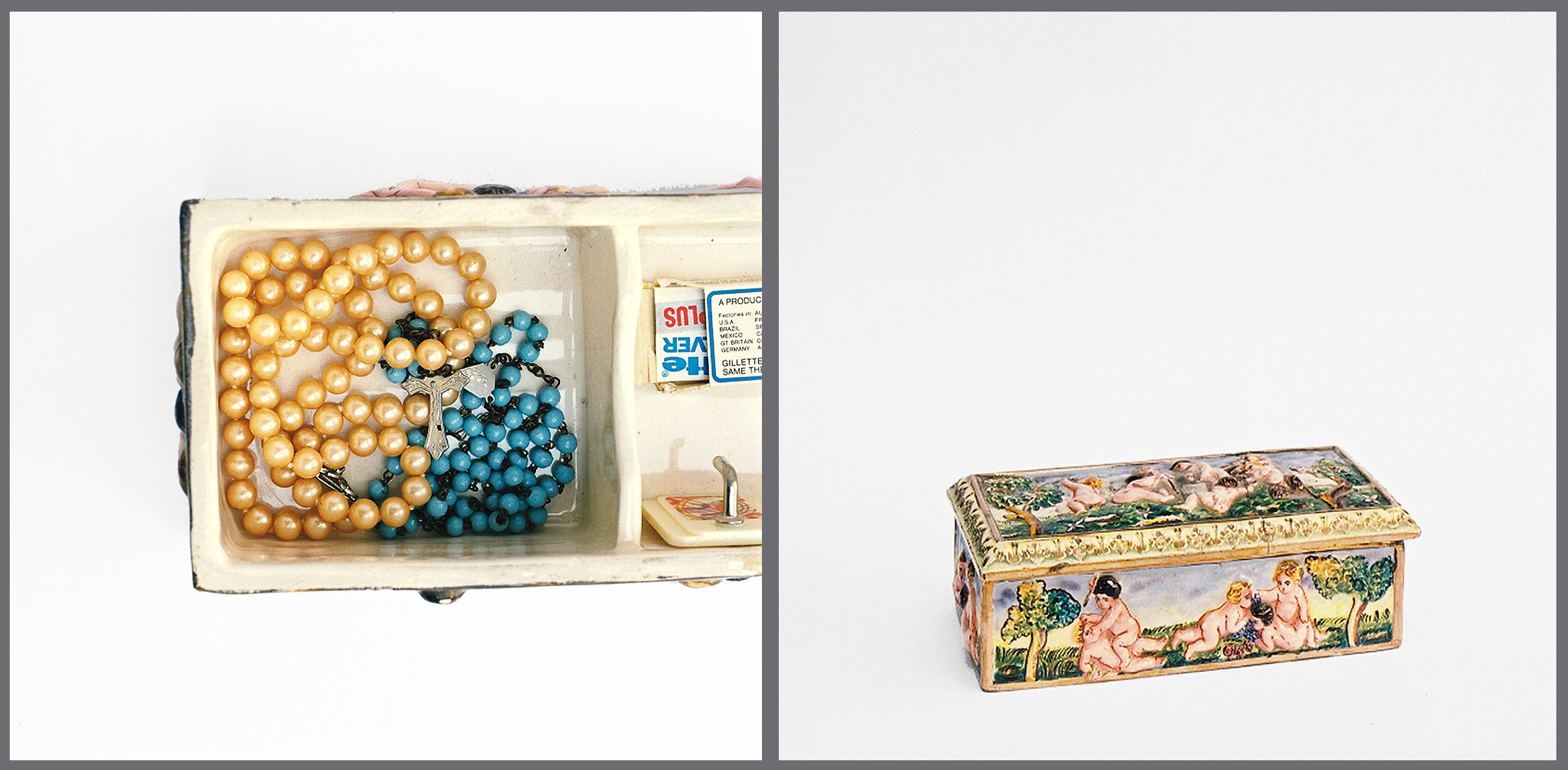
Hasselblad 80mm 2.8 Distagon T* 120 Fujifilm 160ns

In my series Casa Toscana, I began by documenting the rooms of our home in Italy. I was enthralled by the light pouring into the rooms at different times of day and got very inspired to capture the nuances of the Casa Toscana. I would photograph the larger objects that were integral to the rooms, such as the vintage refrigerator or furniture. Looking closer I began to inspect drawers and boxes and set up a still life station to photograph these “house treasures” on.

They included a vintage telephone, an old book, a toy. In contrast to the intricate environment of the home, I took these objects and placed them on white poster board and photographed them in indirect available light. I began by taping the poster board to the edge of the table top along a wall, and then taping the top of the board to an outside wall in indirect light. I easily created a “seamless” white background. The objects sit in a neutral white space that was clean and neat. Each object had an unspoken story that it was able to communicate, and also served to break up the projects direction that was a study in rooms, compositions, and light.
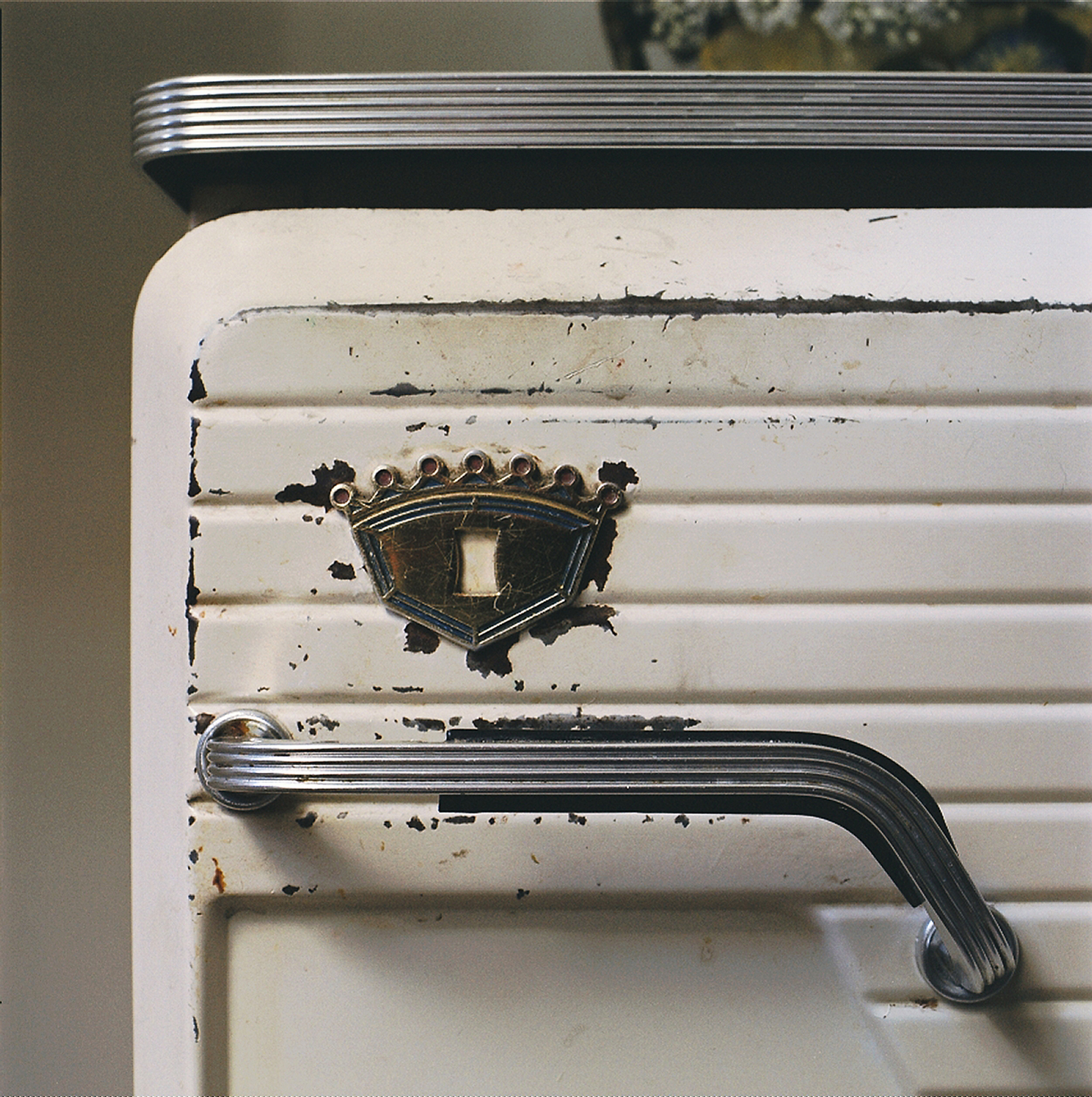


When I returned with this work to NYC I had the film developed and scanned. I’m not too thrilled with the scans, but I was able to create a stunning blurb book on the project. The overall idea really turned into something much more than I had planned for. I gave a copy of the book to a few members of Barbara’s family and it brought some to tears to eyes of a special few. That’s how you know you did a good job, when you make the client cry. Please take a look at my Blurb Book Store to view the book and yes, it is available for purchase. I have a full preview of the book set up, so you can check out the whole story and all the images. The book is 111 pages!

So what are you waiting for? Get out there and start shooting objects… and put it in a project.
~David
All images shot with a Hassy and the 80mm f2.8 or the 50 f4.0. Film was Fujifilm 160NS and scanned at time of development. One note I have to make, I was never happy with the scans and I got lazy and had the lab do them. Normally I would bust out the Epson V750 and do it myself. I learned a lesson, the more you have your hands on it, the better the final result will be.
Share this:

September 1, 2013
Film Based Cameras Mean Sh*t. Yea Right.
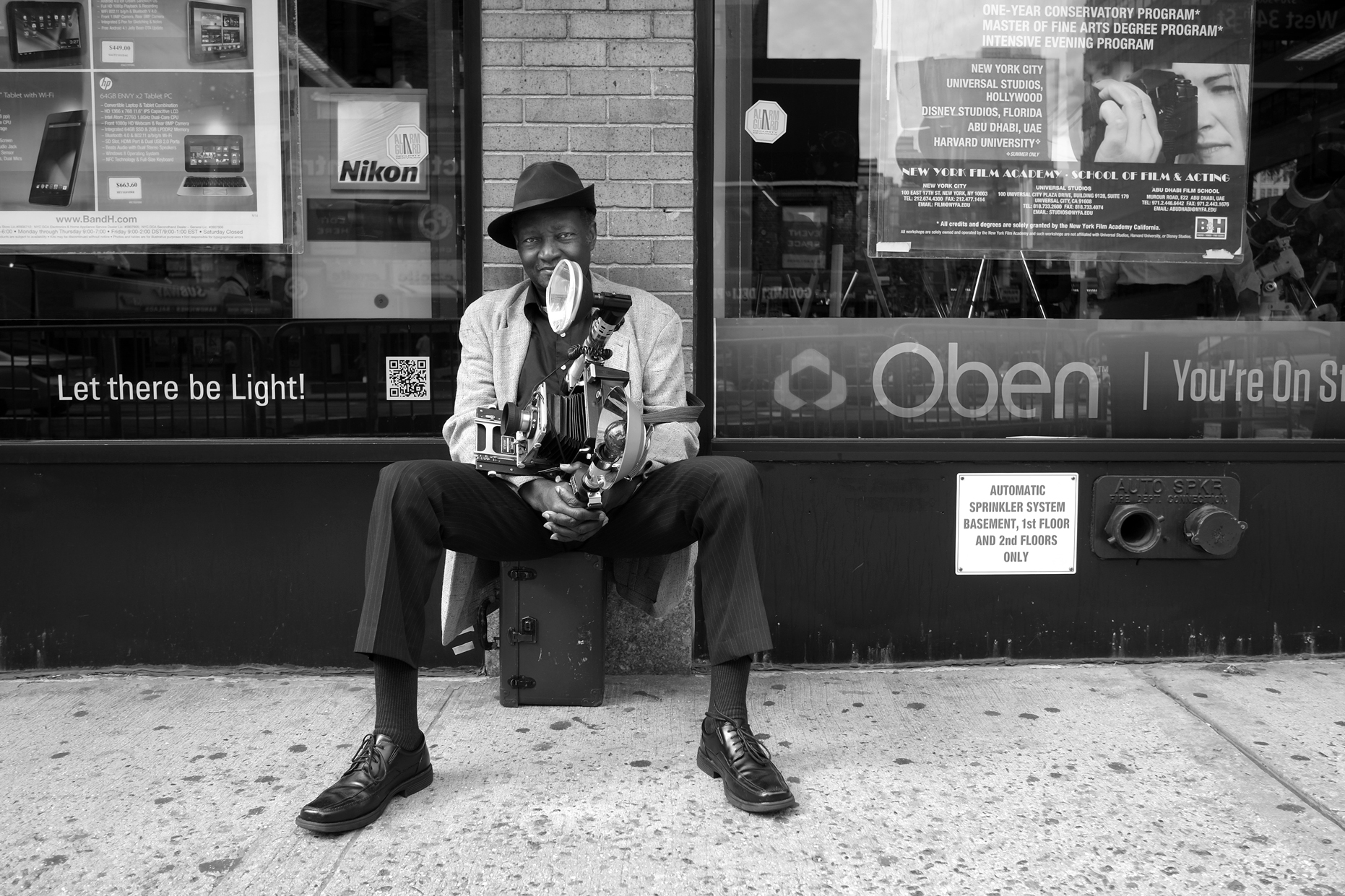
Louis Mendes outside of B&H Photo NYC 34th Street.
Shooting film is rare these days. That is not to say the film-based camera is irrelevant. Quite the opposite actually. The discipline of film has its merits, mostly in the form of personal choice of process than a distinct quality factor. Digital is as good as film, if not better. Film however is tactile and extremely deliberate. The tactile essence plays the human’s desire to make something solid, visible and touchable, because zeroes and ones that make up a digital file are abstract as they reside on a hard drive invisibly to your 5 senses. The negative, for all its flaws can be beheld with out the use of any other technology. Its existence is physically a substantial object and while the negative is not the end, it has a promises that it can create something very special in the form of the print. Holding a gorgeous hand printed image on an exotic paper where texture and the light of day expresses the latent image is a much different feeling than holding an iPad or viewing on a display. I won’t diminish the digital file, I’ll just say it’s an altogether alternate way of viewing the photograph. Certainly the digital file can be printed on a vast amount of papers and styles, so in the end, the way we create our photograph is moot.
Destined to view on a screen or as a print, film and digital are interchangeable. Negatives can be scanned, and digital negatives made as well. How we arrive at the finished photograph and the style of the work is paramount in the pursuit of finding photographic style. Take for instance the NY Photographer Louis Mendes. He excretes photographic style in his choice of camera and the way the image is delivered, (as a 4×5 instant print).
“Louis Mendes is a quintessential street photographer best known for his Speed Graphic camera, blocked hat and consistent suave style dubbed “Shaft with a camera.” Mendes is a staple in New York City to tourists and natives alike. He’s been photographed thousands of times cradling his Speed Graphic as if he were the Statue of Liberty holding her tabula ansata. Portraits of Louis Mendes have won awards internationally and grace the walls of galleries world-wide.”
Louis shoots in a jacket, fedora and with an old skool effeincecny that belies a true professional. Louis is a can do guy, and his smile is wonderful to behold. Read more about Louis and his Speed Graphic here, but his facebook info sums him up nicely:
Now thats photographic style. Cheers Louis.
Share this:

August 20, 2013
The Old Tuscan Farmer and Every Picture Matters Lesson

The Old Tuscan Farmer in the Cortona market
On Saturday mornings in Cortona the market comes to the squares. It’s where we buy our produce, and Barbara’s family has been shopping there for seemingly forever. We have a favorite farmer, and when I met him, he was old. Italian countryside old, which means he looks older than he is due to that famous Tuscan sun. Plus farmers always age harder than regular folk do. His stall was attended by his extremely nice wife (equally as old, but very sturdy), and who I think is his daughter in law, along with his son and a few others who might be family but might be farm hands helping to bring the crop to the market. For as long as I have been coming to Cortona, this has been the same. They are very nice, and the old farmer is jolly and congenial, he always has a firm handshake and a grand smile. For the life of me, I have a problem understanding older Italians and we would go back and forth talking and I never really knew what he was saying or if he understood me, but I grew to like him immensely, he became part of what I love about Cortona.
Two years ago he stopped working the main part of the stall, and broke off to the side setting up next to a wall, sitting mostly, and selling herbs in little pots. No more the heavy melons and sacks of tomatoes, this aspect of the business was now delegated to his wife and the kids. His hands would be always wrapped around a cane, and it was understood he was letting the next generation take over and he would just be in charge of a much smaller crop. When asked how he was feeling, he shook his head and said he was fine, but age was taking its toll on the old farmer, and his pride wouldn’t let him stay home, complain, nor stop what he had been doing his whole life. When I was working on my Instant Italy project (shooting Fujifilm Instax photos exclusively) I took a fine photograph of the old farmer and tried to give it to him but he didn’t comprehend an instant photo so I slipped it in his top pocket as the image was developing. I shot a second photograph of him, the one I would keep, but didn’t come out well. Pointing a camera at the old farmer produced a random result because he didn’t keep still and was always in conversation with who ever would be near him. The next year, I came with the Fuji X-Pro 1 and had decided that I would shoot the people I knew, but I would do it unobtrusively and I would focus on thier hands frequently.
I was eager to be shooting him, and as Barbara and mom selected produce I chatted him up and photographed his hands wrapped around his now ever present cane. I made one exposure, that’s all. I didn’t want to be intrusive as he was now engrossed in another conversation. We saw him a few more times that year on following Saturdays but I had my image.
This year we trotted through the market to buy our produce. I looked forward greatly to seeing the old farmer and being in the presence of his smile and hearing his undecipherable Italian. When we turned the corner the herbs where there, in little black plastic pots but he was nowhere to be seen. His wife upon seeing Barbara and mom greeted us, and mom and Barbara had an exchange with her. They asked where he was and I was hoping for another story of what I had already gotten and inkling about. The farmer’s wife looked down, and said something I of course couldn’t follow. Barbara turned slowly to me and lamented, “he’s gone” with a long face confirming what I had already suspected. He had passed 4 months ago, and further details were absent. I hoped it was an easy passing, and I walked away sadly, feeling empty, like a little part of my summer was forever gone, and then I thought about the photo of his hands. Holding on to his cane, and perhaps a grip onto this world for his last year here. The old farmer will live on in my memories and in that photograph, as well as the Fujifilm Instax photo. I don’t have the latter, but I hope his family found it in his belongings and it’s sitting on a hearth in the farmhouse.
Photography is powerful, it can make a man immortal or conjure the emotions of a past moment. As I lamented the passing of my nameless old farmer I knew I would treasure that image for all time. When I made the image I was thinking of how I could elaborate on my style and work that I shoot in Tuscany. When I edited the image I was unimpressed and not too excited about the photograph I had made. Now, with his passing the condition has changed dramatically, the importance of the image magnified.
Never ever take an exposure for granted. What is drab can become brilliant, what is mundane exceptional. Photographs like wine can into something far more important and relevant than what you thought during the 1/60th of a second it took to expose.
Every picture matters.
—
Image made with Fujifilm XPro1 and 35mm 1.4 shot in film sim B&W Mode 1:1 format. Processed in Snapseed.
Share this:

August 14, 2013
The Exhibition at the old Hospital and the Zeiss Touit 12mm for X-Pro1

View of Val di Chiana from the Old Hospital
I’ll be honest, I’m not that much of a super wide guy. My preferred focal length is just a little wider than normal view. The 28mm to 35mm is pretty perfect for me. Back in May, I got two lenses from Zeiss to try out, the 35 1.8 and 12mm 2.8 Touit lenses. I walked with the 35 1.8 around NYC for a few weeks testing the lens before I passed it on to Gabe from Ruinism and wrote about it on my “Part 1” of the Zeiss Touit tests which can be found here in this earlier blog. I then began to shoot with the 12mm and actually had trouble making images I was excited about. It wasn’t that the gorgeous lens was anything less than a great optic, it was I who had issue with the lens. For those who follow my blog, its not just words, the images have to back up what I’m saying. The environments that I was testing the lens in were just not coexisting and the lens wasn’t working for me. Well, all that changed yesterday when I took the 12mm and mounted it on my trusty Fujifilm X-Pro1 with the aim of checking out some exhibitions at the Cortona On the Move Photo Festival in Italy. All of the images are shot using the 12mm 2.8 at ISO Auto 1600, color shots are Velvia Film Sim Mode unless I chose the B&W Y mode (I used film sim bracketing so I was able to capture it all).
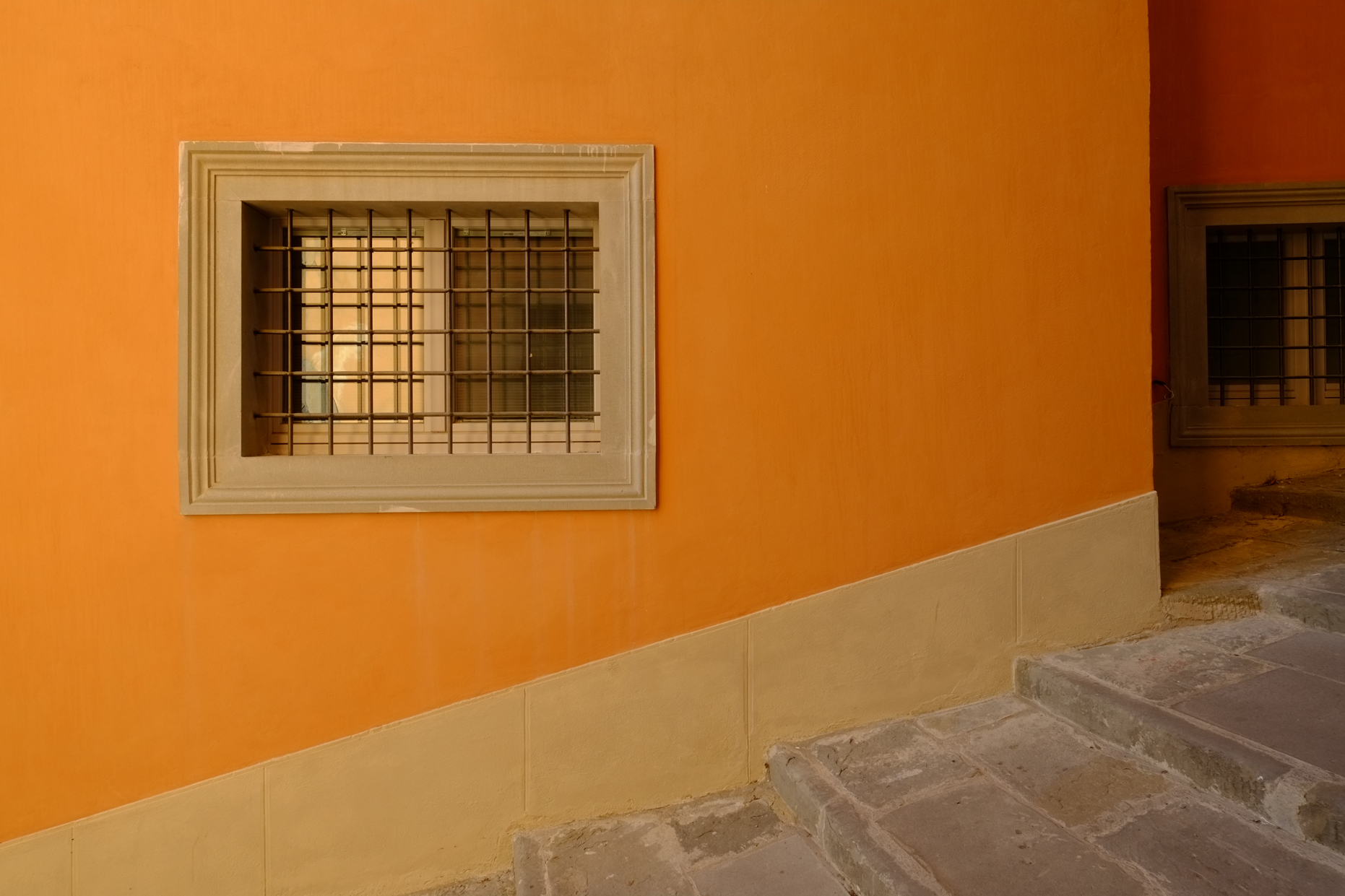
Study of the geometry of Composition in Tuscany
This photo festival is really unlike any other that ever existed before. Taking place is Cortona Italy, a hilltop medieval city made famous lately by the Frances Mayes book, “Under the Tuscan Sun” (Mayes tells the tale of being an expat American and finding herself while rebuilding a Tuscan villa) the festival consists of a series of exhibitions that are found in odd locations throughout the city. By using spaces that are currently unused or abandonded, the festival curates photography with a theme of movement, travel and exploration. It’s a super cool way to explore the old city and see some photography and also, gain entry to spaces that would otherwise not be available.
The festival for the second time was able to procure the old hospital and transform it to a gallery featuring edgy and stimulating photographers as well as a retrospective look at the now defunct Newsweek magazine. For me, hospitals are associated with death, and I found it fitting that Newsweek (which ended publication in December of 2012) a perfect fit to showcase multiple news themes that it was known for, along with some of the brightest documentary shooters. Indeed, the exhibition is aptly titled, “An Autopsy”. RIP Newsweek.
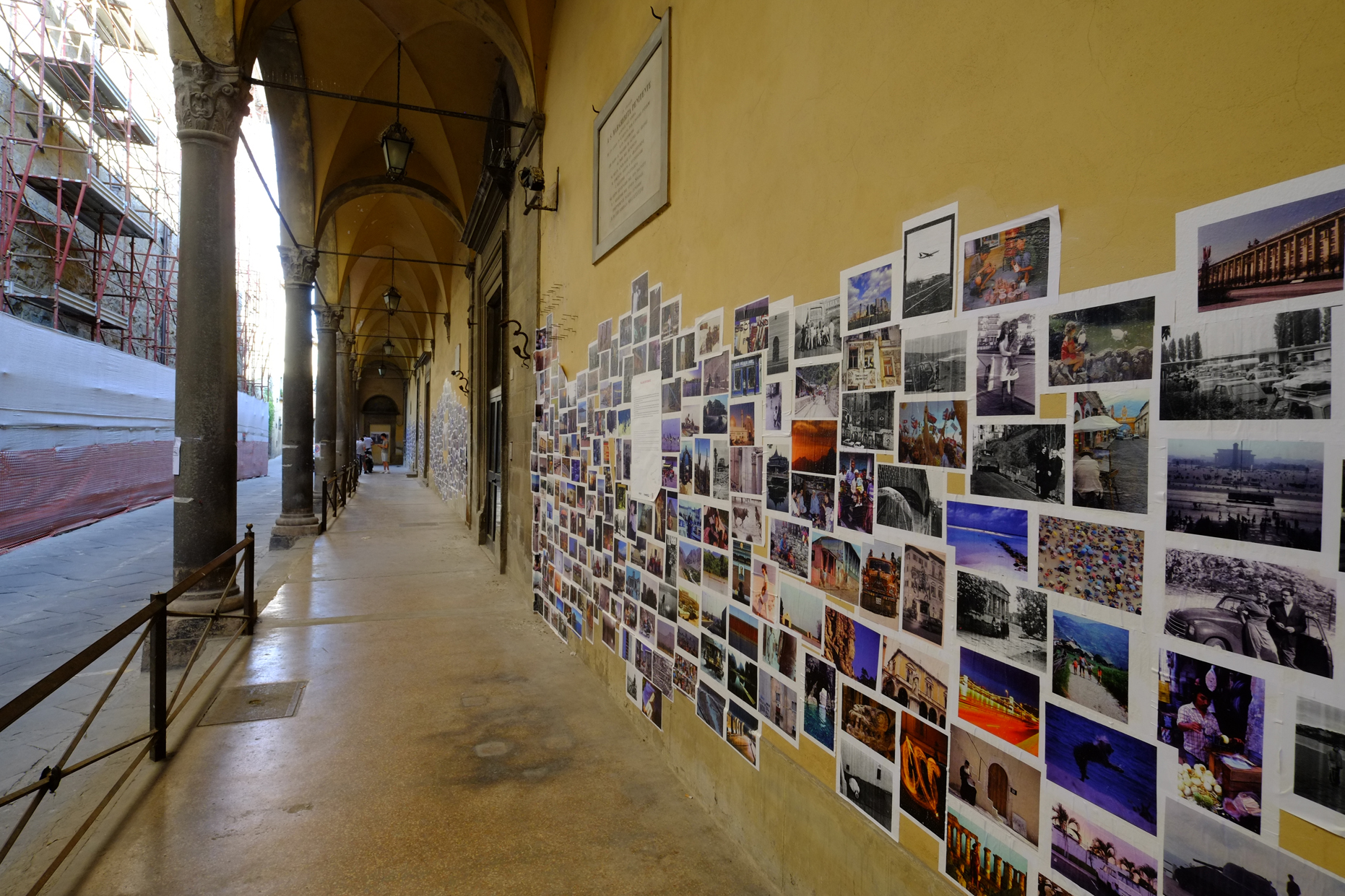
Crowd sourced installation where readers of La Republica were asked to submit photos taken prior to 1999
I have a new hero, Zed Nelson, who over 5 years shot in 18 countries across 5 continents the diaspora of western concepts of beauty being exported as a new manifestation of aesthetic globalization. His work is akin to Lauren Greenfield and Erwin Olaf but has a technical savvy and execution I was moved by. The room that Zed is displayed in has wide-open windows that over look the city and the valley below. Visitors are torn between looking at glass jar containing fat taken during a liposuction procedure and a view to die for. The dichotomy is exquisite.
Sol Neelman is a North West photographer who couldn’t cut it as a jock, and became a photographer. His are larger than life shots of extreme and weird sports. The subject matter is instantly interesting and his timing for the camera frame impeccable. I look forward to purchasing his book of the complete project, the exhibition left me wanting more.
Salvatore Santoro documentary of his childhood home and despotic local of Campania was what I felt the weakest of the exhibitions, yet still the spirit of the festival pervades the curation of work. While Salvatore’s work is solid, the subject matter is sad and the locations simply run down from the effects of mafia and pollution. I preferred to look at weird sports and go back in history with the covers of Newsweek.

The 12mm super wide lets you explore space unlike a normal view.
The crazy Italian photographer I met at Photo Show Milan, Antonio Manta led a workshop at the opening of the festival. This wild spirit and master printer always works with a quirky twist on his portraiture and his workshop embodided that spirt. He set up a red carpet with an inspired throne in front of the signature building in Cortona, the Palazo del Comune and had his class photograph tourists and while choosing the theatre location for the Cortonesi (locals) to be photographed. A selection from his class is on exhibit and shows the organic nature of the festival, work from students attending on display.

I loved how with the use of Newsweek large proofs the festival was able to make a political commentary on thier home country and the world at large. Seeing a Tim Hetherington print as well reminded me what a genius we lost in Libya and I lament that we can’t have Tim’s eye look at current events any longer.
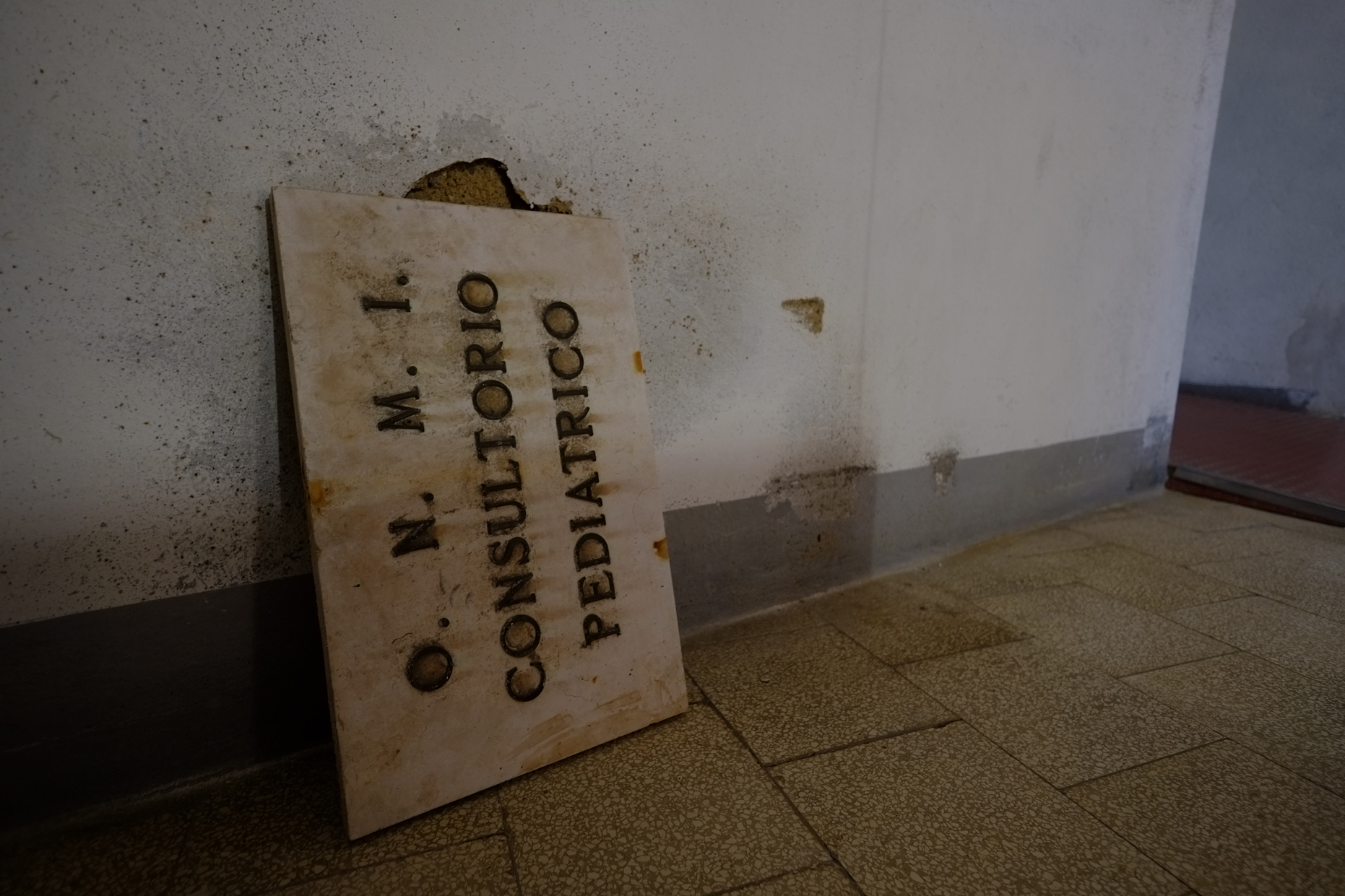
Walking the corridors of old hospital and looking at great examples of photography is inspiring, but doing so with the super wide 12mm Zeiss Touit was the icing on the cake. I wanted to take it all in, not just a slice. What better way to examine it all than with a larger than life lens? After all the trying with the lens, I found its home in my bag, as I travel. All the shots in the blog entry are shot with the 12mm, I’ll let the images do the talking.

The super wide is great at taking it all in, and perhaps if Cortona On The Move festival is about travel going places, then its official lens should be the Touit 12mm.

B&W w/ Yellow Filter Film Sim mode
David Brommer on August 22nd and 23rd will be conducting a Composition seminar in Cortona that is part classroom, part portfolio review, and part photo walk. A trip to the old hospital will be in order!

Steps leading to multiple levels of the exhibition
Share this:

August 4, 2013
Two Day Workshop in Cortona, Italy August 23rd and 24th at Cortona On The Move Photo Festival

Doors of Tuscany Shot with Lensbaby
Cortona is a photogenic medieval hilltop city located in the south of Tuscany that is a photographers paradise. So much in fact, that three years ago a group of enterprising young photographers created the Cortona On The Move Photo Festival to showcase photography themed around travel and movement. The festival features exhibits, talks, portfolio reviews, contests, and workshops spread out through the winding alleyways and squares. The exhibits are in old hospitals, wince cellars, churches and other antique locations. Visitors get a map and while exploring the city, get to view a seriously curated assemblage of todays top contemporary photography as it relates to travel and the concept non-static photography.
For over a decade I have been visiting this corner of the world (I was married to Barbara in Cortona in 2003 as matter of fact, we are celebrating our TEN year anniversary-I love you Barbara <3) and photographing with different techniques. The location is enchanting, and with the festival firmly routed in the city, all the more interesting.

Cortona view of the Vale shot with Fujifilm Instax
This year, I proposed a two day workshop to help photographers view this city with an eye for advanced composition. If you are looking into a trip this summer, you simply can’t go wrong with COTM and a visit to Tuscany. Here are the details for the workshop:

Detail of rear of Church 8×10 Camera 14″ Kodak Ektar Lens
COMPOSITION IN CORTONA: BEYOND THE RULE OF THIRDS
Digital cameras can practically do it all, but what they can’t do is adjust for good composition, a fundamental quality of a great image. Ironically, the technological wonders of the digital era have made some of us blind to seeing photographs as art, and although the latest digital cameras may be able to perform in almost any light, if you can’t “see” the shot, then you won’t capture a memorable image.
Cortona on the Move festival will host American photographer David Brommer for a special two part seminar. The first part, an afternoon lecture and slide show of Brommer’s popular, “Better Photographic Composition – Beyond the Rule of Thirds” program where Brommer will cover the basics of composition and then go further into more complicated compositional elements. Directly following this presentation will be a review of students work. The class will resume the next morning for a photo walk in Cortona where you will get to put what you just learned to practice.
This seminar is ideally suited for those with a basic understanding of photography but wish to advance their skills by learning compositional fundamentals and techniques that will dramatically improve their images.
MATERIALS: Attendees may bring up to 5 of their best images for review on a USB thumb drive for the Friday session. For the photo walk on Saturday, attendees are recommended to bring a Digital SLR with wide to normal angle lenses, a fully charged battery and memory cards. Tripods are not recommended as this is a photo walk, however comfortable sneakers are a must. We will be covering a lot of ground on old cobblestoned streets.
DATES: August 23rd 4 pm to 7 pm (class room session) and August 24th 7 am to 10 am (Cortona photo walk)
COST: 125€
The organization of the Festival will help the participants to find affordable accommodations.
To enroll, make a bank transfer to:
Associazione Culturale ONTHEMOVE
Banca Credito Cooperativo
Iban: IT 66 N 084 8925 4010 0000 0361 220
Info: workshop@cortonaonthemove.com
I will conduct the class primarily in English, however a translator will be on site. I hope to see some of my American friends, or make new acquaintances in Cortona.
~David
Share this:

May 26, 2013
Do it, Touit! New Zeiss Lenses for the Fujifilm X & Sony NEX Mount Part 1

Detail with tree of Orly Genger’s Red, Blue and Yellow installation in Madison Sq. Park, NYC. 32 mm lens
Last week I was privileged by Zeiss to test out a new line of lenses made for two Mirrorless digital camera systems; the Fujifilm X, and Sony NEX mounts. Being keen to mount Zeiss lenses on my XPro1 from my experience as both a Contax shooter in the 90’s and a Hassalblad shooter in the 2000’s is an understatement. I love Zeiss. Carl Zeiss was a German who pioneered lens manufacture in the 1840’s and is responsible for classic groupings of optics that would advance the image resolution of photography. It would be a truism to say, photography owes something Zeiss.

at the Zeiss Touit launch, Standard Hotel, NYC. Iphone.
The new lenses have the silly and catchy name of Touit, named after a tropical parrot. Thus far they have released two lenses, a 32 mm f 1.8 and 12 mm f2.8. The plans to expand the system with a third lens, a 50 mm f2.8 macro are eminent. Further lenses will certainly follow. By this time, many blogs and review sites have posted info on the Zeiss Touits and I don’t want to repeat what has already been published, so I’ll just take you through my observations and work while I put the lenses to the task. As Richard Schleuning from Zeiss explained, these lenses were targeted towards “those that make photographs as opposed to those that take photographs”. I’m sure we could geek out on what that’s supposed to mean, but can agree that we most likely want to make photographs. By nature I’m a giver not a taker so that sits well with me. Thank you Richard, and Carl.

Spring afternoon in Madison Sq. Park. 32 mm
The lenses can be categorized as “luxury” lenses. They are made with a tactile consideration befitting a high end product. Beautiful matte black metal barrels and rubberized and recessed focus and aperture rings. Not bulky like the Fujifilm lenses and much more solid than the NEX system lenses, you can feel the quality build in your hands as well as in your wallet.

Matt Hill onstage at Paper Burlesque. 32 mm
The 32 mm 1.8 Planar is the standard lens providing you with a 50 mm view on the APS-C size sensors. Counter that to the Fujifilm 35 mm 1.4. As I said before, the lens feels and looks great on the camera. I found the focus to be as fast if not slightly faster than the Fujifilm lens. The 32 mm comes with a large plastic lens hood, I prefer the slick and small Fujifilm metal hood to the Zeiss. Richard explained they chose plastic to keep weight down. When I tested the lens I went sans hood, the hood adds about 2.5 inches and I feel if your going Mirrorless, then go small.

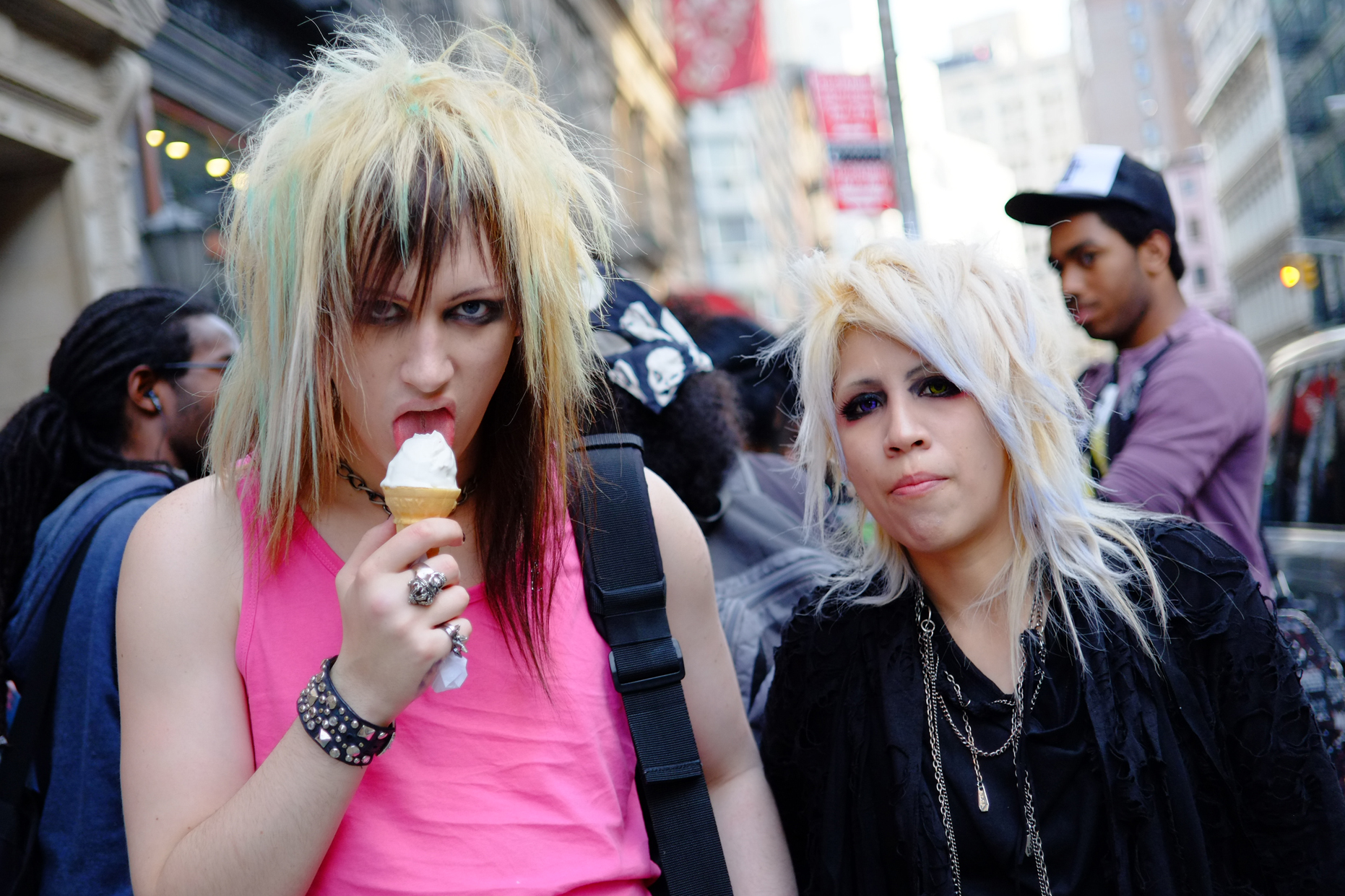
Detail of stall on St. Marks Place NYC. 32 mm lens
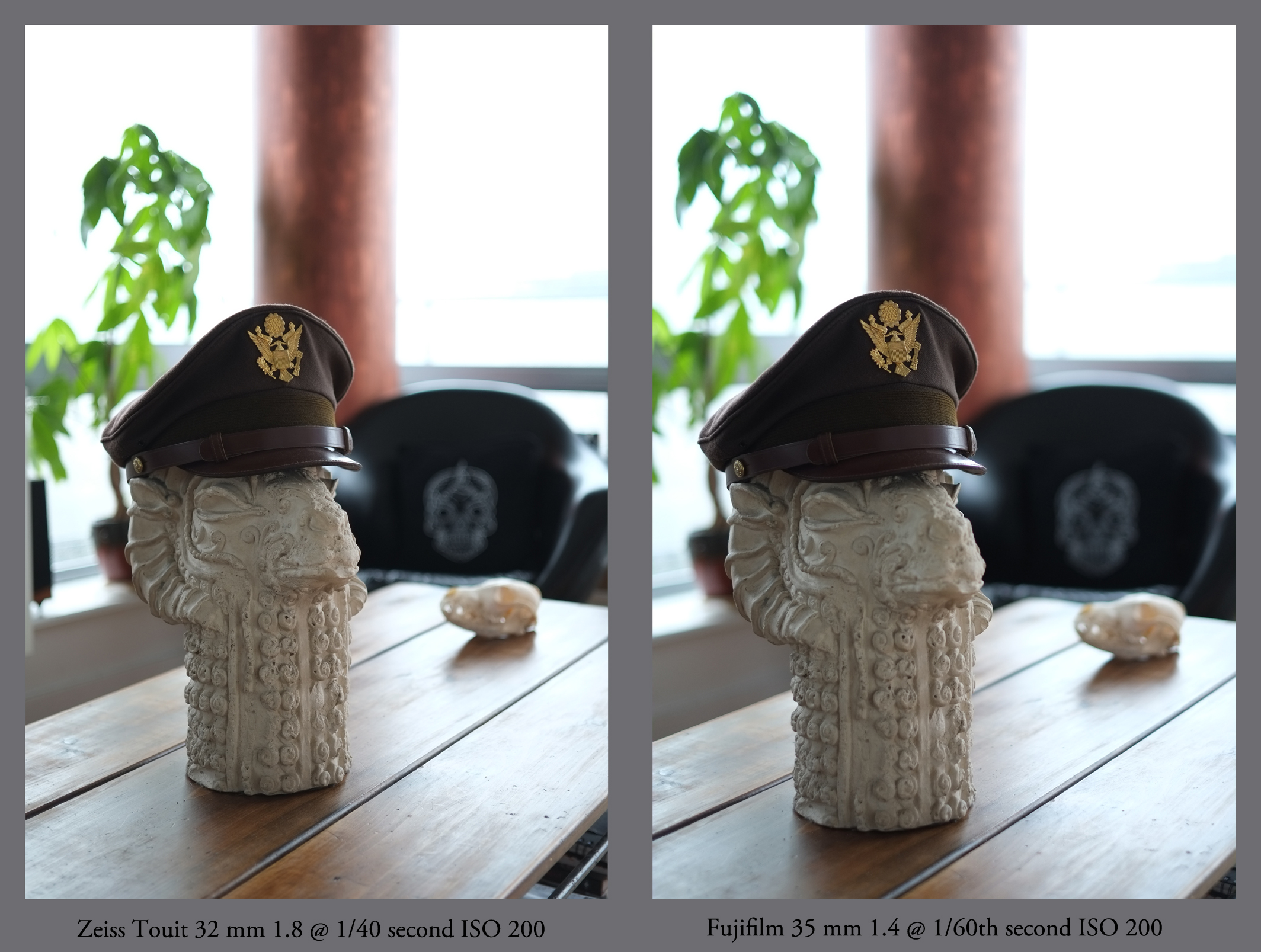
After I made this image I really found the figure in the baseball cap off to the right annoying visually. I shot it at 1.8 and figured what if I had made that image with the Fujifilm lens that is a 2/3 stop faster. Would I have gotten more pleasing bokeh and thus have “blurred out” the unwanted figure?
So I conducted a test by putting the camera on my trusty Oben carbon fiber tripod and shooting this still life in my apartment between the two lenses. I have uploaded a very large image so feel free to pixel peep. Also please feel free to comment which of the two lenses produced the look you like the most. Me, I have to say I love more blur that is attainable with the Fujifilm 35 1.4, but the 9 blade aperture on the Zeiss certainly does have a smooth and pleasant blur. Notice the harder edges of the green plant in the back ground as well as the embroidered skull. I do like the slightly wider field of view on the 32 mm. I also notice a color shift between the two lenses. I had a Lastolite 30″ 5 in 1 silver gold reflector off to camera right acting as a warm fill. The Fujifilm 35 mm seemed to
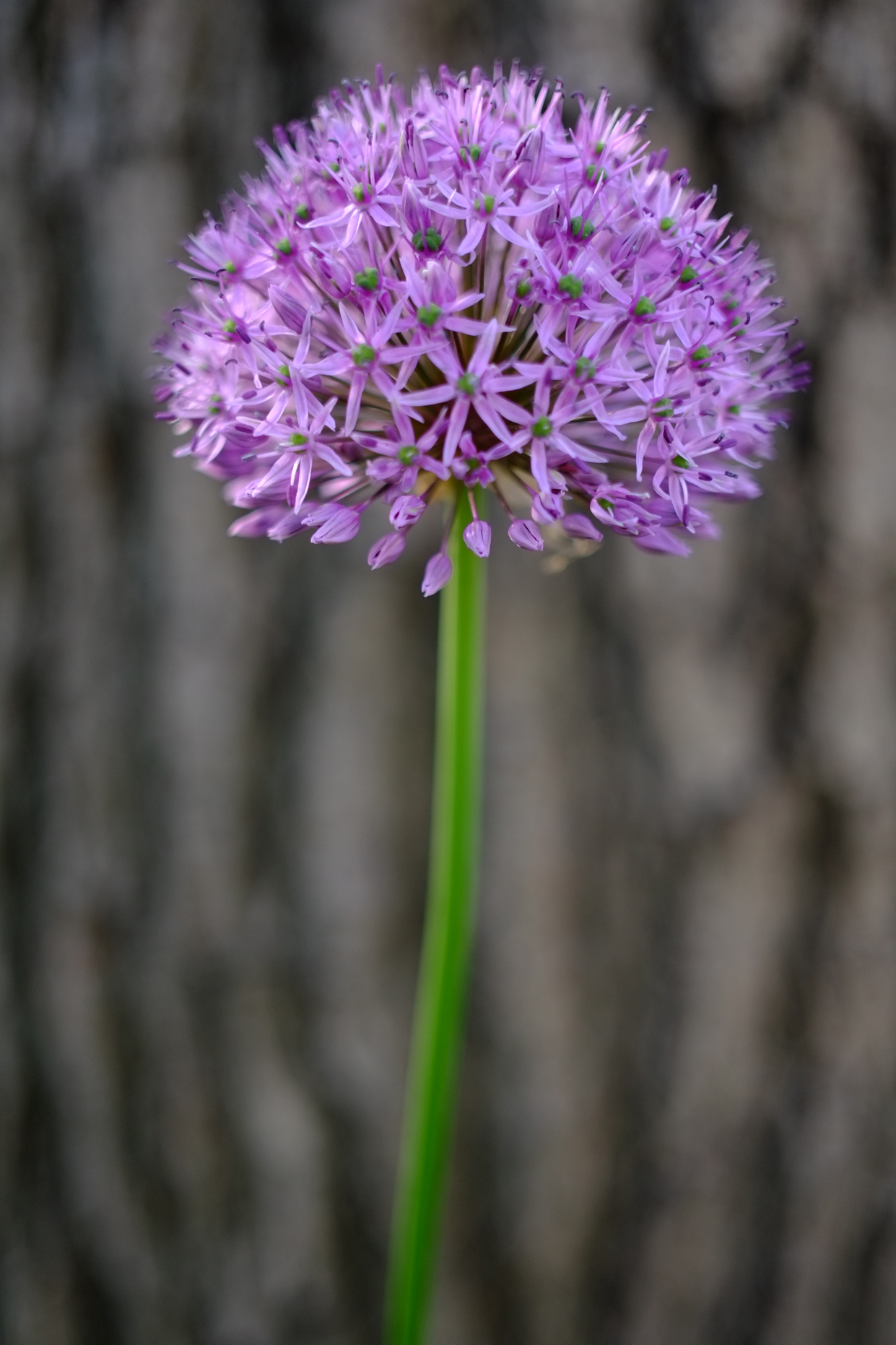
Macro is superb with-out really being a macro lens. The 32 mm can focus down to 1.21 feet. Please consider the background of a macro shot, I think it is easy to get all caught up in the subject and then make a mistake in the background. I saw this purple flower in front of the pattern like bark of the tree and really concentrated on filling the background with the texture of the bark and being careful to not get anything but the tree in the background. The flower was easy, but man, look at that soft out of focus mottling of the bark. Yum.
Great rendition in macro range.
The 1.8 rocks in low light when combined with the amazing low light capability of the Xpro1.
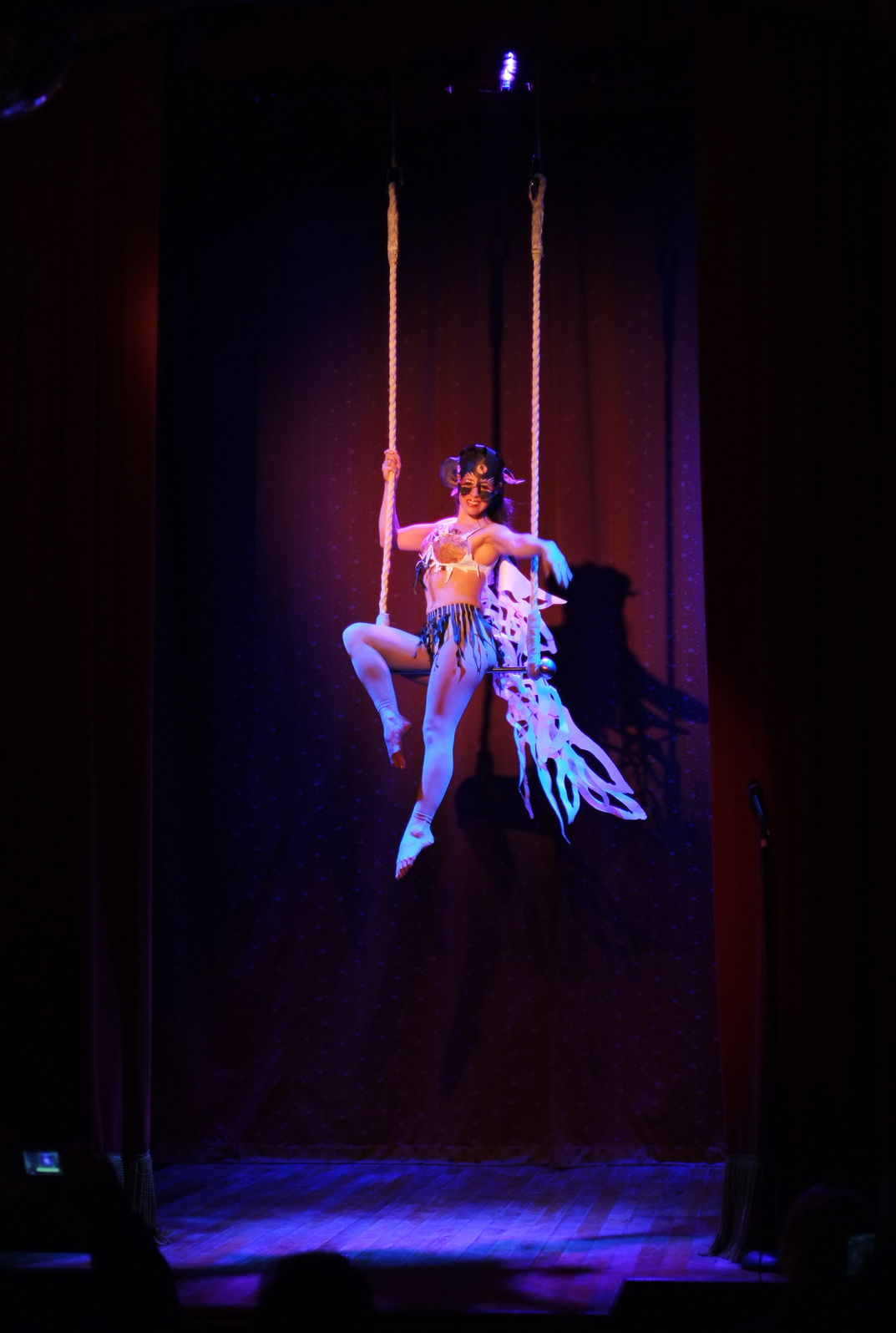
Paper Bulesque by Mat Hill. Dancer- Rosabelle Selavy. 32 mm f1.8 – 1/50 sec. ISO 1000 Center Meter, Tungsten
Thus far I’m impressed with the lenses. They do cost about 1/3 more than the all ready fairly expensive Fujifilm X lenses. Are they worth it? Stay tuned for part two, where we will see more of the 12 mm lens and some low light tests. Please don’t forget to add your comments on the 35 mm Fuji vs. the 32 mm Zeiss comparison.
~David


