Suspect Photography

words and images from david george brommer

Tag: photography

Film Based Cameras Mean Sh*t. Yea Right.

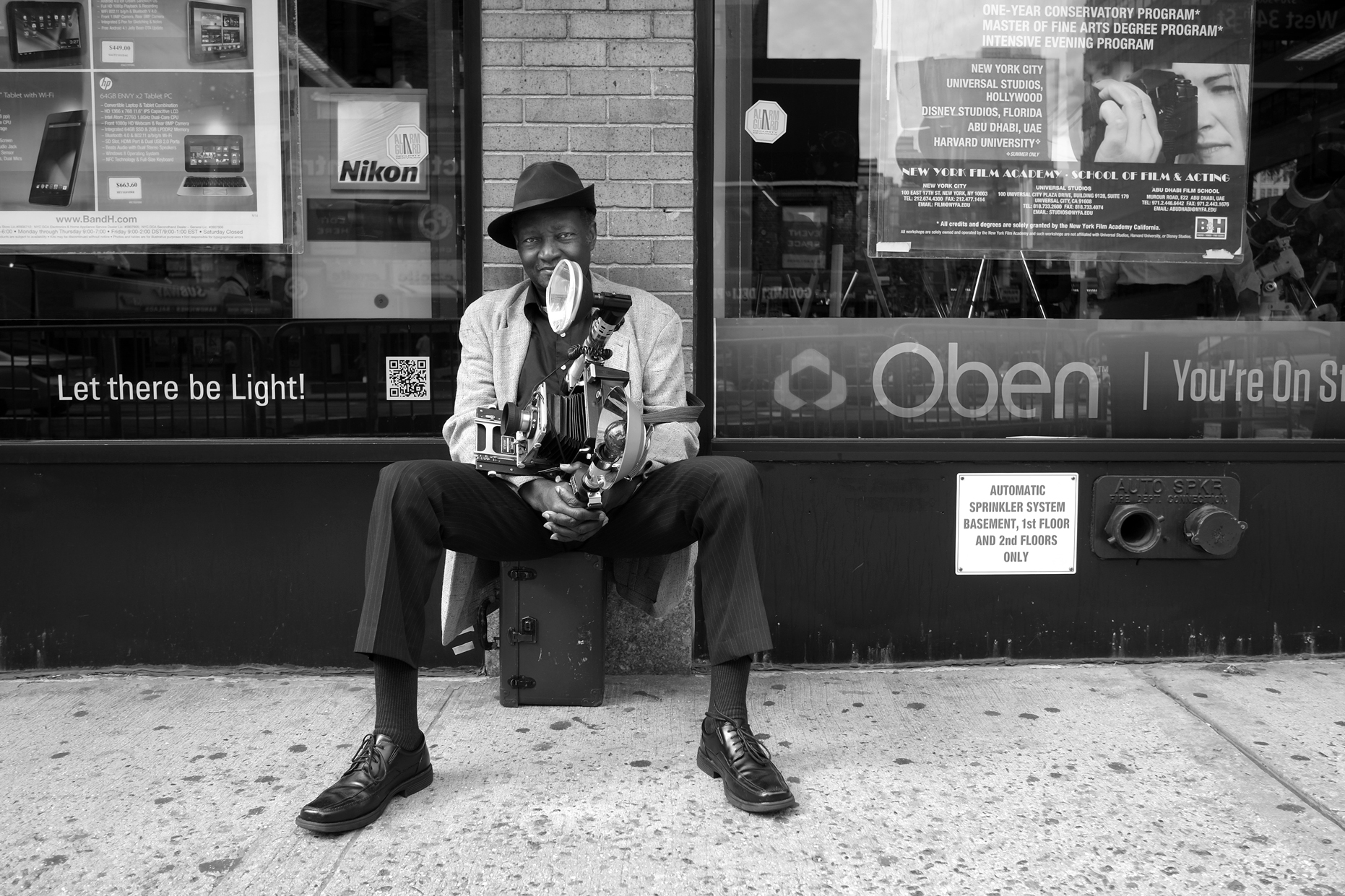
Louis Mendes outside of B&H Photo NYC 34th Street.

Louis Mendes outside of B&H Photo NYC 34th Street.

Shooting film is rare these days. That is not to say the film-based camera is irrelevant. Quite the opposite actually. The discipline of film has its merits, mostly in the form of personal choice of process than a distinct quality factor. Digital is as good as film, if not better. Film however is tactile and extremely deliberate. The tactile essence plays the human’s desire to make something solid, visible and touchable, because zeroes and ones that make up a digital file are abstract as they reside on a hard drive invisibly to your 5 senses. The negative, for all its flaws can be beheld with out the use of any other technology. Its existence is physically a substantial object and while the negative is not the end, it has a promises that it can create something very special in the form of the print. Holding a gorgeous hand printed image on an exotic paper where texture and the light of day expresses the latent image is a much different feeling than holding an iPad or viewing on a display. I won’t diminish the digital file, I’ll just say it’s an altogether alternate way of viewing the photograph. Certainly the digital file can be printed on a vast amount of papers and styles, so in the end, the way we create our photograph is moot.

Destined to view on a screen or as a print, film and digital are interchangeable. Negatives can be scanned, and digital negatives made as well. How we arrive at the finished photograph and the style of the work is paramount in the pursuit of finding photographic style. Take for instance the NY Photographer Louis Mendes. He excretes photographic style in his choice of camera and the way the image is delivered, (as a 4×5 instant print).

“Louis Mendes is a quintessential street photographer best known for his Speed Graphic camera, blocked hat and consistent suave style dubbed “Shaft with a camera.” Mendes is a staple in New York City to tourists and natives alike. He’s been photographed thousands of times cradling his Speed Graphic as if he were the Statue of Liberty holding her tabula ansata. Portraits of Louis Mendes have won awards internationally and grace the walls of galleries world-wide.”

Louis shoots in a jacket, fedora and with an old skool effeincecny that belies a true professional. Louis is a can do guy, and his smile is wonderful to behold. Read more about Louis and his Speed Graphic here, but his facebook info sums him up nicely:

Now thats photographic style. Cheers Louis.

The Old Tuscan Farmer and Every Picture Matters Lesson

The Old Tuscan Farmer in the Cortona market

The Old Tuscan Farmer in the Cortona market

On Saturday mornings in Cortona the market comes to the squares. It’s where we buy our produce, and Barbara’s family has been shopping there for seemingly forever. We have a favorite farmer, and when I met him, he was old. Italian countryside old, which means he looks older than he is due to that famous Tuscan sun. Plus farmers always age harder than regular folk do. His stall was attended by his extremely nice wife (equally as old, but very sturdy), and who I think is his daughter in law, along with his son and a few others who might be family but might be farm hands helping to bring the crop to the market. For as long as I have been coming to Cortona, this has been the same. They are very nice, and the old farmer is jolly and congenial, he always has a firm handshake and a grand smile. For the life of me, I have a problem understanding older Italians and we would go back and forth talking and I never really knew what he was saying or if he understood me, but I grew to like him immensely, he became part of what I love about Cortona.

Two years ago he stopped working the main part of the stall, and broke off to the side setting up next to a wall, sitting mostly, and selling herbs in little pots. No more the heavy melons and sacks of tomatoes, this aspect of the business was now delegated to his wife and the kids. His hands would be always wrapped around a cane, and it was understood he was letting the next generation take over and he would just be in charge of a much smaller crop. When asked how he was feeling, he shook his head and said he was fine, but age was taking its toll on the old farmer, and his pride wouldn’t let him stay home, complain, nor stop what he had been doing his whole life. When I was working on my Instant Italy project (shooting Fujifilm Instax photos exclusively) I took a fine photograph of the old farmer and tried to give it to him but he didn’t comprehend an instant photo so I slipped it in his top pocket as the image was developing. I shot a second photograph of him, the one I would keep, but didn’t come out well. Pointing a camera at the old farmer produced a random result because he didn’t keep still and was always in conversation with who ever would be near him. The next year, I came with the Fuji X-Pro 1 and had decided that I would shoot the people I knew, but I would do it unobtrusively and I would focus on thier hands frequently.

I was eager to be shooting him, and as Barbara and mom selected produce I chatted him up and photographed his hands wrapped around his now ever present cane. I made one exposure, that’s all. I didn’t want to be intrusive as he was now engrossed in another conversation. We saw him a few more times that year on following Saturdays but I had my image.

This year we trotted through the market to buy our produce. I looked forward greatly to seeing the old farmer and being in the presence of his smile and hearing his undecipherable Italian. When we turned the corner the herbs where there, in little black plastic pots but he was nowhere to be seen. His wife upon seeing Barbara and mom greeted us, and mom and Barbara had an exchange with her. They asked where he was and I was hoping for another story of what I had already gotten and inkling about. The farmer’s wife looked down, and said something I of course couldn’t follow. Barbara turned slowly to me and lamented, “he’s gone” with a long face confirming what I had already suspected. He had passed 4 months ago, and further details were absent. I hoped it was an easy passing, and I walked away sadly, feeling empty, like a little part of my summer was forever gone, and then I thought about the photo of his hands. Holding on to his cane, and perhaps a grip onto this world for his last year here. The old farmer will live on in my memories and in that photograph, as well as the Fujifilm Instax photo. I don’t have the latter, but I hope his family found it in his belongings and it’s sitting on a hearth in the farmhouse.

Photography is powerful, it can make a man immortal or conjure the emotions of a past moment. As I lamented the passing of my nameless old farmer I knew I would treasure that image for all time. When I made the image I was thinking of how I could elaborate on my style and work that I shoot in Tuscany. When I edited the image I was unimpressed and not too excited about the photograph I had made. Now, with his passing the condition has changed dramatically, the importance of the image magnified.

Never ever take an exposure for granted. What is drab can become brilliant, what is mundane exceptional. Photographs like wine can into something far more important and relevant than what you thought during the 1/60th of a second it took to expose.

Every picture matters.

Image made with Fujifilm XPro1 and 35mm 1.4  shot in film sim B&W Mode 1:1 format. Processed in Snapseed.

The Exhibition at the old Hospital and the Zeiss Touit 12mm for X-Pro1

View of Val di Chiana from the Old Hospital

View of Val di Chiana from the Old Hospital

I’ll be honest, I’m not that much of a super wide guy. My preferred focal length is just a little wider than normal view. The 28mm to 35mm is pretty perfect for me. Back in May, I got two lenses from Zeiss to try out, the 35 1.8 and 12mm 2.8 Touit lenses. I walked with the 35 1.8 around NYC for a few weeks testing the lens before I passed it on to Gabe from Ruinism and wrote about it on my “Part 1” of the Zeiss Touit tests which can be found here in this earlier blog. I then began to shoot with the 12mm and actually had trouble making images I was excited about. It wasn’t that the gorgeous lens was anything less than a great optic, it was I who had issue with the lens. For those who follow my blog, its not just words, the images have to back up what I’m saying. The environments that I was testing the lens in were just not coexisting and the lens wasn’t working for me. Well, all that changed yesterday when I took the 12mm and mounted it on my trusty Fujifilm X-Pro1 with the aim of checking out some exhibitions at the Cortona On the Move Photo Festival in Italy. All of the images are shot using the 12mm 2.8 at ISO Auto 1600, color shots are Velvia Film Sim Mode unless I chose the B&W Y mode (I used film sim bracketing so I was able to capture it all).

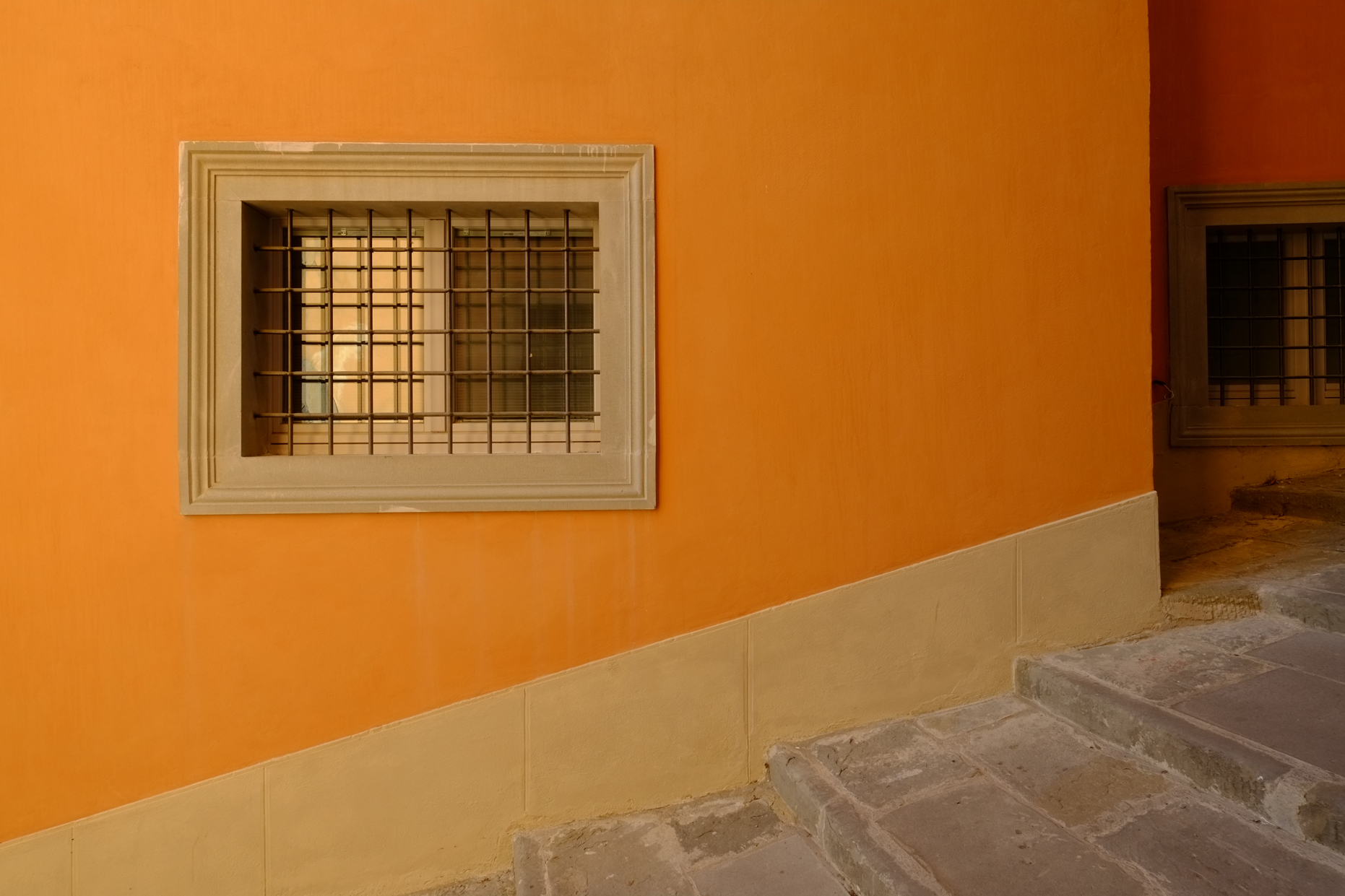
Study in the geometry of Composition in Tuscany

Study of the geometry of Composition in Tuscany

This photo festival is really unlike any other that ever existed before. Taking place is Cortona Italy, a hilltop medieval city made famous lately by the Frances Mayes book, “Under the Tuscan Sun” (Mayes tells the tale of being an expat American and finding herself while rebuilding a Tuscan villa) the festival consists of a series of exhibitions that are found in odd locations throughout the city. By using spaces that are currently unused or abandonded, the festival curates photography with a theme of movement, travel and exploration. It’s a super cool way to explore the old city and see some photography and also, gain entry to spaces that would otherwise not be available.

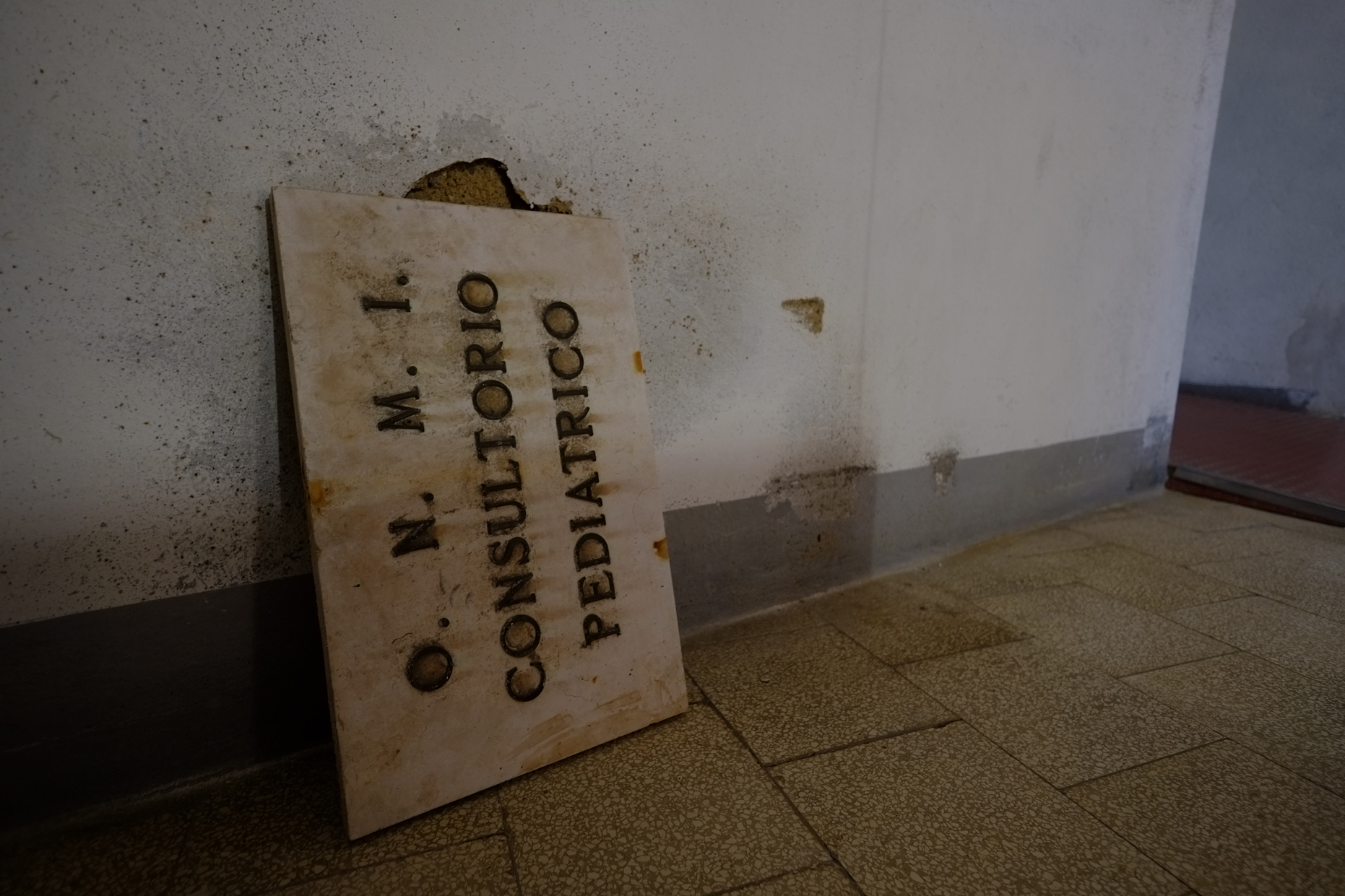
The festival for the second time was able to procure the old hospital and transform it to a gallery featuring edgy and stimulating photographers as well as a retrospective look at the now defunct Newsweek magazine. For me, hospitals are associated with death, and I found it fitting that Newsweek (which ended publication in December of 2012) a perfect fit to showcase multiple news themes that it was known for, along with some of the brightest documentary shooters. Indeed, the exhibition is aptly titled, “An Autopsy”. RIP Newsweek.

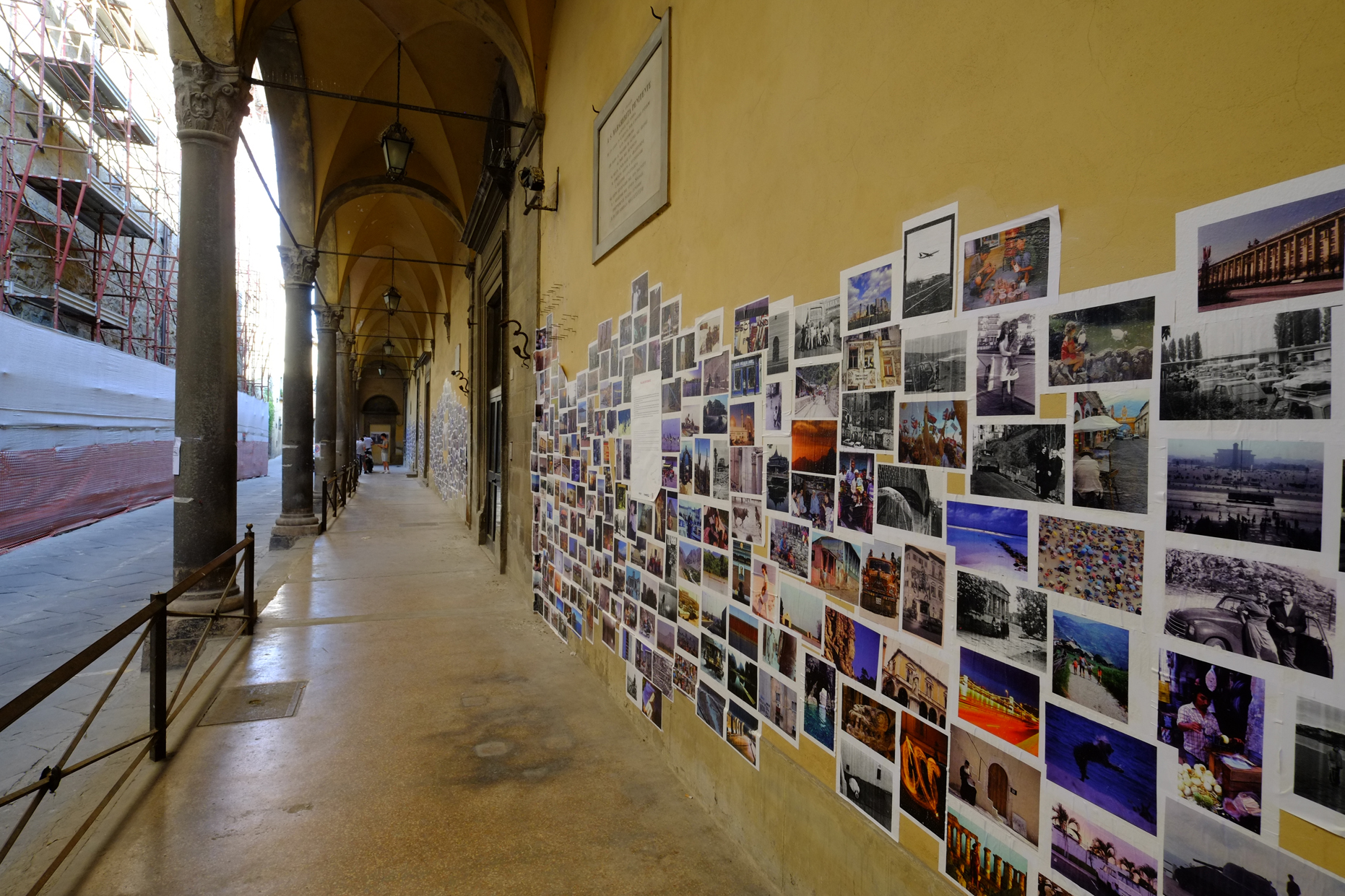
Crowd sourced installation where readers of La Republica were asked to submit photos taken prior to 1999

Crowd sourced installation where readers of La Republica were asked to submit photos taken prior to 1999

I have a new hero, Zed Nelson, who over 5 years shot in 18 countries across 5 continents the diaspora of western concepts of beauty being exported as a new manifestation of aesthetic globalization. His work is akin to Lauren Greenfield and Erwin Olaf but has a technical savvy and execution I was moved by. The room that Zed is displayed in has wide-open windows that over look the city and the valley below. Visitors are torn between looking at glass jar containing fat taken during a liposuction procedure and a view to die for. The dichotomy is exquisite.

Sol Neelman is a North West photographer who couldn’t cut it as a jock, and became a photographer. His are larger than life shots of extreme and weird sports. The subject matter is instantly interesting and his timing for the camera frame impeccable. I look forward to purchasing his book of the complete project, the exhibition left me wanting more.

Salvatore Santoro documentary of his childhood home and despotic local of Campania was what I felt the weakest of the exhibitions, yet still the spirit of the festival pervades the curation of work. While Salvatore’s work is solid, the subject matter is sad and the locations simply run down from the effects of mafia and pollution. I preferred to look at weird sports and go back in history with the covers of Newsweek.

The 12mm super wide lets you explore space unlike a normal view.

The 12mm super wide lets you explore space unlike a normal view.

The crazy Italian photographer I met at Photo Show Milan, Antonio Manta led a workshop at the opening of the festival. This wild spirit and master printer always works with a quirky twist on his portraiture and his workshop embodided that spirt. He set up a red carpet with an inspired throne in front of the signature building in Cortona, the Palazo del Comune and had his class photograph tourists and while choosing the theatre location for the Cortonesi (locals) to be photographed. A selection from his class is on exhibit and shows the organic nature of the festival, work from students attending on display.

Charlatan

I loved how with the use of Newsweek large proofs the festival was able to make a political commentary on thier home country and the world at large. Seeing a Tim Hetherington print as well reminded me what a genius we lost in Libya and I lament that we can’t have Tim’s eye look at current events any longer.

fallensign

Walking the corridors of old hospital and looking at great examples of photography is inspiring, but doing so with the super wide 12mm Zeiss Touit was the icing on the cake. I wanted to take it all in, not just a slice. What better way to examine it all than with a larger than life lens? After all the trying with the lens, I found its home in my bag, as I travel. All the shots in the blog entry are shot with the 12mm, I’ll let the images do the talking.

View3

The super wide is great at taking it all in, and perhaps if Cortona On The Move festival is about travel going places, then its official lens should be the Touit 12mm.

B&W  w/ Yellow Filter Film Sim mode

B&W w/ Yellow Filter Film Sim mode

David Brommer on August 22nd and 23rd will be conducting a Composition seminar in Cortona that is part classroom, part portfolio review, and part photo walk. A trip to the old hospital will be in order!

Steps leading to multiple levels of the exhibition

Steps leading to multiple levels of the exhibition

Do it, Touit! New Zeiss Lenses for the Fujifilm X & Sony NEX Mount Part 1

Detail with tree of Orly Genger's Red, Blue and Yellow installation in Madison Sq. Park, NYC. 32 mm lens

Detail with tree of Orly Genger’s Red, Blue and Yellow installation in Madison Sq. Park, NYC. 32 mm lens

Last week I was privileged by Zeiss to test out a new line of lenses made for two Mirrorless digital camera systems; the Fujifilm X, and Sony NEX mounts. Being keen to mount Zeiss lenses on my XPro1 from my experience as both a Contax shooter in the 90’s and a Hassalblad shooter in the 2000’s is an understatement. I love Zeiss. Carl Zeiss was a German who pioneered lens manufacture in the 1840’s and is responsible for classic groupings of optics that would advance the image resolution of photography. It would be a truism to say, photography owes something Zeiss.

at the Zeiss Touit launch, Standard Hotel, NYC. Iphone.

at the Zeiss Touit launch, Standard Hotel, NYC. Iphone.

The new lenses have the silly and catchy name of Touit, named after a tropical parrot. Thus far they have released two lenses, a 32 mm f 1.8 and 12 mm f2.8. The plans to expand the system with a third lens, a 50 mm f2.8 macro are eminent. Further lenses will certainly follow. By this time, many blogs and review sites have posted info on the Zeiss Touits and I don’t want to repeat what has already been published, so I’ll just take you through my observations and work while I put the lenses to the task. As Richard Schleuning from Zeiss explained, these lenses were targeted towards “those that make photographs as opposed to those that take photographs”. I’m sure we could geek out on what that’s supposed to mean, but can agree that we most likely want to make photographs. By nature I’m a giver not a taker so that sits well with me. Thank you Richard, and Carl.

Spring afternoon in Madison Sq. Park. 32 mm

Spring afternoon in Madison Sq. Park. 32 mm

The lenses can be categorized as “luxury” lenses. They are made with a tactile consideration befitting a high end product. Beautiful matte black metal barrels and rubberized and recessed focus and aperture rings. Not bulky like the Fujifilm lenses and much more solid than the NEX system lenses, you can feel the quality build in your hands as well as in your wallet.

Matt Hill onstage at Paper Burlesque. 32 mm

Matt Hill onstage at Paper Burlesque. 32 mm

The 32 mm 1.8 Planar is the standard lens providing you with a 50 mm view on the APS-C size sensors. Counter that to the Fujifilm 35 mm 1.4. As I said before, the lens feels and looks great on the camera. I found the focus to be as fast if not slightly faster than the Fujifilm lens. The 32 mm comes with a large plastic lens hood, I prefer the slick and small Fujifilm metal hood to the Zeiss. Richard explained they chose plastic to keep weight down. When I tested the lens I went sans hood, the hood adds about 2.5 inches and I feel if your going Mirrorless, then go small.

Detail of stall on St. Marks Place NYC. 32 mm lens

Detail of stall on St. Marks Place NYC. 32 mm lens

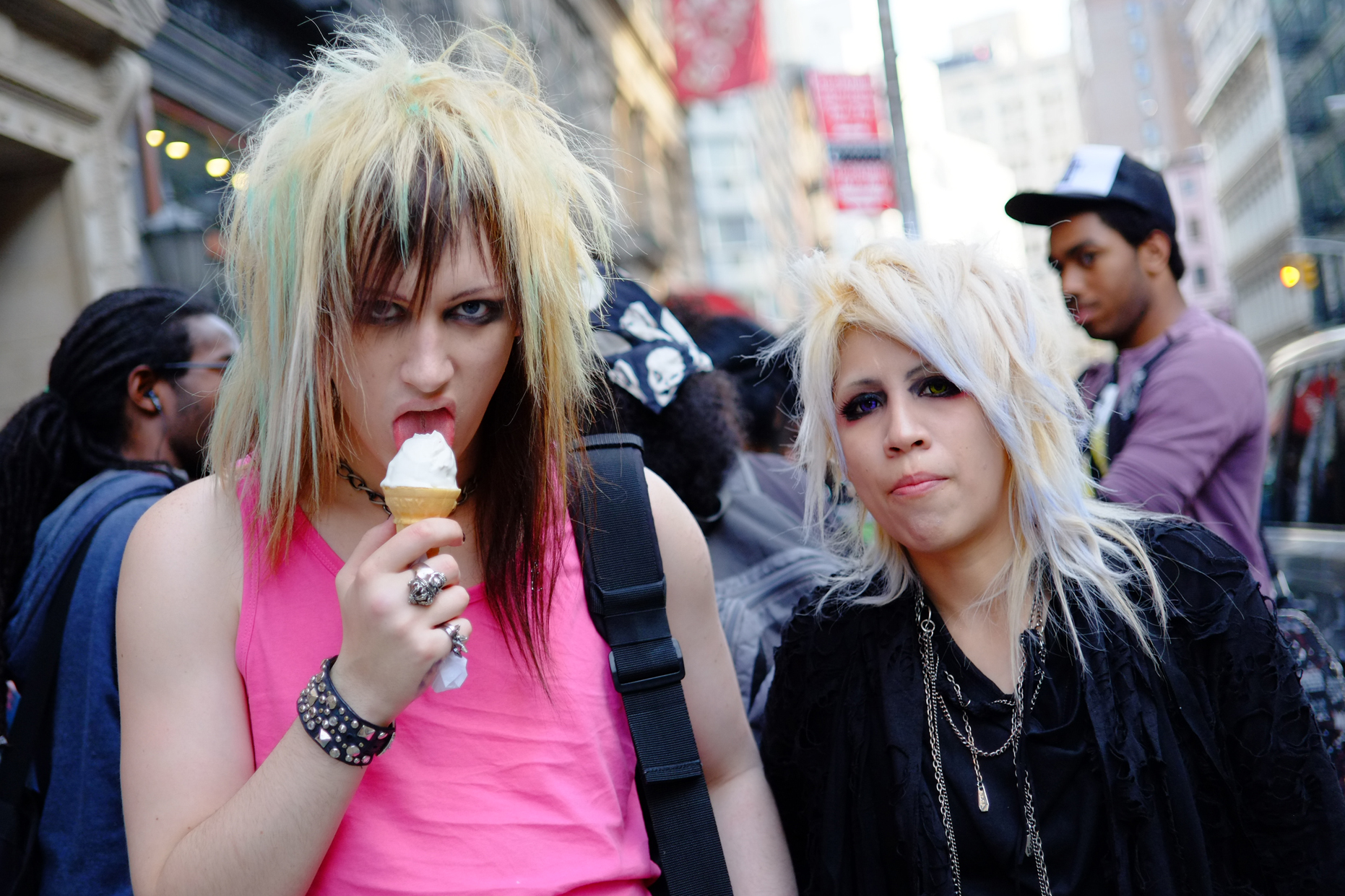
After I made this image I really found the figure in the baseball cap off to the right annoying visually. I shot it at 1.8 and figured what if I had made that image with the Fujifilm lens that is a 2/3 stop faster. Would I have gotten more pleasing bokeh and thus have “blurred out” the unwanted figure?

NYWraiths

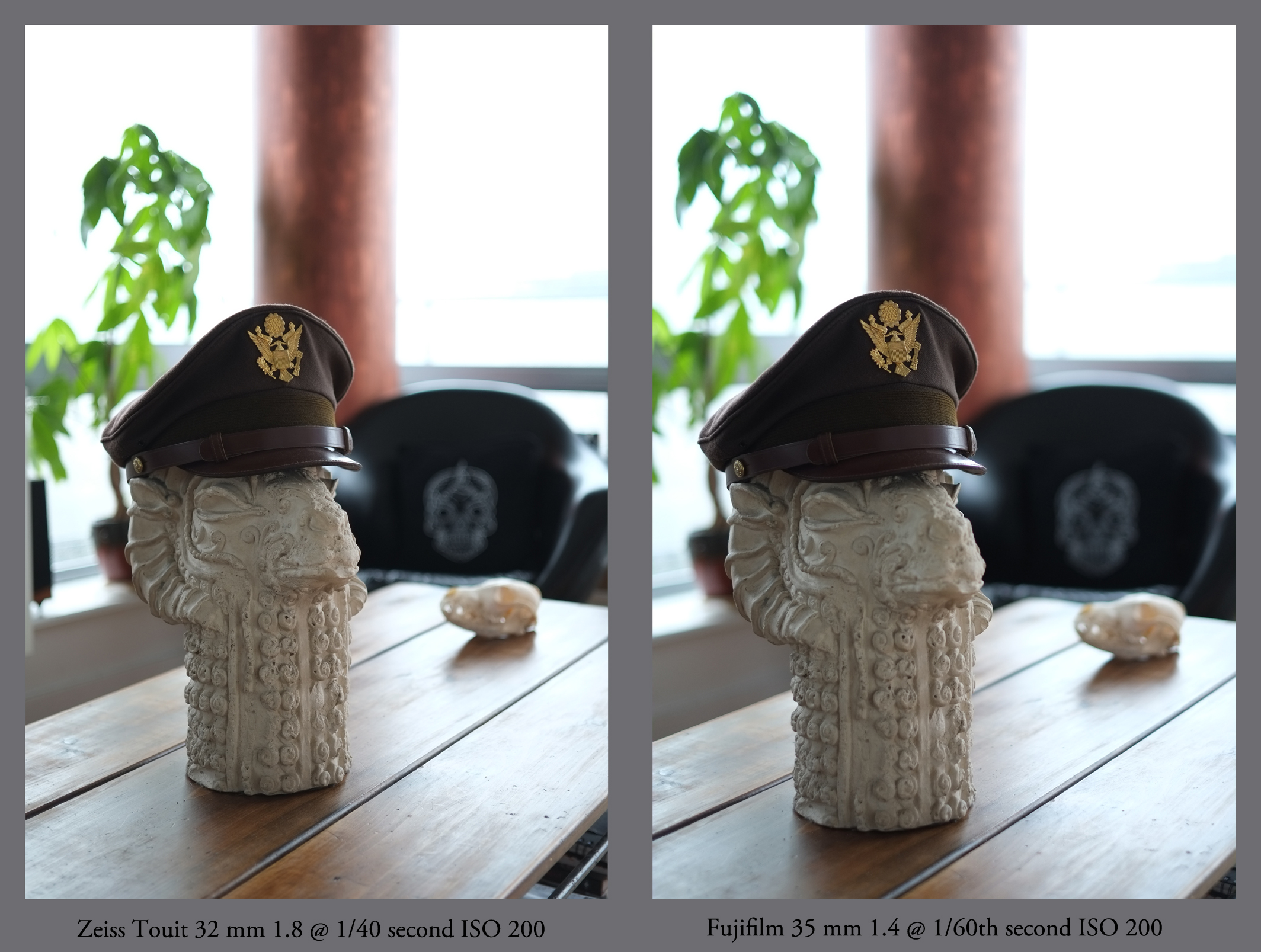
So I conducted a test by putting the camera on my trusty Oben carbon fiber tripod and shooting this still life in my apartment between the two lenses. I have uploaded a very large image so feel free to pixel peep. Also please feel free to comment which of the two lenses produced the look you like the most. Me, I have to say I love more blur that is attainable with the Fujifilm 35 1.4, but the 9 blade aperture on the Zeiss certainly does have a smooth and pleasant blur. Notice the harder edges of the green plant in the back ground as well as the embroidered skull. I do like the slightly wider field of view on the 32 mm. I also notice a color shift between the two lenses. I had a Lastolite 30″ 5 in 1 silver gold reflector off to camera right acting as a warm fill. The Fujifilm 35 mm seemed to

lens_comparison

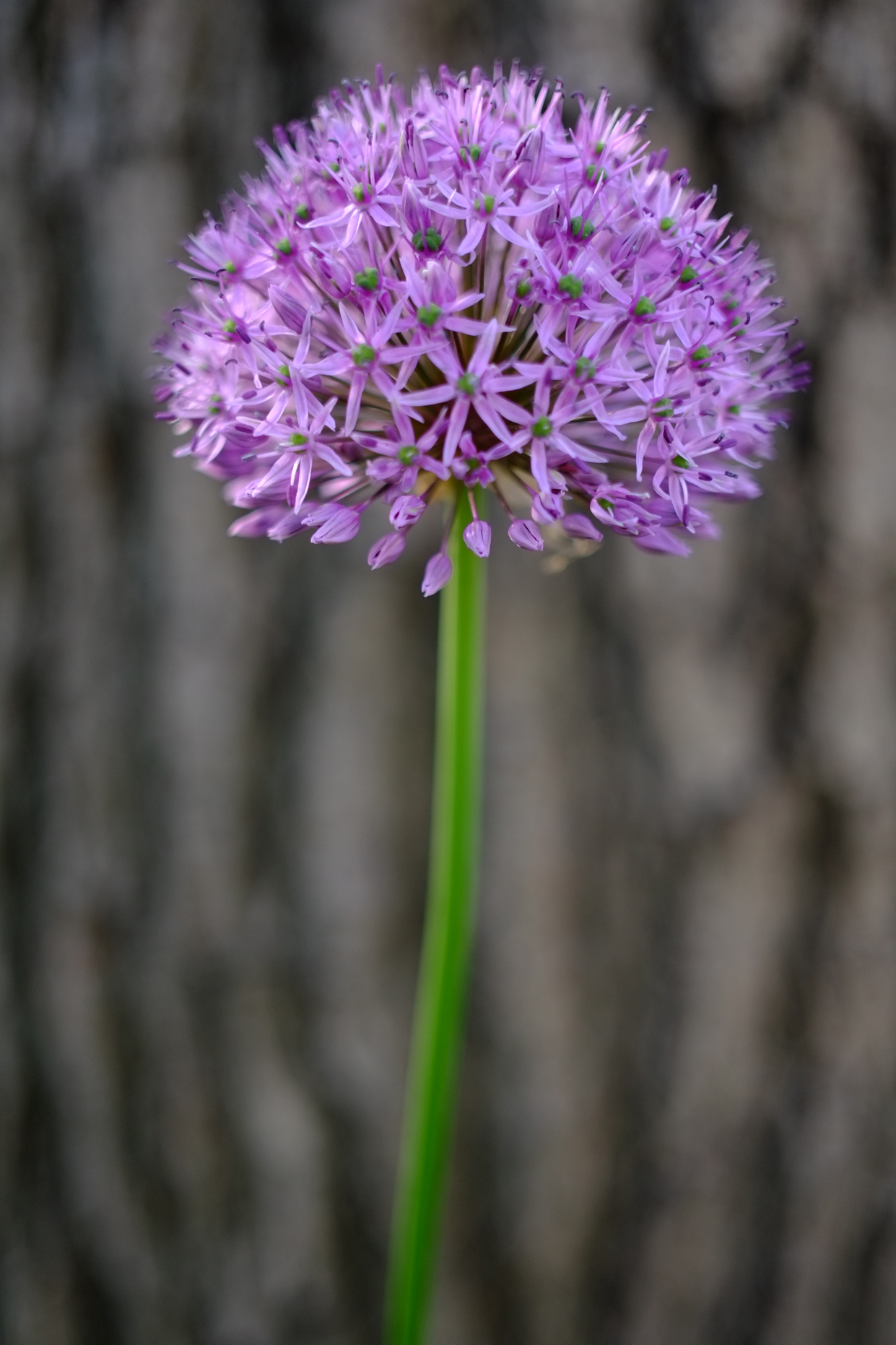
Macro is superb with-out really being a macro lens. The 32 mm can focus down to 1.21 feet. Please consider the background of a macro shot, I think it is easy to get all caught up in the subject and then make a mistake in the background. I saw this purple flower in front of the pattern like bark of the tree and really concentrated on filling the background with the texture of the bark and being careful to not get anything but the tree in the background. The flower was easy, but man, look at that soft out of focus mottling of the bark. Yum.

Great rendition in macro range.

Great rendition in macro range.

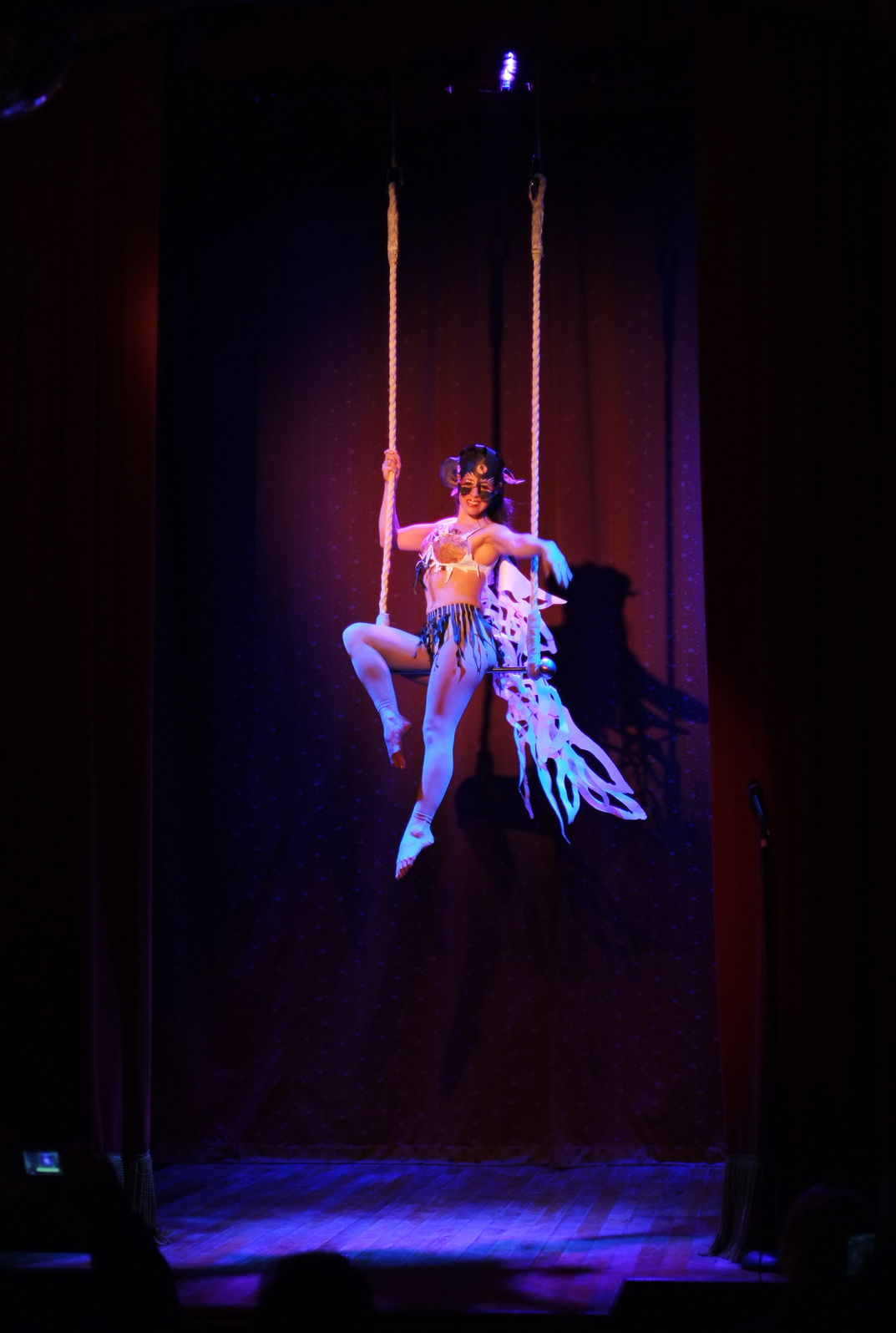
The 1.8 rocks in low light when combined with the amazing low light capability of the Xpro1.

Paper Bulesque by Mat Hill. Dancer- Rosabelle Selavy. 32 mm f1.8 - 1/50 sec. ISO 1000 Center Meter, Tungsten

Paper Bulesque by Mat Hill. Dancer- Rosabelle Selavy. 32 mm f1.8 – 1/50 sec. ISO 1000 Center Meter, Tungsten

Thus far I’m impressed with the lenses. They do cost about 1/3 more than the all ready fairly expensive Fujifilm X lenses. Are they worth it? Stay tuned for part two, where we will see more of the 12 mm lens and some low light tests. Please don’t forget to add your comments on the 35 mm Fuji vs. the 32 mm Zeiss comparison.

~David

Ricoh GR Digital IV: Thoughts, Trials, and Tests. But No Tribulations.

Dog is a much better skater than I.

Dog is a much better skater than I.

Ricoh and DPA (Digital Photo Academy) surprised me with a Ricoh GR Digital recently. My good buddy Gabe Biderman has always be a devotee and I knew it was a serious camera, but I never really gave it much thought. However, when UPS drops off a jewel such as the GR Digital IV at your doorstep, it merits giving it a shot or two, or three.

The original Film GR and the Digital GR D side by side. Brothers or Lovers?

The original Film GR and the Digital GR D side by side. Brothers or Lovers?

For those unfamiliar with this camera it is based on the Ricoh GR1, a high end point and shoot from 1996. The camera quickly achieved a cult like following, and pretty much was about as good as it got for its size. When the digital age arrived the high end point and shoot film cams pretty much went the way of the dodo bird and Ricoh took a big hit. In the US, they retreated from the camera market and had poor distribution. In 2005 they introduced the GR Digital, an updated yet surprisingly similar looking camera to its analog father. Once again, it attained a almost cult like following, but due to distribution issues, was still a bit of a hassle to find in the USA. A few years ago Ricoh decided that it was time to return to the US market enforce and attract more dealers thus making their cameras easier to find and purchase. This year, Ricoh attained Pentax corporation and this Japanese power horse is once again fully invested in world wide photography. The GR Digital is now in its fourth version, and a newer one is actually going to start shipping very soon. Enough history, lets get to the camera.

Ruinism in pointtilism

Ruinism in Pointillism

The Ricoh GR Digital 4 is a small compact digital point and shoot with a super sharp 28 mm f 1.9 prime lens. No zoom, and don’t even think about engaging the digital zoom feature. The Sensor is relatively small by todays standards at 1.7″ and 10 megapixel, however I wouldn’t be too concerned with that, considering the camera is actually very small. If the sensor was larger, so would the camera and you could forget about putting it in a jean or shirt pocket. After spending a day with the GR riding in my tight Levi 510 black jeans I opted to get the matching leather case and roll the cam on my belt like Batman would have it. For me, it’s either off the shoulder and I’m noticing it is there, or on the hip where I mostly don’t notice it, mostly. The GR has its own ergonomics, one designed in the mid 90’s. It’s a thin rectangle with a “bump” on the right side that acts as both grip and battery holder. The GR is housed in a magnesium shell reinforced with cushy rubber. For a cam of its size, it actually has a bit of heft, it feels well made and it is. The buttons and dials have solid clicks and are appealing in a tactile sense. When you turn the camera on the lens pops out and retracts on power off. Start up time I’d say is middling, not super fast, yet not terribly slow. From pocket to ready to shoot is about 1.2 seconds.
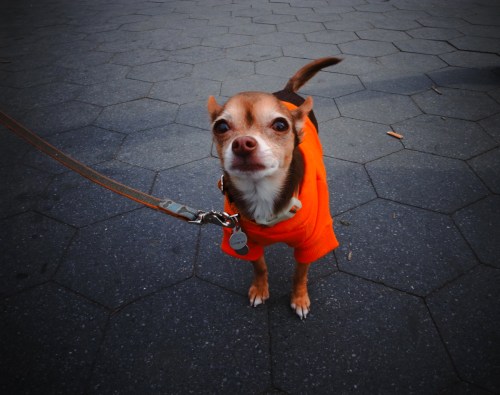
GR reacts swiftly and focuses fast close up.

GR reacts swiftly and focuses fast close up.

The camera has a bit of a sense of humor, where on a film camera you would have a sliding latch to open the film door, this camera uses a similar looking mechanism in the same place, but it pops the flash. The menu system is very MS DOS like, it’s not a pretty GUI, and you can’t assign specific wallpaper to it. There are three main menus, and they are fairly long. The camera does just about anything, from interval shooting, HDR bracketing, AE Bracketing, Raw Capture (but not RAW + Jpeg weird huh), passive and active AF (GR focuses fast and nice), a killer macro mode (1.7mm), a hot shoe, a nice bright 3″ LCD screen and to top it off with, a non-HD video mode (640) which says, “I’m a camera not a video camera thank you”. However, it does have HDMI out so go figure. Now this one little feature may just be completely unique, I have never seen anything like this before, when you turn the camera off it gives you a daily shot count. Yes, it tells you how many images in total you have made for that calender day. Its like having your Dad tell you to brush your teeth before you go sleep. I think this is a useful tool to understand how you photograph and to help you to shoot more or less by having a record.
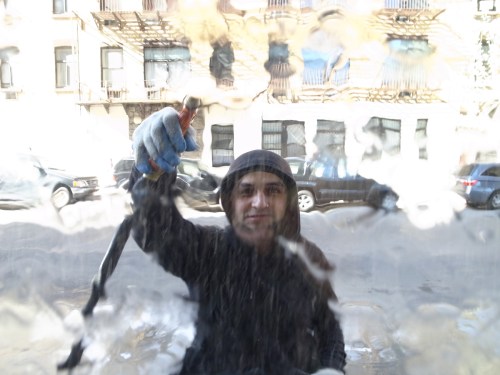
Washing Windows in Contrasty Light

Washing Windows in Contrasty Light

On the negative side, don’t shoot over 400 ISO in color. This camera is not made for low light. The ISO does go to 3200 but its got noise the size of square marbles. The camera has all the modes you would expect such as Shift P, S, M and my favorite, A mode or Aperture priority. However since the sensor is so small, the camera inherently has a ton of depth of field, so no bukeh for you and a top aperture of F 9.0. I could also site as a negative, the price. The camera is not inexpensive at $550.00, but I must also recall my fathers favorite motto, “Good things are not cheap-cheap things are not good”. This is not a casual camera, it is a deliberate photographers tool. It’s not available in blue nor red, its matt black and business.
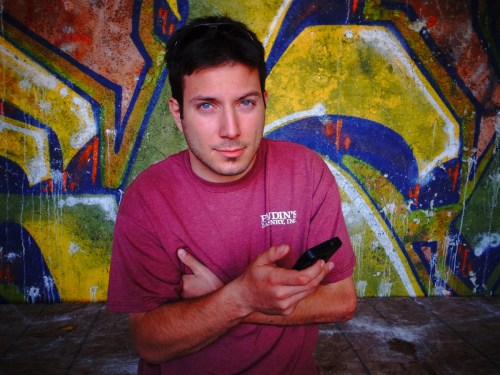
Look into those eyes... love the camera's 28 mm lens for an enviriomental portrait

Look into those eyes… love the camera’s 28 mm lens for an environmental portrait

The camera has 3 custom modes called MY1, MY2 and MY3. You can access these on the top master control. The menu system allows for control of many variables, from exposure modes, focus modes, style modes, ISO, file settings and such. The idea is to really master these three shooting preferences and toggle easily between them. I especially like the film sim modes, which include a nice submenu to customize the style. Say if you were to choose B&W, you can adjust the contrast, sharpness (remember that 28 mm 1.9 prime lens?…Oh yea its sharp), vignette strength, vividness (why not)?, and a very tightly adjusted sepia tone. If you follow my blog, you know that I am a huge fan of in camera stylistic choices, and the GR in this case not only gives them to you, it makes it easy to save them and use them when you need that particular look. I took most of my test image in Positive Film, a color saturated film similar to Fujifilm Provia. I also chose to use a heavy vignette, and I upped the saturation and contrast. This was MY3, MY1 was a contrasty sharp B&W, MY 2 P with a boost of vivid. The camera came with a letter from Pentax’s Jim Malcolm and in it, he wrote extensively describing what he had assigned his three “MY” settings. Asking your MY is akin to asking what film you have loaded. Sweet.
MY1: B&W Contrast & Sharpness Boost

MY1: B&W Contrast & Sharpness Boost

MY 2: Vivid, P Mode

MY 2: Vivid, P Mode

MY 3: Positive Film, boost Vivid, Sharpness, and light boost of Contrast.Vignetting High. P Mode

MY 3: Positive Film, boost Vivid, Sharpness, and light boost of Contrast.Vignetting High. P Mode

Which of MY settings do you prefer? Please comment.

Using these very specific style choices on Jpeg images will enhance the final result of both your photographic body of work and aid you in fine tuning  your own photographic voice.
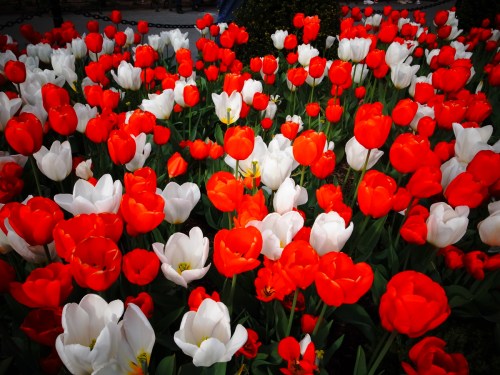
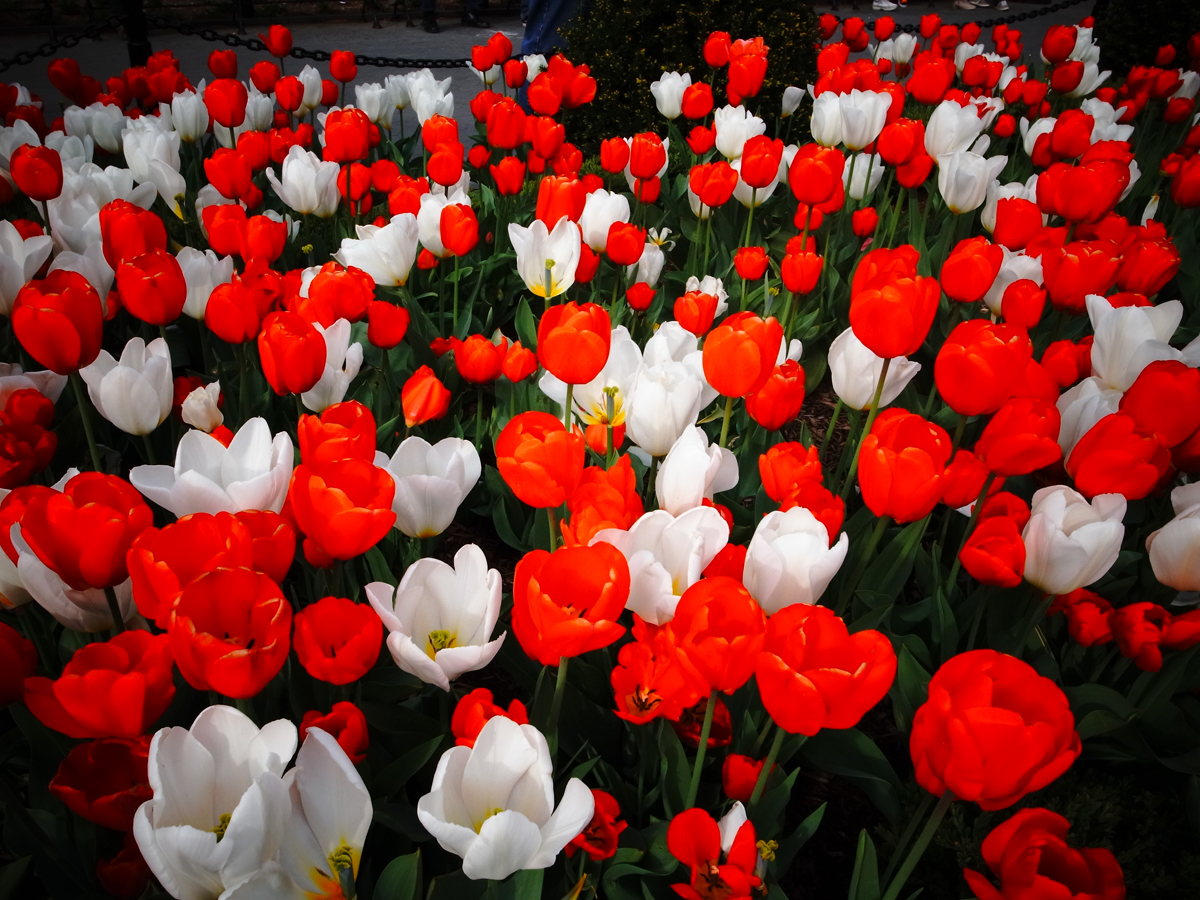
MY 3 Tulips on acid shot

MY 3 Tulips on acid shot

The camera considering its price point is very oddly placed and if I was to be asked, would I spend $550 on this camera I would have to look deep into my cam-soul to answer that yes. It is a solid performing, prime lens shooting, well built, advanced camera. However, there are others in the market similar to the GR and dare I say better? One comes to mind, the Sony X100 which features a great 1″ 20 mp sensor for a hundred bucks more. However, there is still something very attractive to the GR. It might be the grip, or the familiar look to the design, or perhaps its just little nuances, such as when you turn the camera off, it gives you a shot count for that calendar day.  That last little tidbit has big consequences, I believe the more you shoot, the better a photographer you get. You will see compositions emerge from the tangle of complicated backgrounds. Subjects will appear more interesting if you master photography and one sure way to fast track to master is shoot a lot. How much is a lot? Well, this camera will tell you every darn time you turn it off. I like that. The GR digital is a photographers camera. A very particular photographer.

The camera makes cool images, the meter rocks, and the lens is a performer.

The camera makes cool images, the meter rocks, and the lens is a performer.

UPDATE 9/24/2013 :

this image was updated into a short post about the camera here.
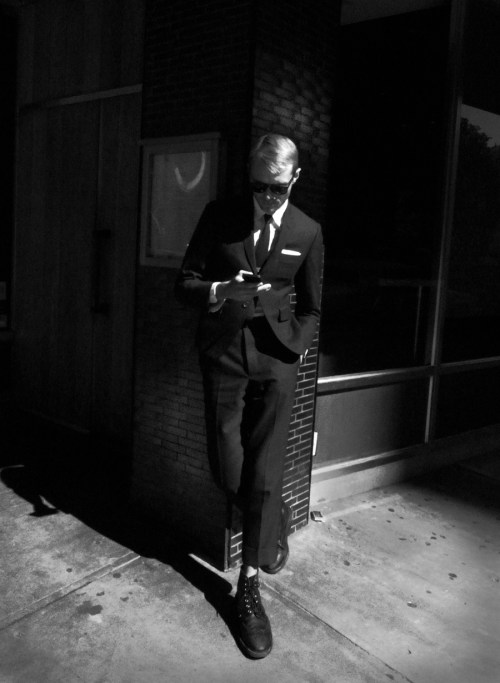
Message Man in Chelsea

The Suspect Story: Part 1, A Un-Published Suspect Photography interview with Chris Gampat of the Phoblographer

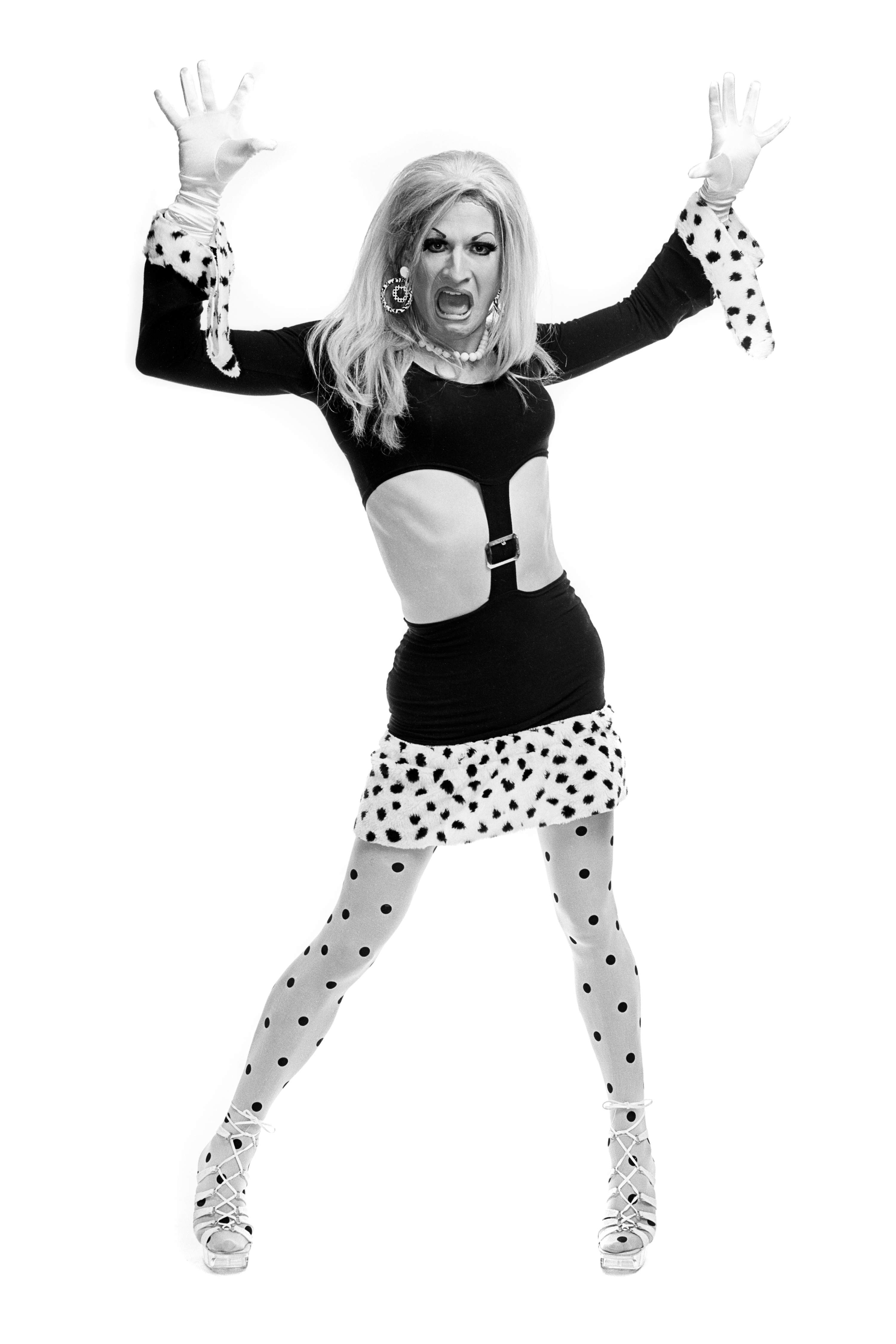
Io Electro from the Seattle Suspects series Contax RX 60 2.8 Macro Planar 1/60 sec f 11 Kodak Techpan 25 iso

A couple of years ago, Chris Gampat, chief editor of the Phoblographer asked me a few questions about my Seattle Suspects project. For some reason, the questions and answers were never published, and recently while cleaning up some hard drives, I found the piece. This will be the first part in a three  part series about my most photographically productive time, the Seattle years.

Tell us about how you came up with the name, “Seattle Suspects.”

Suspect Photography was the name of my gallery/studio in Seattle. We filled a niche in the photography community of Seattle by showcasing emerging and mid-career photographers that had an edge, but couldn’t find a home in the more established galleries such as Benham and Gail Gibson gallery. We had a great location, in Pioneer Square and I coined a term, Maverick Gallery. These were artist owned galleries that were prevalent in the bohemian inhabited old industrial and manufacturing buildings that made up Pioneer Square.
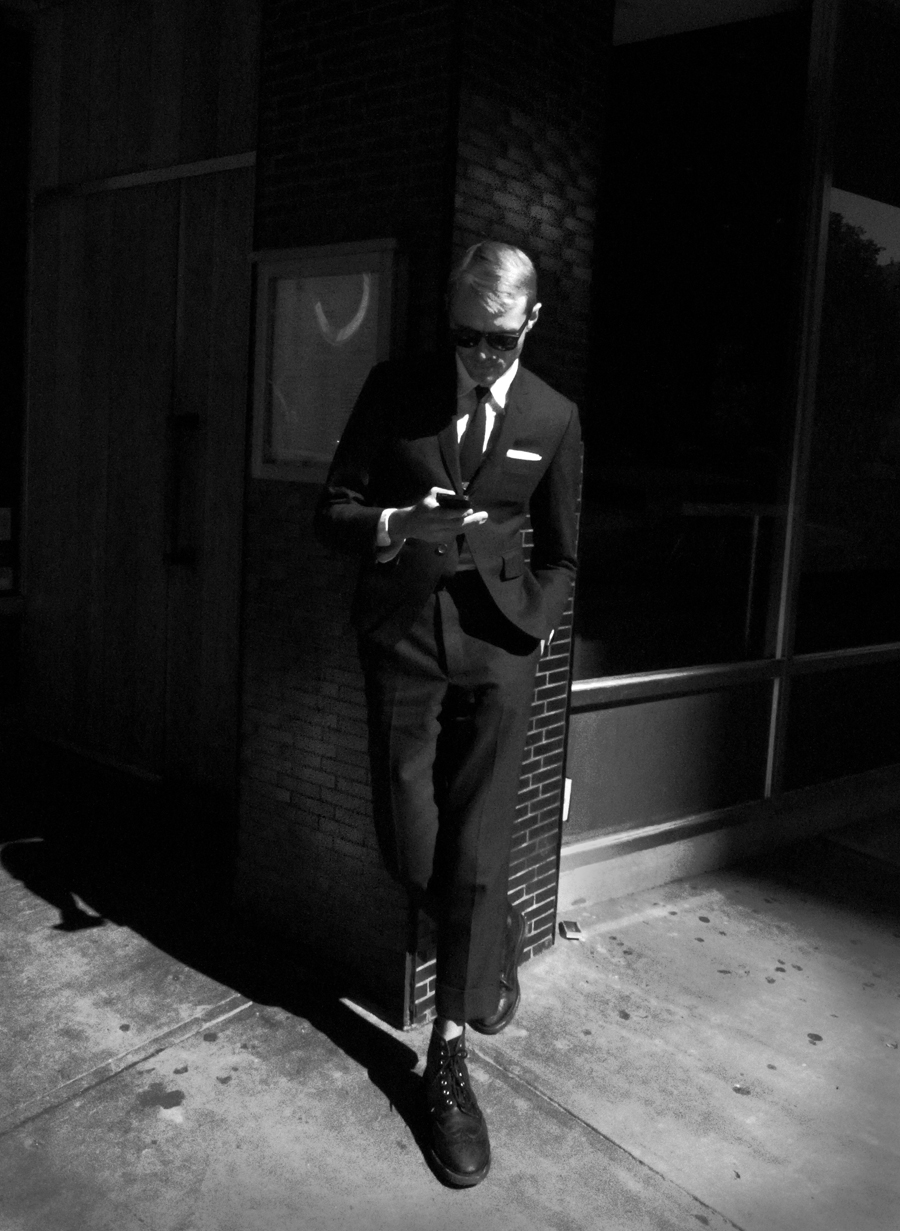
Suspect Photography was named after an experience I had where I “suspected” anything could exist in an instance of chance. When you look at an uncertain future, you can “suspect” anything, because anything is possible. Suspect Photography is both pragmatic and optimistic with a dash of fanciful promise.

Since the subjects were a selection of Goths, Fetish heads, Drag Queens, Artists, Poets, Musicians, and other assorted wayward souls I had a small difficulty in coming up with a name for the project. So I looked for the common denominator, which was they all came to Suspect Photography to be photographed, and Suspect Photography was in Seattle, hence the name Seattle Suspects. On a side note, everyone I ran the name by loved the title, but Joyce Tenneson. She is the undisputed queen of photography books and she absolutely detested it! I had to go with my gut, and keep the name in spite of Joyce’s opinion.

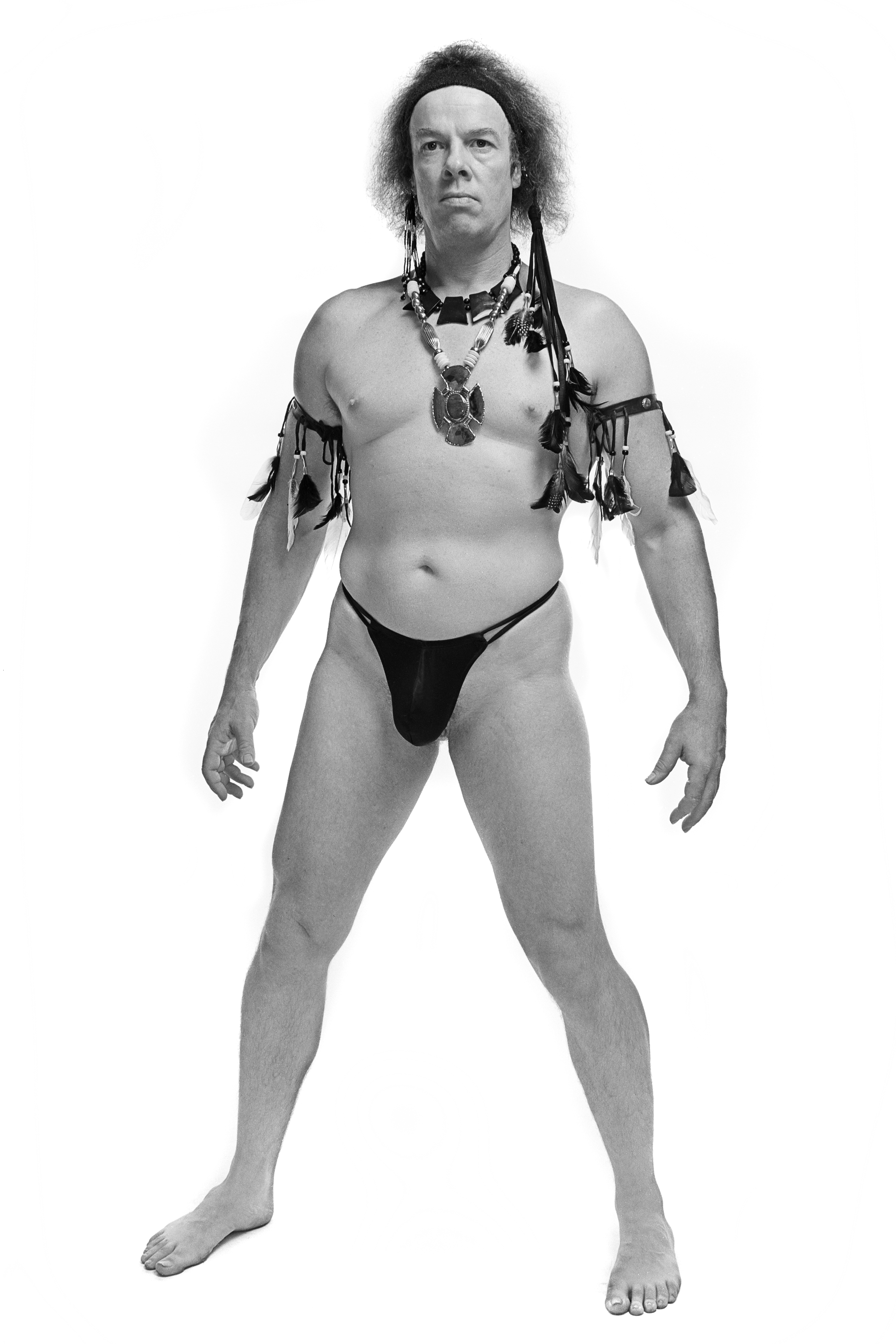
Nearly Naked Man from the Seattle Suspects. Contax RX 60mm 2.8 1/60 sec F11 Kodak Tech Pan 25 iso

 What was working with these people like for you?

Like hanging out with friends that I wanted to become closer to. I love people who are on the edge, I love freaks. I love people who take being called a freak as a compliment.

Susan from Club F*uck Seattle Suspect Series Contax RX 60 2.8 Macro Planar 1/60 sec F 11

 How did you get your subjects to pose the way that they did?

I encourage them to take over the studio sounds system. If you didn’t bring a cd over, I’d drop in one of mine, something that local clubs would be playing. It was the mid 90’s so NIN, Skinny Puppy, Dead Can Dance would suffice fine. I’d let them dance for me and coach them to stop when they got into an interesting pose. I would look for positions that were demonstrative of the subject, ones that encouraged positive and negative space with expressive reaching of the arms or straddled legs.

Sparks from the Seattle Suspects series Contax RX 35-70 vario-sonnar 1/60 sec F 11 Kodak Techpan 25 iso

Do you feel that chemistry between a photographer and the subject is vital to creating great photos? If so, why?

Absolutely. Emotions will be caught on film, so if they don’t trust you, then your images will reflect that. They wont give you their all. I likened the underground of Seattle to a court, and I was the court photographer. I photographed the kings and queens of the scene and they trusted my eye to capture this moment in their life. This gave me access to the rest of the courtesans. I have to also say at this point that I was one of them. I wasn’t an outsider looking in, I was an insider of the scene. I partied at the after hour speakeasies where I recruited the Suspects, I promoted at the clubs (Catwalk and Chapel Periolous) and I ran a gallery that featured edgy art. I also shot Fantasy Unlimited ad campaigns that gave me street cred. The Suspect’s trusted me with themselves, and I respected them.

Dalia from the Seattle Suspects series. Contax RX 60 2.8 Macro Planar 1/60 sec f 11 Kodak Techpan 25 iso

How did you inspire yourself?

How could I not? Look closely at the suspects, they are so complicated and strangely beautiful, a blend of darkly serious and deathly whimsical that I always was honored these subjects would pose before my lenses. What we photograph will echo in eternity, I was inspired to ensure their voices and style would not fade into obscurity. The suspects of mid 1990’s Seattle are fully documented and that is inspiration incarnate.

Malinda from the Seattle Suspects series Contax RX 60 2.8 Macro Planar 1/60 sec f 11 Kodak Techpan 25 iso

Tell us about how you lit your subjects to get the look that you wanted.

I approach studio lighting like two puzzles to solve. First, you must light the background. I would hit the background with two While Lighting “oil cans” fitted with barn doors to keep the spill from hitting the subject in the foreground. I would try to even the light out so the flash would give F11 across the entire backdrop. To light the subject I would use a White Lighting Ultra 1800 in a large Photoflex soft box as a main light, pretty much hitting the subject’s torso at f 11 but the trick was to mount the light on a Bogen Super Boom. Booming the box lets me use the light like a great soft skylight to bathe the subject that I can tweak and aim just so. For fill light I would use an Ultra 600 in Photoflex Stripdome to achieve F 8 1/2 output. I recommend playing with your lights and testing them so you can find the look that matches the subjects and the process your using.

Thank you Chris for asking me those questions, and thank you to all the fabulous freaks of mid 90’s Seattle. You set me free to find myself.

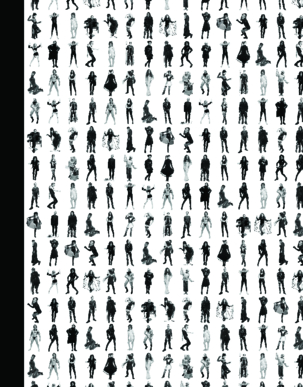
Seattle Suspects book published in 2009 with Blurb and available on the Blurb market place or with a print on the Seattle Suspects site.

Please visit the Seattle Suspects main site to view the book and more suspects, and whilst your at it, give a “like” to the Suspects fan page.

~David

Finding Photographic Style In Italy

Vespa rider in Milan

Achieving photographic style and understanding the traits that make imagery posses its own distinguishable idiom that resonates with the photographers voice is a daunting and difficult artistic undertaking. As each devotee explores photography and builds their visual vocabulary inevitably certain photographers will rise to the top. Highly crafted and odd works by Joel Peter Witkin, Perfect landscapes of Ansel Adams, snippets of time expertly caught by Bresson, they all share their own unique photographic style that differentiates and identifies the photographer to the photograph. There are many more of course, but those three come to mind as evoking strong, and yet vastly different styles. I’ll invite you later to watch a two hour lecture where I delve deeply into the anatomy of photographic style but this moment I want  to show off an exercise if you will, a self assignment that I give myself every summer for the past decade.

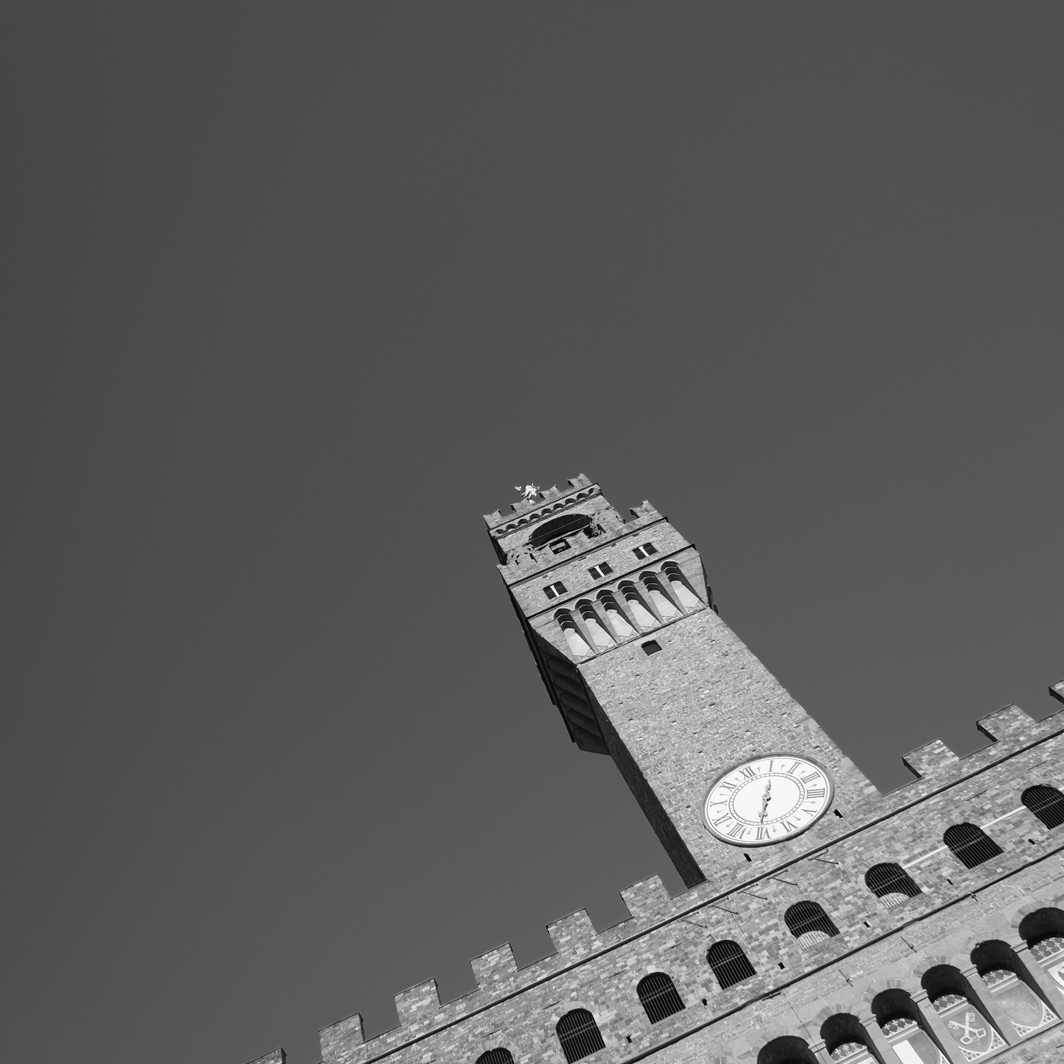
Palazzo Vecchio

Palazzo bucolic, Florence

Every year my wife Barbara and I spend our vacation in Tuscany. We have this wonderful home that was Barbara’s grandmothers and has been in her family ever since. The back room is used as a dark room, and there is even a “camera ready room” for coating cyanotypes, loading film holders, and organizing gear for shoots. This photo “mini” project starts in Milan, and then migrates to a small village below Cortona. For a decade now I have spent weeks of my summer in this bucolic medieval countryside and the narrow streets of hill top towns.  I have shot sun flowers (warning: an August trip is a bit late for sun flowers, if you are into shooting them, then I suggest a early July visit), cipressi trees, castles, farm houses, and graveyards. In many ways it’s a photographic paradise and the hordes of tourists with all manner of cameras will surely stop and shoot these unique characteristics.

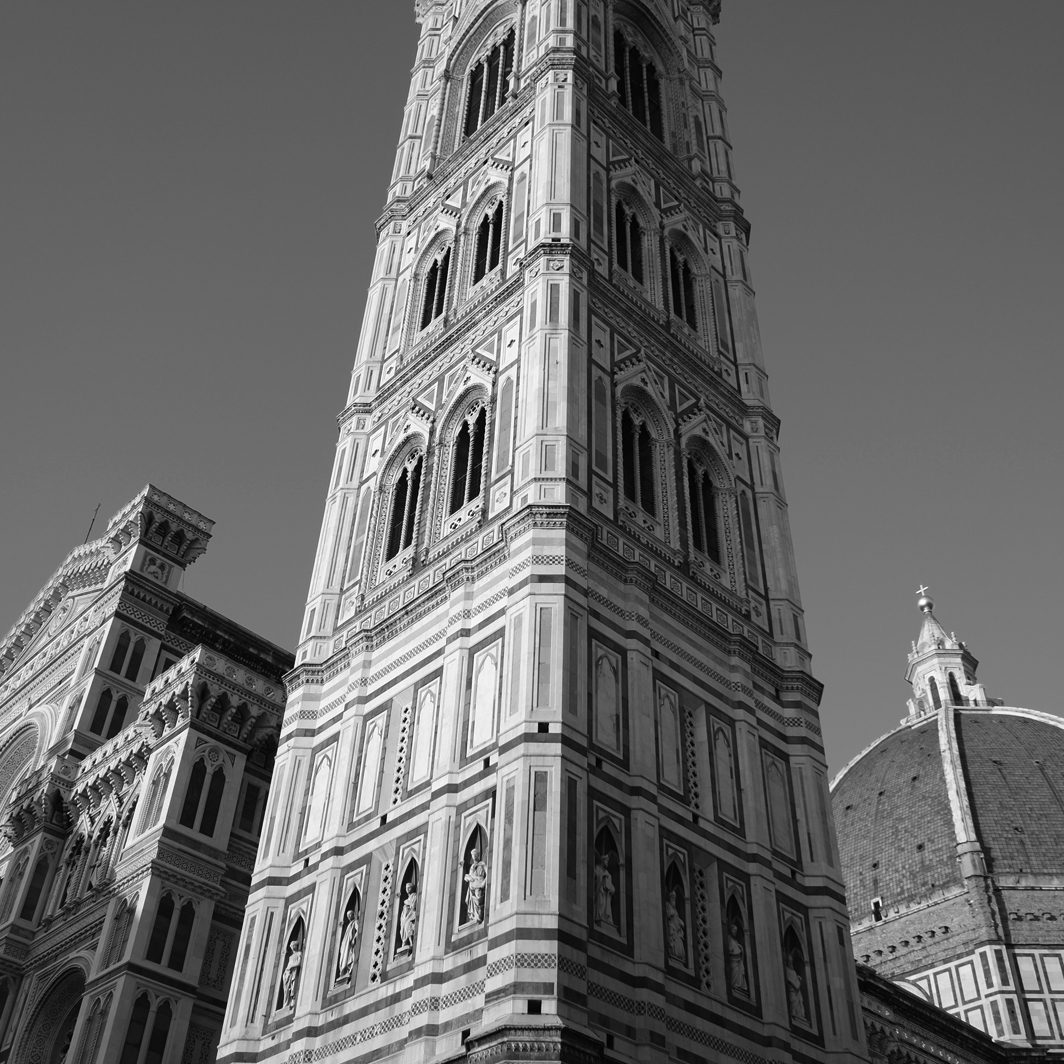
Florence Duomo

Florence Duomo or The Basilica di Santa Maria del Fiore aka Florence Duomo

I am interested in having my vision standing out from the crowd. I seek to create images that capture the subject, yet show it in a way that is uncommon and unique. I have to look deeply into my photographic skill set, decimate the technique, subject matter, capture, post process and imagine a way to complete the project with a single voice. It’s hard work and for me, I had to really delve deeply and think about it.

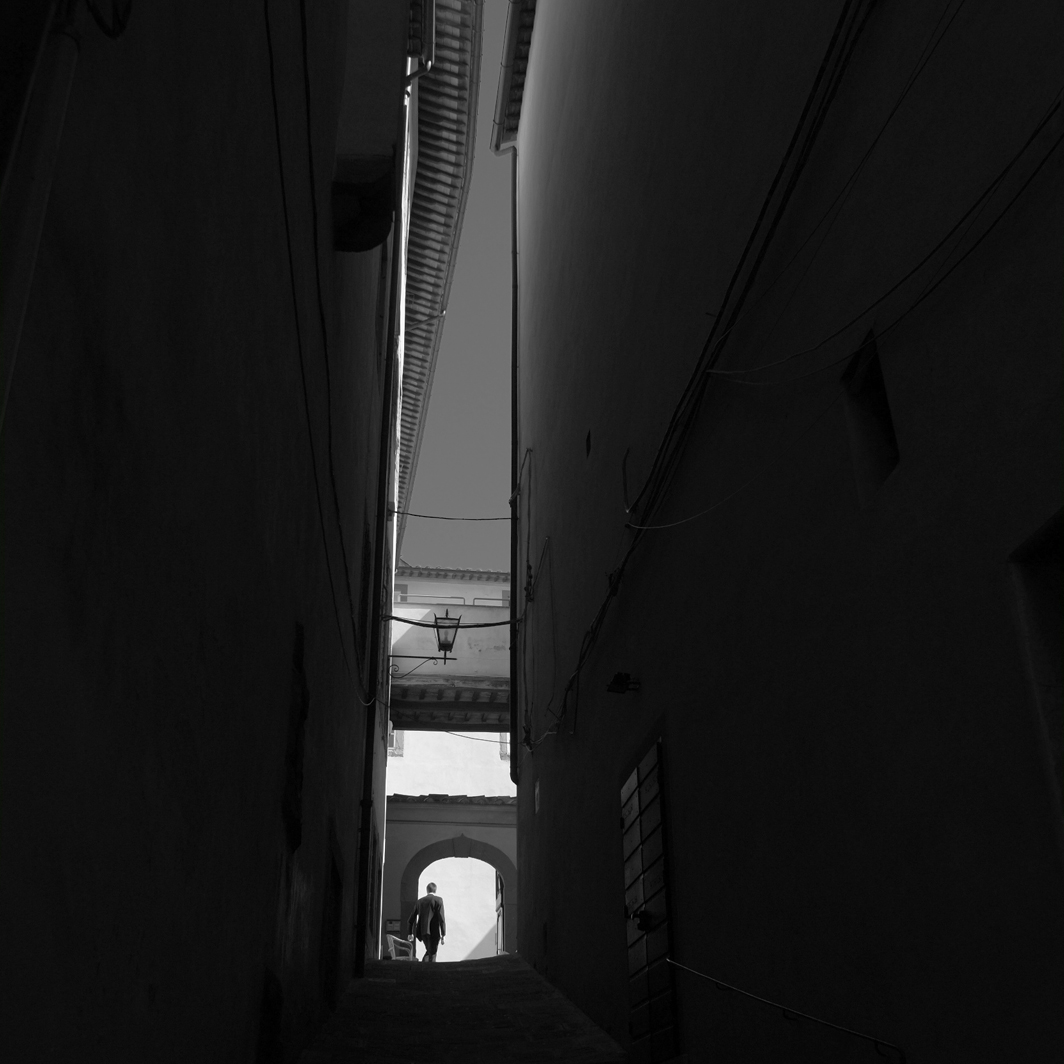
vicolo in Cortona

VIcolo in Cortona

In the past, I have worked on projects such as “Italy Looking Up” where I only shot aiming the camera upwards. No straight on shooting what so ever. I have shot “Adams” style large formate with my Deardorff 8×10, Lensbaby and 35 mm film, Toy Camera with a Black Bird Fly, Nikon Rangefinder with Ilford XP2, and Hasselblad 2 1/4 color print. The project “Instant Italy” was captured using Fujifilm Instax cameras exclusively. By creating sever restrictions on gear you can emerge with a unique style, simply because your confined to something that allows less visual options.

Cortona

Cortona

This year I resolved to shoot with my new and trusty Fujifilm X Pro 1. I would get a chance to explore the nuances of the 35 mm 1.4 and of course, old faithful, the 18 mm 2.0. On the road to photographic style, shooting with primes or limited focal lengths add a common visual denominator, that of the angel of view. No sloppy zooming back and forth here… its either wide or normal view. If I can’t get close to a detail, then its going to be small in the frame.

Galleria Vittorio Emanuele II, Milan

I also decided to make a dramatic choice that would really effect the way I composed my images, I set the camera aspect ratio to 1:1. I’d be working in square format, like my beloved red Hassy. I would also assign a B &W or monochrome film simulation mode. This also means I would be capturing less information on each picture I took. The files went from being 45.7 megabytes to 15.2 megabytes under these setting parameters. I know, I could shoot Raw and have both the big fat files and also the smaller “assignment style” files, but I like to live on the photographic edge.

Either I make this work or I have nothing. I love drama, so the B&W film mode I used most often was the B&W Red filter.

Snack cart, Milan

Snack cart, Milan

It’s not easy to shoot this way, by not falling back on Raw + Jpeg capture you are showing a level of conviction on shooting using a specific technique. Square and B&W however is an interesting choice, because a perfect square is geometrically pleasing and lets face it, B&W is cool like the Fonzie.

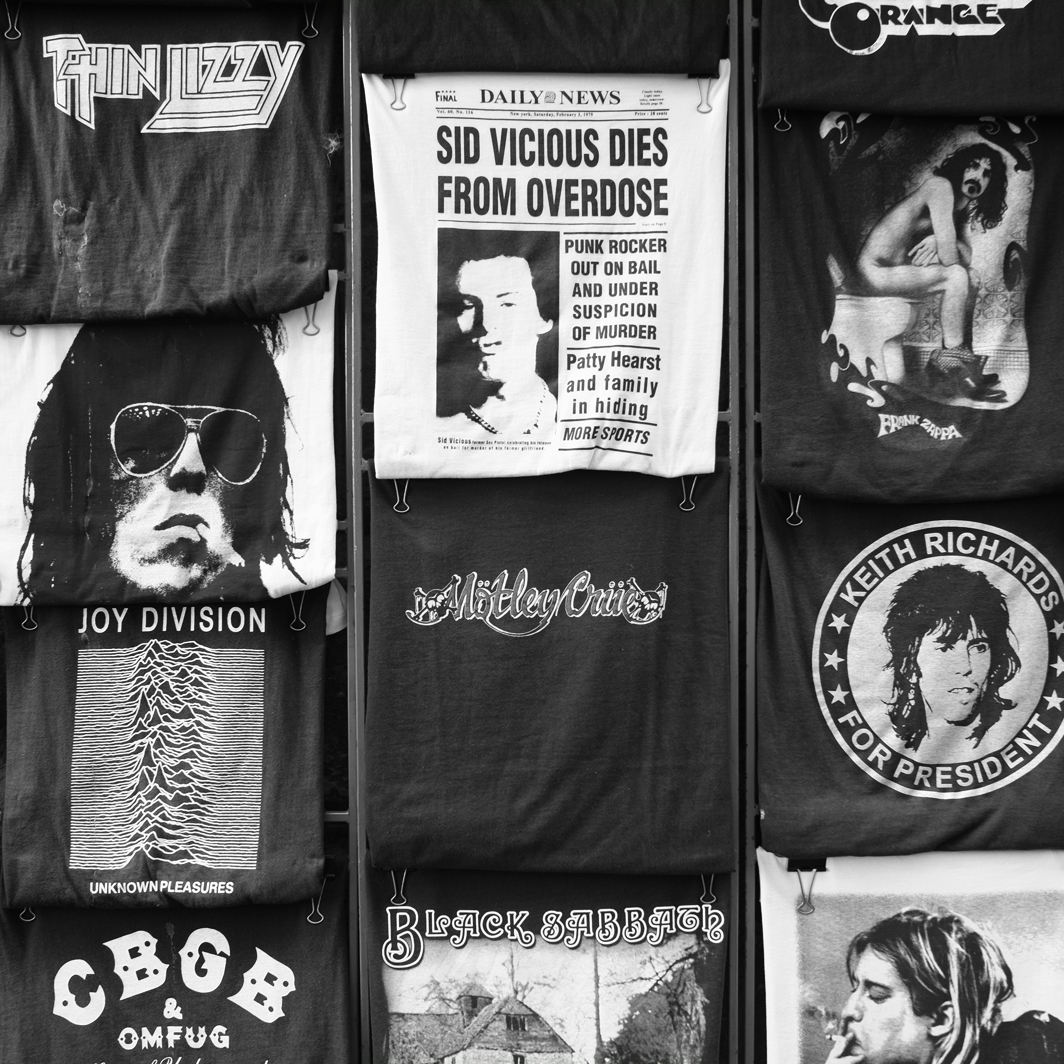
Rock and Roll

Rock and Roll

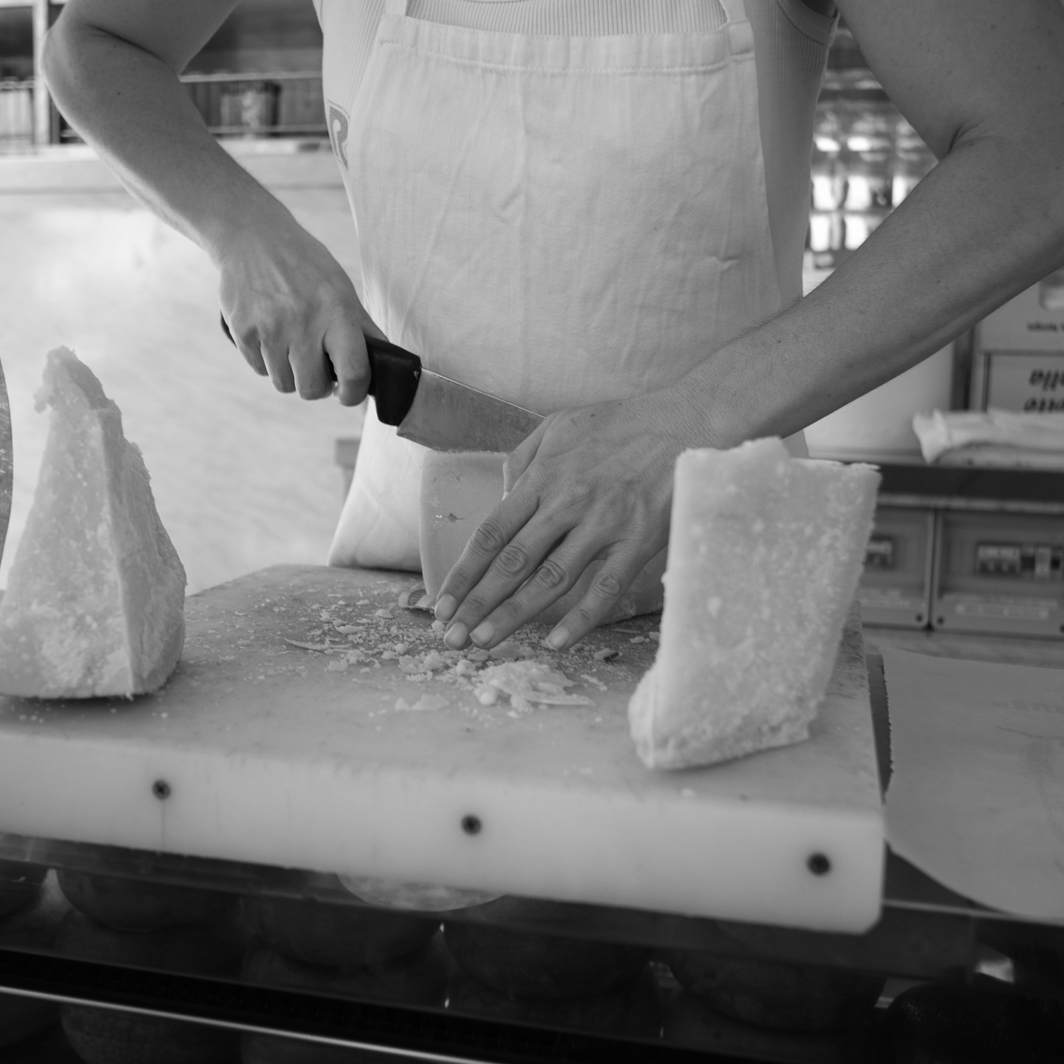
Time was limited, and I had other projects also on the burner. I thought about how the technique could apply to more specific subject matter, like hands, or people. In Camucia, on Thursday mornings the market attracts lots of genuine local flavor. In particular is a vendor who I call Senor Porchetta. His porchetta wagon always has a long line of bustling Tuscans getting their porchetta fill. He is jovial, equally good with pig or knife and knows his fegatini like Silvio Berlusconi knows a 17 year old.

Senor Porchetta

Senor Porchetta

Hands in the Cortona Market

Hands in the Cortona Market

I can’t recall the name of the photographer who said, “if you’re not sure, get closer”, but they were was certainly on to something. Engage your macro, and come in close. I love the macro on the 18 f2.0 is 7.09″ (18 cm) as compared to the 35 f1.4 which is 11.02″ (28 cm), the 18 lets you get in a little closer, but beware, the lens takes in a lot of the scene.

Detail of locks on the Ponte Vechio, Florence. Shot with 18mm f2.0.

Moms sewing kit in the Casa Tuscana.

Mom’s sewing kit in the Casa Tuscana, 18mm f2.0

Fujifilm also has a macro 60mm 2.4. I’ve yet to test this one, but as I continue to work with the 35 1.4 I’m sure to add it to the arsenal later in the year.

35mm 1.4 with a 200% crop

If you have read this far and are liking these images and wish to develop your style or just hear more ranting from me on style, here is a link to the 2 hour program on Youtube, “Finding Photographic Style” recorded in the B&H Event Space this year.

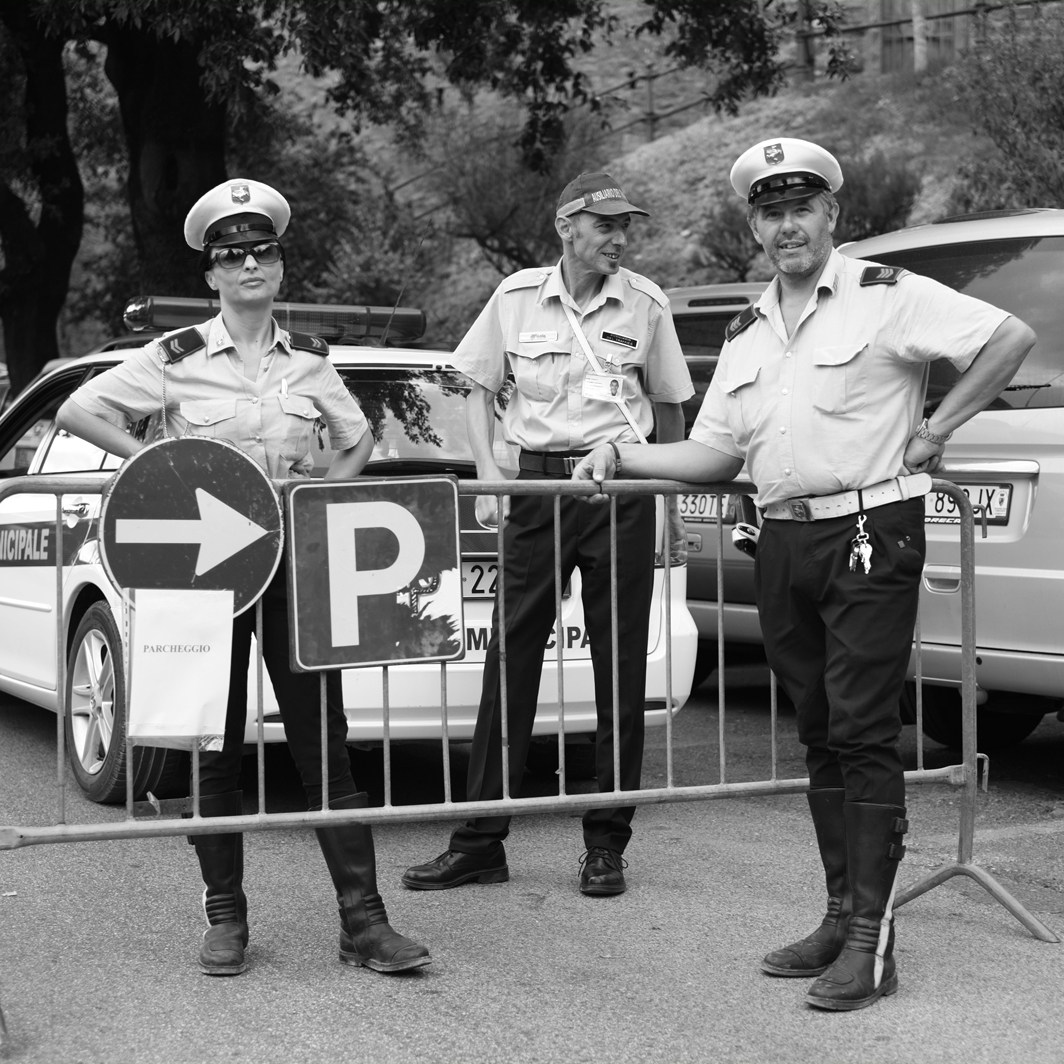
Cortona Cops

Cortona Cops

I also brought my Speed Graphic 4×5 on this trip loaded with Fujifilm Acros to do some cyanotype work. But thats a post for another day.

Ciao!

~David George Brommer