Suspect Photography

words and images from david george brommer

DSLR is Dead, Long live DSLR
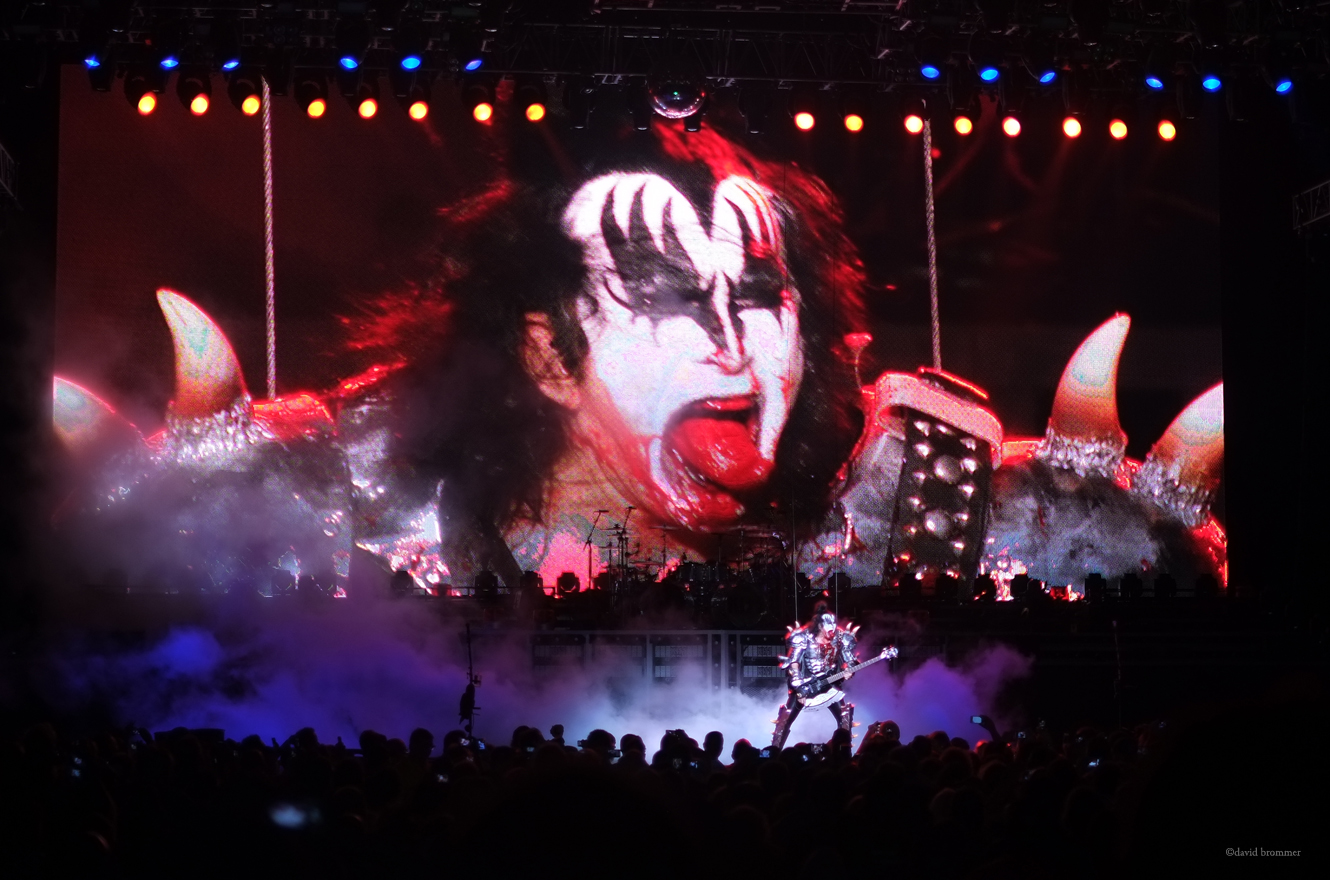
Gene Simmons of Kiss, still spewing blood after 40 years.

The grumblings of this rumor started with my friend Brandon a few weeks ago. We’re both “photo industry” guys and we are privy to charts, numbers and insider information (of course this is photo industry insider info so we wont be chillin’ with Bernie Maddox) about cameras and the technology that drives them. In the past few days after the big Photokina show (photo industry trade show in Europe where half the new camera’s of the year are announced) a flurry of “Mirrorless” cams were announced. Also back in January 2012, photo blogger and all around good guy, Trey Ratcliffe posted “DSLRS are a dying Breed”. Seems a lot of attention is being mentioned online about the future of camera gear and it seems the poor old DSLR is getting it’s mirrored rump slapped.  However, I disagree whole-heartedly with these predictions.  The DSLR is a vital tool in photography, it has its place and shant be replaced with a Mirrorless camera they way the DSLR made the film based SLR obsolete. On the contrary, DSLR lenses and functionality will continue to increase and become much more popular as the coveted full size sensor becomes more affordable. For a long time I believe, at least a few more generations of photographers. Many of my students ask which is better? I don’t believe one is better than the other inherently, but which is better matched to the user. I do get rankled when I hear that DSLR is dead. I think far from it. Very far, like galaxy far.

First I’m going to characterize the users, the photographers who will be making images so we can establish what they need. The first letter will act as code applying to the following lists, the strong points and weak points of DSLR vs. Mirrorless and which photographer can benefit. This is a very fair way of evaluating the merits of each class of camera.

Types of Photographer

<PP> Pro Photographer: Someone who pays for their food and shelter with money generated by photographs they make. In most cases, they will specialize in genre such as journalism, fashion, portrait, event (weddings and such), sports, commercial (companies need photos of all the time), fine art, and the a common one, the “freelancer” who will shoot just about anything to make buck. Often they may have studied photography in school and fallen in love with the medium. Pro Photographers often blur the lines teaching, lecturing, testing and taking on new projects as they present themselves. But for all, this is their primary source of income.

<AH> Advanced Hobbyist: Someone who loves photography including the images, the gear, and the simple act of clicking a shutter and capturing a slice of time and place. They can be fanatical in their pursuit of photography. They purchase the latest gear, they take photo trips and join clubs and enter photo competitions. If their 2.0 minded, they might also have a heavy online presences with social media such as Flickr, Pinterist and such. I’m also going to put the fine art photographer in this category. The emphasis is on vision with a solid versatile camera for the needs of these shooters.

<CS> The Casual Shooter: They would never call themselves a photographer, they just seek to document important people and occasions in their life. They are the vacationers, family, and friends. They are not usually artistic nor the have the inclination to really care about the finer aspects of a good photograph. They often know a good photo when they see one, but their quest is to record a slice of time and place sharply, well exposed and with a minimal of effort and size.

What cameras will this generation be shooting with? BadAss I’d say!

Merits and Shortcomings of DSLR and Mirrorless

Long lenses: Long and fast telephoto optics is plentiful for the DSLR. Since these lenses tend be long and heavy, having a larger camera on the back of them really helps your maneuver the whole package to get what you want. PP, AH

Easy Ergonomics Due to Larger Size Camera: DSLR are indeed larger, and that can help by providing more space to put buttons and larger buttons at that. The Olympus Pen cameras in particular have very small and annoying buttons to navigate menu and camera features. Having a good grip on the camera can help make it more easy to use and less fumbling. This rings so true when working with heavy fast optics. PP, AH, CS

WYSIWYG or “What you see is what you get”: No matter how good a EVF (electronic view finder) is, your still looking at pixels. Movement, gain, grain is all presented in the viewfinder if your lucky and even have one on Mirrorless cameras. That archaic mirror reflex system found on DSLRs lets you see in analog, like the world was meant to be seen. I don’t want to compose looking at a TV screen, because that’s exactly what an EVF is, a miniature TV. I’d rather look at the real world when I’m making a photograph. I want to “feel” the place and find the image. I have never been a huge fan of video games and seeing the scene gives it more tangibility.  PP, AH

Pros shoot with Pro “looking” Cameras: Show up to shoot a wedding with the same camera that Uncle Bob has will make the Bride wonder why they are paying you the big bucks. It may be superficial to make this claim, but it’s true. There are different levels that a pro photographer can attain. Lets say the highest is shooting for Vogue, you will need to project an image to have access to this type of photography, and yes, a Hassalblad H4 will impress the art directors, models, and most important, the client. Show up with a Panasonic GH3 and your going to get laughed at. PP

Value: $500 bucks gets you a really nice DSLR. $3000 gets you’re an extremely capable camera. I think that there are great values in the range of DSLR’s out there. CS

Compact and Light Weight: For the photographer who travels, this is fantastic. Hauling around lots of heavy and cumbersome gear is annoying and for some folk prohibitive. Many of my female students have small hands, and the smaller cameras fit into them better. Some of my students have been older and between arthritis and other physical reasons a smaller camera is easier on their wrists and back. The photographer Bob Krist who is known as a travel photographer likes to use these smaller cams because he is restricted often by weight limits on bush planes. CS, AH (and sometimes the PP if travel is their specialty)

Performance vs. Cost: Bigger sensors provide more information and can yield a better image. Especially if your printing large or will be cropping. Larger sensors to tend to also have a greater dynamic range to capture highlight and shadows. As of 2012, it is less expensive to purchase a DSLR with a APS-C size sensor than a comparable mirror-less camera. The Canon Rebel T3  costs $479 which is the least expensive DSLR on the market. The least expensive Mirrorless that has a APS-C size sensor, the Sony NEX 5n is $499. All the other models of Mirrorless that have APS-C size or micro 4/3 are much more expensive. CS 

Lens Selection: You can mount more lenses without adaptors onto the DSLR system. While this may be true you may never venture out to using a 1970’s vintage Canon FD, Nikon AI or maybe that hip Russian Zenit lens. Mirrorless cameras can use various mount adaptors that can be costly but usually the focus will be hampered by the EVF. The only one that does it well is Sony with their focus peaking feature, but I don’t care to evaluate focus with shimmering white dot matrixes personally. PP, AH

Cool Factor: DSLR cams hearken back to the golden era of film based 35mm photography. There is nothing like making pictures with a SLR, the clicking sound, the heft of the camera and the strapping on of a camera that says Nikon. Mirrorless cameras are radical and hi-tech. they often don’t even look like a camera. AH, CS

Talk to the skull, er I mean hand.

I hope this post sheds light on the recent debate. As for me, I chose the Fujifilm X-Pro 1 mainly because it gave me parallax corrected viewfinder, performance, and size plus a whole lotta cool factor. I stand by saying that any camera in the hand of a person who has vision and some technical skill can make a great image from that camera. Can they make many? Then it takes the right camera to photographer combo.

The place is really jumping to the Hiwatt amps,
‘Til a 20-inch cymbal fell and cut the lamps,
In the blackout they dance right into the aisle,
And as the doors fly open even the promoter smiles,
Someone takes his pants off and the rafters knock,
Rock is dead, they say,
Long live rock, long live rock, long live rock

The Who

~David Brommer

Finding Photographic Style In Italy

Vespa rider in Milan

Achieving photographic style and understanding the traits that make imagery posses its own distinguishable idiom that resonates with the photographers voice is a daunting and difficult artistic undertaking. As each devotee explores photography and builds their visual vocabulary inevitably certain photographers will rise to the top. Highly crafted and odd works by Joel Peter Witkin, Perfect landscapes of Ansel Adams, snippets of time expertly caught by Bresson, they all share their own unique photographic style that differentiates and identifies the photographer to the photograph. There are many more of course, but those three come to mind as evoking strong, and yet vastly different styles. I’ll invite you later to watch a two hour lecture where I delve deeply into the anatomy of photographic style but this moment I want  to show off an exercise if you will, a self assignment that I give myself every summer for the past decade.

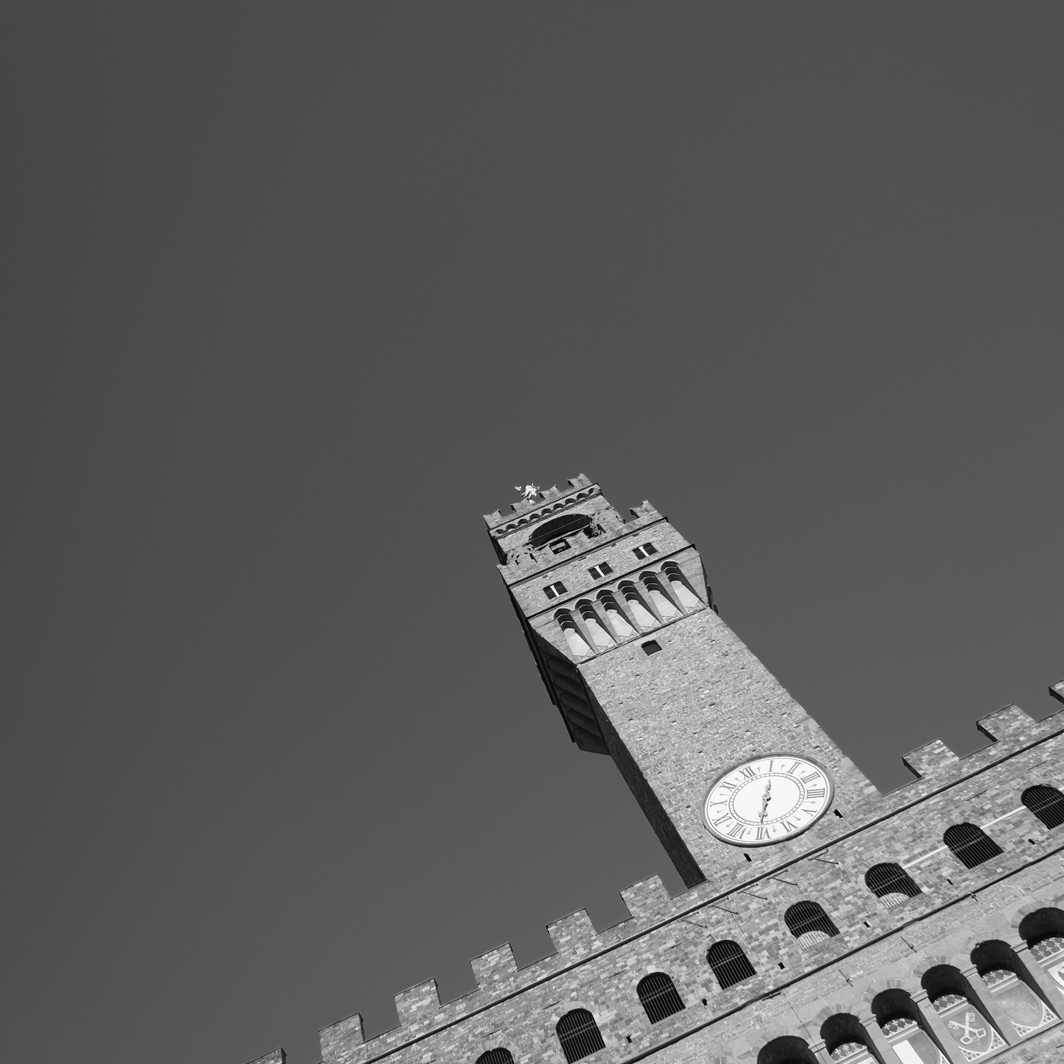
Palazzo Vecchio

Palazzo bucolic, Florence

Every year my wife Barbara and I spend our vacation in Tuscany. We have this wonderful home that was Barbara’s grandmothers and has been in her family ever since. The back room is used as a dark room, and there is even a “camera ready room” for coating cyanotypes, loading film holders, and organizing gear for shoots. This photo “mini” project starts in Milan, and then migrates to a small village below Cortona. For a decade now I have spent weeks of my summer in this bucolic medieval countryside and the narrow streets of hill top towns.  I have shot sun flowers (warning: an August trip is a bit late for sun flowers, if you are into shooting them, then I suggest a early July visit), cipressi trees, castles, farm houses, and graveyards. In many ways it’s a photographic paradise and the hordes of tourists with all manner of cameras will surely stop and shoot these unique characteristics.

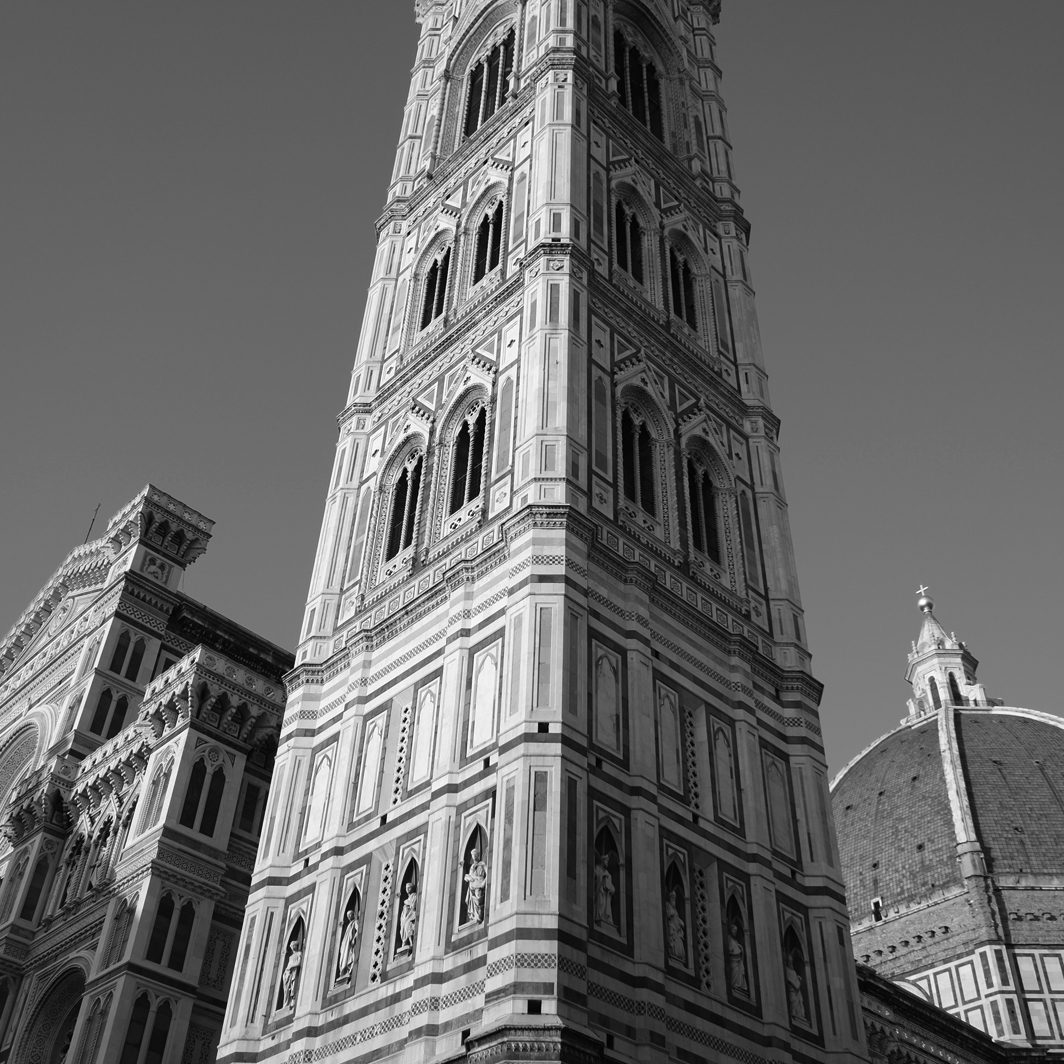
Florence Duomo

Florence Duomo or The Basilica di Santa Maria del Fiore aka Florence Duomo

I am interested in having my vision standing out from the crowd. I seek to create images that capture the subject, yet show it in a way that is uncommon and unique. I have to look deeply into my photographic skill set, decimate the technique, subject matter, capture, post process and imagine a way to complete the project with a single voice. It’s hard work and for me, I had to really delve deeply and think about it.

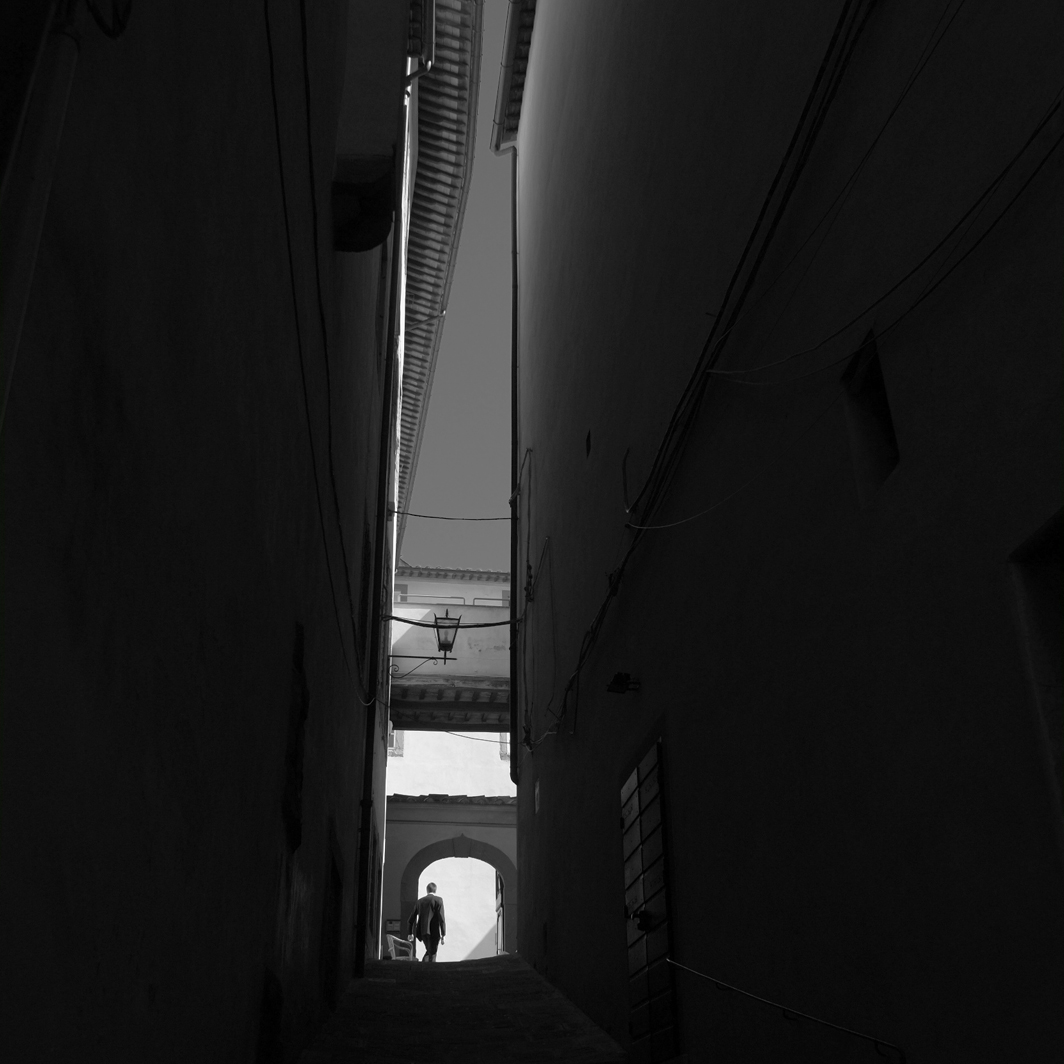
vicolo in Cortona

VIcolo in Cortona

In the past, I have worked on projects such as “Italy Looking Up” where I only shot aiming the camera upwards. No straight on shooting what so ever. I have shot “Adams” style large formate with my Deardorff 8×10, Lensbaby and 35 mm film, Toy Camera with a Black Bird Fly, Nikon Rangefinder with Ilford XP2, and Hasselblad 2 1/4 color print. The project “Instant Italy” was captured using Fujifilm Instax cameras exclusively. By creating sever restrictions on gear you can emerge with a unique style, simply because your confined to something that allows less visual options.

Cortona

Cortona

This year I resolved to shoot with my new and trusty Fujifilm X Pro 1. I would get a chance to explore the nuances of the 35 mm 1.4 and of course, old faithful, the 18 mm 2.0. On the road to photographic style, shooting with primes or limited focal lengths add a common visual denominator, that of the angel of view. No sloppy zooming back and forth here… its either wide or normal view. If I can’t get close to a detail, then its going to be small in the frame.

Galleria Vittorio Emanuele II, Milan

I also decided to make a dramatic choice that would really effect the way I composed my images, I set the camera aspect ratio to 1:1. I’d be working in square format, like my beloved red Hassy. I would also assign a B &W or monochrome film simulation mode. This also means I would be capturing less information on each picture I took. The files went from being 45.7 megabytes to 15.2 megabytes under these setting parameters. I know, I could shoot Raw and have both the big fat files and also the smaller “assignment style” files, but I like to live on the photographic edge.

Either I make this work or I have nothing. I love drama, so the B&W film mode I used most often was the B&W Red filter.

Snack cart, Milan

Snack cart, Milan

It’s not easy to shoot this way, by not falling back on Raw + Jpeg capture you are showing a level of conviction on shooting using a specific technique. Square and B&W however is an interesting choice, because a perfect square is geometrically pleasing and lets face it, B&W is cool like the Fonzie.

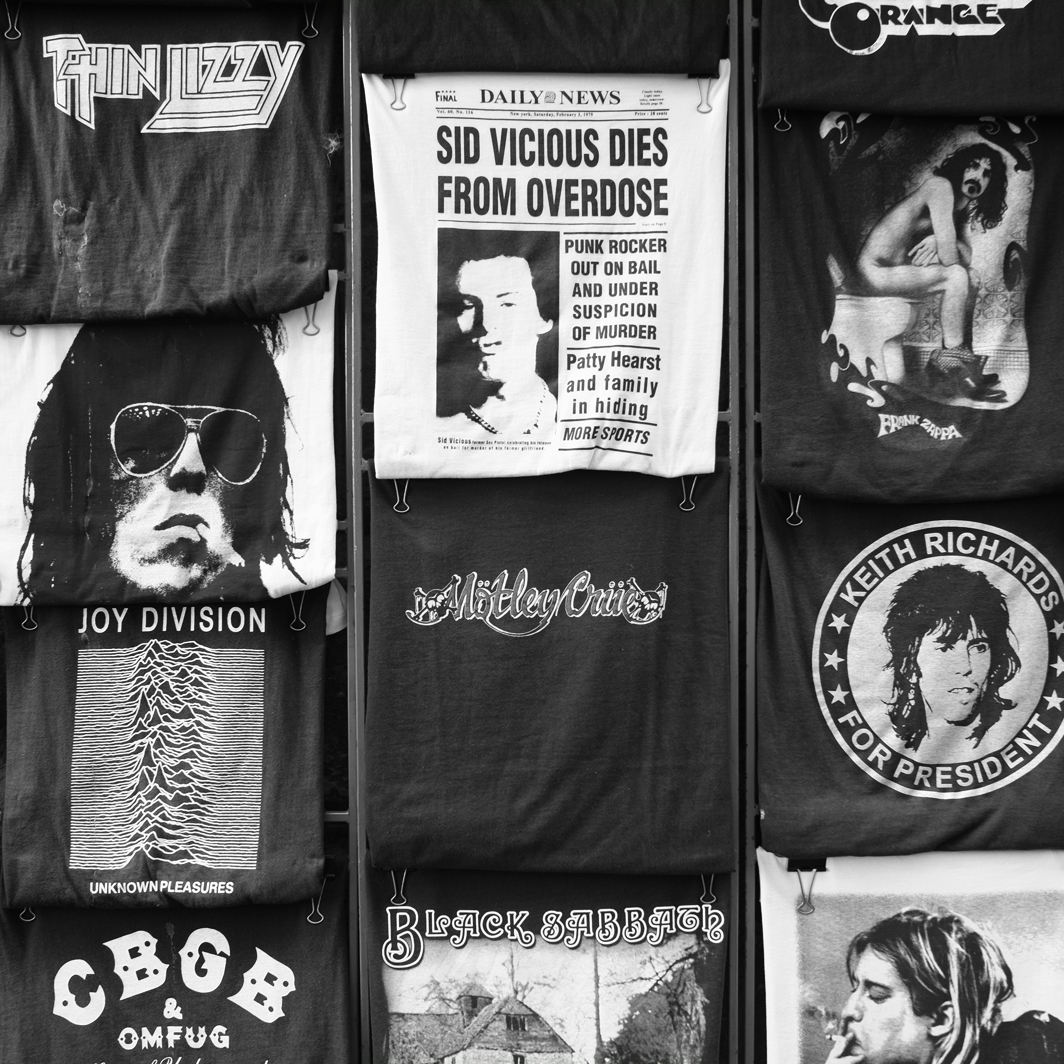
Rock and Roll

Rock and Roll

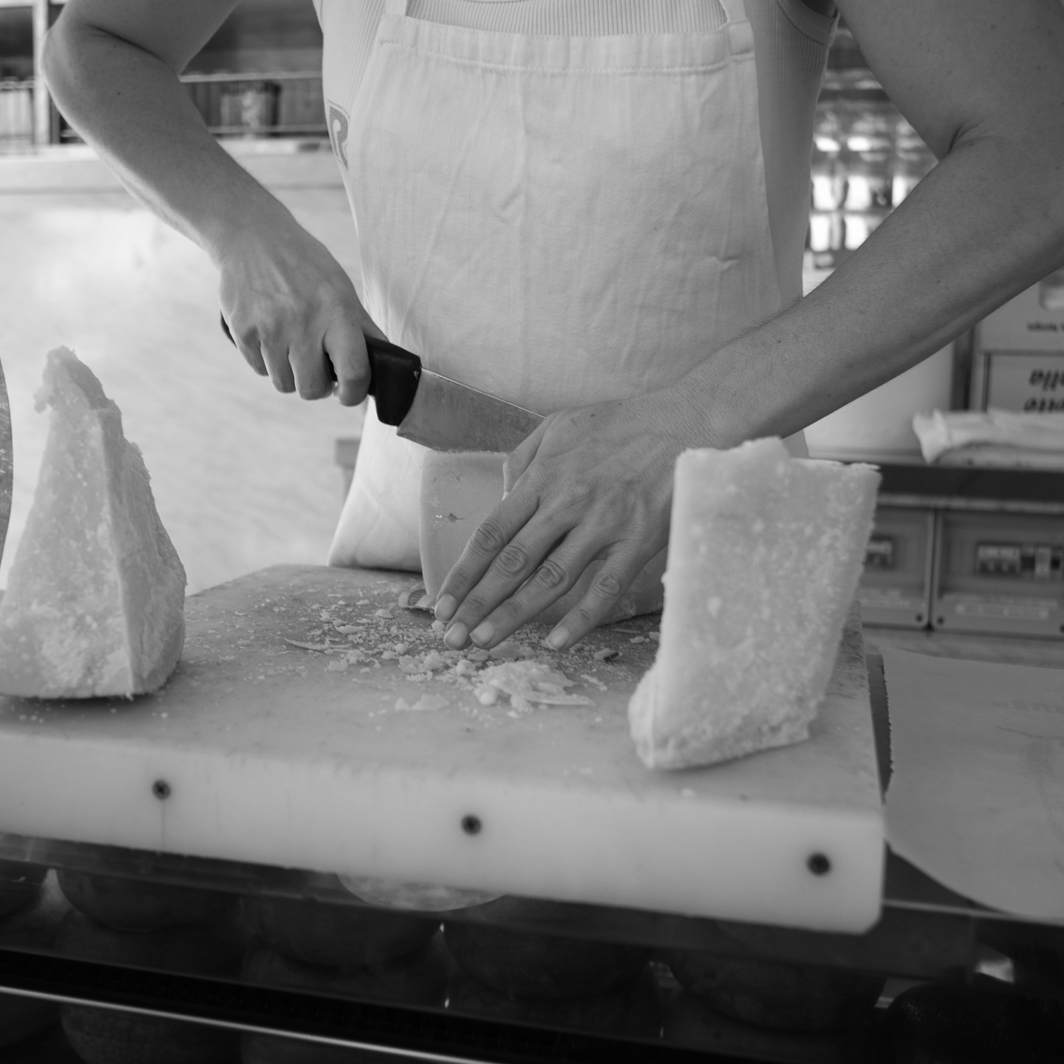
Time was limited, and I had other projects also on the burner. I thought about how the technique could apply to more specific subject matter, like hands, or people. In Camucia, on Thursday mornings the market attracts lots of genuine local flavor. In particular is a vendor who I call Senor Porchetta. His porchetta wagon always has a long line of bustling Tuscans getting their porchetta fill. He is jovial, equally good with pig or knife and knows his fegatini like Silvio Berlusconi knows a 17 year old.

Senor Porchetta

Senor Porchetta

Hands in the Cortona Market

Hands in the Cortona Market

I can’t recall the name of the photographer who said, “if you’re not sure, get closer”, but they were was certainly on to something. Engage your macro, and come in close. I love the macro on the 18 f2.0 is 7.09″ (18 cm) as compared to the 35 f1.4 which is 11.02″ (28 cm), the 18 lets you get in a little closer, but beware, the lens takes in a lot of the scene.

Detail of locks on the Ponte Vechio, Florence. Shot with 18mm f2.0.

Moms sewing kit in the Casa Tuscana.

Mom’s sewing kit in the Casa Tuscana, 18mm f2.0

Fujifilm also has a macro 60mm 2.4. I’ve yet to test this one, but as I continue to work with the 35 1.4 I’m sure to add it to the arsenal later in the year.

35mm 1.4 with a 200% crop

If you have read this far and are liking these images and wish to develop your style or just hear more ranting from me on style, here is a link to the 2 hour program on Youtube, “Finding Photographic Style” recorded in the B&H Event Space this year.

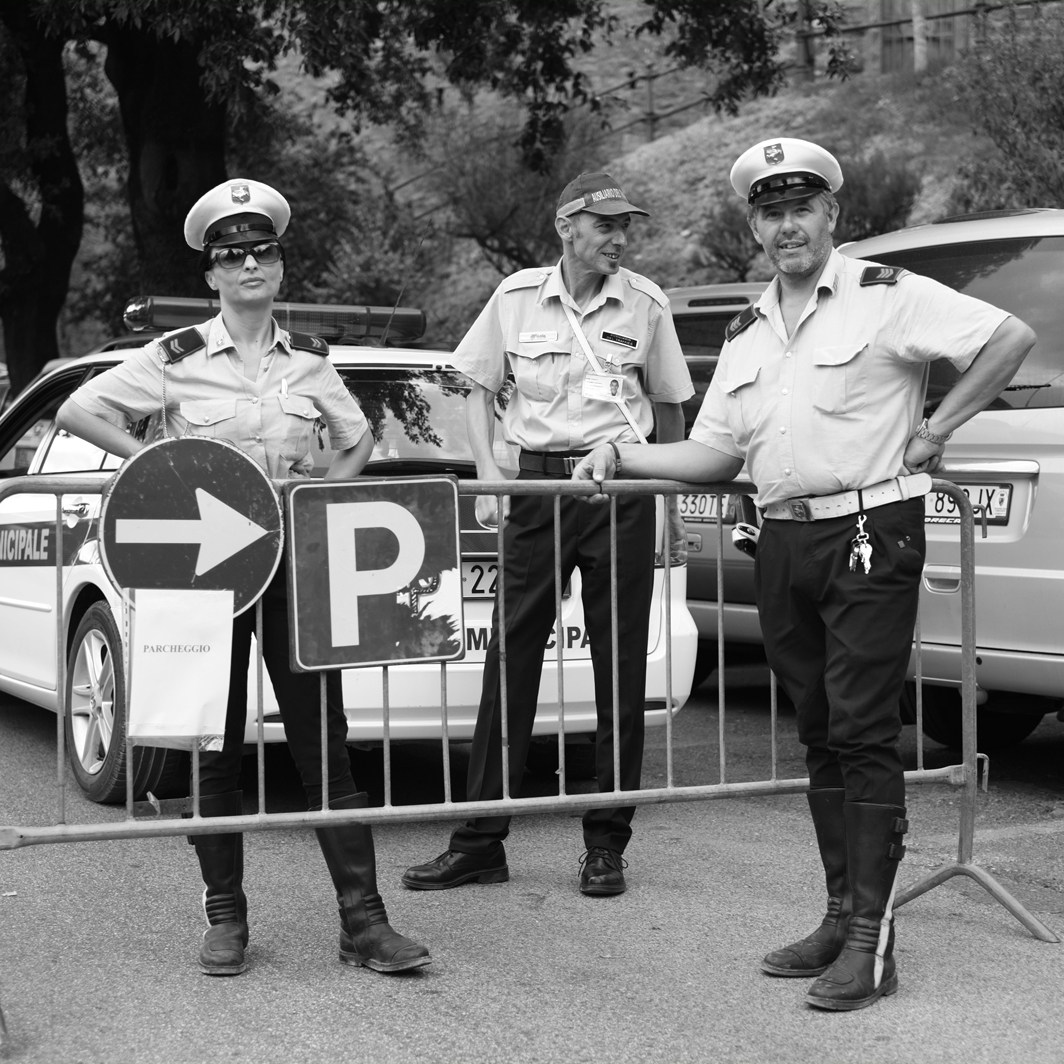
Cortona Cops

Cortona Cops

I also brought my Speed Graphic 4×5 on this trip loaded with Fujifilm Acros to do some cyanotype work. But thats a post for another day.

Ciao!

~David George Brommer

Adventures in Dripping Wet Photography, Wet Plate Collodion That Is.

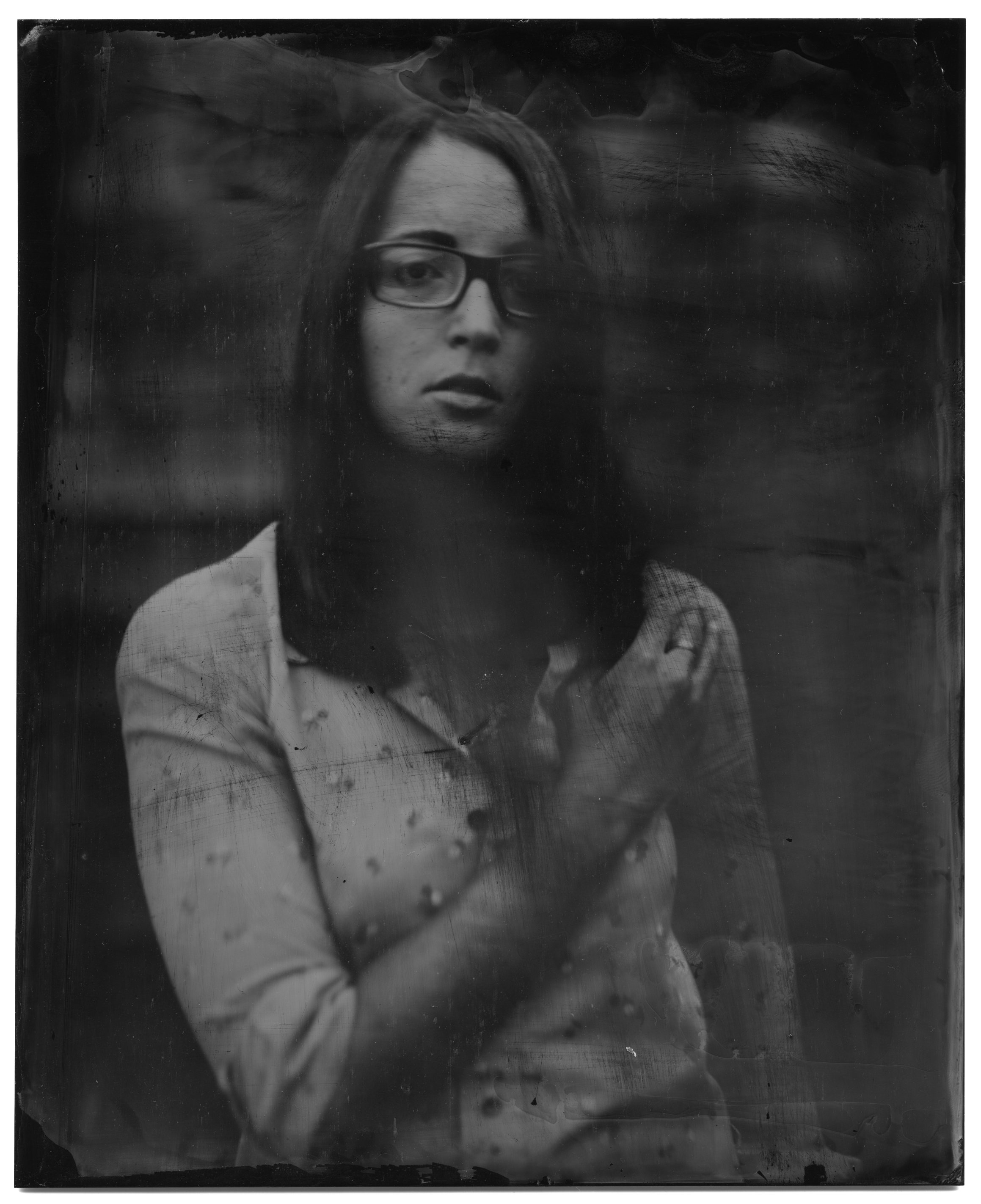
Portrait of the Photographer Brenton Hamilton, 8×10 Tintype, 14″ Kodak Commercial Ektar 8 Seconds @ F 8

Late last June, I took a class on Wet Plate Collodion at the Maine Media Workshops with Jell Enfield. I had been wanting to take this class for a few years, but the schedules never seemed to coincide. However in 2012 the stars were in alignment and there I found myself in one of my favorite places in the world, the Hass Lab on the Maine Workshops homestead campus. Things were about to get wet and some interesting images were to be taken.

2012 Collodion Class at MMW shot at Rockport Harbor.
Fuji Xpro 1, 18mm Lens post process NIK Silver EFx Antique Plate II Filter.

Possibly one of the best aspects of this class were the other students and teacher assistants. Seems that Wet Plate attracts an odd lot of photographers so our group was always on the large size, which was great because a model (interesting, beautiful & cool at that) was easy to get in front of the camera. Also, the large number of T/A’s made it easy to get chemistry poured, cars loaded, darkroom tents set up, and advice. We had the assistance of a local who is a supplier for wet plate paraphernalia, Niles Lund. He would prove invaluable (he did a mod on one of my Fidelity 8×10 holders to a wet plate holder for $40) as a second to our fearless and silver stained instructor, the inimical Jill Enfield. Jill mixes passion, intuitiveness, and experience into her wet plate endeavors. It was an honor to spend the week with Jill and learn this technique. Check out Jill’s time lapse video of her shooting in NYC’s Tompkins Sq. Park to get a feel for Jill and the process.

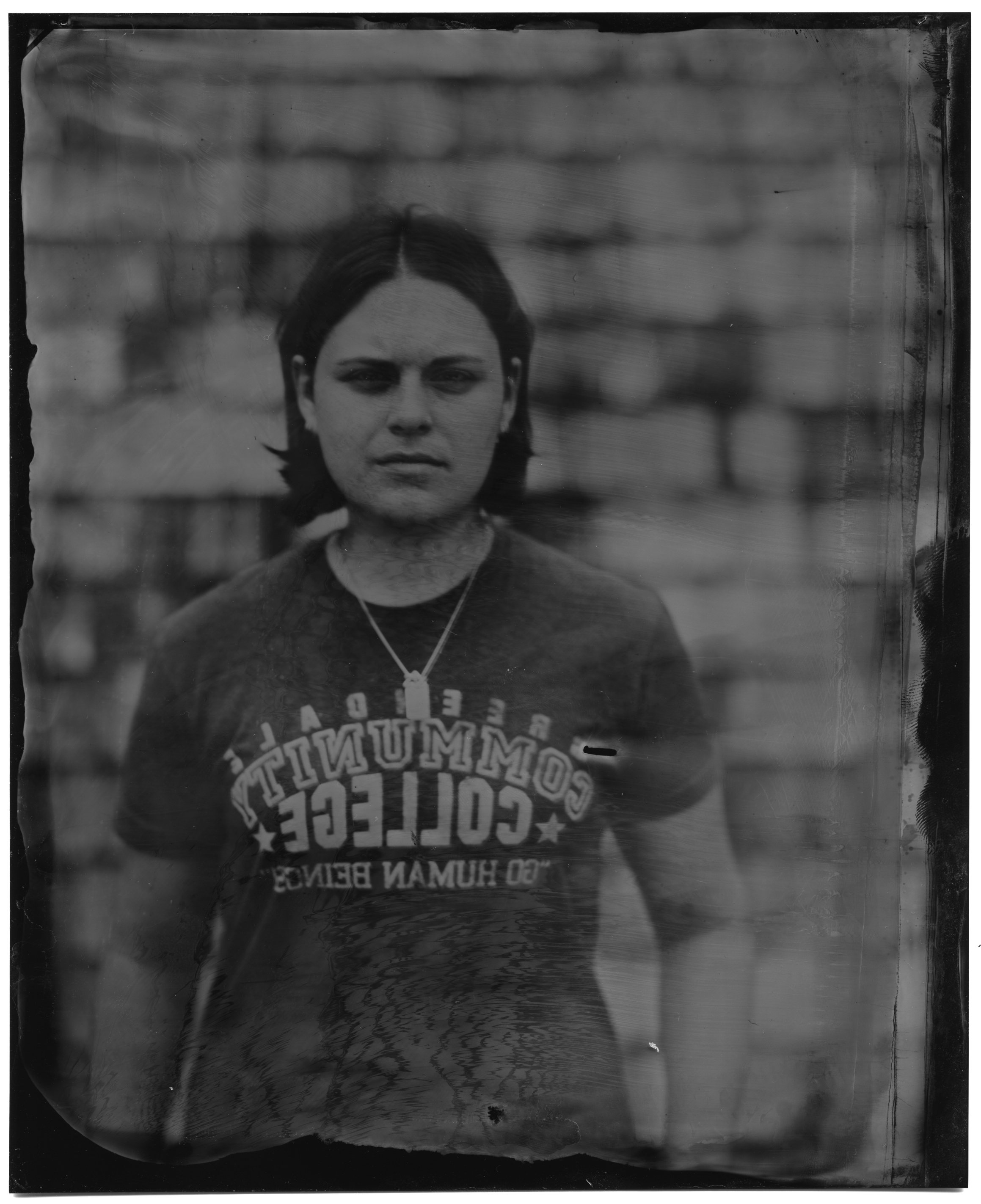
Portrait of Kendra 8×10 Tintype Kodak 14″ Comercial Ektar Lens, 10 Seconds F8 Note: Kendra is covered in beautiful tattoos, however since Collodion is sensitive to UV light, tattoos don’t show up in the image.

I’m not going to get into the technical details of wet plate. My fellow student, uber geek and all around super cool photographer chick Sarah did a great job describing the technique on her tumblr blog. So if you aren’t familiar with wet plate I suggest you go, otherwise Ill summarize. Before there was digital there was film, and before there was film there was wet plate. Wet plate is primitive, you have to prepare, shoot and develop your plate all within 10 minutes. In the early days of photography back in 1850 it was state of the art, but now it is ranked as one the golden children of the alternative process movement. Wet plate is a slow speed black and white process with film speed rating ISO 6 to  ISO 10. Thus the long exposures compared to.. well… anything else! It’s also difficult to do, you have to possess manual dexterity to get the various chemistry to adhere, flow, coat, and develop. This process is not for the klutzy, you will have really sloppy plates. And the weird part? Sometimes that’s not bad.

Portrait of Sarah 8×10 Tintype Dagor 8 1/4″ 12 Seconds @ F 8

One thing that was going through my head lately as I embraced the Wet Plate technique, was how does it fit in the “big” picture of photography? Why would one do this whilst the look can be easily replicated in Photoshop? I’m sure the wet plate practinioner just gasped, but really, it’s a lot of work and commitment to make wet plate collodion photographs opposed to running CS6 loaded with a some NIK filters. There are many reasons to do Wet Plate all digital joking aside. For those of us who like to stain your fingers and dig into the process, it takes you back to a humble, hard and complicated era of photography. Think of it as a way to walk in your Great, Great Grand Daddy’s shoes. (I’m not implying my lineage includes a photographer, as far as I know, aside from Uncle Harold, I’m really the first to embrace it). I made it hard on my self, going for 8×10 instead of 4×5, my images took twice the dexterity and acumen to accomplish a good plate. I like to ride a bitch however; I made two 4×5 Ambrotypes and switched over to the Deardorff. Jill also shoots with a Deardorff, and it is a choice camera to work with. Darn thing is solid like a Sherman tank (and just as heavy).

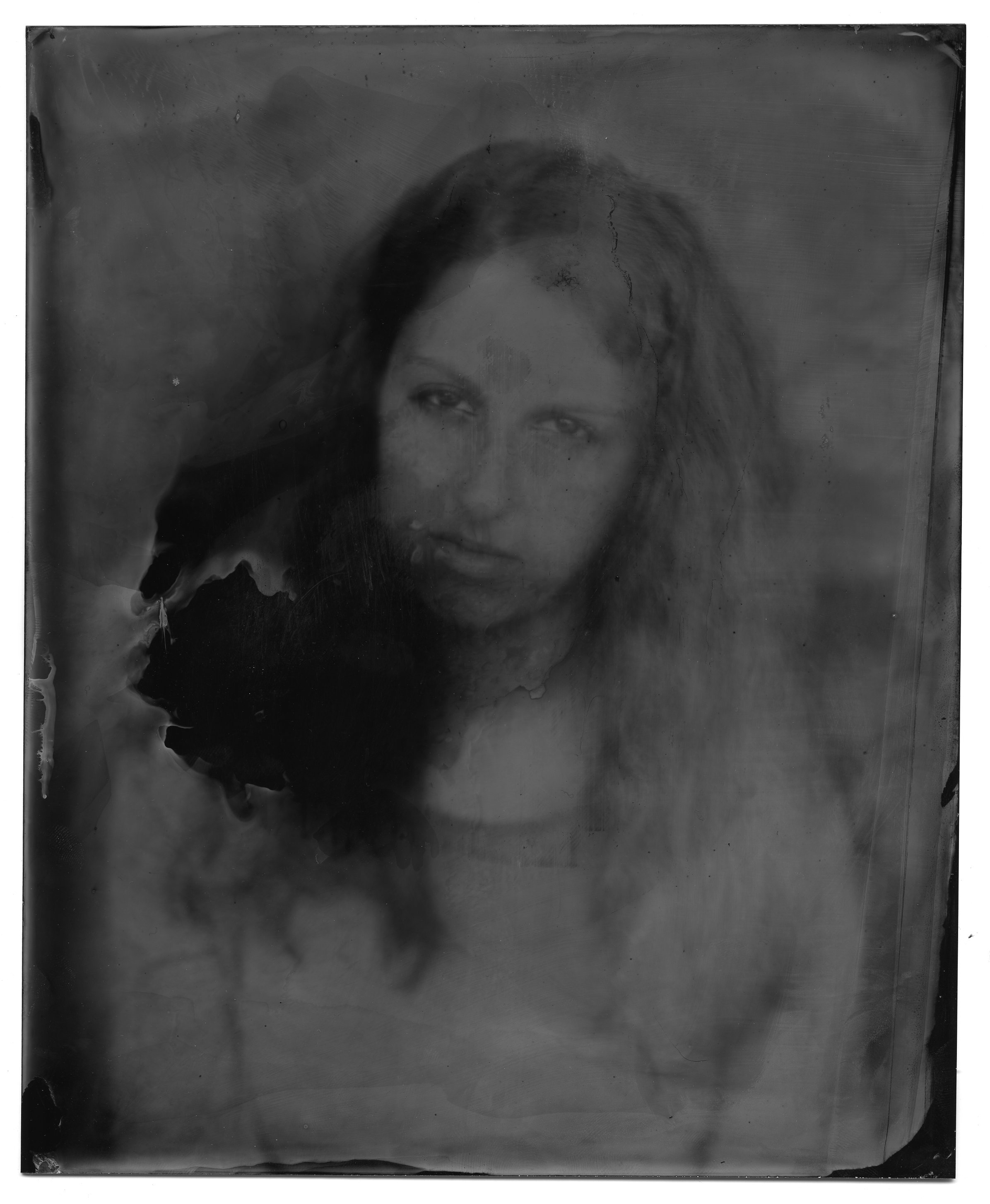
Portrait of Bari, 8×10 Tintype, Kodak Commercial 14″ 10 Seconds @ F8 Note the bad pour of developer that caused the black splotch.

A small concern about Wet Plate is its look. It attracts and scares me at the same time. It’s a look that you can point your finger at and say, “ohh wet plate, cool”. Jill did mention the ability to use watercolor pigment and a few other tricks to own your image more than just executing a great plate. Niles was using an old Dallmeyer brass lens with out a shutter, just timing his shots the old fashioned way, removing the lens cap and counting “one one thousand, two one thousand, three one thousand”. Throw precision away with spent developer, because Jill’s count was different than Niles count and I used my handy timer from my view camera kit. See, I learned view camera from Gordon Hutchings who learned from Morley Bear who are F64’s at heart. I’m a bit of a zoney, for better or worse so I found some of the wet plate technique haphazard and random. The look however is ingenuous to the technique, and that is where I have a hard time swallowing the process. This may be the key, process. Wet Plate is thick with process, control of the chemistry, effects of contamination, and also long exposures. The portraits taken during the era of wet plate were all almost somber and dour expressions. You can’t hold an ear-to-ear grin of a smile for 20 seconds. As a wet plate subject and to record a sharp face you must relax your muscles and be very still. The results are a serious subject. Landscapes tend to take on a pictorialist feel, and again, slow shutters speeds make for odd bedfellows including foliage in the wind soft, water amorfourous and action blurry. Nature of the beast when you eat shoot at ISO 6.

Portrait of the Incredible Mya, 8×10 Tintype, 14″ Kodak Commercial Ektar 10 Seconds @ F 8

Would I switch to this workflow and shoot a project with it? I’m going to say the answer is no. My reason is that I need to concentrate on the subject and executing the project as a whole. My current project, Battlefield Cant has already begun with Ilford FP4 8×10 film, I can’t switch now. And even if I did, setting up portable darkrooms and maintaining the chemistry in the field is way too invested for the return. That all being said, would I shoot wet plate again? Yes, it is an honor to shoot wet plate as our photographic forefathers did. Wet plate is complicated and the results somewhat unpredictable, and that may be it’s joy.

JIll Enfield demonstrating coating technique. Note the portable tent darkroom.
Fuji Xpro 1, 18mm Lens post process NIK Silver EFx Antique Plate II Filter.

Aside from learning the wet plate technique I got to cover some new ground. Because the class attracted seemingly eccentric and cool devotees I got to practice 8×10 Portraiture. I really cannot take a photo of a mundane person; I need some style or something strong inside a person to capture. It had been bugging me, how do you capture a person with an 8×10 view? Doesn’t the camera and film holder come between you and your subject? Square up camera, focus, place subject, compose, focus again, hold really still, insert film holder, and make exposure. Daunting right? I worked through it, I asked my subjects some thing cheesy but effective, I asked them to hold really still and look into the lens while telling the camera a secret, using telepathy of course. The results on several were quite compelling. Brenton Hamilton’s portrait is a favorite of mine. Photographic opportunism presented itself when Joyce Tenneson paddled up in a kayak to where we were set up on Day 4. Once again, that creative cauldron of Maine Media Workshops tests you, makes you “go up levels”.

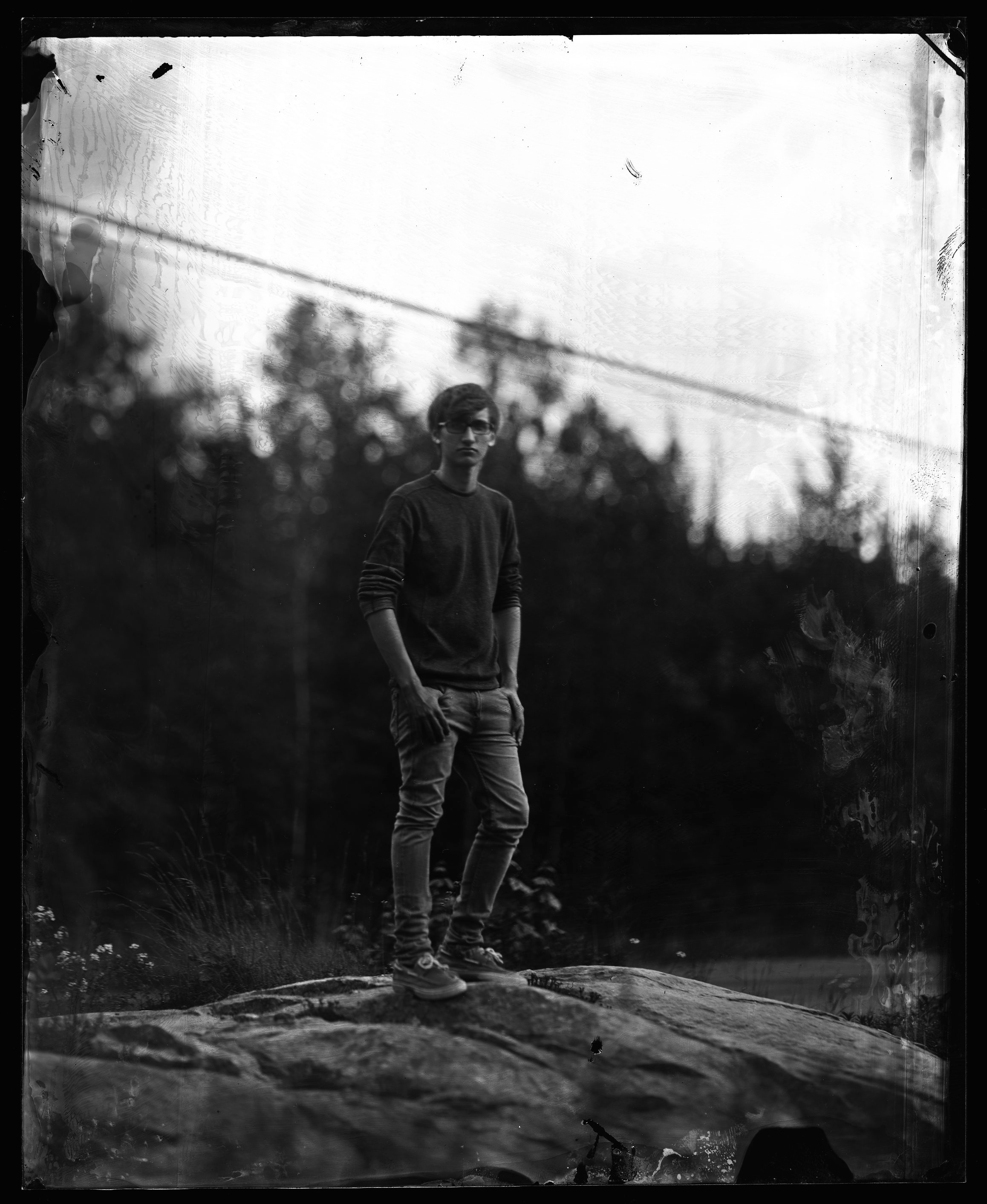
Portrait of Jesse 8×10 Ambrotype Dagor 8 1/4″ 8 seconds @ F 11

Life is but a dream with Joyce Tenneson kayaking in Rockport Maine. 8×10 Tintype, Dagor 8 1/4 lens 12 Seconds F6.3

I’d like to thank Maine Media Workshops, Jill Enfield and my classmates for wonderful week of photography.

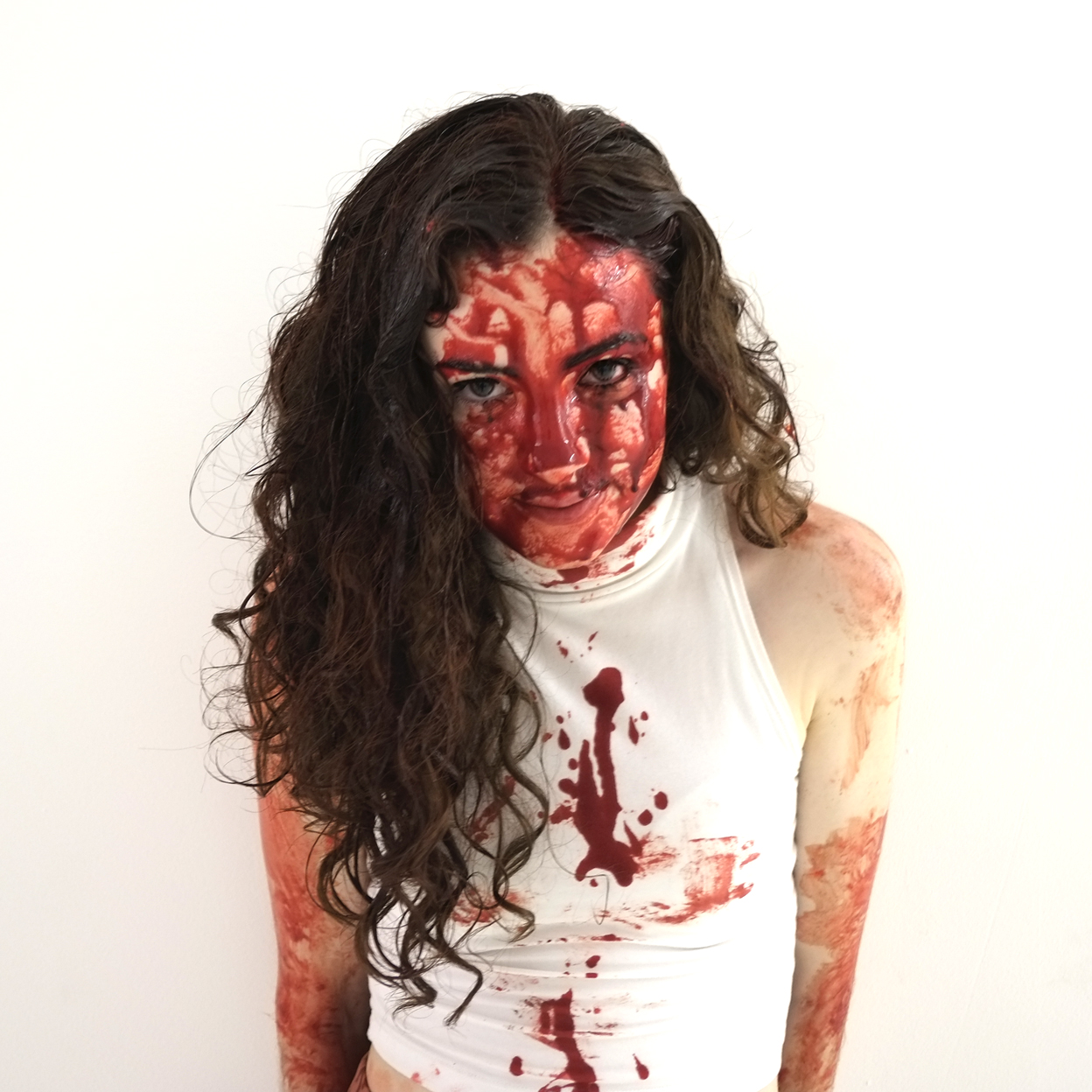
Blood Bath in NYC courtesy of Bruce LaBruce

Just when I thought I was through photographing edges of the human race, Barbara suggested we head over the Hole NYC for a performance piece and book signing by an artist Bruce LaBruce who I wasn’t familiar with. A fast googling brought me to his wiki page and I was intrigued for sure. He’s a Canadian born multi disciplined gay pornographer, photographer, and writer. What caught my attention is he’s working in polaroid whilst shooting contentious set up scenes.

Before and after staging of performance.

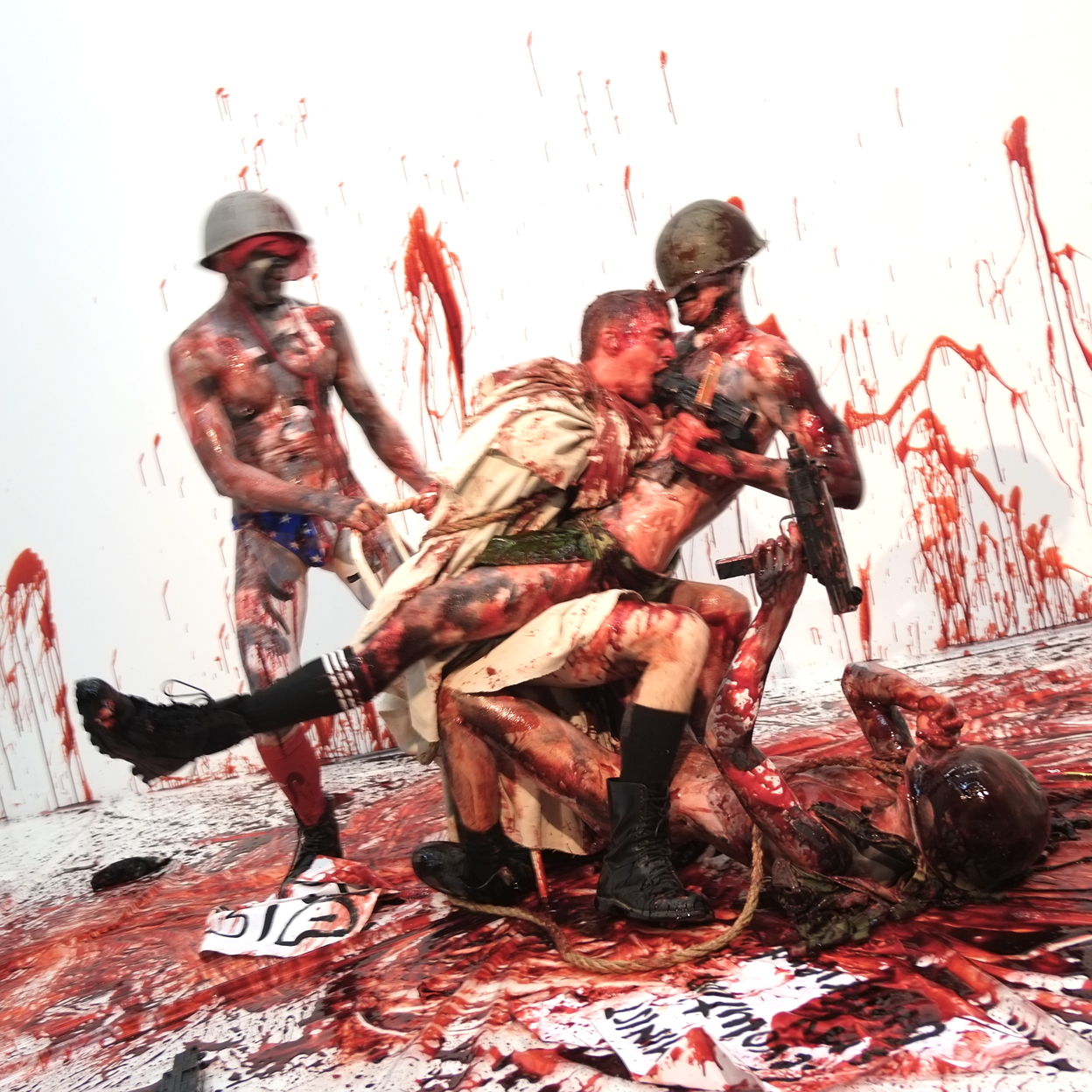
Shock seems to come natural to Bruce, he softly directed the models and injected the signs and queued fonts of blood from his ultra fem-boy assistant. Wielding a Polaroid 600 camera, a base model with hardly any overrides, he strategically shot, signed the photo with a sharpie, and tossed his polaroids to the side for fem-boy to collect. The words on the signs seemed at first to be a standard progressive mantra but then as you start to really latch on to the slogan, its just “off” some how. It’s like laughing at a joke you don’t really get. Makes you think, and then just like that, another bucket of stage blood splatters on the victim-model, the crowd roars, and the antagonist-models contort in delight. Bruce, he’s just shooting, signing and loosely orchestrating the spectacle.

Paraded around The Hole NYC main gallery.

Victim is secured.

All the while a DJ pumped obscure dance music with a sometimes pop and often industrialized beat. Loud, expansive and contained in brilliant hi-key white, the Hole NY shook to audible and visual mock violence. It was perfect.

Bruce LaBruce Pieta 2012

Bruce in action with his Polaroid.

Fem-Nazi Madness

We hung out late afterwards, as people from the audience volunteered to be victimized the crowd slowly shuffled out. There was a small sign that promised signed polaroids for $5 each. I was incredulous to this as nothing in NY costs five bucks that’s worth a damn, aside from a bagel or a 4 block cab ride. Bruce’s work was taped to a brick wall, and in the end, with just a few gallerists  present, fem- boy let us pick out 4 polaroids. Barbara put them in her pocket book, I slipped fem-boy a Jackson. Our photography collection just took a turn for the better, I’m going to treasure those polaroids. They will remind me that the edge of the human race is alive and well.

Polaroid 600 Film recently shot.

a girl from the audience is targeted (and she loved it).

Later on, two blocks north on Bowery at Gemma I chimped my X Pro 1 to see what I got and the results gave me photo-butterfly wings feelings!  At the early point of the performance I set the camera exposure compensation to +1 stops which kept the walls white (until they became blood spattered of course). ISO setting was auto-1600 and I shot wide open at f 2.0 with the 18 mm which was perfect, allowing me to frame the whole stage from my vantage point. I shot fast and furious, to match Bruce’s orchestrations. Twice, I switched over to video and caught a movement of live action. The thrill of  photographs well caught was evident. I was excited by the shoot, but alas, it wasn’t mine. It was purely Bruce’s and myself and all the others who were shooting, video taping… they got something good, something exciting too. With all the smart phones of the 100 or so onlookers I imagine twitter, facebook and instagram must have been humming or as they say in the new digital vernacular, “trending” (I can only imagine the comments). I ordered the steak, rare. It seemed the only thing I had an appetite for after the performance.

After the buckets of blood were all done, Bruce slowed down and took more time directing.

Bruce had no signs saying no pictures. The spectacle was ours, shared by Bruce’s work and his decision to allow the imagery in an ultimate form of sharing, unrestricted access to his Bowery blood bath for all to see. Suspect Photography applauds Bruce LaBruce and his open-source performance art.

~David Brommer

Zen, Zones, and Focal Lengths are now the new drugs.

Fuji X Pro 1, 18mm, Snapseed processed

The sublime pleasure of seeing space surrounding the self as a trained photographer is our greatest gift and pleasure. Shape, lines, shadows, highlights, objects, nuances of patterns, both similar and interrupted, the delicate ballet of balanced forms, transitions of contrast defined in air and matter while viewed in whole, then fractured and selected inside a frame, bounded by our souls perspective focal length. It is sublime when in the zone, when all those take prioritization in you vision, the camera clicks, and its done.
Fuji X Pro 1, 18mm 1/200 f 8 200 iso jpg

The sometimes and not-often secret peak of the photograph making experience is felt in a tremor of the shutter release and can be drawn out for 3 seconds or more after the exposure, this is the satisfaction sensation. You did it. You got that shot amongst a special plane of non-interest.

Fuji X Pro 1, 18mm Snapseed processed

Shooting and seeing is akin to seeking. What it is you seek may not be known to you, walking about armed with your camera and having no particular agenda. Space will reveal what is interesting, time will put your body in the right temporal position and you just might make an interesting photograph. Or you can exert heavy control and manufacture the perfect storm to capture that superlative image. Shooting in a studio makes you the great creator of light, like Lucifer and Prometheus you can encase your image with brilliant photons, be the master of the subject and set. Photographers that create in a studio assume the aspect of gods.

Fitness bill boards

Fuji X Pro 1, 18mm Snapseed processed

How can you shorten the length of mediocre image making from the creating of greater images? There is one way, and that is to make lots of images on an almost daily basis. Live in the margin of seeing, be ready to take the viewfinder as a macroscope for living in this space, here, breathing these sights, and feeling those reflections. Incorporate “often” as way of answering the question, “when do you take pictures”. Raise the camera and make exposures often.

Fuji X Pro 1 18mm 1/30 f 4 iso 400 jpg

A click is a drug and the resulting image the high. Multiple clicks lead to visible euphoria and in that fog of stimulus better images lie. Do it enough and you will find a reliable friend in f8 and a fickle friend at f 1.4. Stay shooting and 1/15 second all of sudden seems like a month. ¼  second and a year shoots by a like the Silver Surfer on speed.

Sean Kernan told me Tidd Hido said, “I think I’m addicted to the feeling of having just taken what I think is a good photograph.” Feed your addiction and makes lots of images. Embrace the “studium” and don’t bogart the camera.

Film Simulation Modes on Fuji X Pro 1

18mm 1/30th at f/2.0 B&W r ISO 800 B&W- Y JPG

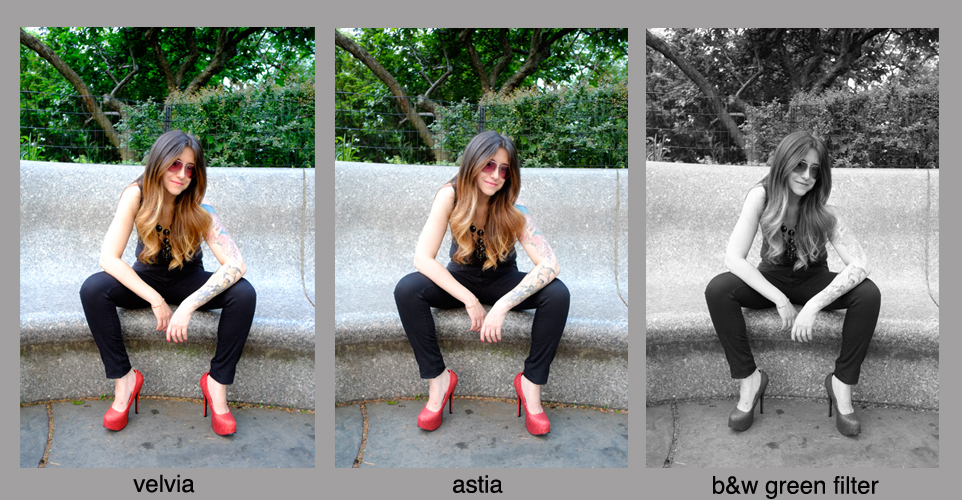
So I’m old, I cut my photo teeth on film, I predate digital photography. Back in the halcyon days of film the choices were plenty and you could match a film to your style or the subject. Kodak was king, but then in the late 80’s Fuji Film came out with a highly saturated slide film (e6) called Velvia and the game changed. Fuji roared into the market and just kept coming up with innovative professional emulsions that defined the film mindset and challenged Kodaks hold on film. These Fuji films all had a certain look to them, some subtle and some bold. Velvia possesses a super saturated slightly contrasty look that became the darling of nature shooters. Provia was the “go-to” film for product, commercial and general use, while Astia and its lower contrast smoothness hinting with a touch of warmness was perfect for portrait and fashion work. These were just the slide films, in the print world of negatives (c41) you also had a bevy of specialized films such as Reala for portraits, Press film for journalists (very pushable to higher iso’s), and some great b&w choices. Neopan 1600 was a wonderful high speed fine grain film, and I still shoot with Across 100, a smooth and fine grain emulsion that produces lovely prints.

Digital Photography is very versatile, in post  you can easily adjust the look of your image to match the attributes of these films. In many ways, the art of matching a film emulsion to your subject is lost these days but was crucial back in the day. The X Pro 1 however has something very cool that us old shooters dig, it’s called “Film Simulation Modes” and in the menu we can bias the camera to shoot like a particular film. I teach a class called, “finding photographic style” and I encourage people to work with in-camera digital styles to fine tune their vision. Shooting this way forces you match subject, genre, and style to a look, easily achievable with a film sim mode. The X Pro 1 takes it even further and offers a film sim bracket mode. You can assign three films and take one shot and the camera gives your three images each with a different film simulation. It’s a bit slower to work this way, as the process time takes few seconds. But the results are fun and shows you the comparison between three types of classic Fuji emulsions.

Barbara models for me at Central Park trying out different film sim modes.

The X Pro 1 offers you a choice of Provia (standard), Velvia (punchy & saturated), Astia (soft), Pro Neg Hi (contrasty), Pro Neg Standard (great range of tones), Monochrome (b&w), Monochrome Y (Yellow filter for contrast), Monochrome R (Red filter for higher contrast, great for clouds), Monochrome G (green filter for smooth skin tones), and Sepia tone (warm old feel).

35 mm lens 1/4000th at f/1.4 Provia ISO 200 JPG

I have been shooting Jpegs with the X 1 Pro on account of no RAW support from Fuji yet, so I haven’t been able to test how a RAW image would work under a film sim mode. The merits of this feature are certainly debatable, but I stand by my statement that it allows you to instantly “own” your image in a unique way. I would advise you to explore these settings both in color and b&w. You just may be surprised at the path this film simulation takes you, or at least get a warm fuzzy feeling now that you can shoot with Velvia again… sort of.

~David

Rangefinders are less jerky

Malaysia Beef Jerky Co.

Mirrors slapping around cause vibrations, and vibrations make for less sharp images. Less sharp images make for less of a good photograph. I do like to see creatively blurry shots, but soft is something entirely else. Rangefinders do not use a mirror, and can be shot at very low shutter speeds hand held while maintaining good sharpness. It’s one of the advantages rangefinder and mirrorless cameras have over their SLR younger brothers. Another advantage is since there is no mirror, the rear element of the lens can mount close to the film/sensor plane making retrofocus lens design not needed. This allows for better edge to edge sharpness. Seems like it all comes down to sharpness, but actually it allows for great versatility in shooting in the neighborhood of  low shutter speeds (below 1/10 of a second and the vaunted 1/4 of a second ) where you can catch moving subjects and sharp static elements.

Hand Held 1/18 F 8.0 ISO 200 JPG

There are a few tricks you can do to increase stability, but first lets talk about what shutter speed you have to start paying attention. There are image stabilizers in many lenses and camera bodies nowadays. Olympus, Sony and Pentax integrate them into their digital bodies, while Canon’s IS (image stabilization) and Nikon’s VR (vibration reduction) are built into the lens. The rules with an SLR is that  you need your shutter speed to be what your focal length is. Thus a 210 mm lens needs a 200th of a second shutter speed. A stabilizer lets you cheat that by 3 stops, thus 200th to 125th to 60th (hello 50mm lens) to a 30th of a second. Pretty darn good when shooting with a Telephoto lenses that can really benefit from stabilizer tech. Most people can hand hold a 3oth of second as a matter of fact, It’s pretty safe to hand held at 1/15 of second with an SLR. Lower than that, the mirror can cause vibrations as stated earlier. 1/8, 1/4, even half a second are very difficult are difficult or impossible to capture an image sharply.

Being able to shoot at low shutter speeds hand held can be an art all to itself. You really do have to achieve a stillness akin to zen. Inhale slowly, have the camera strap wrapped about you so that the camera is taunt, slowly release the shutter with out jerking the camera, hold your breath, utter a word to the diety of your choice, and make the expososure.

1/4 s at f/2.0 B&W r ISO1600 JPG lit by a single table candle

You may have had 2 tall lattes and are now quite  jittery or perhaps just really excited about what your photographing (yea, I have been on a few Suspect  shoots back in the 90’s where I was shaking like a hound dog passing peach pits during the studio session). In this case, bump the ISO up two stops to be sure. The Fuji X Pro 1 is exceptional at high ISO shooting. If all that fails, then find a hood of car, mailbox, pole, or something suitable to prop the camera on just to give you a steady edge. The best of the best can handhold a rangefinder for 2 seconds and still achieve super sharpness. Me, I’m good for a second. But then again, it depends on how many espresso’s I had at dinner.

Shoot well, shoot sharp, and shoot stable fellow Suspects,

~David