Suspect Photography

words and images from david george brommer

Tag: photography

The Suspect Story: Part 1, A Un-Published Suspect Photography interview with Chris Gampat of the Phoblographer

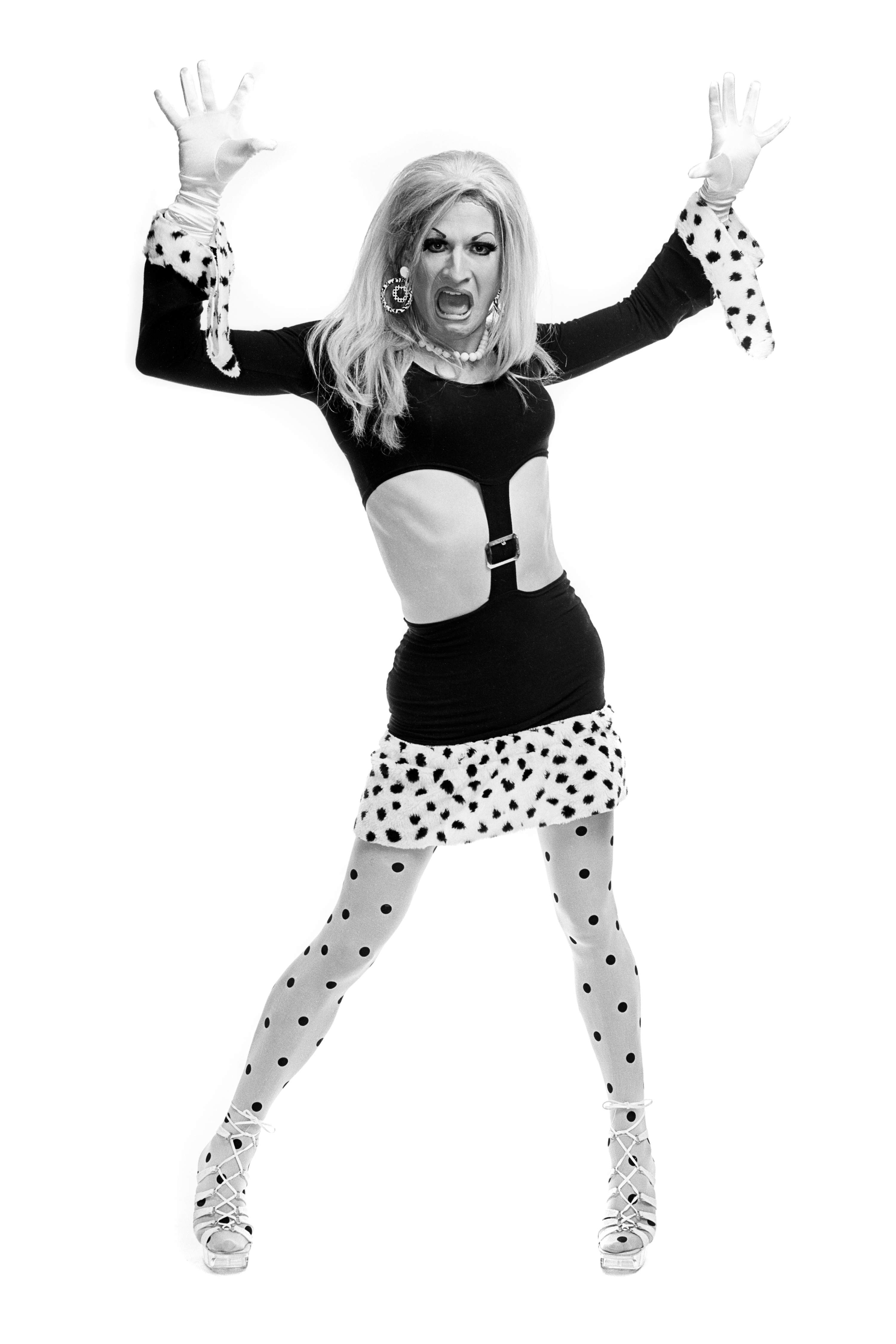
Io Electro from the Seattle Suspects series Contax RX 60 2.8 Macro Planar 1/60 sec f 11 Kodak Techpan 25 iso

A couple of years ago, Chris Gampat, chief editor of the Phoblographer asked me a few questions about my Seattle Suspects project. For some reason, the questions and answers were never published, and recently while cleaning up some hard drives, I found the piece. This will be the first part in a three  part series about my most photographically productive time, the Seattle years.

Tell us about how you came up with the name, “Seattle Suspects.”

Suspect Photography was the name of my gallery/studio in Seattle. We filled a niche in the photography community of Seattle by showcasing emerging and mid-career photographers that had an edge, but couldn’t find a home in the more established galleries such as Benham and Gail Gibson gallery. We had a great location, in Pioneer Square and I coined a term, Maverick Gallery. These were artist owned galleries that were prevalent in the bohemian inhabited old industrial and manufacturing buildings that made up Pioneer Square.

Suspect Photography was named after an experience I had where I “suspected” anything could exist in an instance of chance. When you look at an uncertain future, you can “suspect” anything, because anything is possible. Suspect Photography is both pragmatic and optimistic with a dash of fanciful promise.

Since the subjects were a selection of Goths, Fetish heads, Drag Queens, Artists, Poets, Musicians, and other assorted wayward souls I had a small difficulty in coming up with a name for the project. So I looked for the common denominator, which was they all came to Suspect Photography to be photographed, and Suspect Photography was in Seattle, hence the name Seattle Suspects. On a side note, everyone I ran the name by loved the title, but Joyce Tenneson. She is the undisputed queen of photography books and she absolutely detested it! I had to go with my gut, and keep the name in spite of Joyce’s opinion.

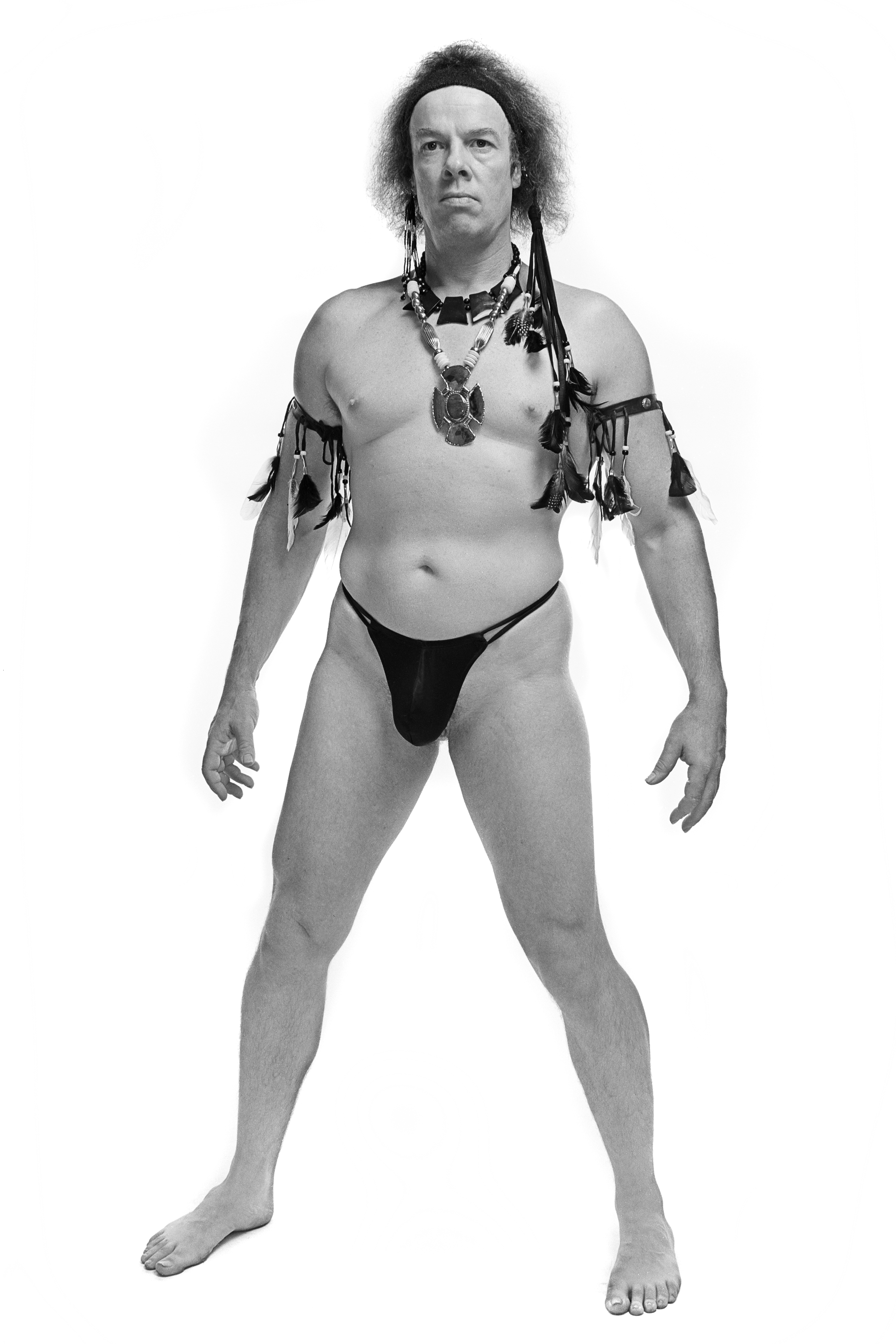
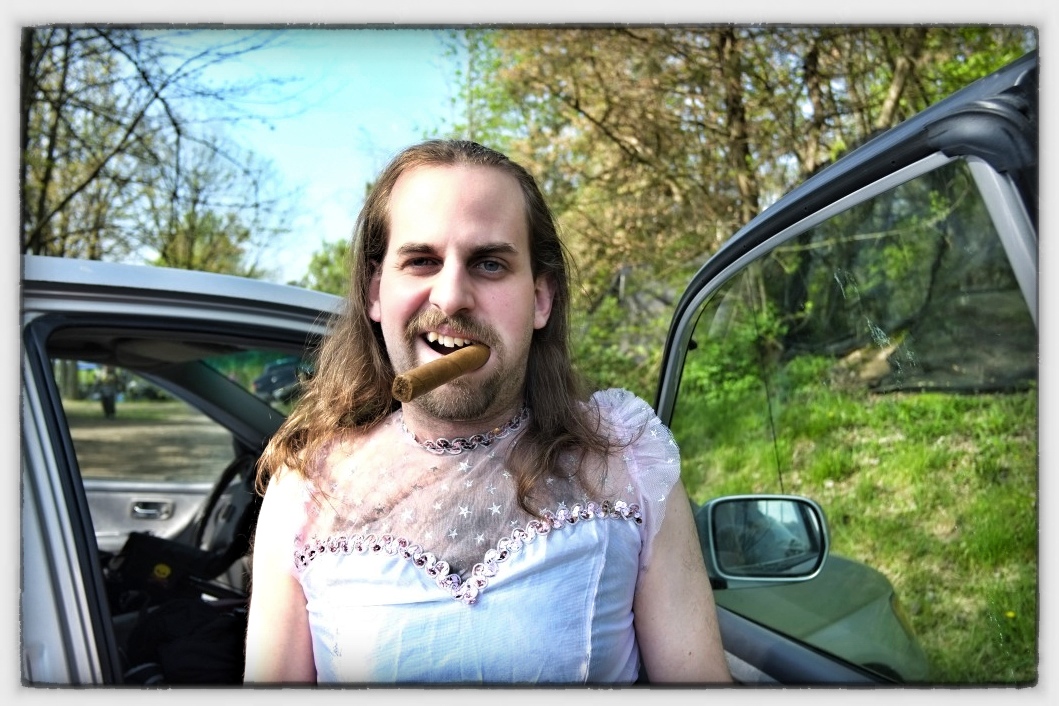
Nearly Naked Man from the Seattle Suspects. Contax RX 60mm 2.8 1/60 sec F11 Kodak Tech Pan 25 iso

 What was working with these people like for you?

Like hanging out with friends that I wanted to become closer to. I love people who are on the edge, I love freaks. I love people who take being called a freak as a compliment.

Susan from Club F*uck Seattle Suspect Series Contax RX 60 2.8 Macro Planar 1/60 sec F 11

 How did you get your subjects to pose the way that they did?

I encourage them to take over the studio sounds system. If you didn’t bring a cd over, I’d drop in one of mine, something that local clubs would be playing. It was the mid 90’s so NIN, Skinny Puppy, Dead Can Dance would suffice fine. I’d let them dance for me and coach them to stop when they got into an interesting pose. I would look for positions that were demonstrative of the subject, ones that encouraged positive and negative space with expressive reaching of the arms or straddled legs.

Sparks from the Seattle Suspects series Contax RX 35-70 vario-sonnar 1/60 sec F 11 Kodak Techpan 25 iso

Do you feel that chemistry between a photographer and the subject is vital to creating great photos? If so, why?

Absolutely. Emotions will be caught on film, so if they don’t trust you, then your images will reflect that. They wont give you their all. I likened the underground of Seattle to a court, and I was the court photographer. I photographed the kings and queens of the scene and they trusted my eye to capture this moment in their life. This gave me access to the rest of the courtesans. I have to also say at this point that I was one of them. I wasn’t an outsider looking in, I was an insider of the scene. I partied at the after hour speakeasies where I recruited the Suspects, I promoted at the clubs (Catwalk and Chapel Periolous) and I ran a gallery that featured edgy art. I also shot Fantasy Unlimited ad campaigns that gave me street cred. The Suspect’s trusted me with themselves, and I respected them.

Dalia from the Seattle Suspects series. Contax RX 60 2.8 Macro Planar 1/60 sec f 11 Kodak Techpan 25 iso

How did you inspire yourself?

How could I not? Look closely at the suspects, they are so complicated and strangely beautiful, a blend of darkly serious and deathly whimsical that I always was honored these subjects would pose before my lenses. What we photograph will echo in eternity, I was inspired to ensure their voices and style would not fade into obscurity. The suspects of mid 1990’s Seattle are fully documented and that is inspiration incarnate.

Malinda from the Seattle Suspects series Contax RX 60 2.8 Macro Planar 1/60 sec f 11 Kodak Techpan 25 iso

Tell us about how you lit your subjects to get the look that you wanted.

I approach studio lighting like two puzzles to solve. First, you must light the background. I would hit the background with two While Lighting “oil cans” fitted with barn doors to keep the spill from hitting the subject in the foreground. I would try to even the light out so the flash would give F11 across the entire backdrop. To light the subject I would use a White Lighting Ultra 1800 in a large Photoflex soft box as a main light, pretty much hitting the subject’s torso at f 11 but the trick was to mount the light on a Bogen Super Boom. Booming the box lets me use the light like a great soft skylight to bathe the subject that I can tweak and aim just so. For fill light I would use an Ultra 600 in Photoflex Stripdome to achieve F 8 1/2 output. I recommend playing with your lights and testing them so you can find the look that matches the subjects and the process your using.

Thank you Chris for asking me those questions, and thank you to all the fabulous freaks of mid 90’s Seattle. You set me free to find myself.

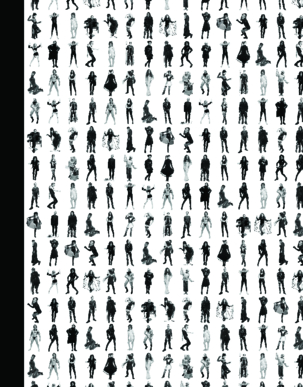
Seattle Suspects book published in 2009 with Blurb and available on the Blurb market place or with a print on the Seattle Suspects site.

Please visit the Seattle Suspects main site to view the book and more suspects, and whilst your at it, give a “like” to the Suspects fan page.

~David

Finding Photographic Style In Italy

Vespa rider in Milan

Achieving photographic style and understanding the traits that make imagery posses its own distinguishable idiom that resonates with the photographers voice is a daunting and difficult artistic undertaking. As each devotee explores photography and builds their visual vocabulary inevitably certain photographers will rise to the top. Highly crafted and odd works by Joel Peter Witkin, Perfect landscapes of Ansel Adams, snippets of time expertly caught by Bresson, they all share their own unique photographic style that differentiates and identifies the photographer to the photograph. There are many more of course, but those three come to mind as evoking strong, and yet vastly different styles. I’ll invite you later to watch a two hour lecture where I delve deeply into the anatomy of photographic style but this moment I want  to show off an exercise if you will, a self assignment that I give myself every summer for the past decade.

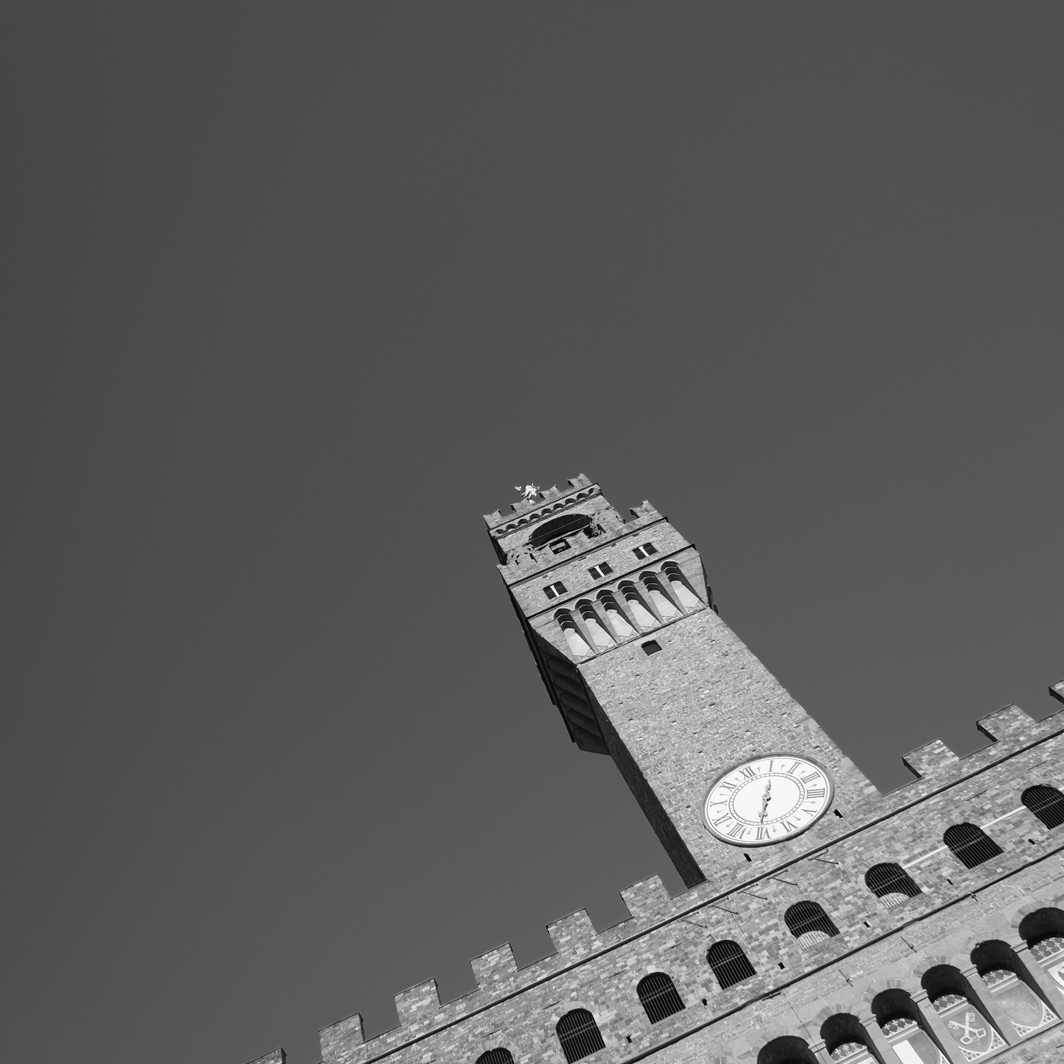
Palazzo Vecchio

Palazzo bucolic, Florence

Every year my wife Barbara and I spend our vacation in Tuscany. We have this wonderful home that was Barbara’s grandmothers and has been in her family ever since. The back room is used as a dark room, and there is even a “camera ready room” for coating cyanotypes, loading film holders, and organizing gear for shoots. This photo “mini” project starts in Milan, and then migrates to a small village below Cortona. For a decade now I have spent weeks of my summer in this bucolic medieval countryside and the narrow streets of hill top towns.  I have shot sun flowers (warning: an August trip is a bit late for sun flowers, if you are into shooting them, then I suggest a early July visit), cipressi trees, castles, farm houses, and graveyards. In many ways it’s a photographic paradise and the hordes of tourists with all manner of cameras will surely stop and shoot these unique characteristics.

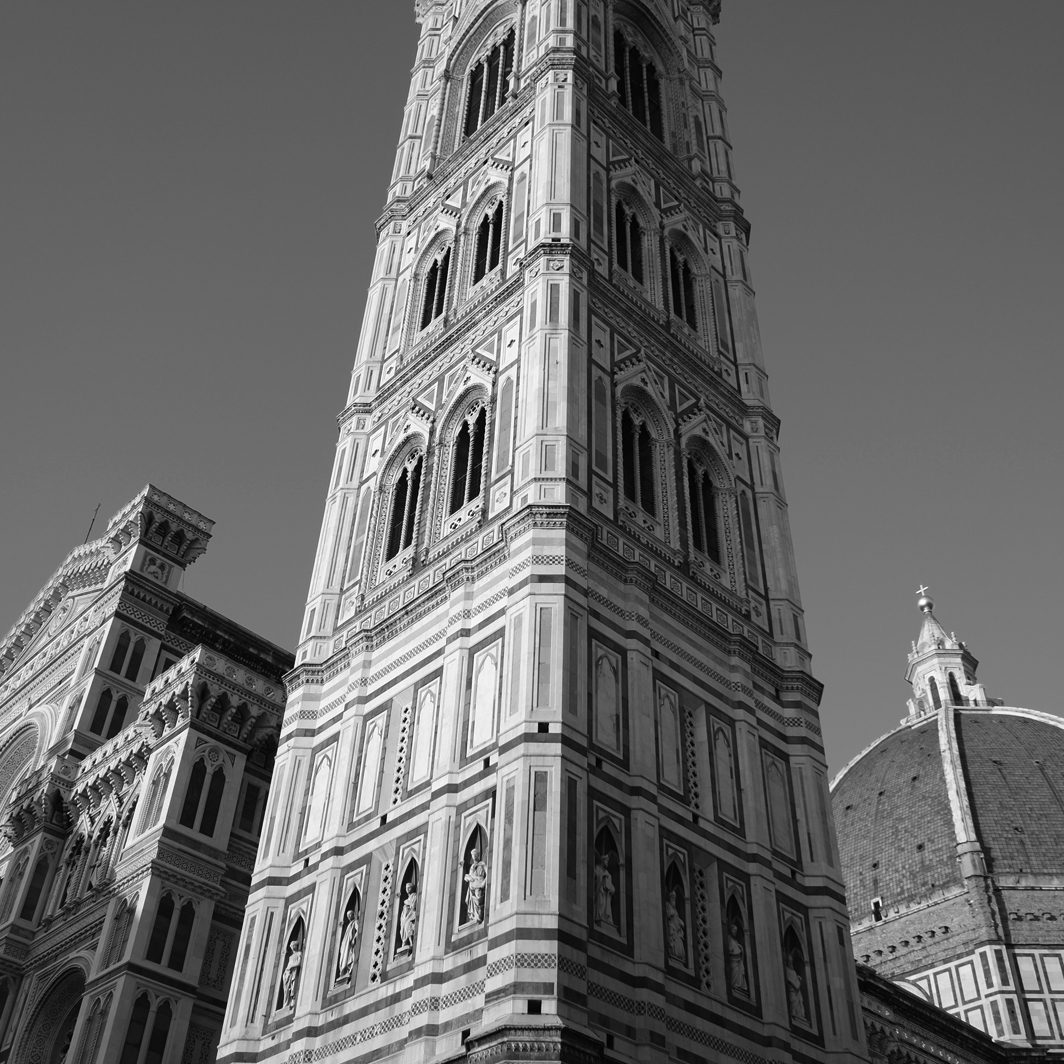
Florence Duomo

Florence Duomo or The Basilica di Santa Maria del Fiore aka Florence Duomo

I am interested in having my vision standing out from the crowd. I seek to create images that capture the subject, yet show it in a way that is uncommon and unique. I have to look deeply into my photographic skill set, decimate the technique, subject matter, capture, post process and imagine a way to complete the project with a single voice. It’s hard work and for me, I had to really delve deeply and think about it.

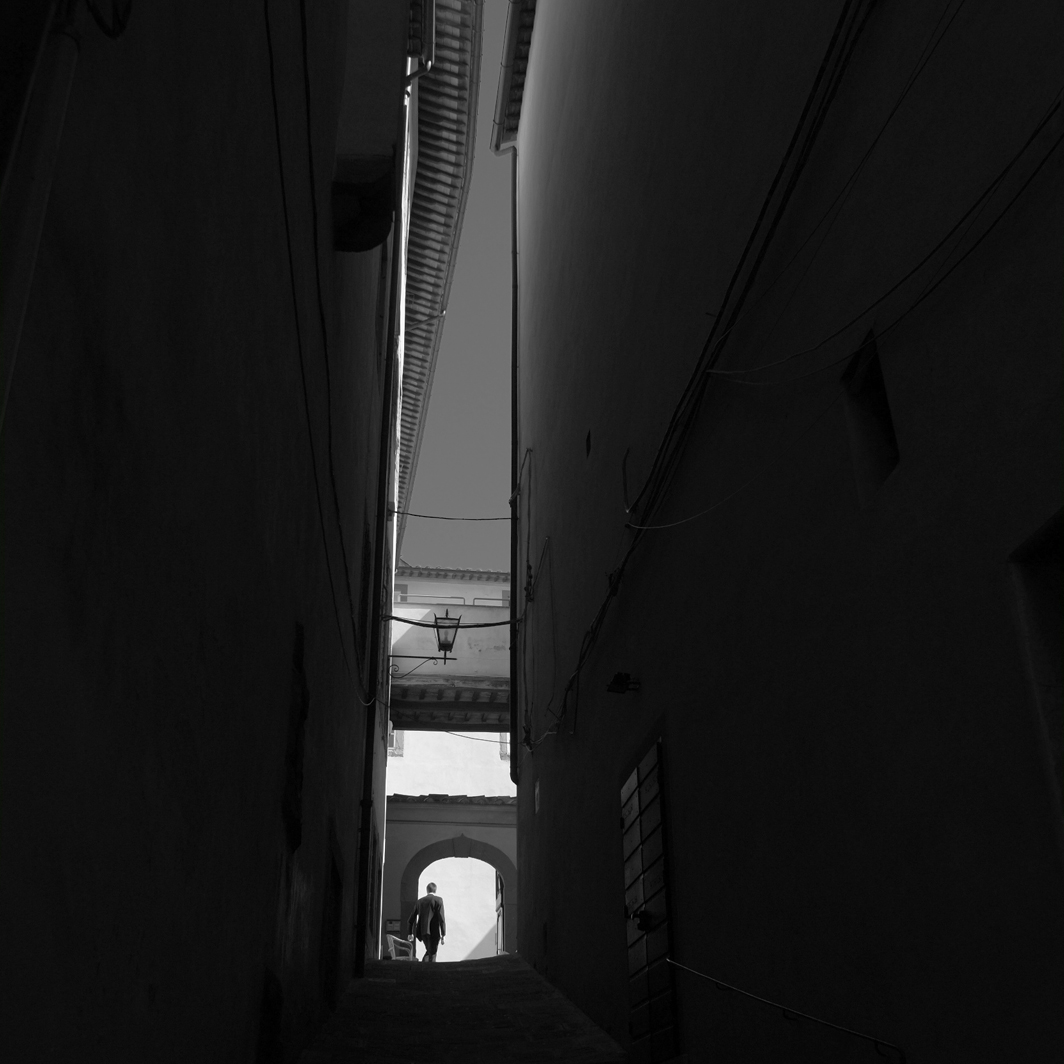
vicolo in Cortona

VIcolo in Cortona

In the past, I have worked on projects such as “Italy Looking Up” where I only shot aiming the camera upwards. No straight on shooting what so ever. I have shot “Adams” style large formate with my Deardorff 8×10, Lensbaby and 35 mm film, Toy Camera with a Black Bird Fly, Nikon Rangefinder with Ilford XP2, and Hasselblad 2 1/4 color print. The project “Instant Italy” was captured using Fujifilm Instax cameras exclusively. By creating sever restrictions on gear you can emerge with a unique style, simply because your confined to something that allows less visual options.

Cortona

Cortona

This year I resolved to shoot with my new and trusty Fujifilm X Pro 1. I would get a chance to explore the nuances of the 35 mm 1.4 and of course, old faithful, the 18 mm 2.0. On the road to photographic style, shooting with primes or limited focal lengths add a common visual denominator, that of the angel of view. No sloppy zooming back and forth here… its either wide or normal view. If I can’t get close to a detail, then its going to be small in the frame.

Galleria Vittorio Emanuele II, Milan

I also decided to make a dramatic choice that would really effect the way I composed my images, I set the camera aspect ratio to 1:1. I’d be working in square format, like my beloved red Hassy. I would also assign a B &W or monochrome film simulation mode. This also means I would be capturing less information on each picture I took. The files went from being 45.7 megabytes to 15.2 megabytes under these setting parameters. I know, I could shoot Raw and have both the big fat files and also the smaller “assignment style” files, but I like to live on the photographic edge.

Either I make this work or I have nothing. I love drama, so the B&W film mode I used most often was the B&W Red filter.

Snack cart, Milan

Snack cart, Milan

It’s not easy to shoot this way, by not falling back on Raw + Jpeg capture you are showing a level of conviction on shooting using a specific technique. Square and B&W however is an interesting choice, because a perfect square is geometrically pleasing and lets face it, B&W is cool like the Fonzie.

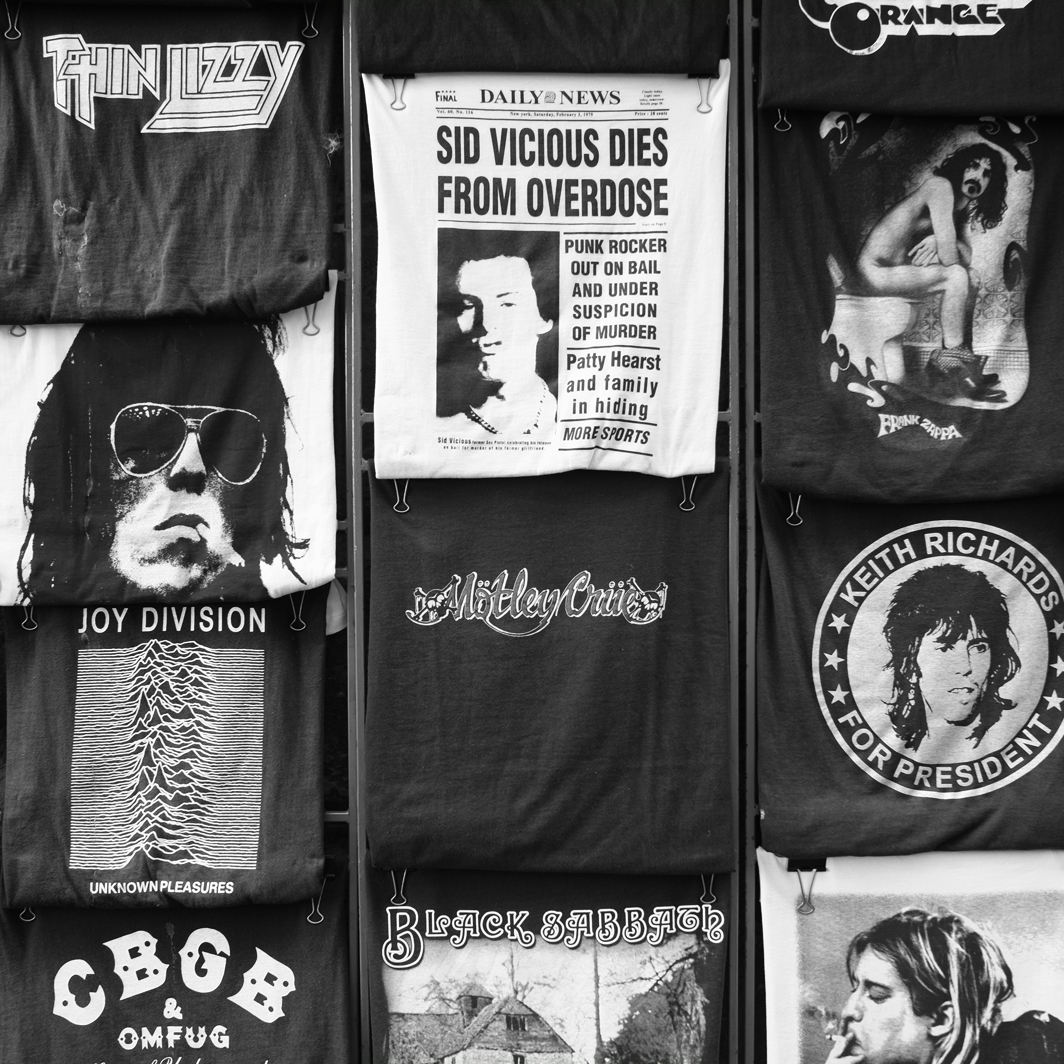
Rock and Roll

Rock and Roll

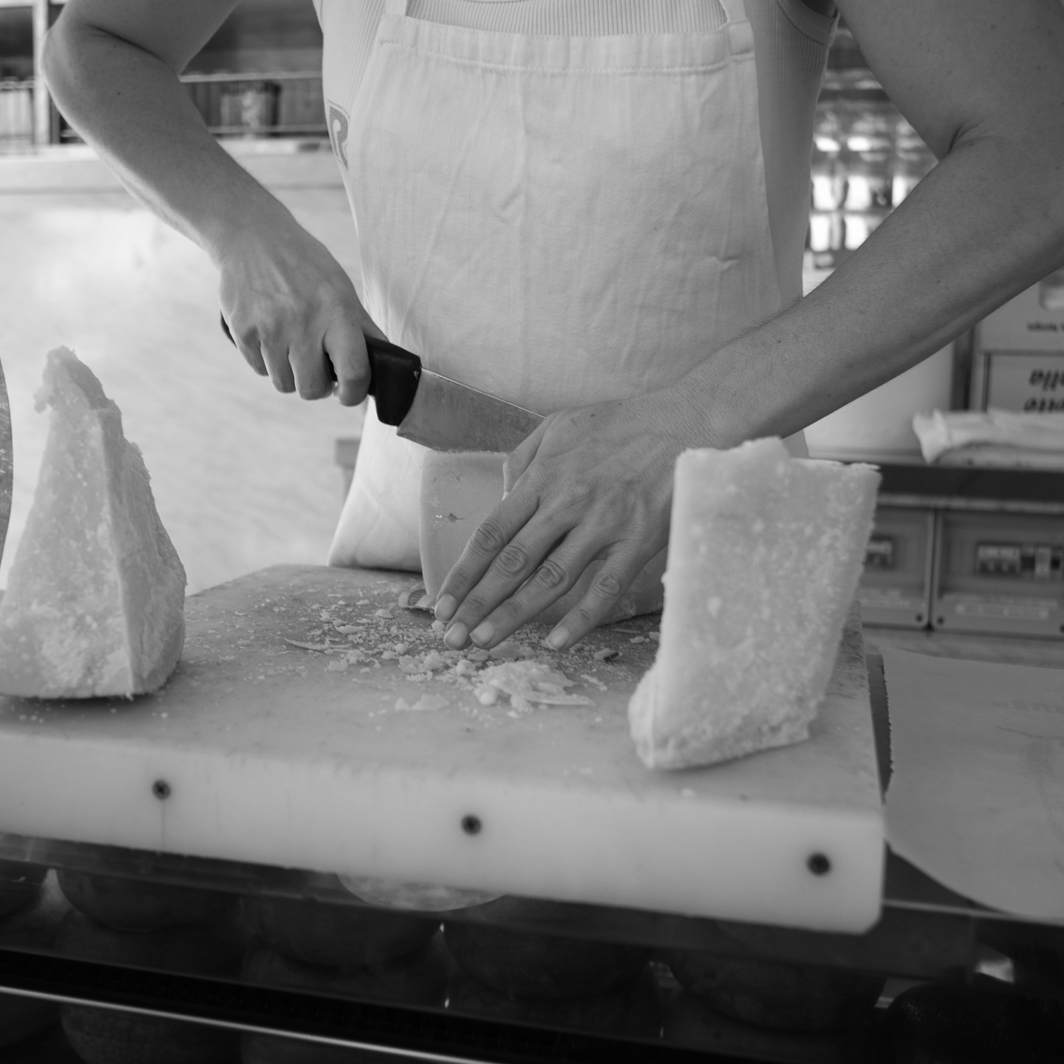
Time was limited, and I had other projects also on the burner. I thought about how the technique could apply to more specific subject matter, like hands, or people. In Camucia, on Thursday mornings the market attracts lots of genuine local flavor. In particular is a vendor who I call Senor Porchetta. His porchetta wagon always has a long line of bustling Tuscans getting their porchetta fill. He is jovial, equally good with pig or knife and knows his fegatini like Silvio Berlusconi knows a 17 year old.

Senor Porchetta

Senor Porchetta

Hands in the Cortona Market

Hands in the Cortona Market

I can’t recall the name of the photographer who said, “if you’re not sure, get closer”, but they were was certainly on to something. Engage your macro, and come in close. I love the macro on the 18 f2.0 is 7.09″ (18 cm) as compared to the 35 f1.4 which is 11.02″ (28 cm), the 18 lets you get in a little closer, but beware, the lens takes in a lot of the scene.

Detail of locks on the Ponte Vechio, Florence. Shot with 18mm f2.0.

Moms sewing kit in the Casa Tuscana.

Mom’s sewing kit in the Casa Tuscana, 18mm f2.0

Fujifilm also has a macro 60mm 2.4. I’ve yet to test this one, but as I continue to work with the 35 1.4 I’m sure to add it to the arsenal later in the year.

35mm 1.4 with a 200% crop

If you have read this far and are liking these images and wish to develop your style or just hear more ranting from me on style, here is a link to the 2 hour program on Youtube, “Finding Photographic Style” recorded in the B&H Event Space this year.

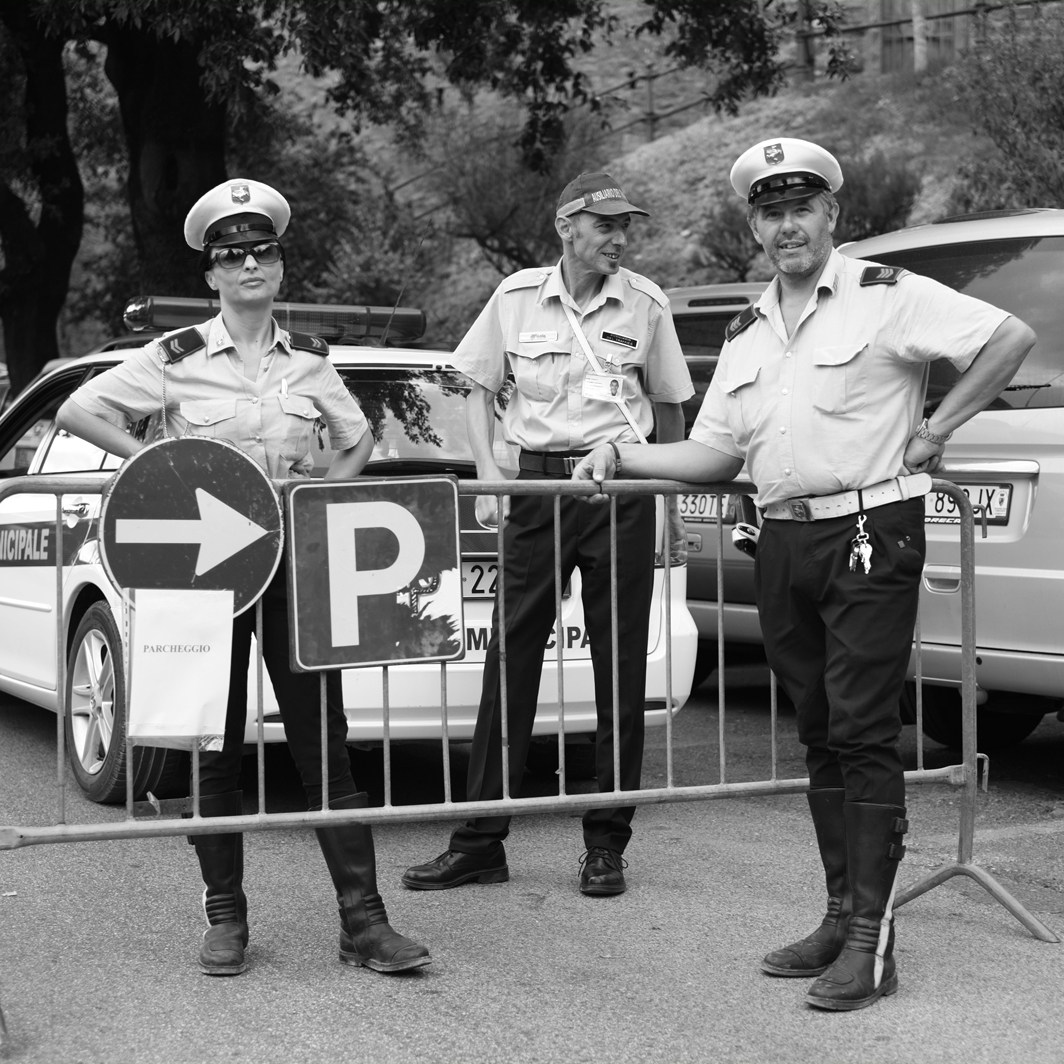
Cortona Cops

Cortona Cops

I also brought my Speed Graphic 4×5 on this trip loaded with Fujifilm Acros to do some cyanotype work. But thats a post for another day.

Ciao!

~David George Brommer

Zen, Zones, and Focal Lengths are now the new drugs.

Fuji X Pro 1, 18mm, Snapseed processed

The sublime pleasure of seeing space surrounding the self as a trained photographer is our greatest gift and pleasure. Shape, lines, shadows, highlights, objects, nuances of patterns, both similar and interrupted, the delicate ballet of balanced forms, transitions of contrast defined in air and matter while viewed in whole, then fractured and selected inside a frame, bounded by our souls perspective focal length. It is sublime when in the zone, when all those take prioritization in you vision, the camera clicks, and its done.

Fuji X Pro 1, 18mm 1/200 f 8 200 iso jpg

The sometimes and not-often secret peak of the photograph making experience is felt in a tremor of the shutter release and can be drawn out for 3 seconds or more after the exposure, this is the satisfaction sensation. You did it. You got that shot amongst a special plane of non-interest.

Fuji X Pro 1, 18mm Snapseed processed

Shooting and seeing is akin to seeking. What it is you seek may not be known to you, walking about armed with your camera and having no particular agenda. Space will reveal what is interesting, time will put your body in the right temporal position and you just might make an interesting photograph. Or you can exert heavy control and manufacture the perfect storm to capture that superlative image. Shooting in a studio makes you the great creator of light, like Lucifer and Prometheus you can encase your image with brilliant photons, be the master of the subject and set. Photographers that create in a studio assume the aspect of gods.
Fitness bill boards

Fuji X Pro 1, 18mm Snapseed processed

How can you shorten the length of mediocre image making from the creating of greater images? There is one way, and that is to make lots of images on an almost daily basis. Live in the margin of seeing, be ready to take the viewfinder as a macroscope for living in this space, here, breathing these sights, and feeling those reflections. Incorporate “often” as way of answering the question, “when do you take pictures”. Raise the camera and make exposures often.

Fuji X Pro 1 18mm 1/30 f 4 iso 400 jpg

A click is a drug and the resulting image the high. Multiple clicks lead to visible euphoria and in that fog of stimulus better images lie. Do it enough and you will find a reliable friend in f8 and a fickle friend at f 1.4. Stay shooting and 1/15 second all of sudden seems like a month. ¼  second and a year shoots by a like the Silver Surfer on speed.

Sean Kernan told me Tidd Hido said, “I think I’m addicted to the feeling of having just taken what I think is a good photograph.” Feed your addiction and makes lots of images. Embrace the “studium” and don’t bogart the camera.
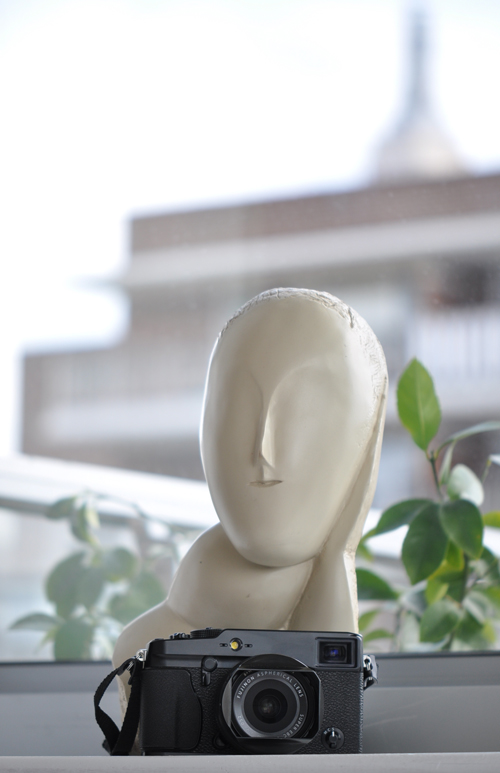
Fuji X-Pro 1, or “The Camera I have been waiting for my whole life”

xpro1

Last week, I got my new Fujifilm X Pro 1 camera with the 18 mm f 2.0 lens. This was a big move for me, I haven’t bought a new camera for many years, as a matter of fact, I think my last cameras that I bought were an Olympus Pen F vintage camera, and before that, the Deardorff 8×10. I would like to note, that various camera companies have been sending me cameras for years to test and learn so that I may spread the word about how to work them. I have put through the ringer Canon, Nikon, Olympus, Pentax, and Leica cameras. Also I have used extensively all the Pro Fujifilm Dslr’s with the exception of the Finepix S5 (I love to shoot with the S1, S2, and S3 watching the evolution from behind the finder). So I plunked down hard earned green backs on this not so little jammer. I wanted to own the camera, because I felt strong about it. The design and quality that is something that has been long in the waiting. If I were to compare it, the best comparison would be to Leica M 8.2 but that would be unfair, and to compare it to the Sony NEX system or Panasonic G3 is also a stretch. The feel of the camera mostly reminds me of Hasselblad X-Pan with out the weight. Actually I can feel the DNA of the X-Pan in the X-Pro 1, after all, Fujifilm manufactured the Hassy X-Pan and it’s lenses. You could even find the camera under the Fuji name of TX (The Xpan got an update to a Mark II in 2003 being called the Xpan 2 and the Fuji’s model the TX 2).

Hasselblad Xpan and Fuji X Pro 1 side by side

If Fuji making the vaunted Hassy X-Pan sends shivers down your spine and you didn’t know that Fuji is actually serious about pro cameras then now you know. Fujifilm is way more than just film and a lab company. They are committed to professional image makers, always have been, and always will. The X-Pro 1 is proof of that.

So exactly why am I so pumped about this camera exactly? Remember, I dropped over $2200 for it. Form and performance seem to go hand in hand with the X Pro 1. The camera borrows much from the X100 which was released a little over a year ago. Indeed, its a interchangeable and beefed up version of the X100 with lots of enhancements. The one thing it does better and were all happy about, it does focus faster than the X100. While I never had much of an issue with X100 it is faster and faster and more responsive it better.

What really sets this X Pro 1 apart from all the other mirrorless cams, is the hybrid viewfinder. If you’re not familiar with the way you see your image as you compose, there are two ways. The OVF or optical view finder and the EVF or Electronic View Finder. OVF is analog, your looking through glass and the EVF is akin to looking at a magnified tiny tv scene of your image. The finder can either work as gorgeous optical finder with projected parallax corrected framing lines, allowing for a host of info to be shown or not shown (everything from WB to battery charge, to meter mode, film sim mode, exp. comp, frames remaining, grids, levels, focus points and more) or as a EVF. Leica users will delight in the way to change the view from OVF to EVF, a lever on the front of the camera reminiscent of the Leica lever for changing framing lines to focal lengths toggles back to enable either view mode. Its a pleasure to look through a true optical view finder, you can see outside the frame of your scene (SLRs have trouble with this, they are view finder wysiwyg) anticipating when something is about to move into the composition. The EVF however is a bit contrasty yet clear, when the camera is in macro mode, the EVF automatically turns on and you have to use it. A clever way to circumnavigate the tenant that rangefinders are poor at macro. The Sony NEX does have a better EVF system, but the bright OVF trumps them all and is one of the pleasures of using the X Pro 1.

Its not a small camera, it has a modern look and lines, its sleek and all black. It is light, but tough since the chassis is magnesium and the body is wrapped in vulcanized leather with a rubber bumper grip. The X Pro 1 feels really good in the hands and around the neck. I switched to a Domke gripper strap, the supplied strap slips off the shoulder easy. There is also a grip available which I am waiting for the shipment. The 18 mm f 2.0 lens ships with a lens cap and a special wide hood and rubber cap. I lost the hood lens cap at a  Yankee’s game last week, so now I’m running it with a B&W 52mm UV filter, the hood and good to go. I’ll be posting more sample images here on Suspect Photography as I bond and become one with this camera.

David

Damn, thats a nice view, it’s burning. Beautiful!

Sitting at the table overlooking Chelsea in NYC my fingers are dancing over the keyboard with a life of their own it would seem. I’m about to slug back my cup ‘o joe and ponder the words I’m about to throw into the web, in the hood of the blogosphere and wonder what I do believe every blogger who came before me thought, “is anyone going to read this? give a rats ass about the posts? what am I going to actually say?”. Perhaps I would be better off just shouting from the balcony. Considering its a cold spring morning and I’m in my underwear, it would be best to continue my current course and pour another mug of joe.

Lets get down to biz shall we? What do I have to say with this blog? Here is where I’m going to go with this. A commentary on photography. This blog will review gear, point out important photographers, host new photos, and be a sound board for what goes on in my head focusing on creation of photographic imagery. Two things have really been on my mind these days-months-years and I’m hoping that this electronic form of communication will let me unburden these thoughts and get feedback from those that just might give a crap.

All right-y Time to ROCK, do this… Lets get what’s in the head into digital distribution. Stay tuned… turn on… feeeeeedddddddd…..