DSLR is Dead, Long live DSLR
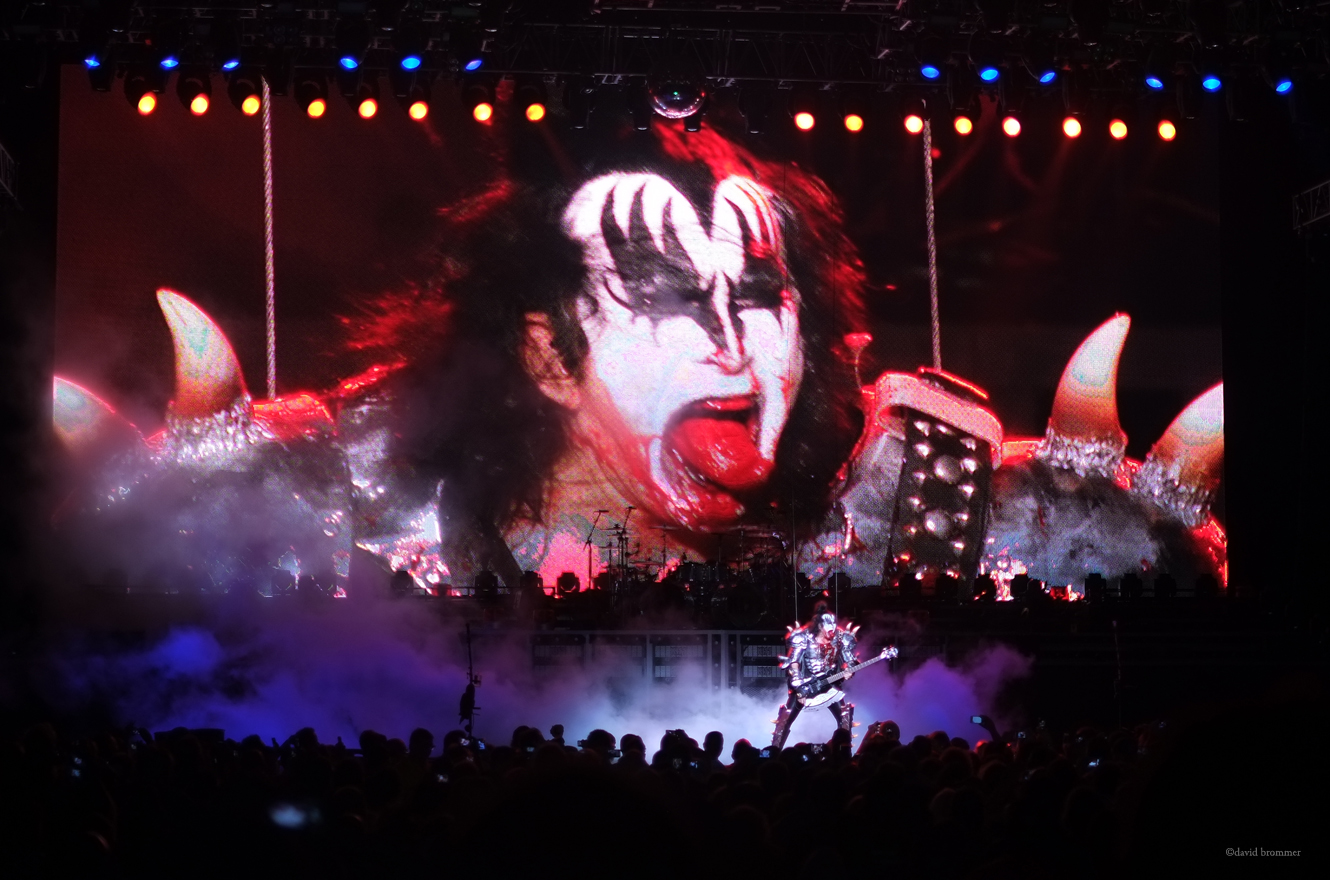
Gene Simmons of Kiss, still spewing blood after 40 years.
The grumblings of this rumor started with my friend Brandon a few weeks ago. We’re both “photo industry” guys and we are privy to charts, numbers and insider information (of course this is photo industry insider info so we wont be chillin’ with Bernie Maddox) about cameras and the technology that drives them. In the past few days after the big Photokina show (photo industry trade show in Europe where half the new camera’s of the year are announced) a flurry of “Mirrorless” cams were announced. Also back in January 2012, photo blogger and all around good guy, Trey Ratcliffe posted “DSLRS are a dying Breed”. Seems a lot of attention is being mentioned online about the future of camera gear and it seems the poor old DSLR is getting it’s mirrored rump slapped. However, I disagree whole-heartedly with these predictions. The DSLR is a vital tool in photography, it has its place and shant be replaced with a Mirrorless camera they way the DSLR made the film based SLR obsolete. On the contrary, DSLR lenses and functionality will continue to increase and become much more popular as the coveted full size sensor becomes more affordable. For a long time I believe, at least a few more generations of photographers. Many of my students ask which is better? I don’t believe one is better than the other inherently, but which is better matched to the user. I do get rankled when I hear that DSLR is dead. I think far from it. Very far, like galaxy far.
First I’m going to characterize the users, the photographers who will be making images so we can establish what they need. The first letter will act as code applying to the following lists, the strong points and weak points of DSLR vs. Mirrorless and which photographer can benefit. This is a very fair way of evaluating the merits of each class of camera.
Types of Photographer
<PP> Pro Photographer: Someone who pays for their food and shelter with money generated by photographs they make. In most cases, they will specialize in genre such as journalism, fashion, portrait, event (weddings and such), sports, commercial (companies need photos of all the time), fine art, and the a common one, the “freelancer” who will shoot just about anything to make buck. Often they may have studied photography in school and fallen in love with the medium. Pro Photographers often blur the lines teaching, lecturing, testing and taking on new projects as they present themselves. But for all, this is their primary source of income.
<AH> Advanced Hobbyist: Someone who loves photography including the images, the gear, and the simple act of clicking a shutter and capturing a slice of time and place. They can be fanatical in their pursuit of photography. They purchase the latest gear, they take photo trips and join clubs and enter photo competitions. If their 2.0 minded, they might also have a heavy online presences with social media such as Flickr, Pinterist and such. I’m also going to put the fine art photographer in this category. The emphasis is on vision with a solid versatile camera for the needs of these shooters.
<CS> The Casual Shooter: They would never call themselves a photographer, they just seek to document important people and occasions in their life. They are the vacationers, family, and friends. They are not usually artistic nor the have the inclination to really care about the finer aspects of a good photograph. They often know a good photo when they see one, but their quest is to record a slice of time and place sharply, well exposed and with a minimal of effort and size.

What cameras will this generation be shooting with? BadAss I’d say!
Merits and Shortcomings of DSLR and Mirrorless
Long lenses: Long and fast telephoto optics is plentiful for the DSLR. Since these lenses tend be long and heavy, having a larger camera on the back of them really helps your maneuver the whole package to get what you want. PP, AH
Easy Ergonomics Due to Larger Size Camera: DSLR are indeed larger, and that can help by providing more space to put buttons and larger buttons at that. The Olympus Pen cameras in particular have very small and annoying buttons to navigate menu and camera features. Having a good grip on the camera can help make it more easy to use and less fumbling. This rings so true when working with heavy fast optics. PP, AH, CS
WYSIWYG or “What you see is what you get”: No matter how good a EVF (electronic view finder) is, your still looking at pixels. Movement, gain, grain is all presented in the viewfinder if your lucky and even have one on Mirrorless cameras. That archaic mirror reflex system found on DSLRs lets you see in analog, like the world was meant to be seen. I don’t want to compose looking at a TV screen, because that’s exactly what an EVF is, a miniature TV. I’d rather look at the real world when I’m making a photograph. I want to “feel” the place and find the image. I have never been a huge fan of video games and seeing the scene gives it more tangibility. PP, AH
Pros shoot with Pro “looking” Cameras: Show up to shoot a wedding with the same camera that Uncle Bob has will make the Bride wonder why they are paying you the big bucks. It may be superficial to make this claim, but it’s true. There are different levels that a pro photographer can attain. Lets say the highest is shooting for Vogue, you will need to project an image to have access to this type of photography, and yes, a Hassalblad H4 will impress the art directors, models, and most important, the client. Show up with a Panasonic GH3 and your going to get laughed at. PP
Value: $500 bucks gets you a really nice DSLR. $3000 gets you’re an extremely capable camera. I think that there are great values in the range of DSLR’s out there. CS
Compact and Light Weight: For the photographer who travels, this is fantastic. Hauling around lots of heavy and cumbersome gear is annoying and for some folk prohibitive. Many of my female students have small hands, and the smaller cameras fit into them better. Some of my students have been older and between arthritis and other physical reasons a smaller camera is easier on their wrists and back. The photographer Bob Krist who is known as a travel photographer likes to use these smaller cams because he is restricted often by weight limits on bush planes. CS, AH (and sometimes the PP if travel is their specialty)
Performance vs. Cost: Bigger sensors provide more information and can yield a better image. Especially if your printing large or will be cropping. Larger sensors to tend to also have a greater dynamic range to capture highlight and shadows. As of 2012, it is less expensive to purchase a DSLR with a APS-C size sensor than a comparable mirror-less camera. The Canon Rebel T3 costs $479 which is the least expensive DSLR on the market. The least expensive Mirrorless that has a APS-C size sensor, the Sony NEX 5n is $499. All the other models of Mirrorless that have APS-C size or micro 4/3 are much more expensive. CS
Lens Selection: You can mount more lenses without adaptors onto the DSLR system. While this may be true you may never venture out to using a 1970’s vintage Canon FD, Nikon AI or maybe that hip Russian Zenit lens. Mirrorless cameras can use various mount adaptors that can be costly but usually the focus will be hampered by the EVF. The only one that does it well is Sony with their focus peaking feature, but I don’t care to evaluate focus with shimmering white dot matrixes personally. PP, AH
Cool Factor: DSLR cams hearken back to the golden era of film based 35mm photography. There is nothing like making pictures with a SLR, the clicking sound, the heft of the camera and the strapping on of a camera that says Nikon. Mirrorless cameras are radical and hi-tech. they often don’t even look like a camera. AH, CS

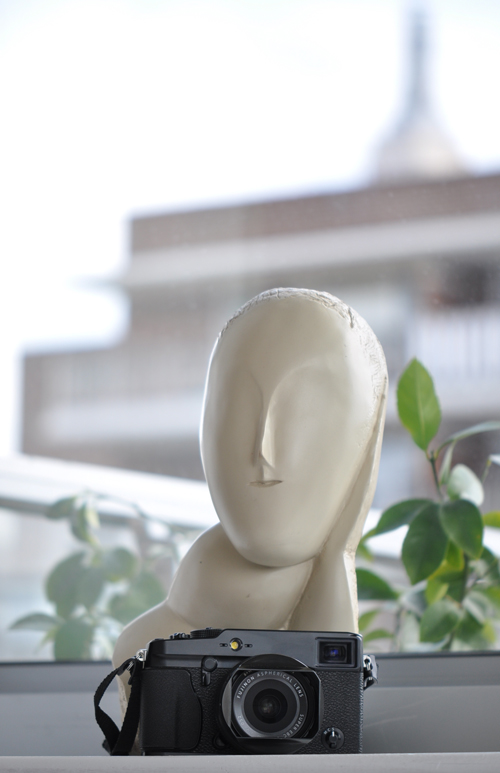
Talk to the skull, er I mean hand.
I hope this post sheds light on the recent debate. As for me, I chose the Fujifilm X-Pro 1 mainly because it gave me parallax corrected viewfinder, performance, and size plus a whole lotta cool factor. I stand by saying that any camera in the hand of a person who has vision and some technical skill can make a great image from that camera. Can they make many? Then it takes the right camera to photographer combo.
The place is really jumping to the Hiwatt amps,
‘Til a 20-inch cymbal fell and cut the lamps,
In the blackout they dance right into the aisle,
And as the doors fly open even the promoter smiles,
Someone takes his pants off and the rafters knock,
Rock is dead, they say,
Long live rock, long live rock, long live rock
~David Brommer



 Suspect Photography