Suspect Photography

words and images from david george brommer

Tag: digital photography

Lives in Motion: Vera Hershenberg’s Photography Exhibition

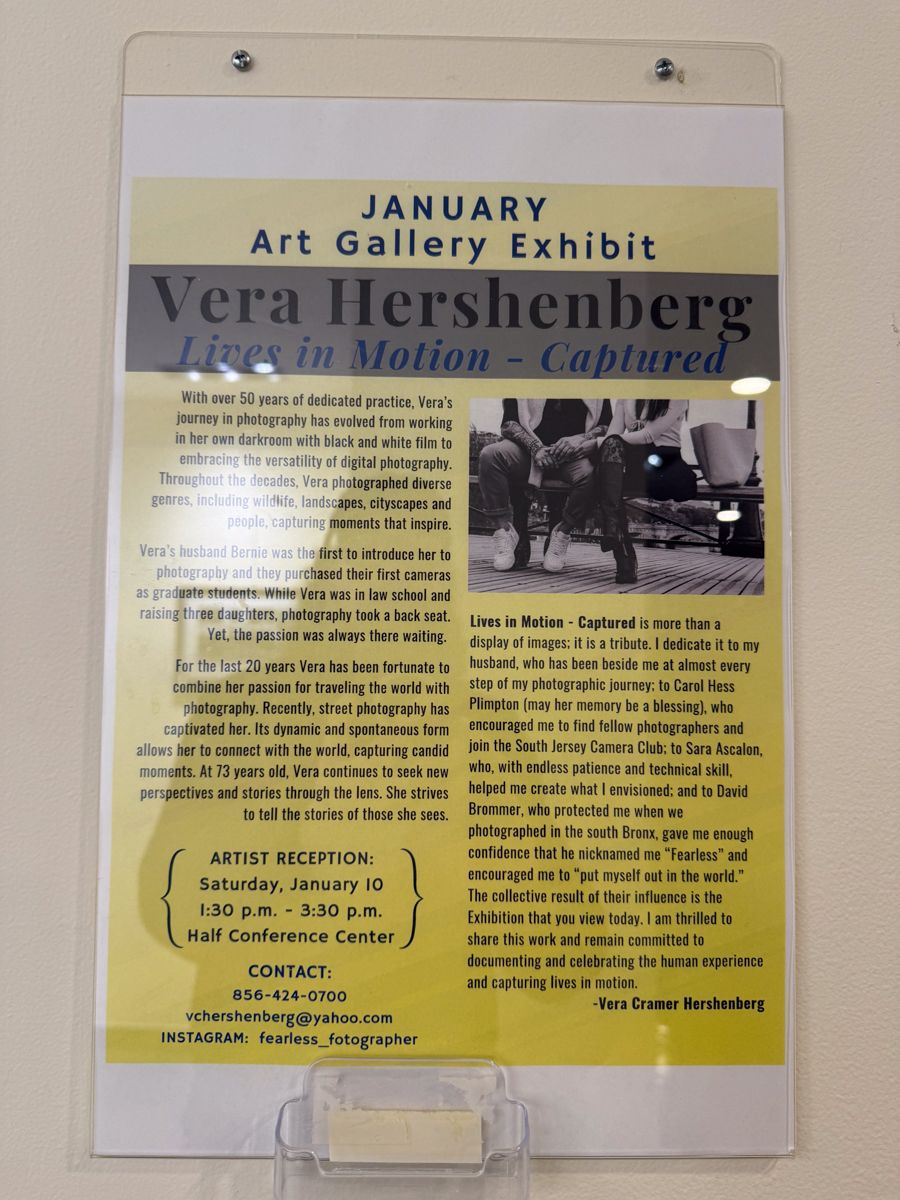
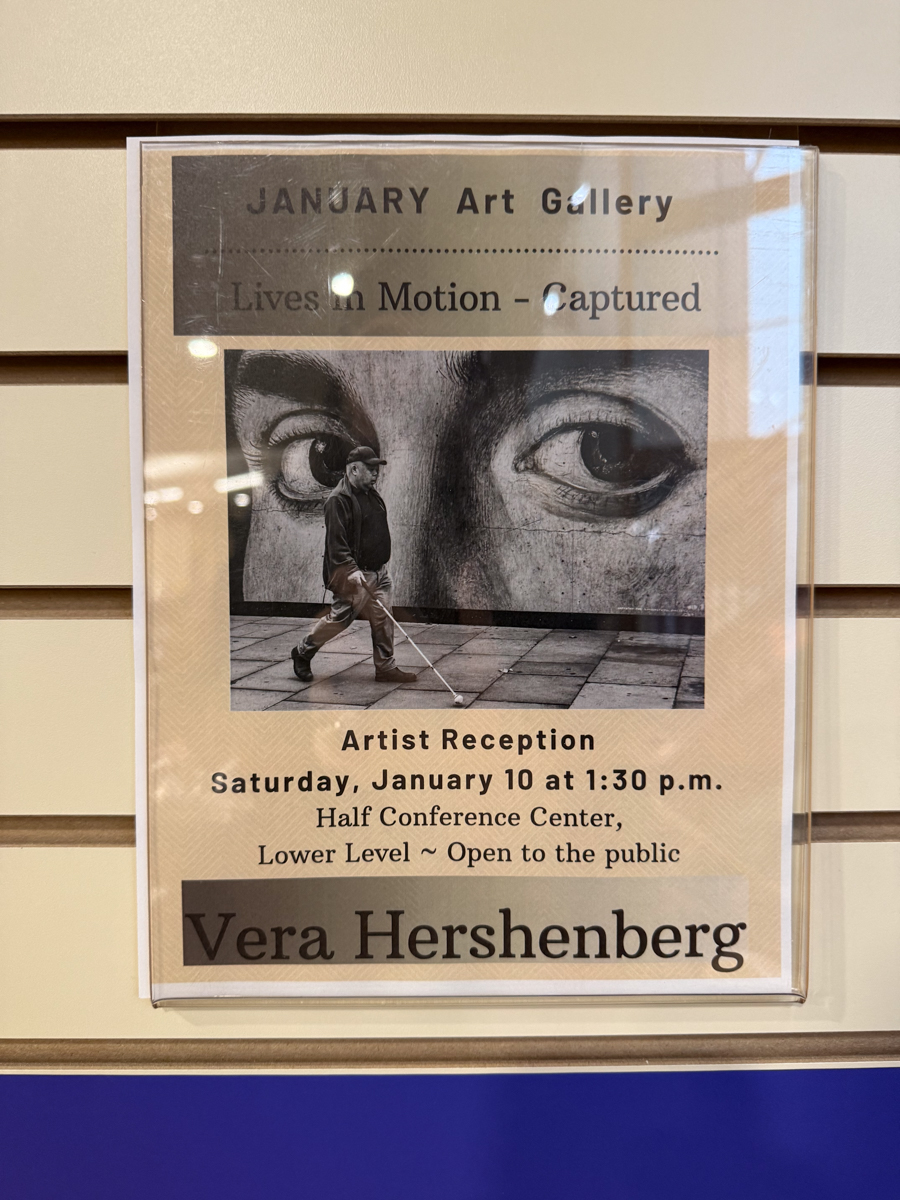
Two years ago I received an email from one Vera Hershenberg asking questions about our NYC Spring Street & UN workshop. It took a little pushing and logistical maneuvers, but she joined us on our inaugural workshop. I spent some time working with Vera, making sure she was in control of the camera and getting what she saw in the files. That was Vera’s strength. She “sees” and she goes for it. Over the workshop she earned the nick name “Fearless” because when she raises her camera chasing what she sees, Vera knows no fear. So it was that we worked in the Bronx, Harlem, East Village and the rougher edged neighborhoods for over a year where Vera shined. Her fearlessness rubbed off on the other work-shopers and made them go a little further too. Vera has chosen street photography late in her life and I am honored to be her camera whisperer. She attended the first Suspect Photography Retreat In the Woods and took advantage of the wise instructors to show them her work and help her organize it for an upcoming exhibition. This past weekend was the opening of her show, Lives In Motion – Captured. The show was so excellent, that I’m going to compare Vivian Maier to Vera Hershenberg, albeit with a conditions. For now, let’s let the work speak for itself.
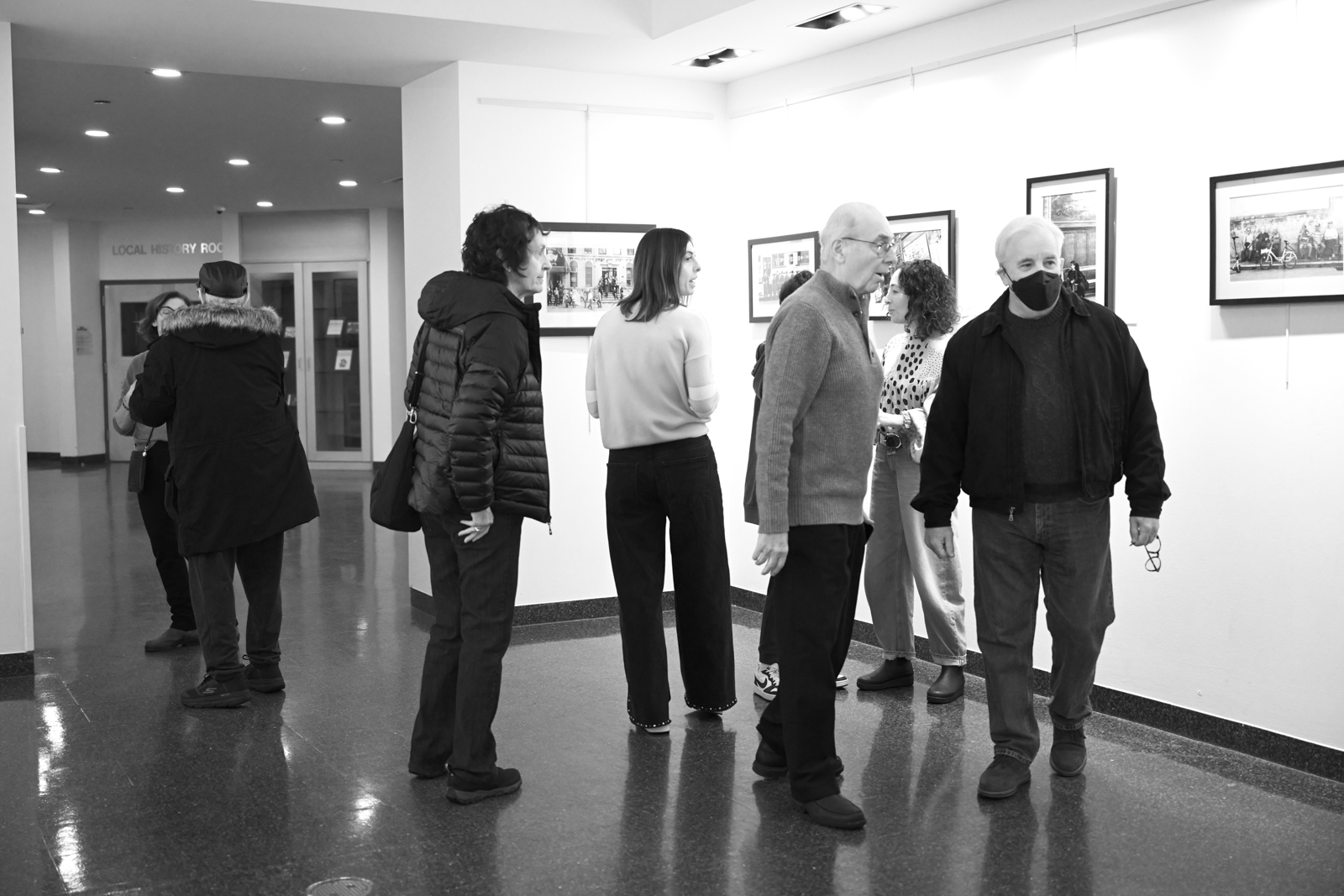
The gallery was located in the Cherry Hill Public Library. Excellent wall space to fill with work. Vera invested in quality framing and had a friend from the local photo group help with the printing (Canon Printers were used).
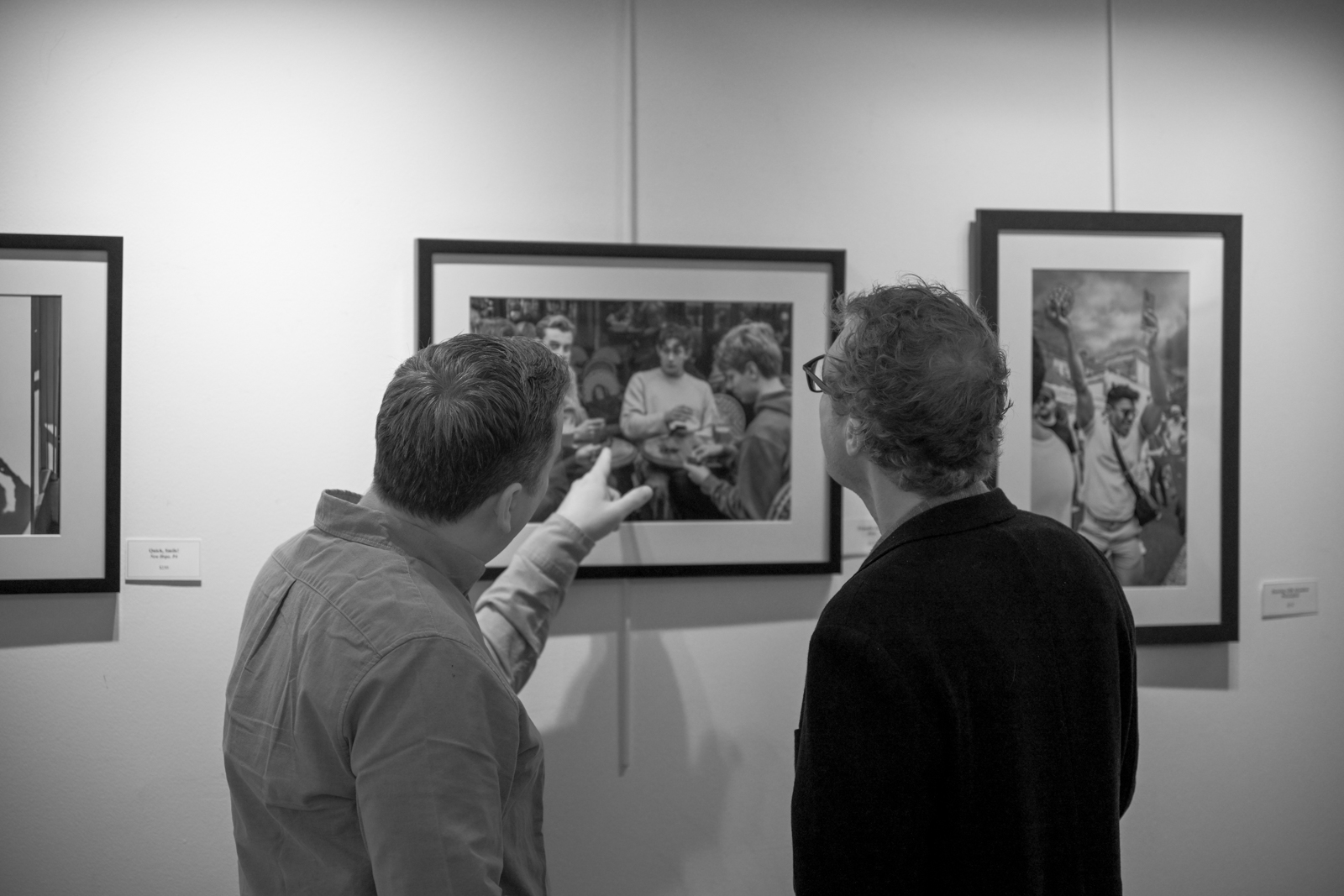
Vera’s work engaged the viewers.
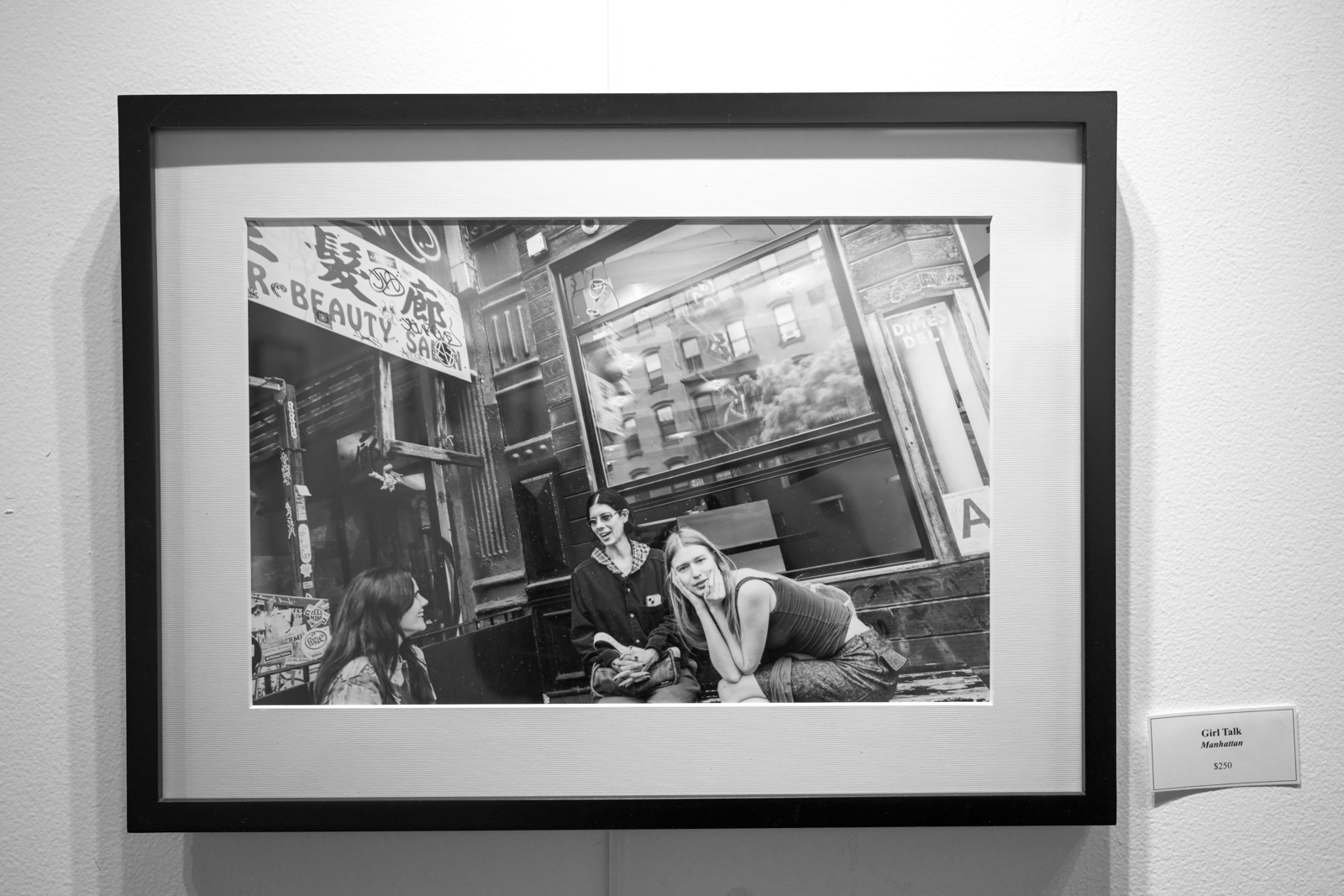
Girl Talk was made on our spring NYC workshop. I recall discussing it with the class during our review sessions. While I liked the image then, to see it printed properly made the image sing. The geometry is stunning, the gesture beacons, and it’s a true Street Photo of the candid nature.
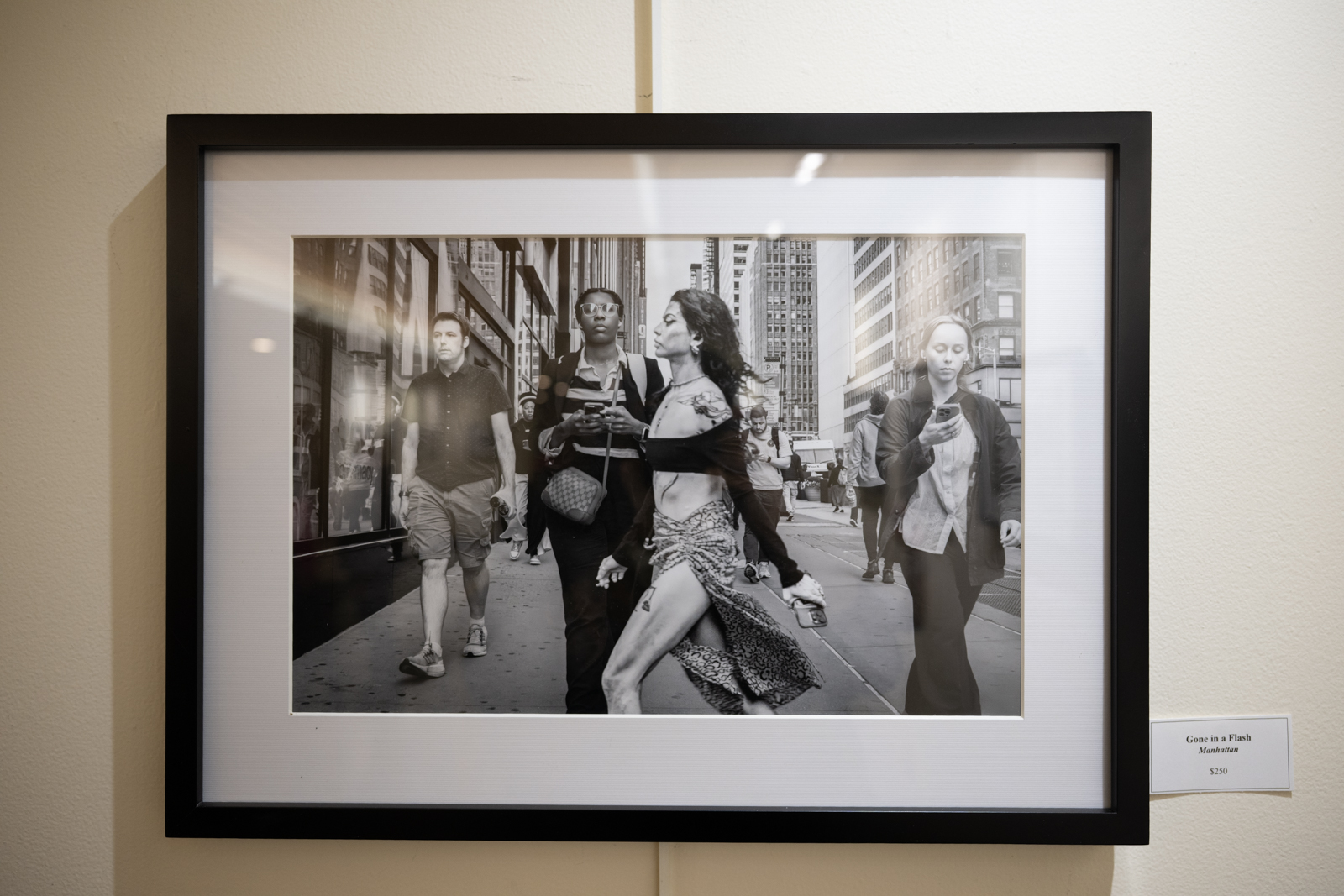
Gone in a Flash is perhaps my favorite image. It begs a long look and tells so much of a street story taking place across an elaborate composition.
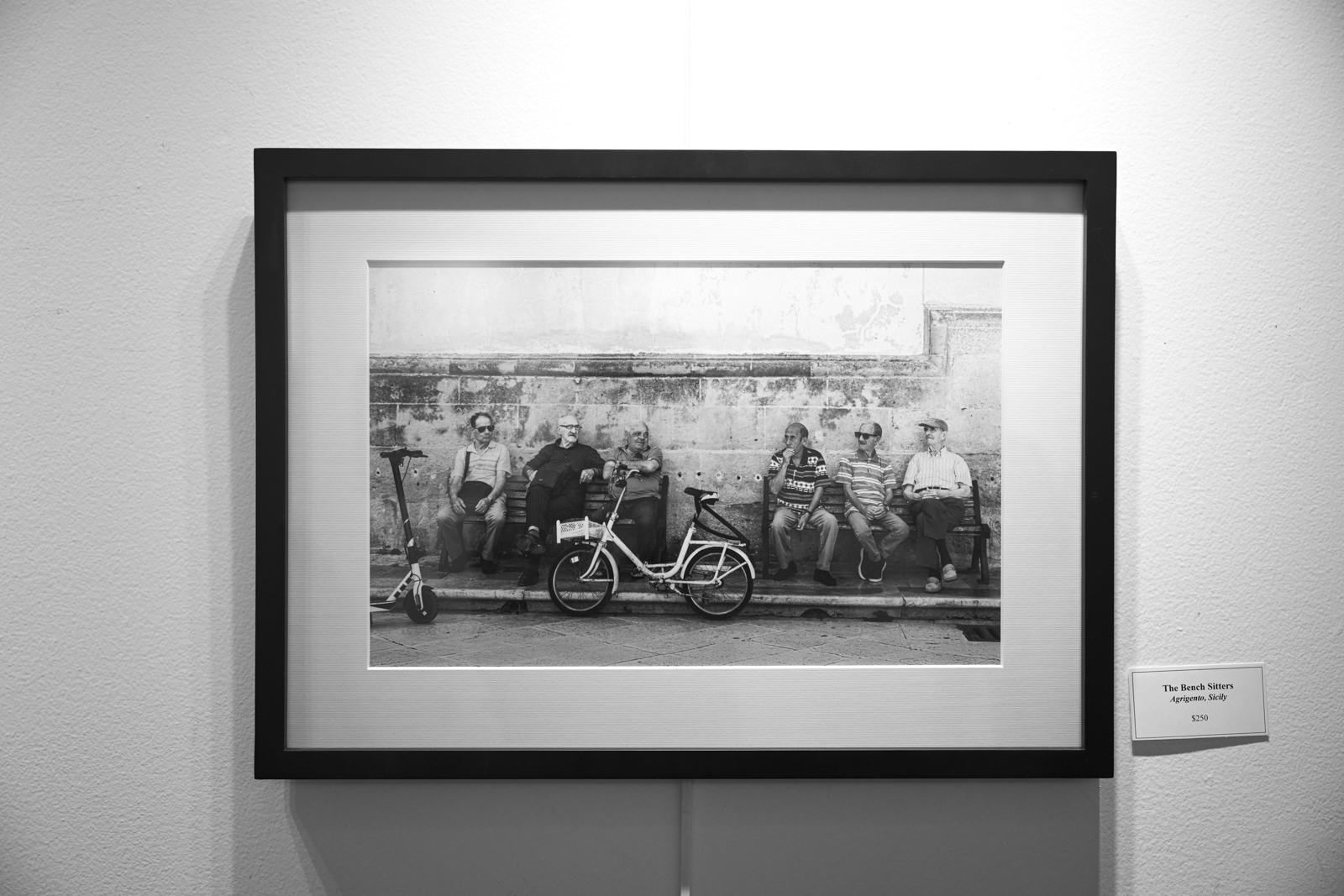
The obligatory old guys sitting behind a bike photo. I think this show hit a number of high notes and many mid-highs, it’s images like these that are the brick and mortar of a show.
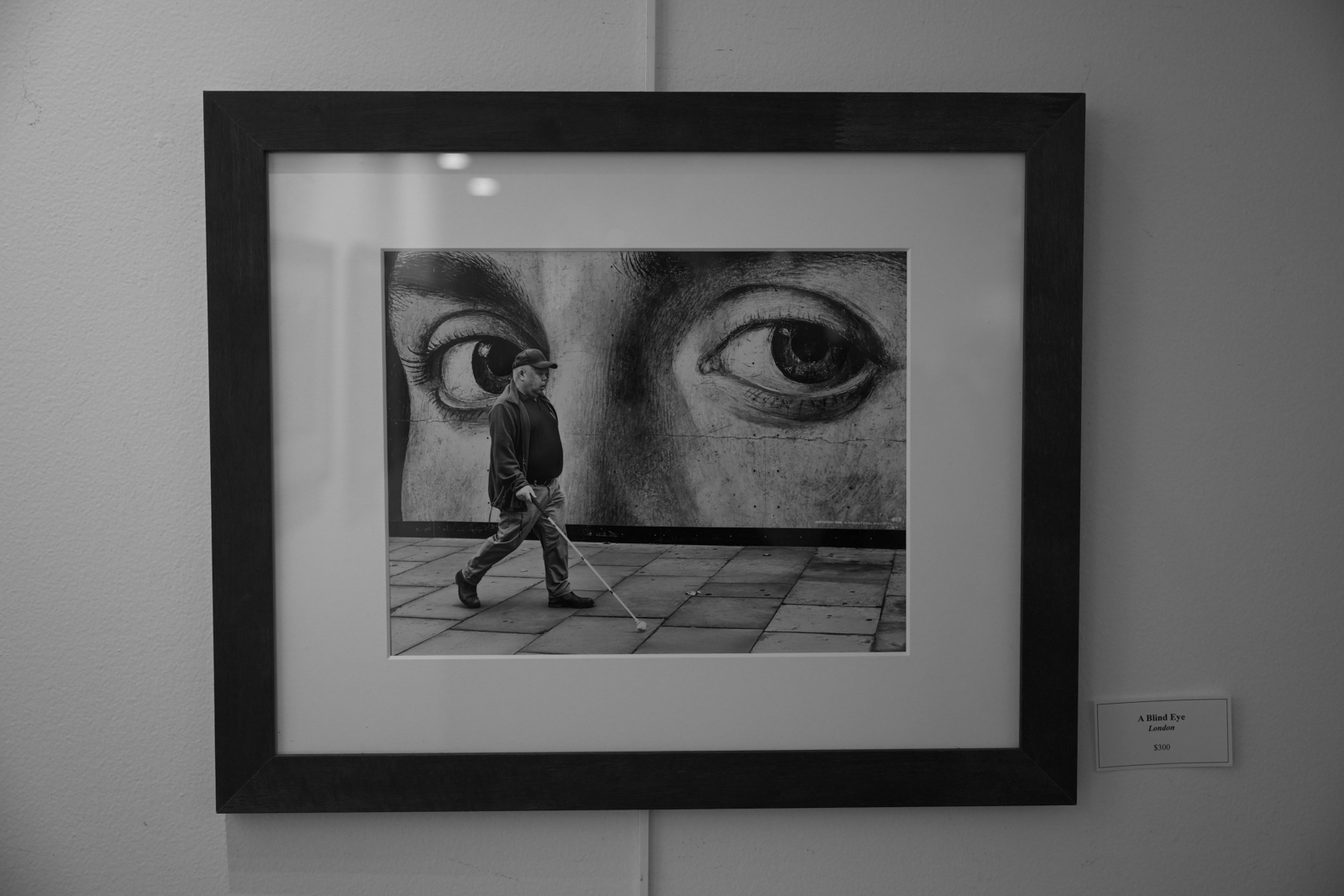
And then a Blind Eye is presented. A perfect street photo worthy of a Magnum photographer.
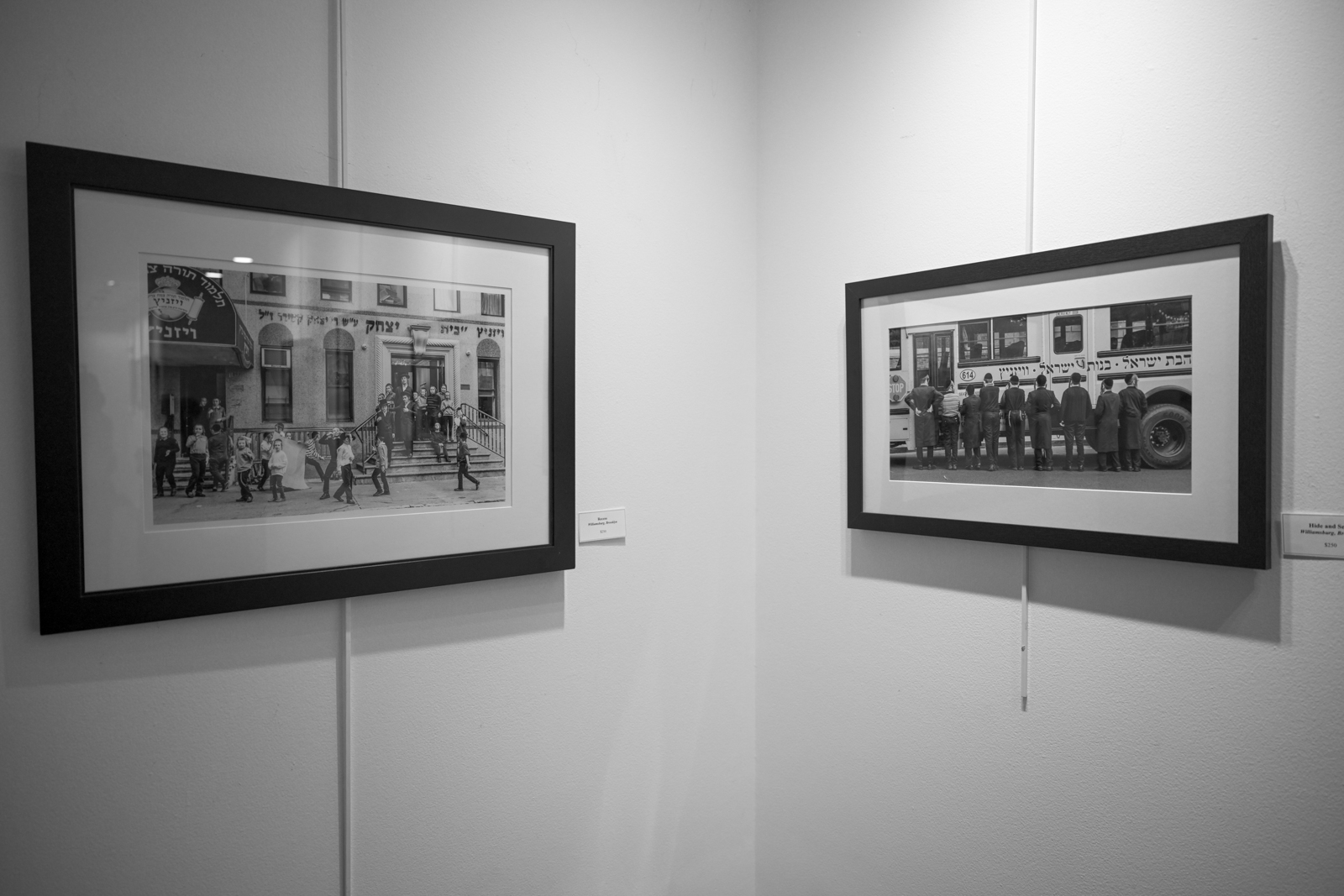
I lead workshops through Williamsburg Brooklyn into the Orthodox enclave. Vera inserted herself into this world with zero hesitation and made compelling work. It’s interesting how the subject reacts to the gender of the photographer. Vera being jewish meant she understood the basic layers of the orthodox, but was also surprised at the depth of religion that plays out in this neighborhood of tennements and storefronts.
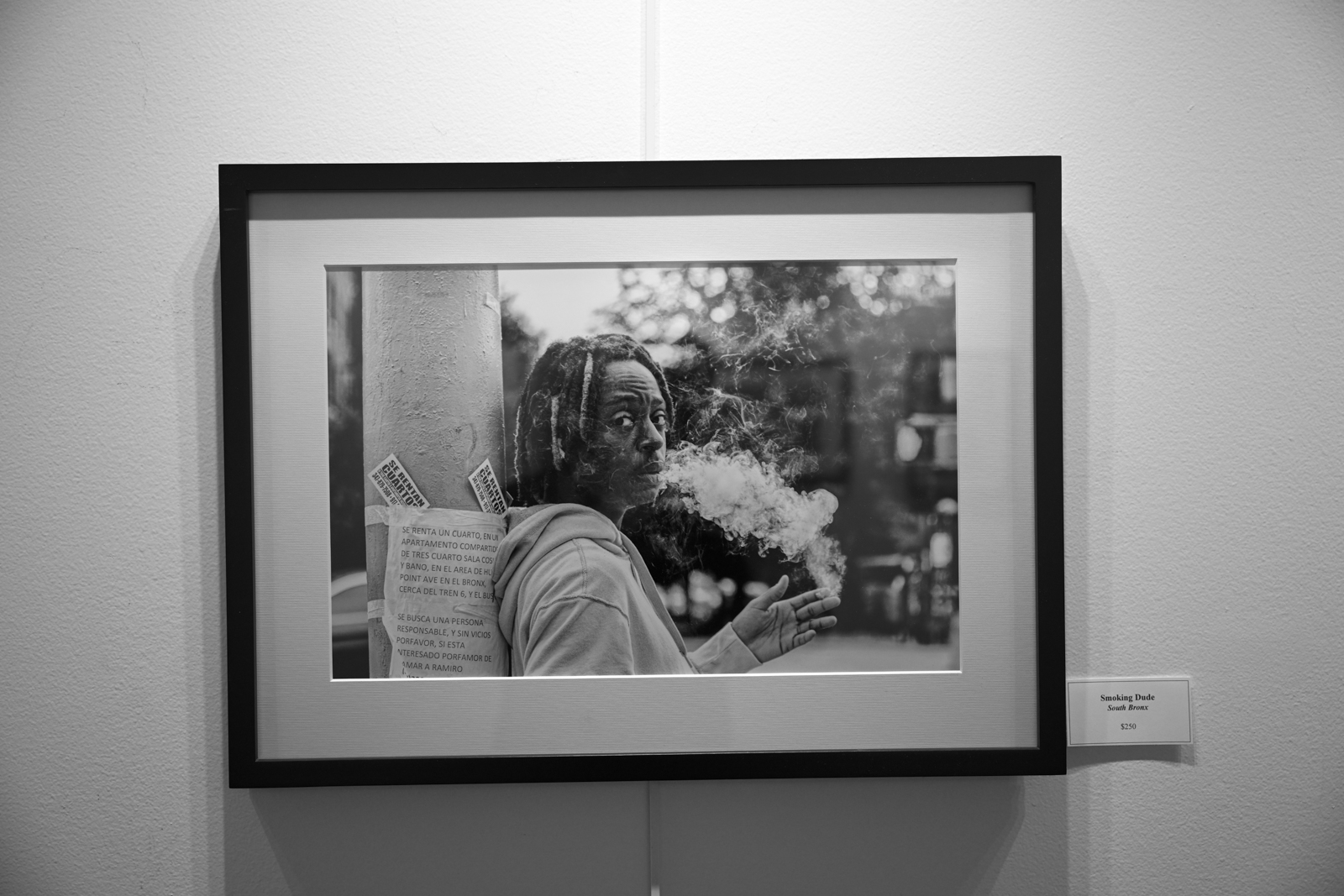
Then there is Smoking Dude. This photograph has a long story behind it, and you’ll have to take a street photography workshop from me to hear it or ask in person. To me, this photo is everything that happened leading up to it’s making, and down the block after it’s making.
I believe any exhibition can lead to a meaningful experience. The highest goal is to be featured at MoMa, but until then, start with local libraries, cafes, bars, and shops with nice walls. From there, aim for gallery representation or art shows. If you want to try this world, look for a group show; it lets you enjoy opening night with low costs for printing and framing. If you’re bold, go for a solo show!
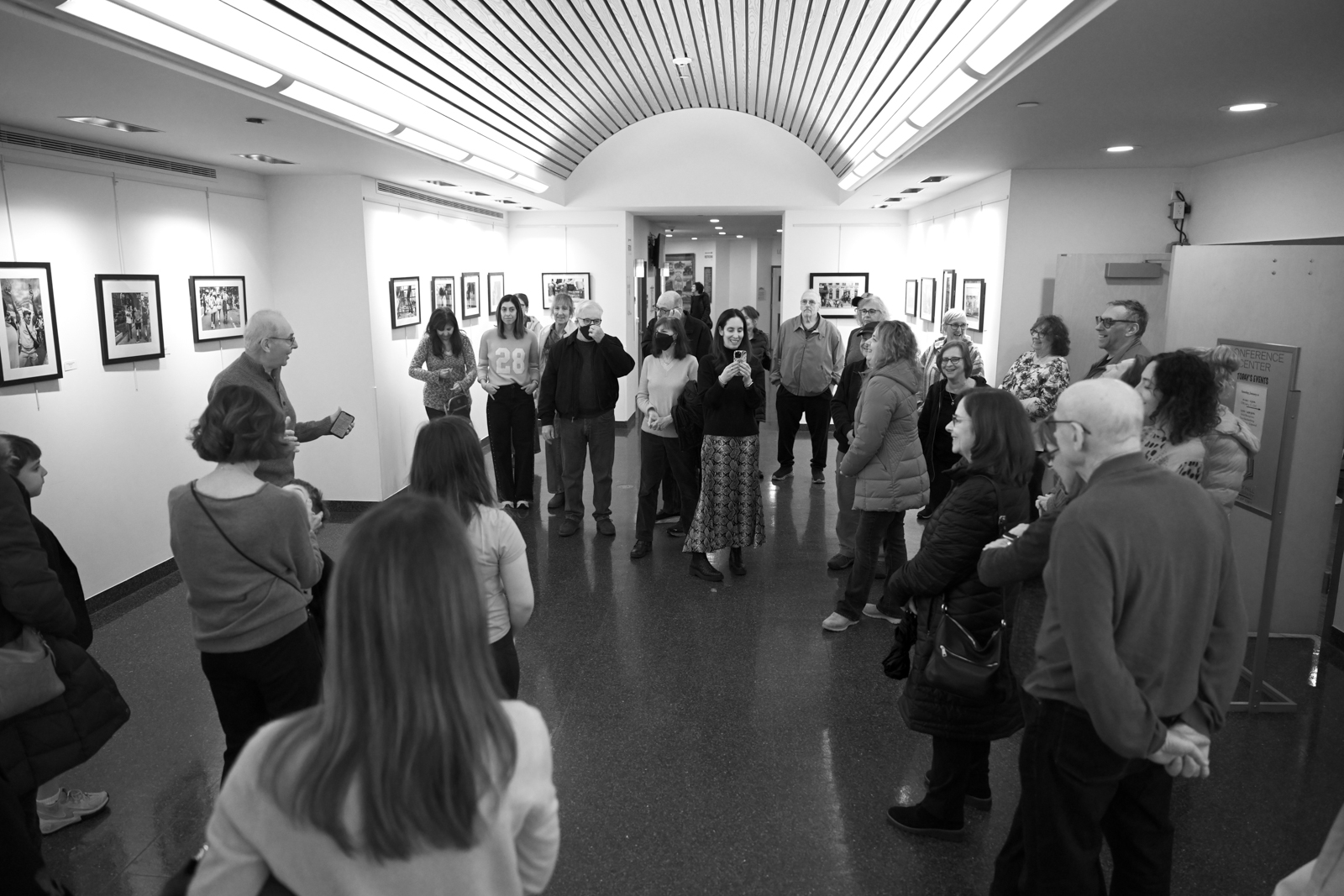
You can’t mention Vera with out mentioning Bernie. Bernie is Vera’s loving husband of many years. He may very well be the most reasonable man I know and is a keen photographer as well. Vera keeps him on his toes, and they have a relationship to admire. At the opening Bernie read a touching testimonial to Vera’s accomplishment.
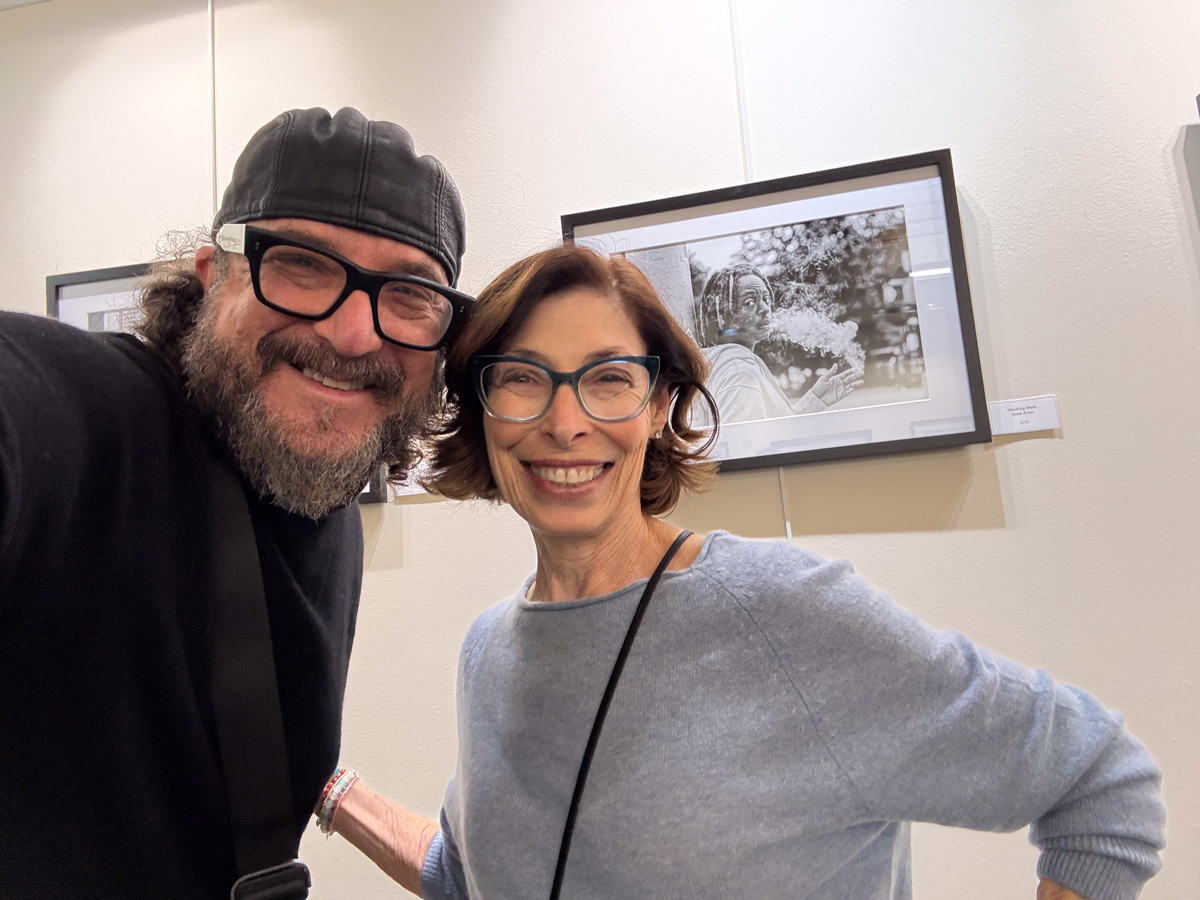
To me, an exhibition of work is the highest form of artistic fulfilment. Websites, Social Media while all playing a part, nothing beats a printed, matted and framed photograph. Yes, I am a traditionalist. But I feel it’s simply the best way to enjoy an image. To complete an exhibition of quality is a major undertaking from a logistics and artistic standpoint. Vera activated her network, set the goal and reached it with aplomb.
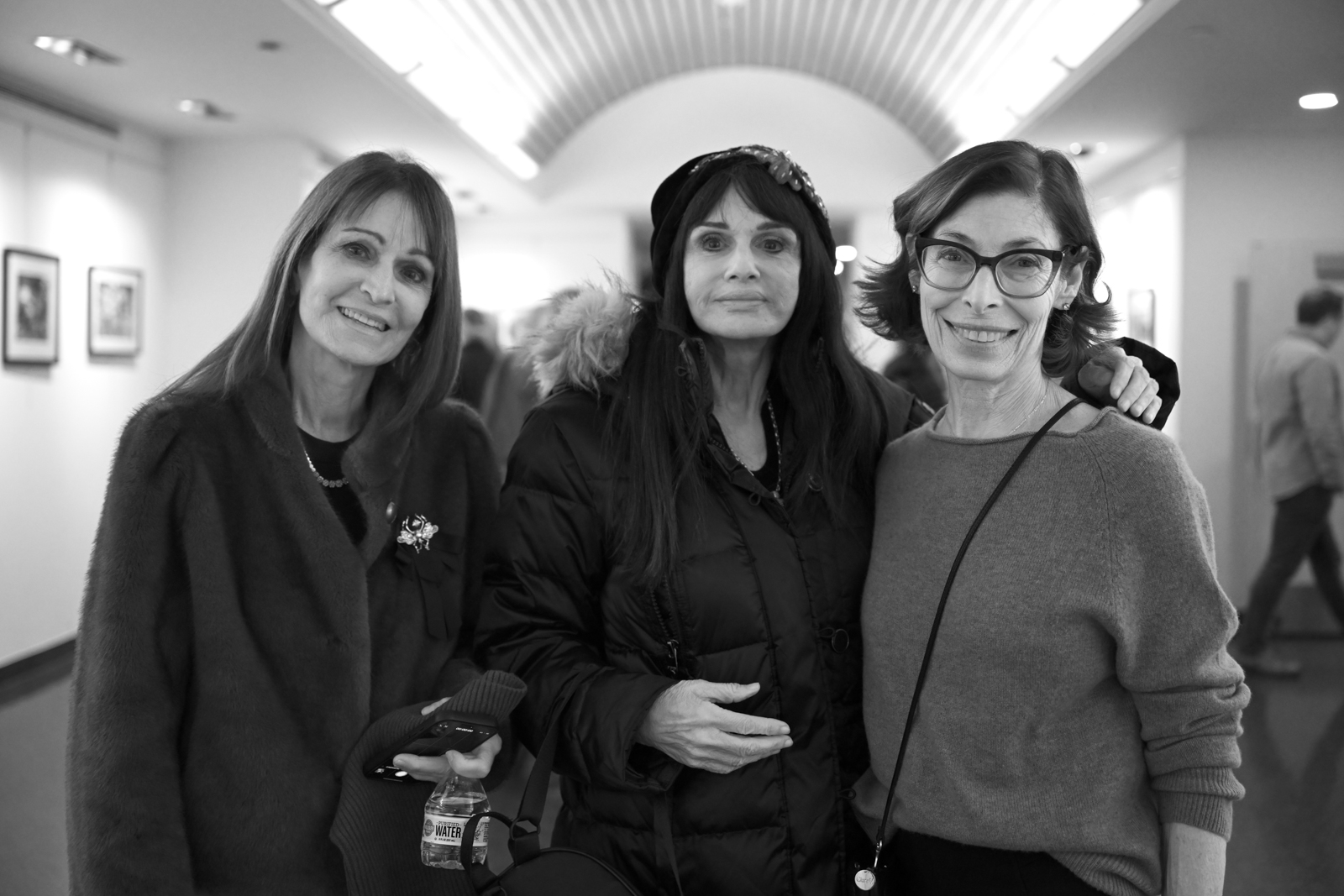
I’m not big on birthdays or other “automatic” celebrations. To me, if you want to celebrate, I’d be much more impressed if you celebrated what I did, and so a show is true celebration on accomplishment. To see Vera among her freinds, family and strangers showcasing her work was very warm and well deserved.
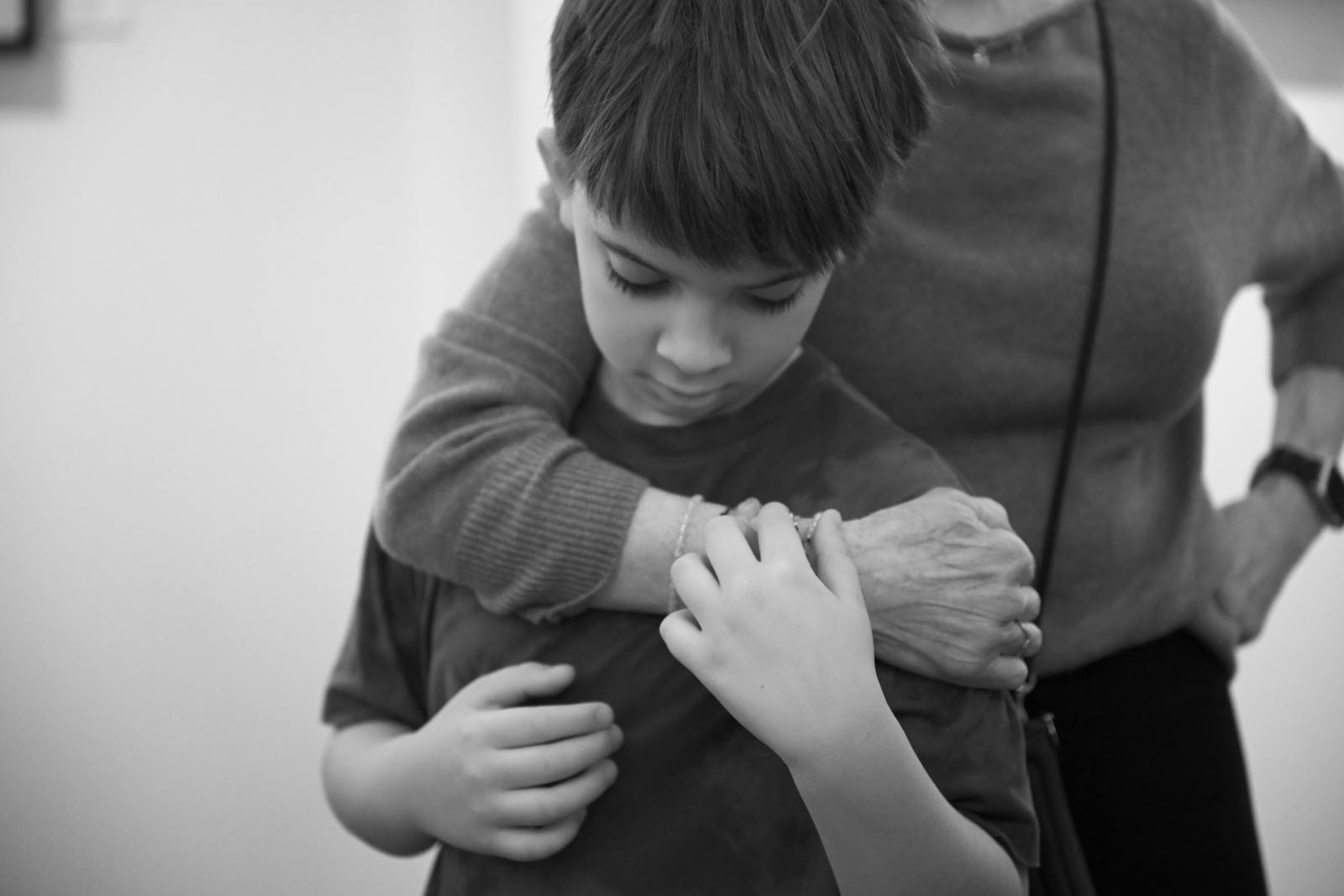
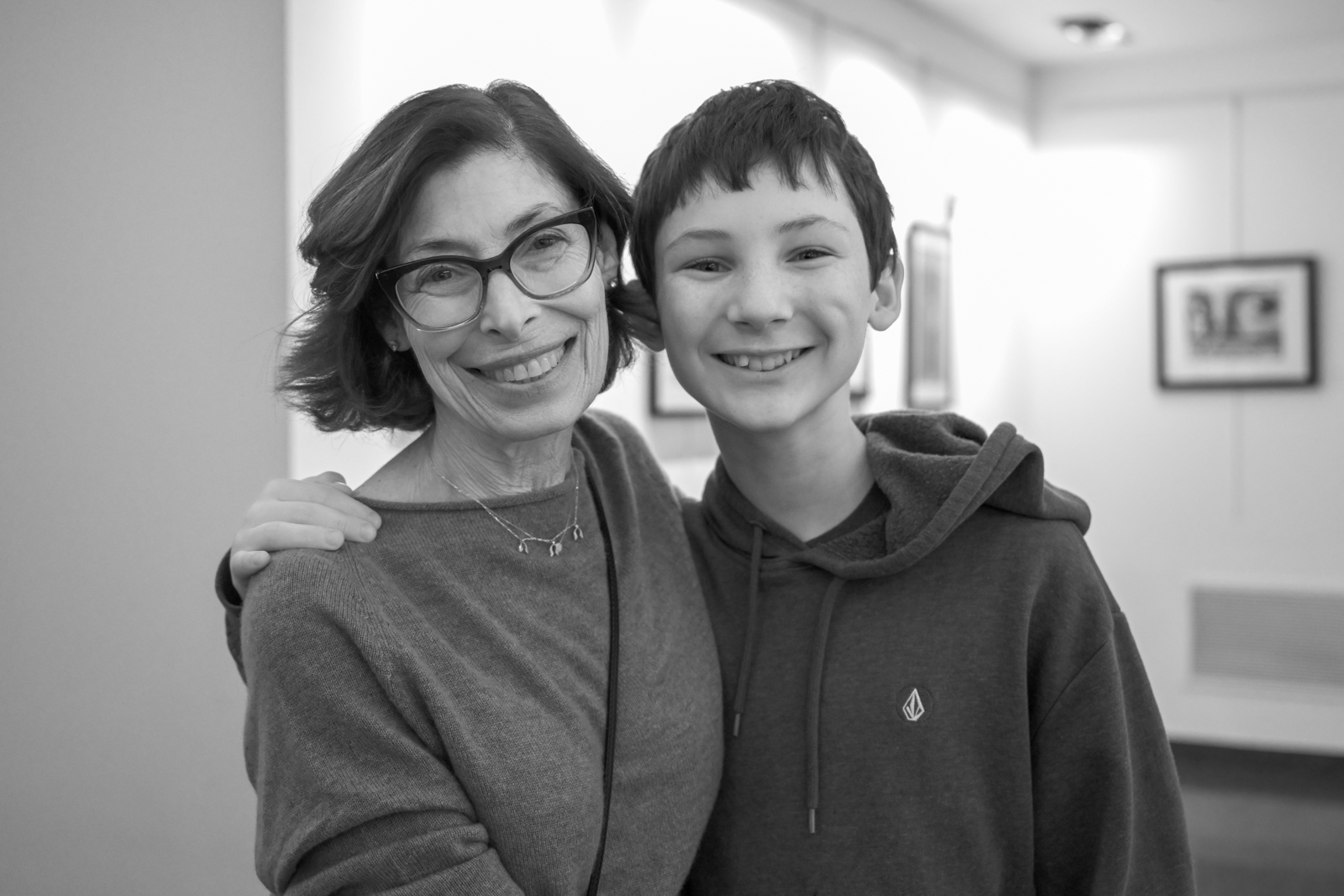
My Granny was cool in a horse racing sort of way, but she didn’t make the work that Vera makes. Her children and grand children were in attendance and I wonder how the show will impact them. Certainly Vera has shown them that she is not your average Ma- but a talented, strong, smart and defining exemplar of street photography. Earlier I made a comparison of Vivian Maier to Vera Hershenberg and I’d say that had Vera spent her life in a near hermetic state she would have produced a body of work very similar to Vivian. Except no selfies, Vera is all about the world around her, not about her in that world.

Follow Fearless Vera on IG

If the goal of a photo show is something that attracts you, stay tuned for more inspirational photography from Suspect Photography Education or book a private one hour review to discuss your work.

-David
Climbing the Mountain – Thoughts on Finding Photographic Style

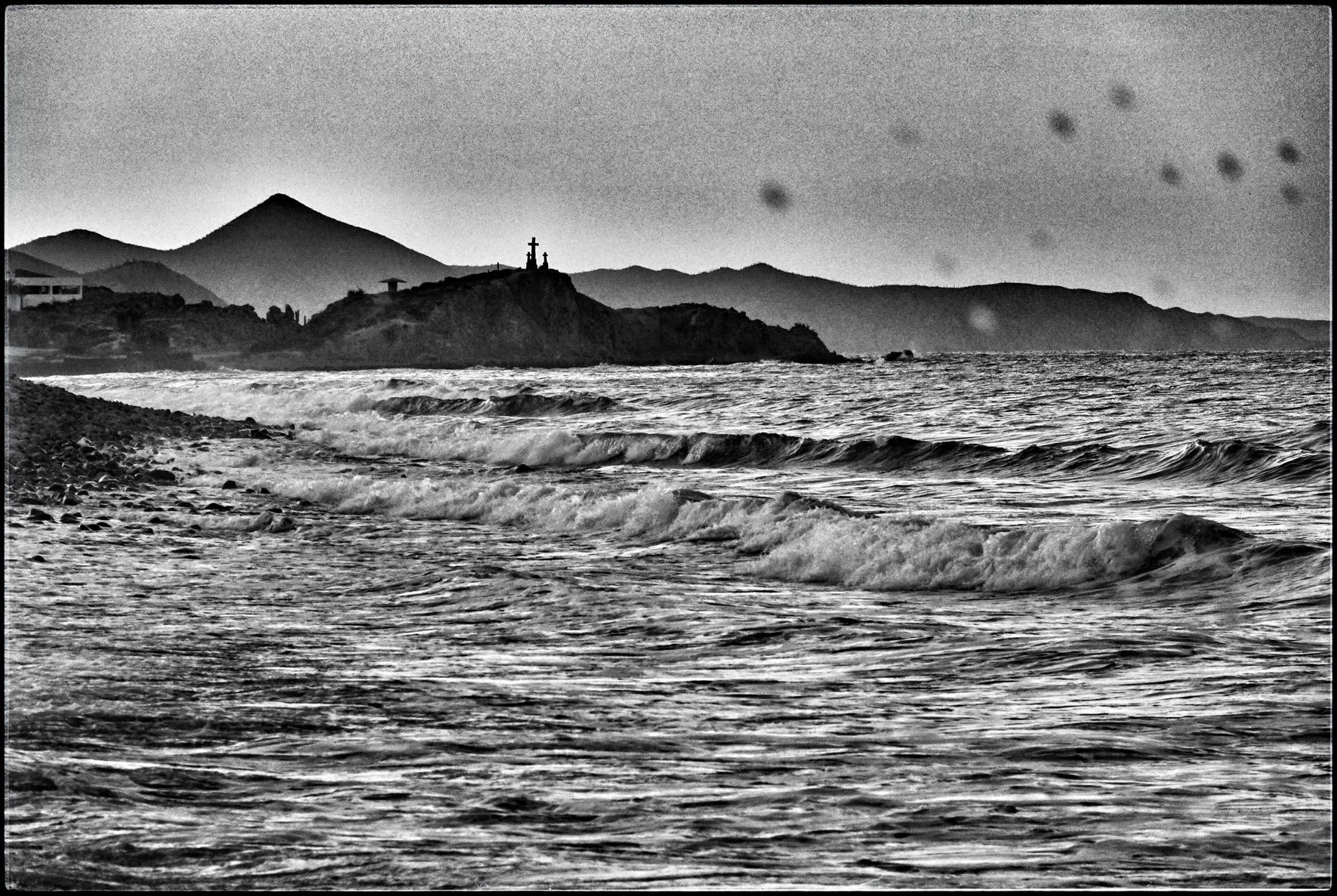
Rancho Los Cruces, Baja California Peninsula, Mexico. Sony RX10

Rancho Los Cruces, Baja California Peninsula, Mexico. Sony RX10

The Mountain. No, I’m not talking about a character form a George Martin novel or a Janes Addiction song. I’m talking about a vast project and desire to create something amazing. The Mountain is all the work ahead of you, all the plans, the complications, the raw effort. The Mountain soars in front of you, its height is dizzying and when you are in the shadow of the mountain the temptation to do nothing, to not try to move forward freezes you. Letting the mountain daunt you will be the equivalent of rolling over and going back to sleep, thus condemning you work to photographic mediocrity. But you are stronger; you will climb the mountain and figure out how to let your photographic voice soar in an orgy of style that will define your photography!

Adapting to the brutal winter of 2014 in NYC. Fujifilm Xpro1 18 mm f2.0

Adapting to the brutal winter of 2014 in NYC. Fujifilm Xpro1 18 mm f2.0

The way to go over the mountain of work ahead of you is actually quite easy. Take one step at a time and keep moving. I would now like to introduce you to something everyone one of us has in their pocket, The Goal Compass. Every great person who achieves something wonderful sets their goal compass and moves in that direction with little deviation. This doesn’t just apply to photographers, imagine Christopher Columbus and the mountain he had to climb to discover the new world. He needed ships, he needed sailors, he had to break a history of convention that stated what he wanted to do was impossible. The planning took over a decade, but he stayed the course and made his spot in history. He could not be deterred and every movement he made was aimed towards his goal. We are not explorers seeking the New World, we are photographers, and fortunately our goals are easier than Columbus.

However the Mountain does stand before us and it can be daunting. By setting the goal compass on plateaus to traverse you will be amazed at the creative ground you will cover. Here is style deconstructed and that which reveals a simple formula  serving as a map to travel over the mountain in the most expedient way.

  1. Master the camera and lens you are utilizing. Use a specific technique to create the image and perform specific post process treatments.

  2. Find subject manner you want to explore deeper. This is idea made reality in the camera viewfinder.

  3. Create a body of work around the subject and place by using the same camera and techniques.

The Euclidean triangle that is the base to developing photographic style. At what point on the triangle are you?

Note: This is an exert from my upcoming book on Finding and Developing Photographic Style. Want to learn more? Come to Brommer’s Style and Composition in NYC Workshop in April.

suspectworkshopbanner

Fujifilm X Pro 1 Predictions – No more pro Mirrorless Cameras?

Lady Liberty

It’s Fujifilm X series prediction time. I have my photo tarot cards out and here is what they say. One word first, yes I have industry connections and I respect any NDA and or personal confidential info that comes my way. However this info is just my personal prediction and is not based on any confidential intell I’m privy to. I came down to these conclusions with Moose Peterson and Gabe Biderman in conversations this week.

With Photo Plus East just around the corner, we’re going to see lots of announcements in the upcoming days of October. I’m only interested in what Fujifilm has up thier sleeves, since I believe they are the currently the most interesting and principal driver of new and cool photo gear. Yup, I just said that. Sorry Big C (the good kind) and the camera company who used to “take the worlds greatest pictures”. It’s all about the Fujifilm X system. Here we go…

We won’t see a XPro 2. I don’t think ever. But we will see a XE2. I think that the hybrid finder on the Xpro1 is going to be the last Mirrorless camera made that has it. It’s what set the Xpro1 apart from pretty much the whole rest of the Mirrorless world but it’s going to be a feature of photo goodness past.  Here is a question to all the current users, do you still use the OVF as much as the days when you first had the Xpro? Or do you find yourself using the EVF more? Lets face it, the EVF is not accurate, I’d say it has about a 10% minus factor on what you see as to what you get. Also, two words, Focus Peaking. Yea, I’m using the OVF less these days. And it hurt to just say that. Seems like analog is just slipping further and further away from me. Next I’ll just be like Neo in the Matrix.

The future is fuzzy… and this is just what I feel in my bones and read in the cards so take it with a grain of salt and look forward to more weather proofing and enhanced EVF functions (manual exposure wysiwig and clearer view).

The Above photography is Lady Liberty shot on the Moose Cruise II with Fujifilm Xpro1 w/ 35 1.4 @ 1/64 F 2.0 ISO 200 and processed in Camera Raw (pretty heavily I may add).

~David

Two Day Workshop in Cortona, Italy August 23rd and 24th at Cortona On The Move Photo Festival

Doors of Tuscany Shot with Lensbaby

Doors of Tuscany Shot with Lensbaby

Cortona is a photogenic medieval hilltop city located in the south of Tuscany that is a photographers paradise. So much in fact, that three years ago a group of enterprising young photographers created the Cortona On The Move Photo Festival to showcase photography themed around travel and movement. The festival features exhibits, talks, portfolio reviews, contests, and workshops spread out through the winding alleyways and squares. The exhibits are in old hospitals, wince cellars, churches and other antique locations. Visitors get a map and while exploring the city, get to view a seriously curated assemblage of todays top contemporary photography as it relates to travel and the concept non-static photography.

presskit

For over a decade I have been visiting this corner of the world (I was married to Barbara in Cortona in 2003 as matter of fact, we are celebrating our TEN year anniversary-I love you Barbara <3) and photographing with different techniques. The location is enchanting, and with the festival firmly routed in the city, all the more interesting.

Cortona view of the Vale shot with Fujifilm Instax

Cortona view of the Vale shot with Fujifilm Instax

This year, I proposed a two day workshop to help photographers view this city with an eye for advanced composition. If you are looking into a trip this summer, you simply can’t go wrong with COTM and a visit to Tuscany. Here are the details for the workshop:

Detail of rear of Church 8x10 Camera 14" Kodak Ektar Lens

Detail of rear of Church 8×10 Camera 14″ Kodak Ektar Lens

COMPOSITION IN CORTONA: BEYOND THE RULE OF THIRDS

Digital cameras can practically do it all, but what they can’t do is adjust for good composition, a fundamental quality of a great image.  Ironically, the technological wonders of the digital era have  made some of us blind to seeing photographs as art, and although the latest digital cameras may be able to perform in almost any light, if you can’t “see” the shot, then you won’t capture a memorable image.

Cortona on the Move festival will host American photographer David Brommer for a special two part seminar. The first part, an afternoon lecture and slide show of Brommer’s popular, “Better Photographic Composition – Beyond the Rule of Thirds” program where Brommer will cover the basics of composition and then go further into more complicated compositional elements. Directly following this presentation will be a review of students work. The class will resume the next morning for a photo walk in Cortona where you will get to put what you just learned to practice.

This seminar is ideally suited for those with a basic understanding of photography but wish to advance their skills by learning compositional fundamentals and techniques that will dramatically improve their images.
MATERIALS: Attendees may bring up to 5 of their best images for review on a USB thumb drive for the Friday session. For the photo walk on Saturday, attendees are recommended to bring a Digital SLR with wide to normal angle lenses, a fully charged battery and memory cards. Tripods are not recommended as this is a photo walk, however comfortable sneakers are a must. We will be covering a lot of ground on old cobblestoned streets.

 DATES: August 23rd 4 pm to 7 pm  (class room session) and August 24th 7 am to 10 am (Cortona photo walk)

COST: 125€

The organization of the Festival will help the participants to find affordable accommodations.

To enroll, make a bank transfer to:

Associazione Culturale ONTHEMOVE
Banca Credito Cooperativo
Iban: IT 66 N 084 8925 4010 0000 0361 220

Info: workshop@cortonaonthemove.com

I will conduct the class primarily in English, however a translator will be on site. I hope to see some of my American friends, or make new acquaintances in Cortona.

~David

Do it, Touit! New Zeiss Lenses for the Fujifilm X & Sony NEX Mount Part 1

Detail with tree of Orly Genger's Red, Blue and Yellow installation in Madison Sq. Park, NYC. 32 mm lens

Detail with tree of Orly Genger’s Red, Blue and Yellow installation in Madison Sq. Park, NYC. 32 mm lens

Last week I was privileged by Zeiss to test out a new line of lenses made for two Mirrorless digital camera systems; the Fujifilm X, and Sony NEX mounts. Being keen to mount Zeiss lenses on my XPro1 from my experience as both a Contax shooter in the 90’s and a Hassalblad shooter in the 2000’s is an understatement. I love Zeiss. Carl Zeiss was a German who pioneered lens manufacture in the 1840’s and is responsible for classic groupings of optics that would advance the image resolution of photography. It would be a truism to say, photography owes something Zeiss.

at the Zeiss Touit launch, Standard Hotel, NYC. Iphone.

at the Zeiss Touit launch, Standard Hotel, NYC. Iphone.

The new lenses have the silly and catchy name of Touit, named after a tropical parrot. Thus far they have released two lenses, a 32 mm f 1.8 and 12 mm f2.8. The plans to expand the system with a third lens, a 50 mm f2.8 macro are eminent. Further lenses will certainly follow. By this time, many blogs and review sites have posted info on the Zeiss Touits and I don’t want to repeat what has already been published, so I’ll just take you through my observations and work while I put the lenses to the task. As Richard Schleuning from Zeiss explained, these lenses were targeted towards “those that make photographs as opposed to those that take photographs”. I’m sure we could geek out on what that’s supposed to mean, but can agree that we most likely want to make photographs. By nature I’m a giver not a taker so that sits well with me. Thank you Richard, and Carl.

Spring afternoon in Madison Sq. Park. 32 mm

Spring afternoon in Madison Sq. Park. 32 mm

The lenses can be categorized as “luxury” lenses. They are made with a tactile consideration befitting a high end product. Beautiful matte black metal barrels and rubberized and recessed focus and aperture rings. Not bulky like the Fujifilm lenses and much more solid than the NEX system lenses, you can feel the quality build in your hands as well as in your wallet.

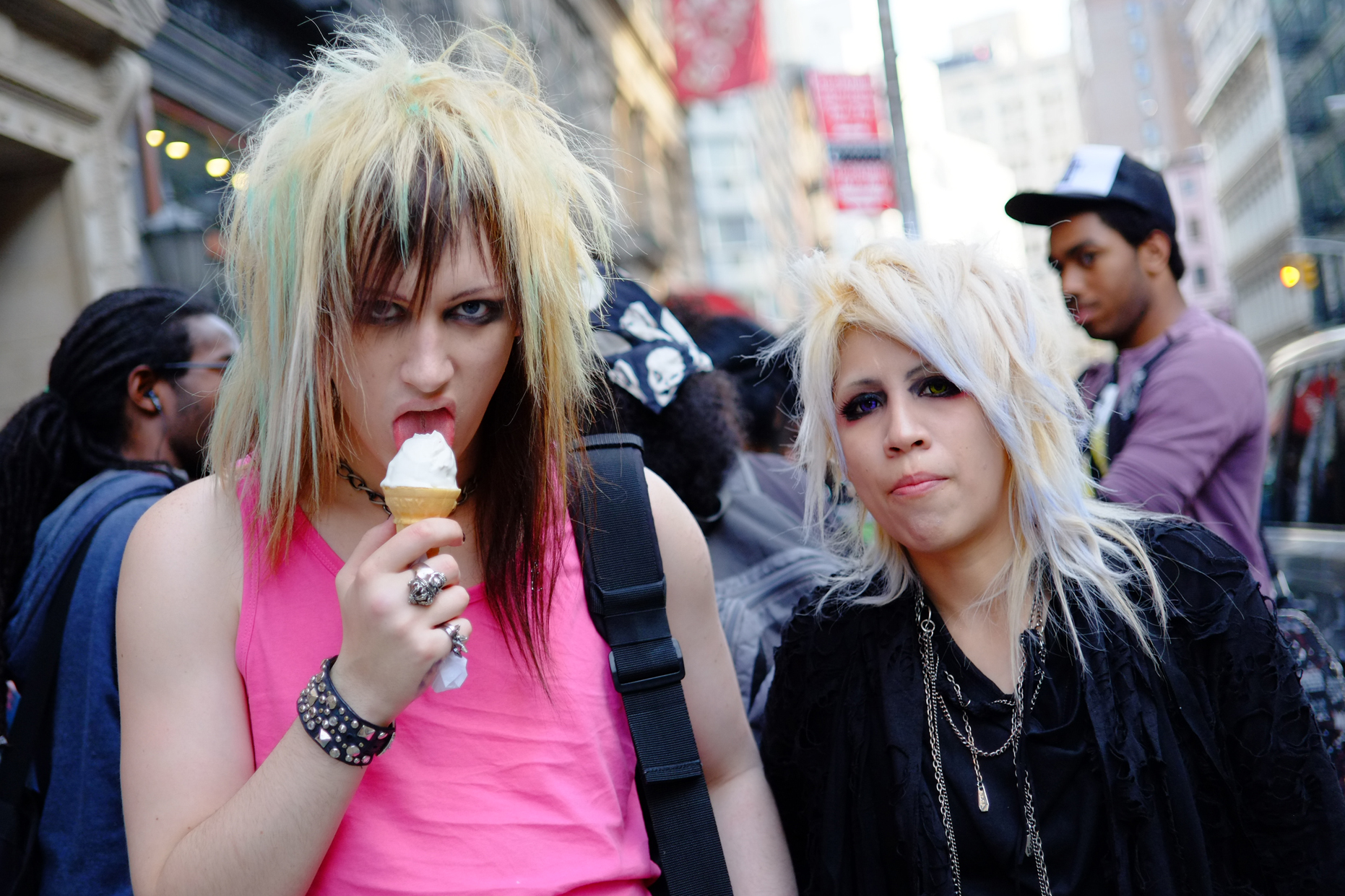
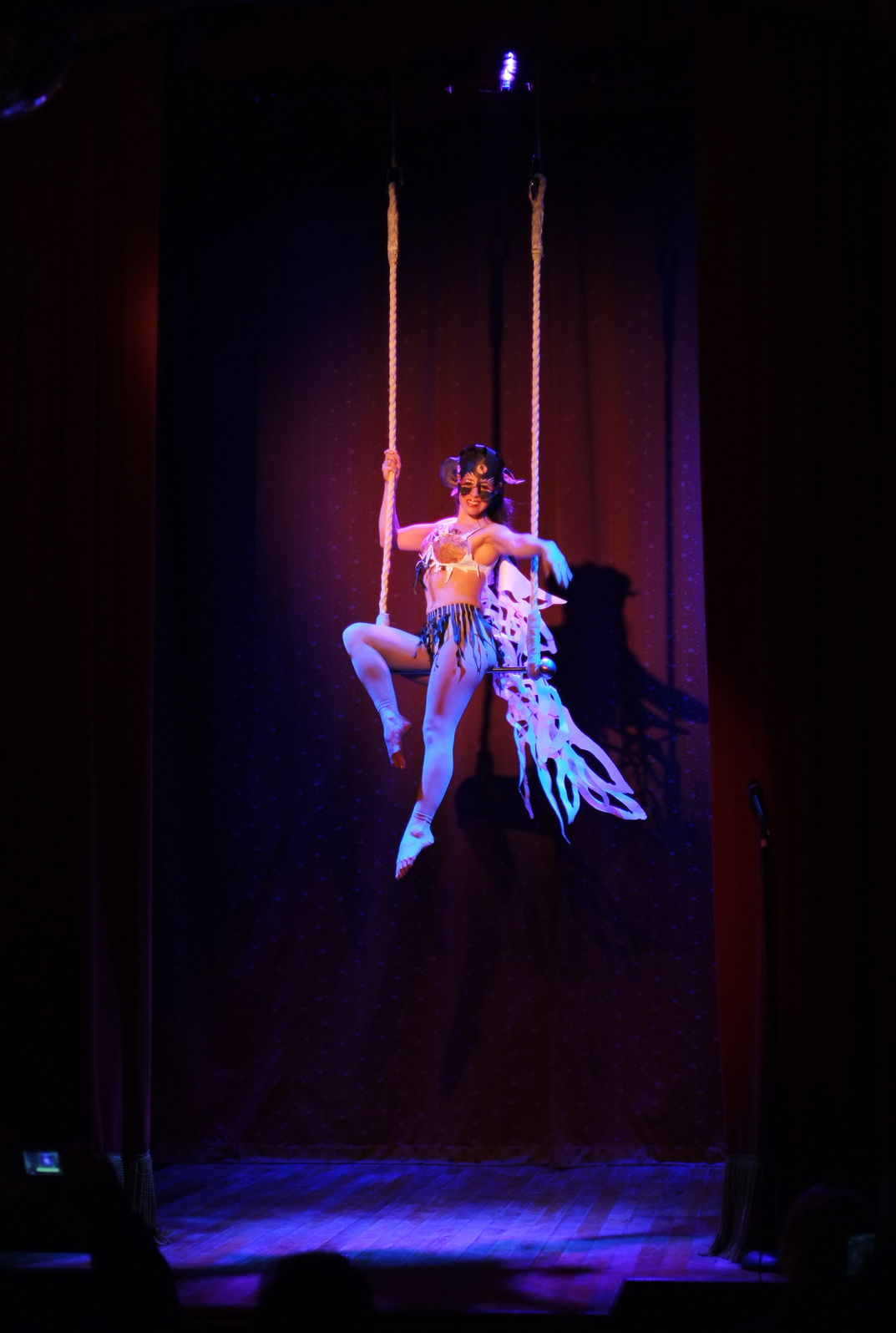
Matt Hill onstage at Paper Burlesque. 32 mm

Matt Hill onstage at Paper Burlesque. 32 mm

The 32 mm 1.8 Planar is the standard lens providing you with a 50 mm view on the APS-C size sensors. Counter that to the Fujifilm 35 mm 1.4. As I said before, the lens feels and looks great on the camera. I found the focus to be as fast if not slightly faster than the Fujifilm lens. The 32 mm comes with a large plastic lens hood, I prefer the slick and small Fujifilm metal hood to the Zeiss. Richard explained they chose plastic to keep weight down. When I tested the lens I went sans hood, the hood adds about 2.5 inches and I feel if your going Mirrorless, then go small.

Detail of stall on St. Marks Place NYC. 32 mm lens

Detail of stall on St. Marks Place NYC. 32 mm lens

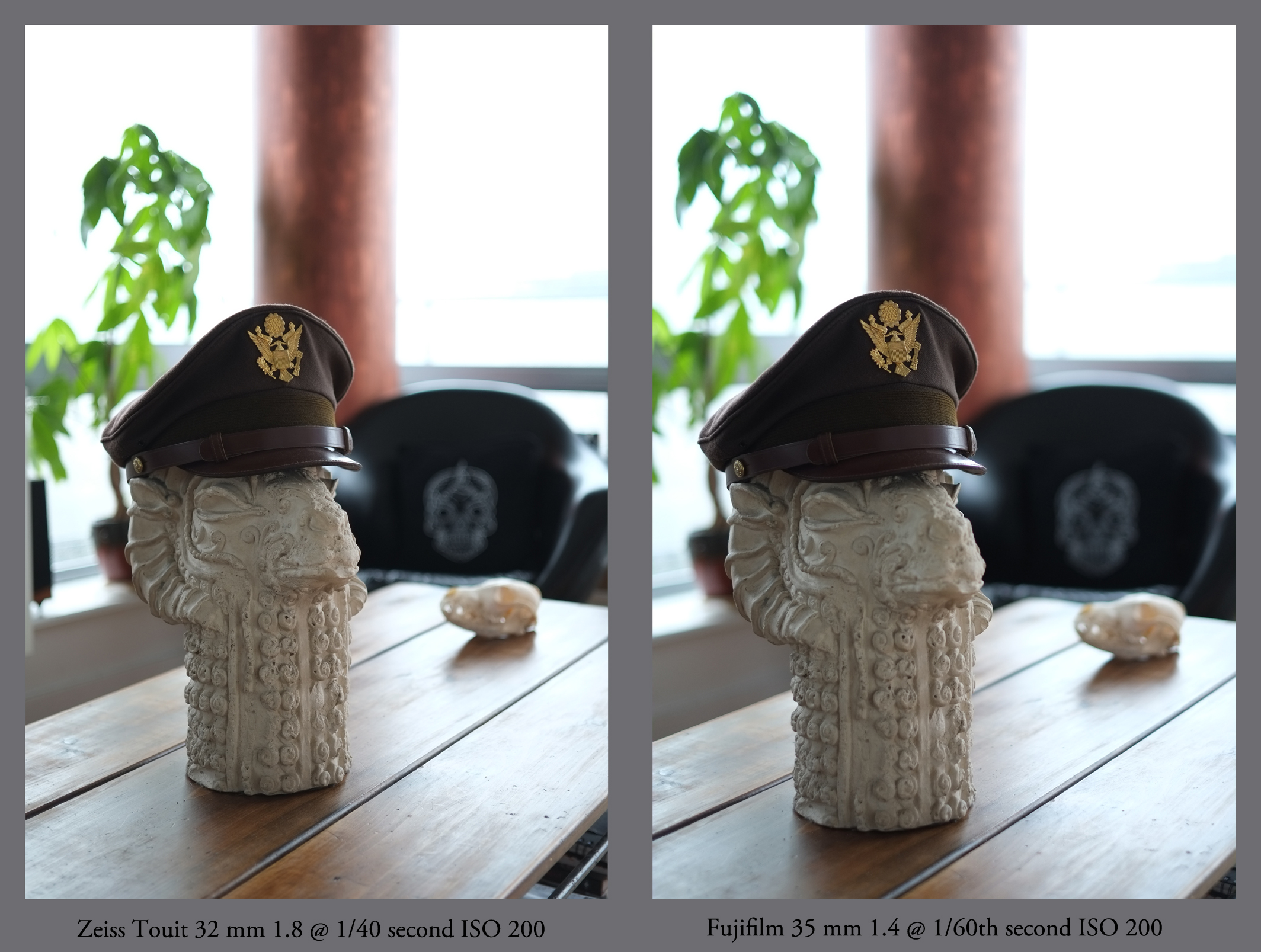
After I made this image I really found the figure in the baseball cap off to the right annoying visually. I shot it at 1.8 and figured what if I had made that image with the Fujifilm lens that is a 2/3 stop faster. Would I have gotten more pleasing bokeh and thus have “blurred out” the unwanted figure?

NYWraiths

So I conducted a test by putting the camera on my trusty Oben carbon fiber tripod and shooting this still life in my apartment between the two lenses. I have uploaded a very large image so feel free to pixel peep. Also please feel free to comment which of the two lenses produced the look you like the most. Me, I have to say I love more blur that is attainable with the Fujifilm 35 1.4, but the 9 blade aperture on the Zeiss certainly does have a smooth and pleasant blur. Notice the harder edges of the green plant in the back ground as well as the embroidered skull. I do like the slightly wider field of view on the 32 mm. I also notice a color shift between the two lenses. I had a Lastolite 30″ 5 in 1 silver gold reflector off to camera right acting as a warm fill. The Fujifilm 35 mm seemed to

lens_comparison

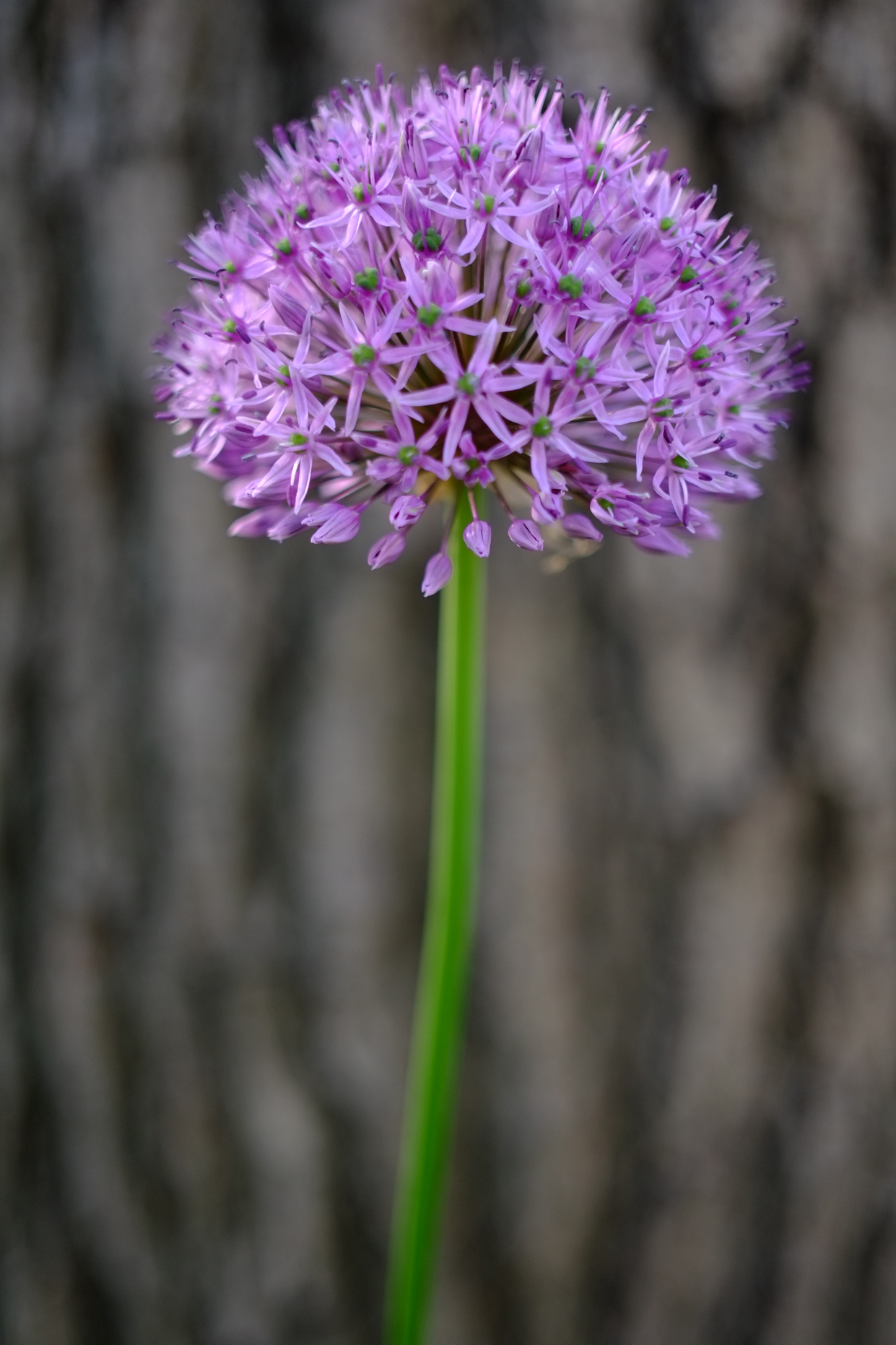
Macro is superb with-out really being a macro lens. The 32 mm can focus down to 1.21 feet. Please consider the background of a macro shot, I think it is easy to get all caught up in the subject and then make a mistake in the background. I saw this purple flower in front of the pattern like bark of the tree and really concentrated on filling the background with the texture of the bark and being careful to not get anything but the tree in the background. The flower was easy, but man, look at that soft out of focus mottling of the bark. Yum.

Great rendition in macro range.

Great rendition in macro range.

The 1.8 rocks in low light when combined with the amazing low light capability of the Xpro1.

Paper Bulesque by Mat Hill. Dancer- Rosabelle Selavy. 32 mm f1.8 - 1/50 sec. ISO 1000 Center Meter, Tungsten

Paper Bulesque by Mat Hill. Dancer- Rosabelle Selavy. 32 mm f1.8 – 1/50 sec. ISO 1000 Center Meter, Tungsten

Thus far I’m impressed with the lenses. They do cost about 1/3 more than the all ready fairly expensive Fujifilm X lenses. Are they worth it? Stay tuned for part two, where we will see more of the 12 mm lens and some low light tests. Please don’t forget to add your comments on the 35 mm Fuji vs. the 32 mm Zeiss comparison.

~David

Suspect Photography Workshops: West Village Photo Walk, Saturday May 18th 2013

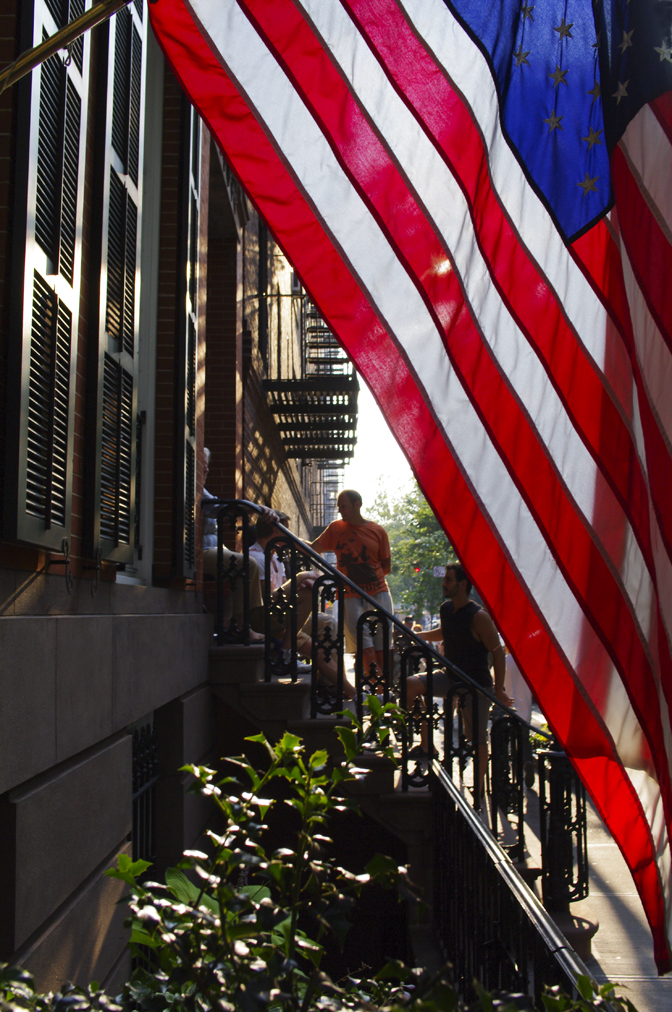
Village Americana

Village Americana

When it comes to charming neighborhoods, New York City’s West Village is second to none. From turn of the century carriage houses to ornate brownstones and winding little streets the West Village has a romance all its own. This photo walk will culminate in the “secret garden” which will be in full bloom and offer exquisite photographic opportunities.

Hidden gardens found and photographed.

Hidden gardens found and photographed.

David will share his secrets to photographing great compositions and teach you to spot the elements that will help you capture this colorful and eclectic New York neighborhood. An emphasis on choosing repetitive elements to seek out and photograph will be encouraged to reinforce a project based thought process. This photo walk will set a great foundation for capturing, “Sense of place” and introduce you to the full potential of your camera.

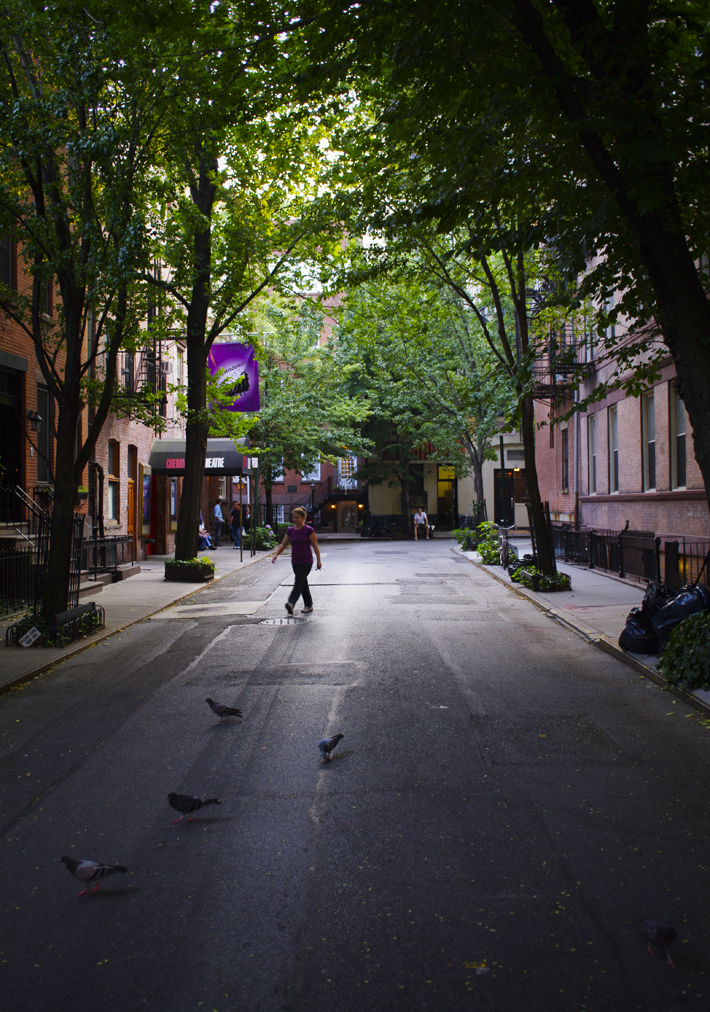
Barrow Street

Barrow Street

This Photo Walk will begin at a local Village café where David (and a few cappuccinos later) will show you how to properly set your camera’s functions to maximize this type of “street shooting”. You will also be given a “shoot list” to help you navigate and keep your vision sharp. DSLR’s, Digital Point and Shoots with override settings, and Mirrorless cameras are all welcome. Take this opportunity to learn your camera better, as David will be able to show you how to get the most out of the complex menu settings of a modern digital camera.

The lessons you will learn will be invaluable next time you are on vacation and roam about with your camera.

This West Village Photo Walk is limited to 10 attendees and runs from 9 am to noon. You are welcome to arrive at 8:30 am with a small portfolio (print or tablet is fine) to get some feedback on your photography.

This photo walk is rain or shine, and costs $79. per person. Please use the pay pal button to process the payment. Suspect Photography Workshops will gladly refund your payment in full if you cancel 3 days or more before the photo walk. Canceling two days before the day of the photo walk  will earn you a workshop credit for future workshops.

Studies in Light and Composition

Studies in Light and Composition

Entrance to the secret garden

Entrance to the secret garden

Village Chracters

Village Characters

Any questions please feel free to contact David Brommer. David has taught numerous photo walks and attendees always walk away with some great images, new photographic ideas and most of all, fun.

Remember, the limit is ten attendees and this walk is going to sell out so jump in now and reserve your spot.

AM_SbyPP_mc_vs_dc_ae

DSLR is Dead, Long live DSLR

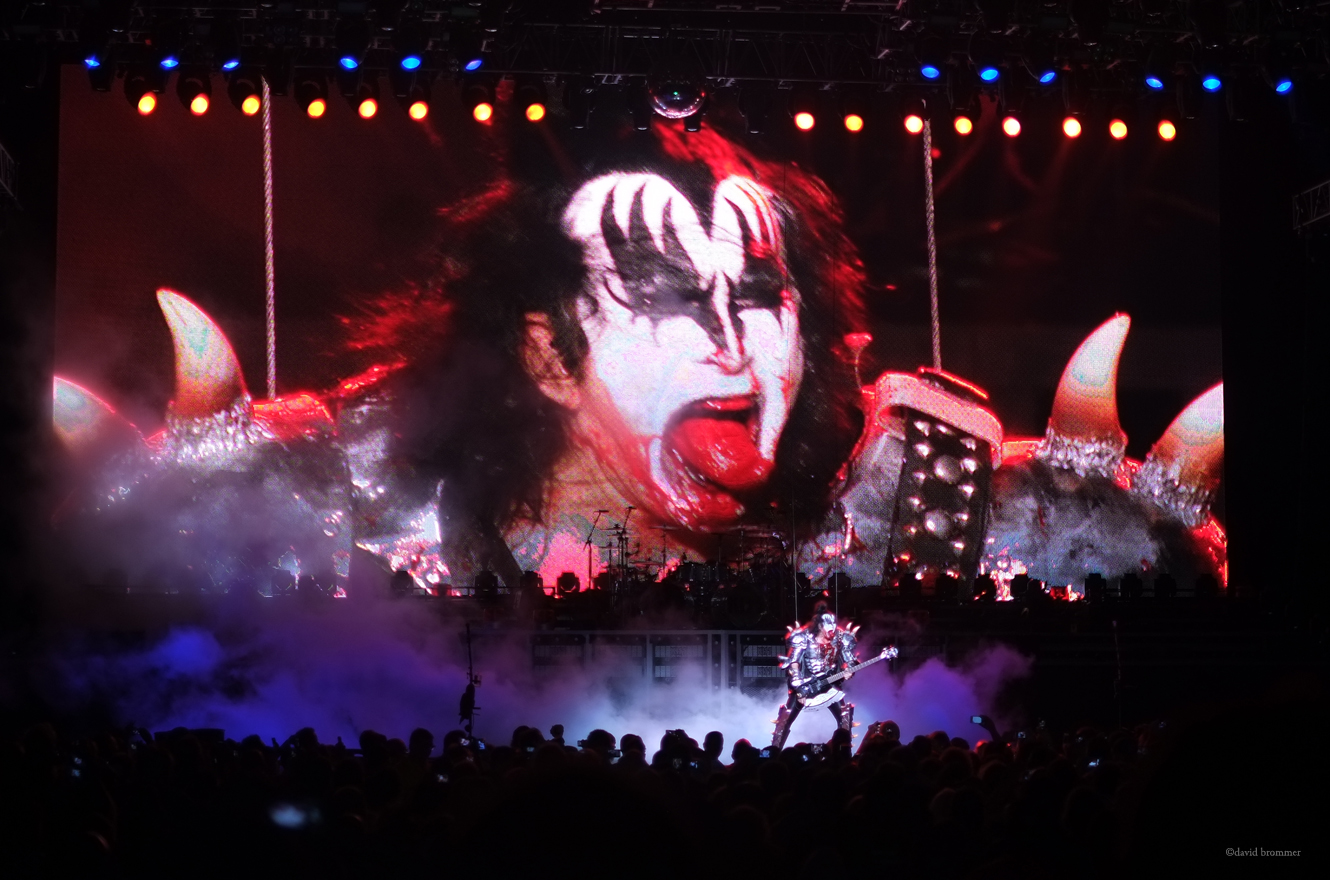
Gene Simmons of Kiss, still spewing blood after 40 years.

The grumblings of this rumor started with my friend Brandon a few weeks ago. We’re both “photo industry” guys and we are privy to charts, numbers and insider information (of course this is photo industry insider info so we wont be chillin’ with Bernie Maddox) about cameras and the technology that drives them. In the past few days after the big Photokina show (photo industry trade show in Europe where half the new camera’s of the year are announced) a flurry of “Mirrorless” cams were announced. Also back in January 2012, photo blogger and all around good guy, Trey Ratcliffe posted “DSLRS are a dying Breed”. Seems a lot of attention is being mentioned online about the future of camera gear and it seems the poor old DSLR is getting it’s mirrored rump slapped.  However, I disagree whole-heartedly with these predictions.  The DSLR is a vital tool in photography, it has its place and shant be replaced with a Mirrorless camera they way the DSLR made the film based SLR obsolete. On the contrary, DSLR lenses and functionality will continue to increase and become much more popular as the coveted full size sensor becomes more affordable. For a long time I believe, at least a few more generations of photographers. Many of my students ask which is better? I don’t believe one is better than the other inherently, but which is better matched to the user. I do get rankled when I hear that DSLR is dead. I think far from it. Very far, like galaxy far.

First I’m going to characterize the users, the photographers who will be making images so we can establish what they need. The first letter will act as code applying to the following lists, the strong points and weak points of DSLR vs. Mirrorless and which photographer can benefit. This is a very fair way of evaluating the merits of each class of camera.

Types of Photographer

<PP> Pro Photographer: Someone who pays for their food and shelter with money generated by photographs they make. In most cases, they will specialize in genre such as journalism, fashion, portrait, event (weddings and such), sports, commercial (companies need photos of all the time), fine art, and the a common one, the “freelancer” who will shoot just about anything to make buck. Often they may have studied photography in school and fallen in love with the medium. Pro Photographers often blur the lines teaching, lecturing, testing and taking on new projects as they present themselves. But for all, this is their primary source of income.

<AH> Advanced Hobbyist: Someone who loves photography including the images, the gear, and the simple act of clicking a shutter and capturing a slice of time and place. They can be fanatical in their pursuit of photography. They purchase the latest gear, they take photo trips and join clubs and enter photo competitions. If their 2.0 minded, they might also have a heavy online presences with social media such as Flickr, Pinterist and such. I’m also going to put the fine art photographer in this category. The emphasis is on vision with a solid versatile camera for the needs of these shooters.

<CS> The Casual Shooter: They would never call themselves a photographer, they just seek to document important people and occasions in their life. They are the vacationers, family, and friends. They are not usually artistic nor the have the inclination to really care about the finer aspects of a good photograph. They often know a good photo when they see one, but their quest is to record a slice of time and place sharply, well exposed and with a minimal of effort and size.

What cameras will this generation be shooting with? BadAss I’d say!

Merits and Shortcomings of DSLR and Mirrorless

Long lenses: Long and fast telephoto optics is plentiful for the DSLR. Since these lenses tend be long and heavy, having a larger camera on the back of them really helps your maneuver the whole package to get what you want. PP, AH

Easy Ergonomics Due to Larger Size Camera: DSLR are indeed larger, and that can help by providing more space to put buttons and larger buttons at that. The Olympus Pen cameras in particular have very small and annoying buttons to navigate menu and camera features. Having a good grip on the camera can help make it more easy to use and less fumbling. This rings so true when working with heavy fast optics. PP, AH, CS

WYSIWYG or “What you see is what you get”: No matter how good a EVF (electronic view finder) is, your still looking at pixels. Movement, gain, grain is all presented in the viewfinder if your lucky and even have one on Mirrorless cameras. That archaic mirror reflex system found on DSLRs lets you see in analog, like the world was meant to be seen. I don’t want to compose looking at a TV screen, because that’s exactly what an EVF is, a miniature TV. I’d rather look at the real world when I’m making a photograph. I want to “feel” the place and find the image. I have never been a huge fan of video games and seeing the scene gives it more tangibility.  PP, AH

Pros shoot with Pro “looking” Cameras: Show up to shoot a wedding with the same camera that Uncle Bob has will make the Bride wonder why they are paying you the big bucks. It may be superficial to make this claim, but it’s true. There are different levels that a pro photographer can attain. Lets say the highest is shooting for Vogue, you will need to project an image to have access to this type of photography, and yes, a Hassalblad H4 will impress the art directors, models, and most important, the client. Show up with a Panasonic GH3 and your going to get laughed at. PP

Value: $500 bucks gets you a really nice DSLR. $3000 gets you’re an extremely capable camera. I think that there are great values in the range of DSLR’s out there. CS

Compact and Light Weight: For the photographer who travels, this is fantastic. Hauling around lots of heavy and cumbersome gear is annoying and for some folk prohibitive. Many of my female students have small hands, and the smaller cameras fit into them better. Some of my students have been older and between arthritis and other physical reasons a smaller camera is easier on their wrists and back. The photographer Bob Krist who is known as a travel photographer likes to use these smaller cams because he is restricted often by weight limits on bush planes. CS, AH (and sometimes the PP if travel is their specialty)

Performance vs. Cost: Bigger sensors provide more information and can yield a better image. Especially if your printing large or will be cropping. Larger sensors to tend to also have a greater dynamic range to capture highlight and shadows. As of 2012, it is less expensive to purchase a DSLR with a APS-C size sensor than a comparable mirror-less camera. The Canon Rebel T3  costs $479 which is the least expensive DSLR on the market. The least expensive Mirrorless that has a APS-C size sensor, the Sony NEX 5n is $499. All the other models of Mirrorless that have APS-C size or micro 4/3 are much more expensive. CS 

Lens Selection: You can mount more lenses without adaptors onto the DSLR system. While this may be true you may never venture out to using a 1970’s vintage Canon FD, Nikon AI or maybe that hip Russian Zenit lens. Mirrorless cameras can use various mount adaptors that can be costly but usually the focus will be hampered by the EVF. The only one that does it well is Sony with their focus peaking feature, but I don’t care to evaluate focus with shimmering white dot matrixes personally. PP, AH

Cool Factor: DSLR cams hearken back to the golden era of film based 35mm photography. There is nothing like making pictures with a SLR, the clicking sound, the heft of the camera and the strapping on of a camera that says Nikon. Mirrorless cameras are radical and hi-tech. they often don’t even look like a camera. AH, CS

Talk to the skull, er I mean hand.

I hope this post sheds light on the recent debate. As for me, I chose the Fujifilm X-Pro 1 mainly because it gave me parallax corrected viewfinder, performance, and size plus a whole lotta cool factor. I stand by saying that any camera in the hand of a person who has vision and some technical skill can make a great image from that camera. Can they make many? Then it takes the right camera to photographer combo.

The place is really jumping to the Hiwatt amps,
‘Til a 20-inch cymbal fell and cut the lamps,
In the blackout they dance right into the aisle,
And as the doors fly open even the promoter smiles,
Someone takes his pants off and the rafters knock,
Rock is dead, they say,
Long live rock, long live rock, long live rock

The Who

~David Brommer