Suspect Photography

words and images from david george brommer

Tag: camera

When is a Photograph Truly “Done”?

DJI Mavic Air 3 Tele Lens, Processed in Camera Raw- Ready to print

We’ve all been there: the meticulous packing of camera gear, the careful selection of lenses, and the anticipation of chasing light. We scout locations, wait for the perfect moment, and then, click. The shutter fires, the photograph is made, and a fleeting piece of time is frozen. But is that precise moment, that initial capture, when a photograph is truly “done”? Hint, it’s not.

For many photographers, the creation process of an image is far from over when the memory card fills. The initial capture is merely the spark, the raw material, a digital or analog negative holding immense potential. The process is a creative continuum that extends well beyond the field, into the necessary and transformative stage of editing. The digital darkroom is where your vision truly takes form; here you refine the light, enhance the mood, crop for impact, and bring out the crucial details that tell your story. This stage is essential in translating what you saw with your eyes to what you felt with your heart. It is the critical step of giving emotional intent a physical, visual language that speaks clearly to others.
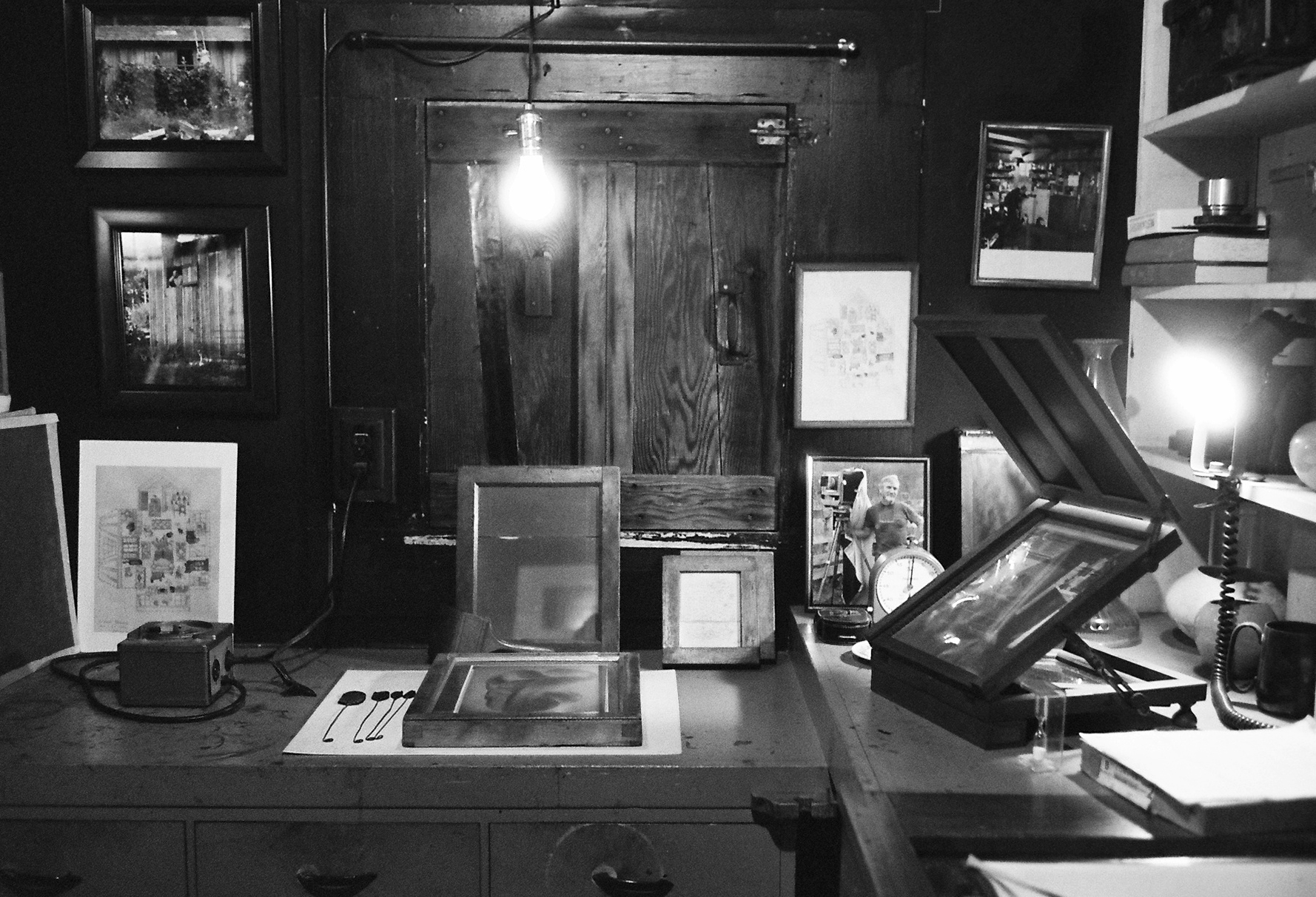
Edward Weston’s Darkroom

The final act of creation is the output, the moment you publish, print, or post your photograph to its audience. This is when the work moves from potential energy to a tangible reality. Is it a gallery-quality print, carefully matted and framed, ready to hang on a wall and command attention? Is it a thoughtfully placed image on a page in a book or zine, contributing to a larger narrative? Or is it meticulously prepared and uploaded to the web or a social media site, destined to connect with a global audience, spark conversation, and inspire? Once you put it out there, it’s essentially done.
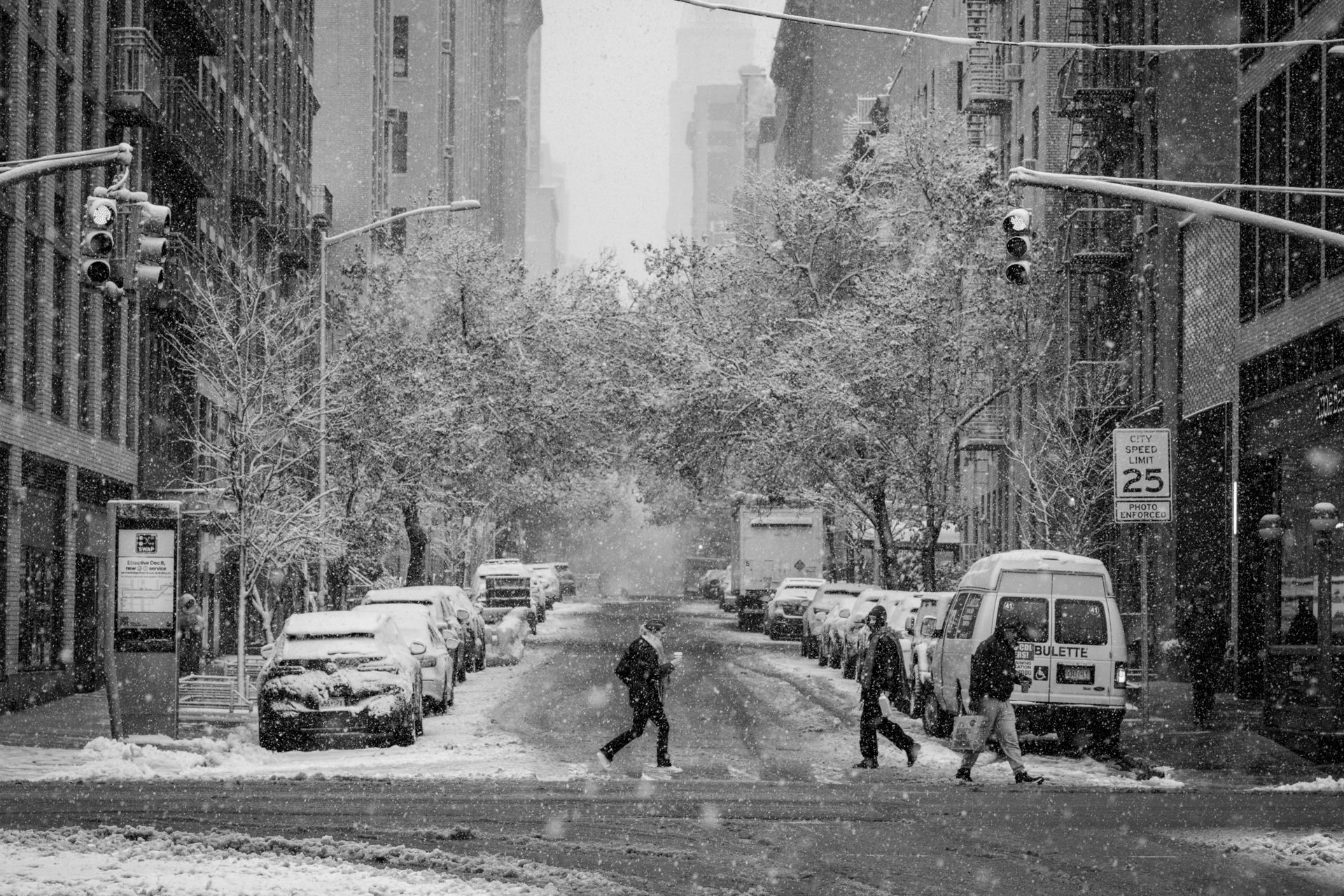
Snowstorm 8th & 24 NYC December 14 2026

A photograph isn’t merely “taken”; it’s made. It’s a process that begins with your intent as you pack your gear and culminates when it takes its final, finished form, ready to be seen, experienced, and remembered. Shared. It is done when you’ve expressed your vision to its fullest and prepared it for its intended destination, whether that’s a single discerning eye or the whole wide world.

Warning, continuing with this blog post might contain NSFW images.

A few nights ago my wife Barbara and I attended the Whitney Museum of American Art’s holiday member’s night. When we were about to leave I reached for my Fujifilm X100mkVI and then thought better of it, we’d be going to dinner at Pastis afterwards and the camera would be a lightweight burden, besides, I have my trusty Iphone 16 Pro. What is the best camera? Yea, you know the answer to that if you’ve read this far into the article.

As we walked through the galleries, past surreal camels, we came upon this scene and I pulled out the iPhone and ran to frame and make this photo. The subject was standing still, admiring the piece and my usual luck is “get in position, subject moves out of position”. But not this time. I was able to make a few photos fast zeroing on composition.
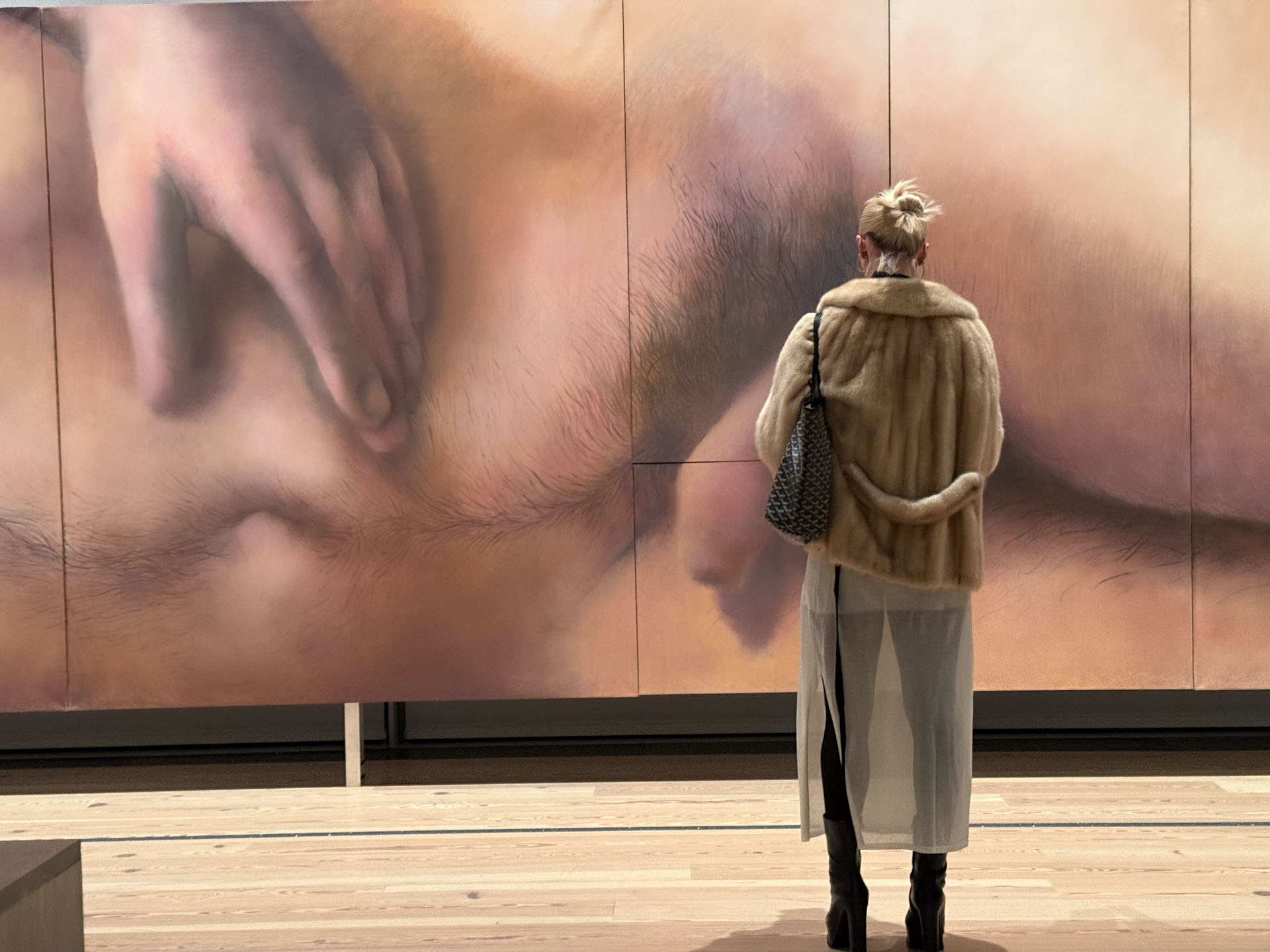
Crooked horizon, poorly cropped feet.. my first shot was off.

Made some corrections and then she began to walk away. The window for this photo was over. However, due to all those years of making bad photos I was able to capture a good photo. Later that night I sat in bed editing the image in Apple’s proprietary editing suite and adjusted to this final image.

Was it done? Not quite yet, I then uploaded to my instagram and now….

The photo is done. See more on the Suspect Photography Instagram.

-David

Exploring the TTArtisan Tilt 50 Lens: A Hands-On Review

As many of us, I’m a gear freak and love optics. I was poking around the Nikon Z lens options on the B&H Website and came across this lens, the TTArtisan Tilt 50. It’s part of this wave of ‘cheap cost’, but ‘not cheaply made’, Chinese lenses. The 70’s were a hey-day of weird, wide, and tele lenses from oddball companies; and then in the 2000’s Lensbaby hit the market. Now with the rise of easy manufacture (barring tariffs) lenses, and manual film/video lens needs, there is a plethora of this type of equipment to try out. Long story short: I bought the lens on speculation, and was pleasantly surprised on all fronts!

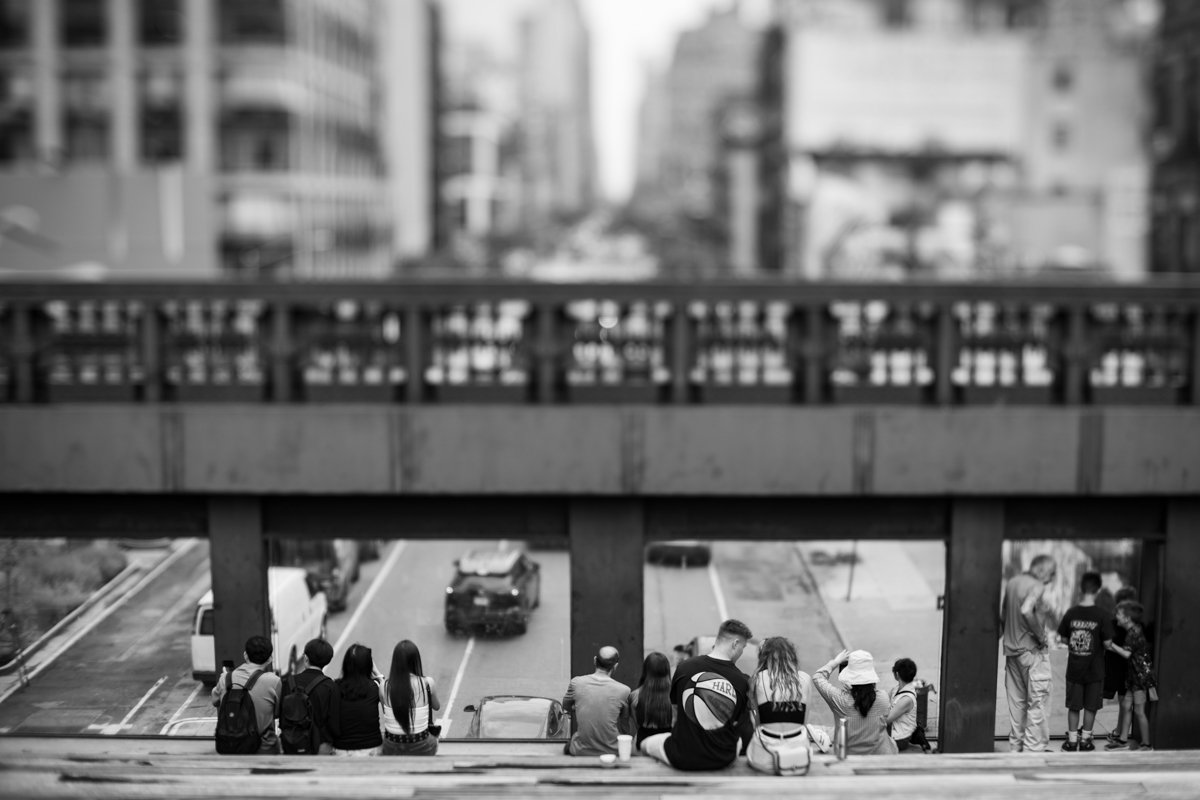
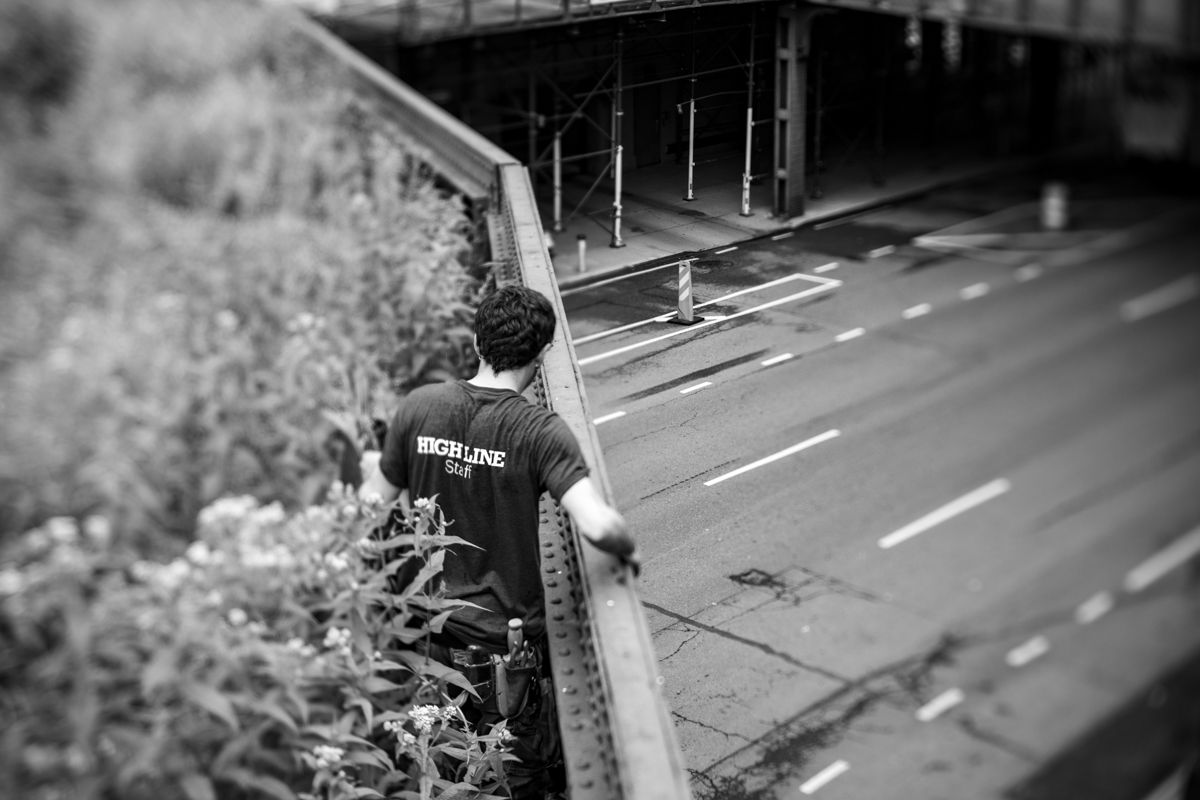
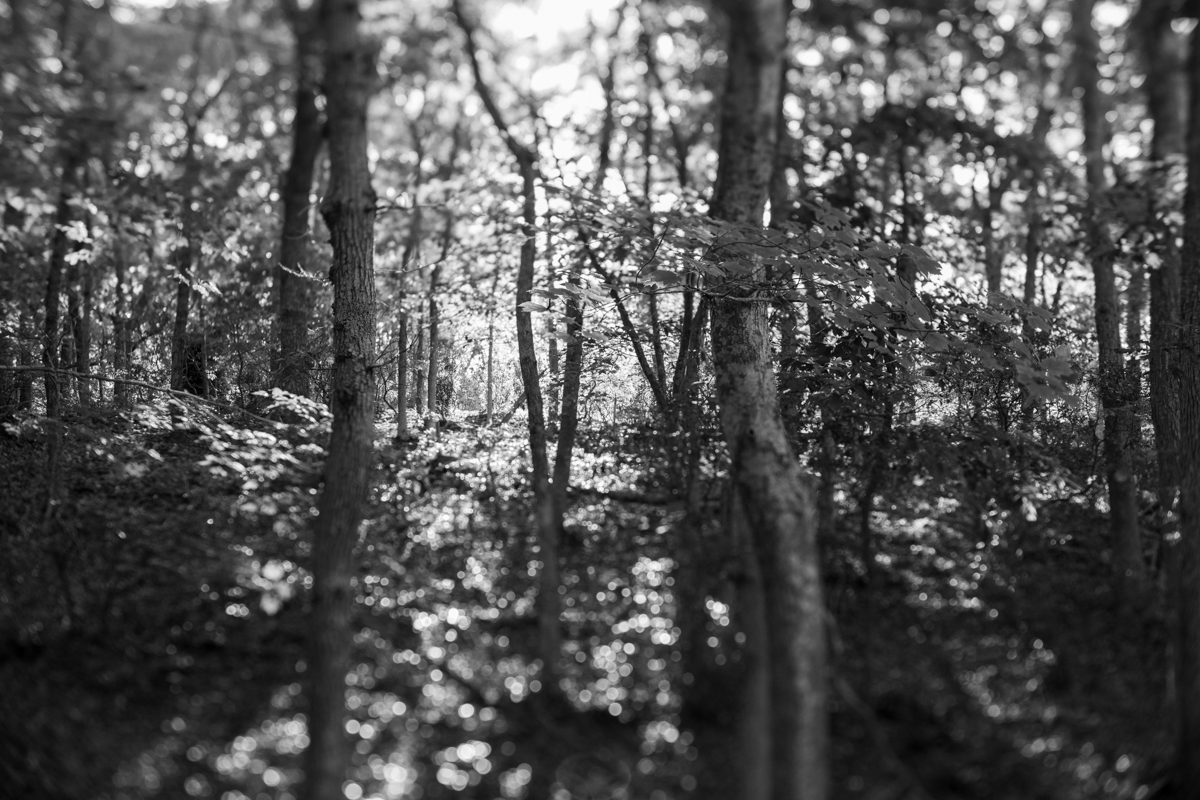
I slapped the lens on a Nikon Zf with focus peaking turned off (I found it hard to “see the image” with the shimmering distraction), auto iso on, aperture mode, B&W switched on, Raw. Making sure “ok to shoot without lens” setting is checked. I took a morning stroll on the Highline excited to try out this fine feeling lens.

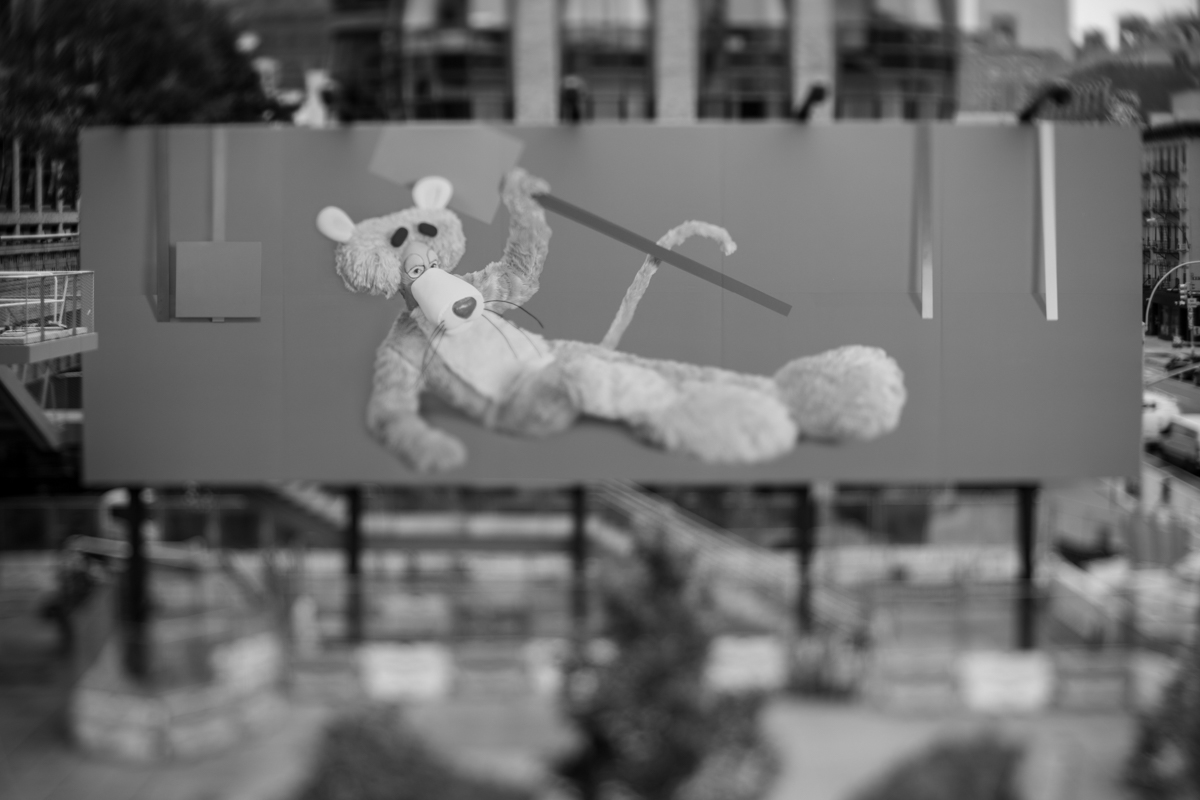
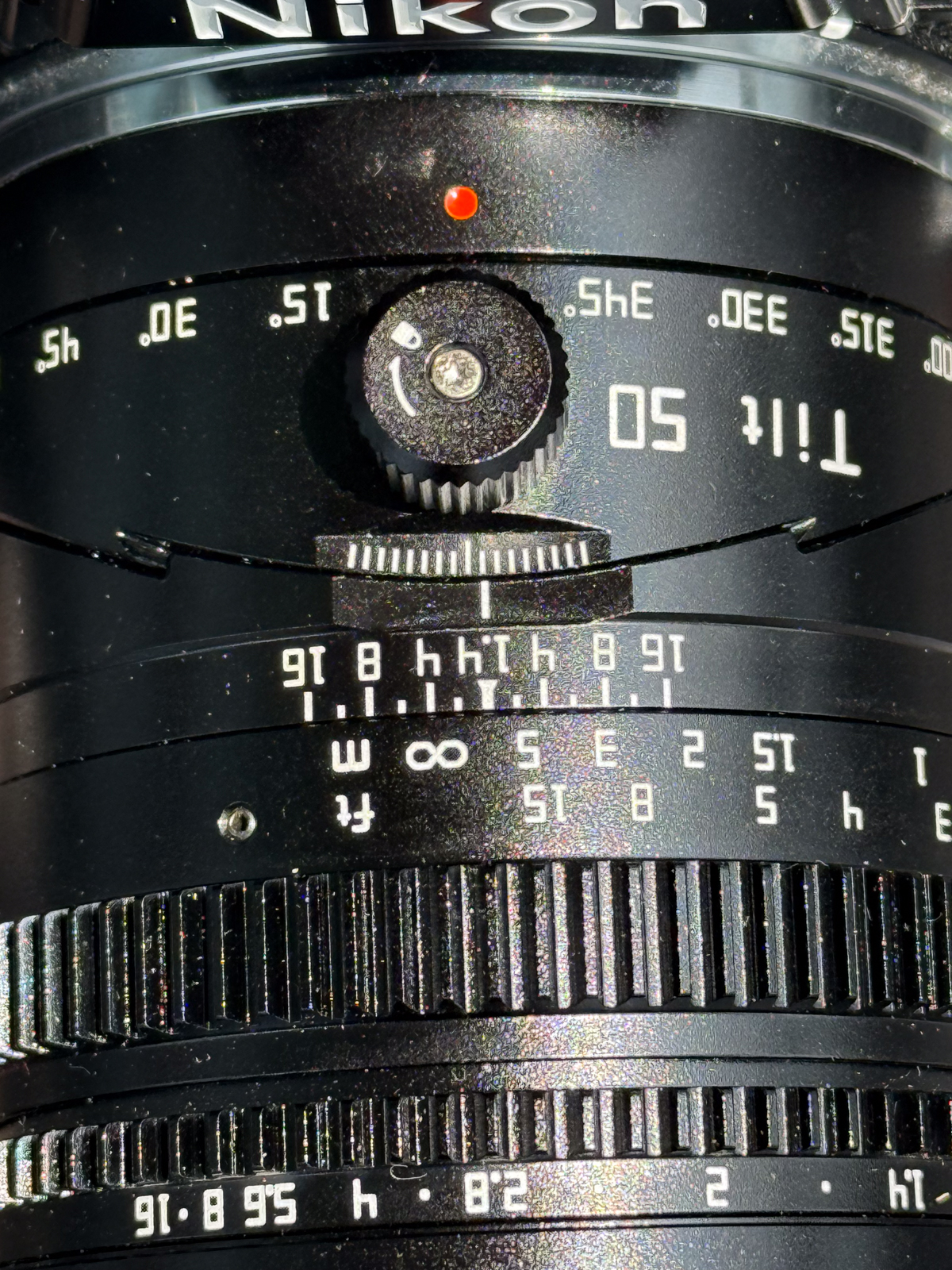
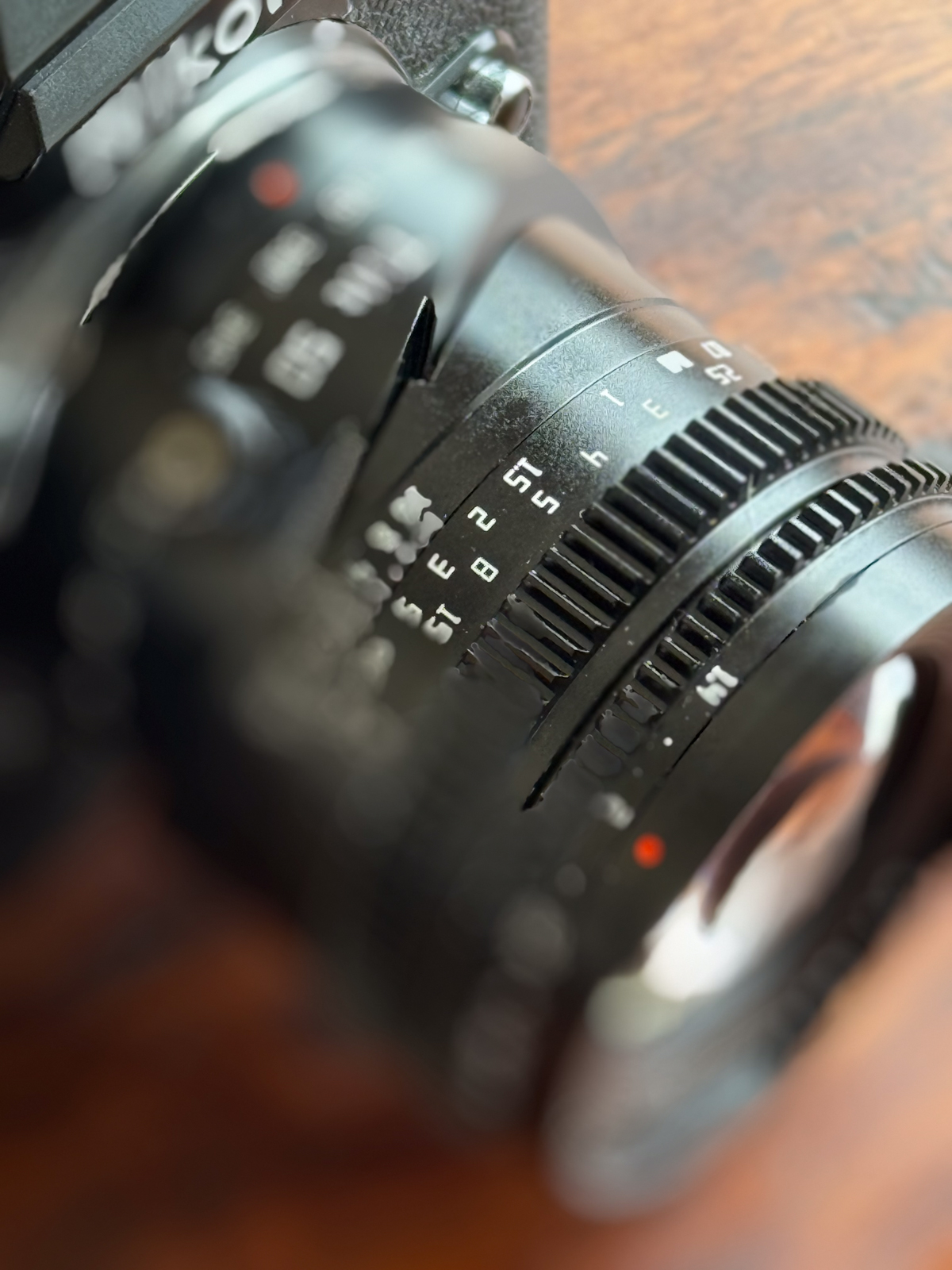
The lens has two unique controls, one for the tilt and the other direction of the tilt axis. By strategically turning these two, in tandem with the manual aperture, you gain access to a “strip” of in focus view. You can “spin” the lens to make that strip go anywhere. The lens also has a wonder full depth of field bokeh and close 19.7″ / 50 cm minimum focus.

The actual sharpness of the lens is questionable, it’s not a view camera, but that’s not the point. Straight on at F8 it’s sharp, but it falls off the more wide we open. However I found it sharp enough to certainly buy and keep in my gear bag. It’s fun to use and produces unique results.

The lens likes height to give it perspective. Walking the Hhighline was actually perfect with its vantage points and strong horizontal lines.

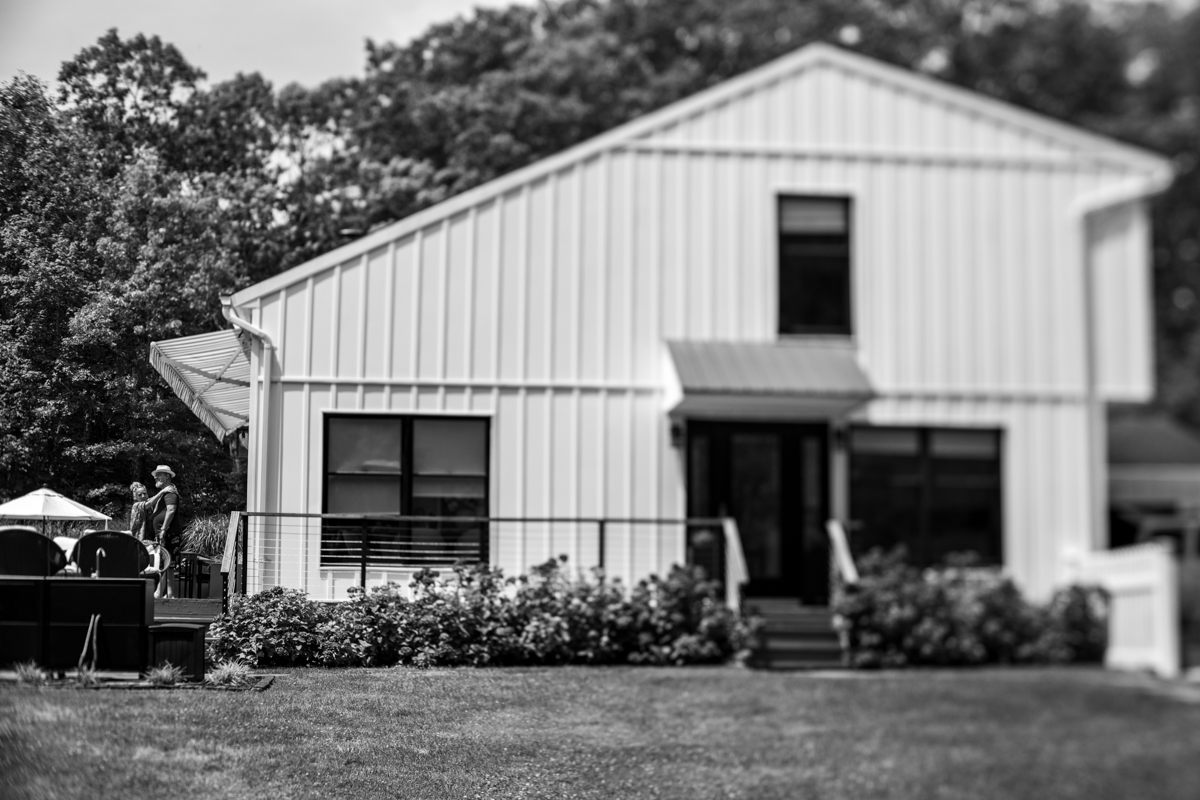
We cruised out to celebrate the fourth of July out in the Hamptons in the Buick and I grabbed the same combo.

Couple of notes, you have to have deft and strong fingers to maneuver the tilt and rotation functions. A tripod couldn’t hurt, but I used it handheld during my exploration of the lens.

My favorite wall north of MoMa. Vintage camera wall by Brandon Remler.

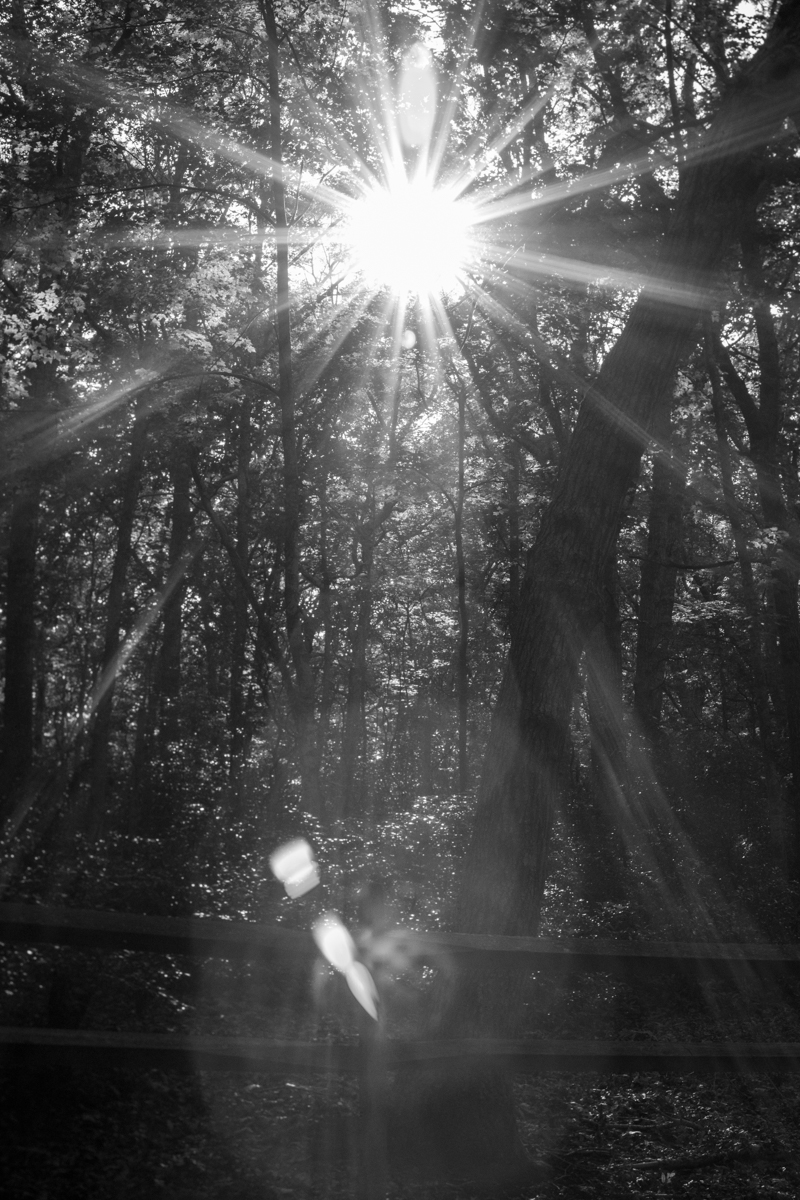
Shot this one at f16 amined up into the sun through the trees. I wanted to see how much wackadoodle the flare would cause. The result, enough!

Shooting the Tilt 50 at f. 2 to 4 seems best. Shooting wide open at 1.4 makes the circle very tight. Opening up two stops is the “sweet spot”. It’s the dreamy effect. I dig it. Is it gimicky like full frame fish eye? yes. But the Tilt 50 does have its place. I’m thinking a start and finish workout project, shot only with the Tilt 50. The tilt effect makes things tiny and if used correctly, can help telling the story by highlighting via focus on subjects.

I don’t recommend it for straight shooting. Not having the effect makes it less desirable, but still, the bokeh is outstanding and for the cost… Certainly less than Eisenhower’s collar.

That’s the great night photographer Gabriel Biderman and the president of the Duran Duran fan club, Nancy (only kidding, Nan is one of the finest people I call a friend). But in all seriousness, this image illustrates the way the tilt 50 can assist story telling.

It’s a heavy weight lens at 15.9 oz / 452 g. The focus is smooth as well as the click less aperture ring for those who might consider using it for film making. Which by the way, I suspect would be outstanding. Like a way to shoot a memory or a dream sequence. The lens also has satisfactory knurled rings if you were to use with a follow focus device.

Here’s my plan. I’m keeping the lens. At $229 using a payboo card it has great potential with insignificant investment. In the spring I bought the 14-24 2.8 S lens and love it, but at it’s hefty 2k price it doesn’t do what this little extra nifty fifty can do. It comes in all the mounts including Fuji X, Canon, Sony and micro 4/3. Go buy it at B&H and tell me how you like you it.

~David July 2025

Self Assigned Projects to Cope with Difficulty

Photography is a drug, it can be your savior, a north star in times of trouble. I mean it, when you lift the camera to your eye and view the world through the view finder native troubles are sidelined and creating the image takes center stage. Recently my wife Barbara and I had to drop everything and take care of her aging mother in law in Milan. While we braced for the worst, the little lady has recovered and we are back in NYC.  

The following text is a the narration from the slide show you can view on Youtube.

This family calamity had moments of full attention and lots of down time. Using the down time to mitigate the situation would lend peace and purpose to this dark time. So I did what every self respecting photographer artist would do and make a “creative plan” that is really art therapy. Taking stock of what I had and where I would be I vowed to push myself to its completion. 

Setting parameters. 

Before leaving I took stock in front of my antique breakfront that houses my camera collection. The task ahead was a heavy one, and I wanted to reach deep down chose a camera that is challenging (requiring focus) and inspirational. Recently I swapped out straps on my gorgeous Nikon SP (the rate 2005 reissue) and I was keen to bring it into the field. It had been over a year since I ran a roll of film through the camera and it’s always a pleasure to use, the camera feels so good in the hands. What optics to bring? For Lenses would be a 35mm 1.8 and 25mm f4. Check. I also have a new iPhone 16 Pro Max I had just upgraded from my iPhone 13 so that would be my “mobile sketch book”. Check. Because I am a serious photographer and I have been so successful with my current camera set up, I packed the Nikon Z9 and the super versatile 24-120 f 4. Along with two laptops (my airbook and B&H work laptop) I stuffed it all into a Tenba back pack and along with Eisenhower my faithful Chihuahua I jetted off to Italy.  

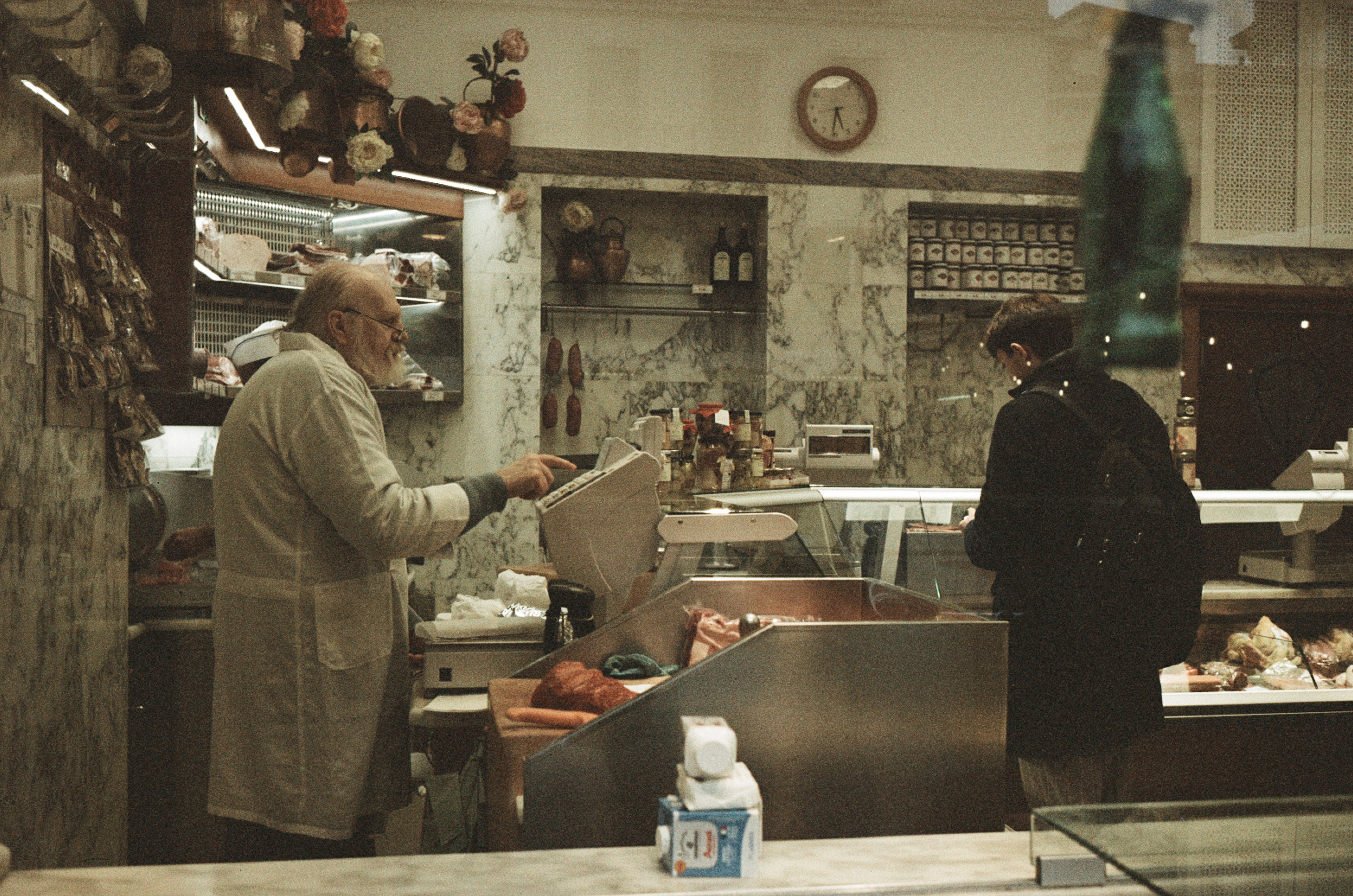
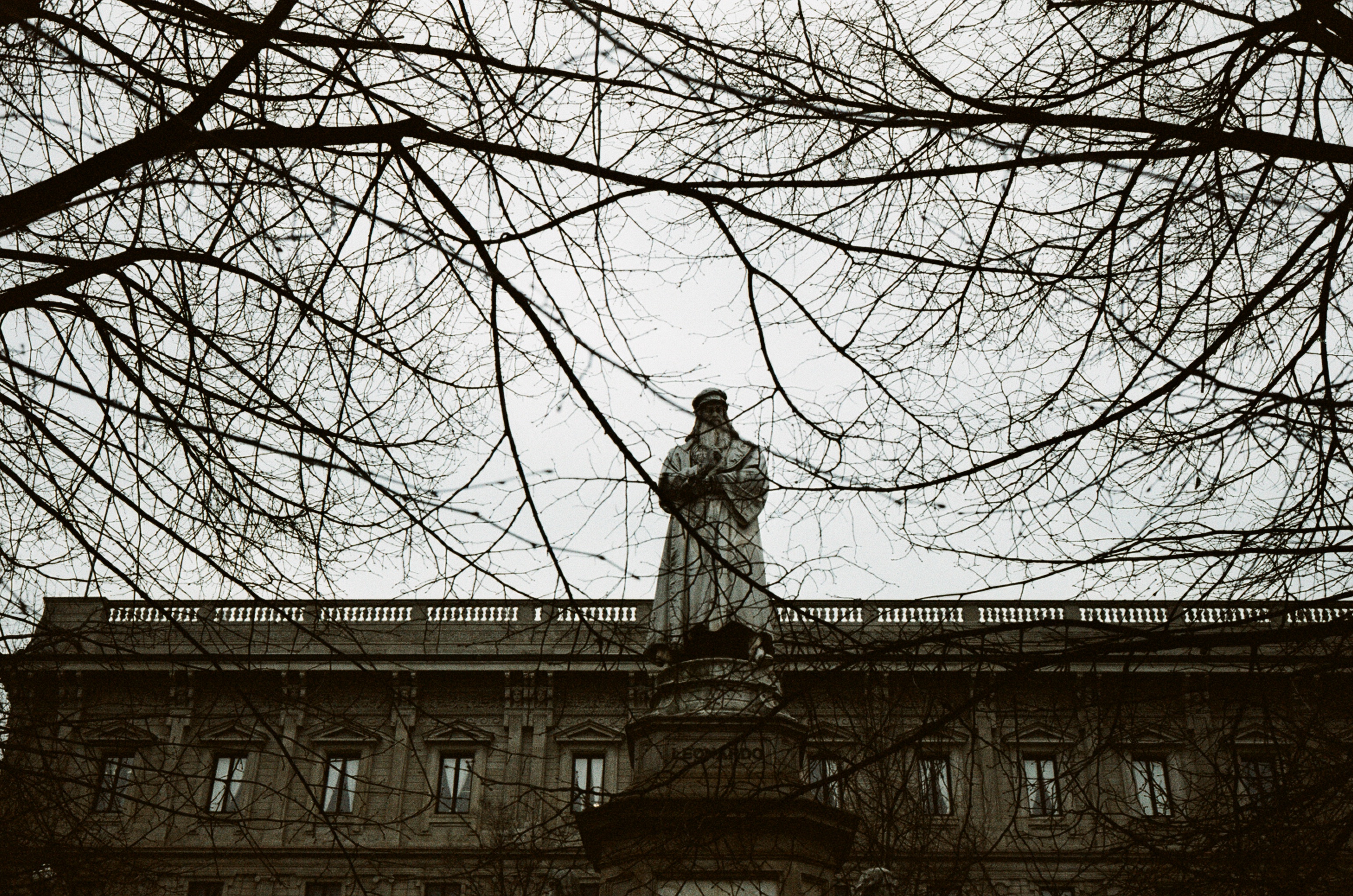
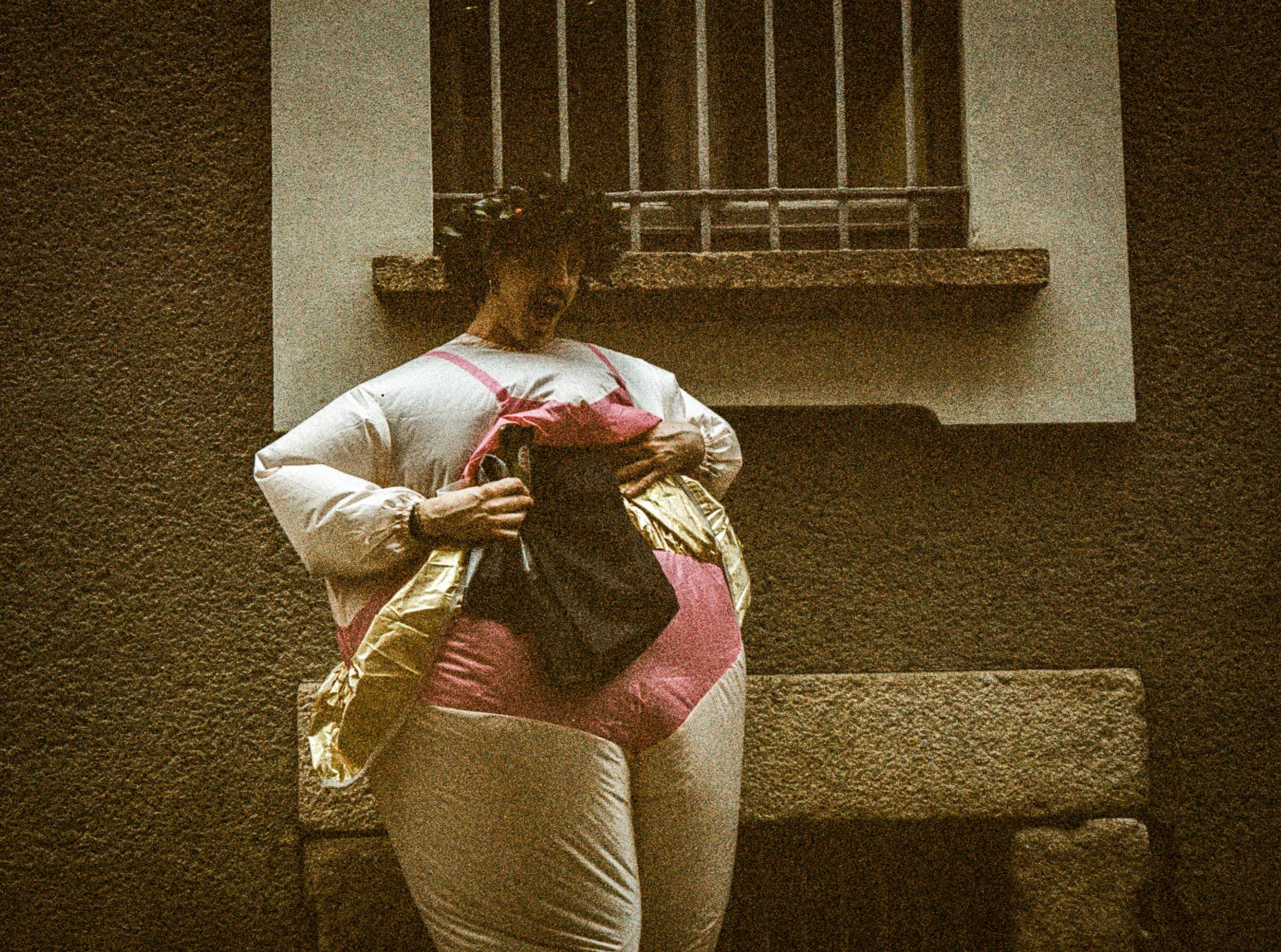
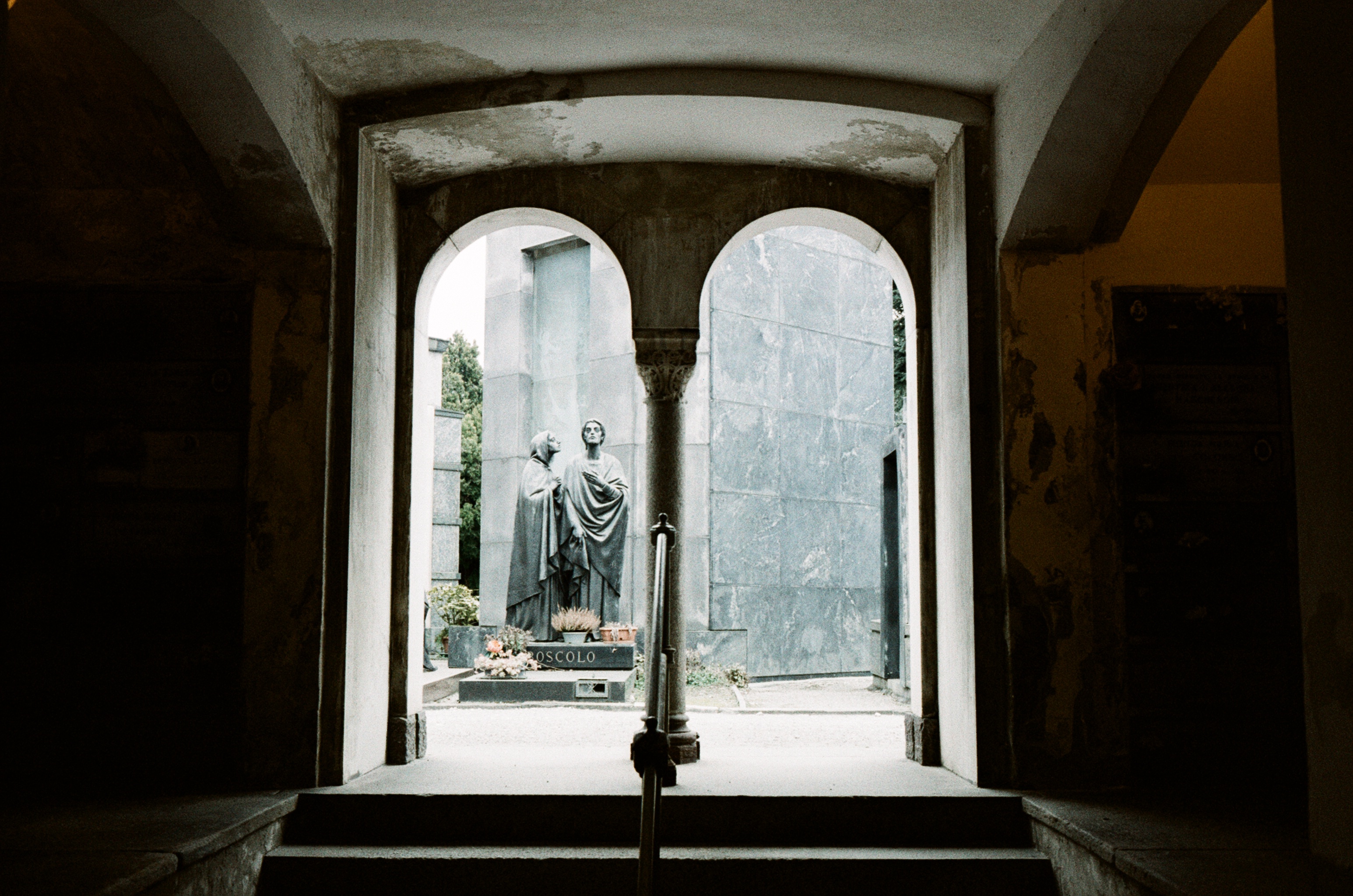
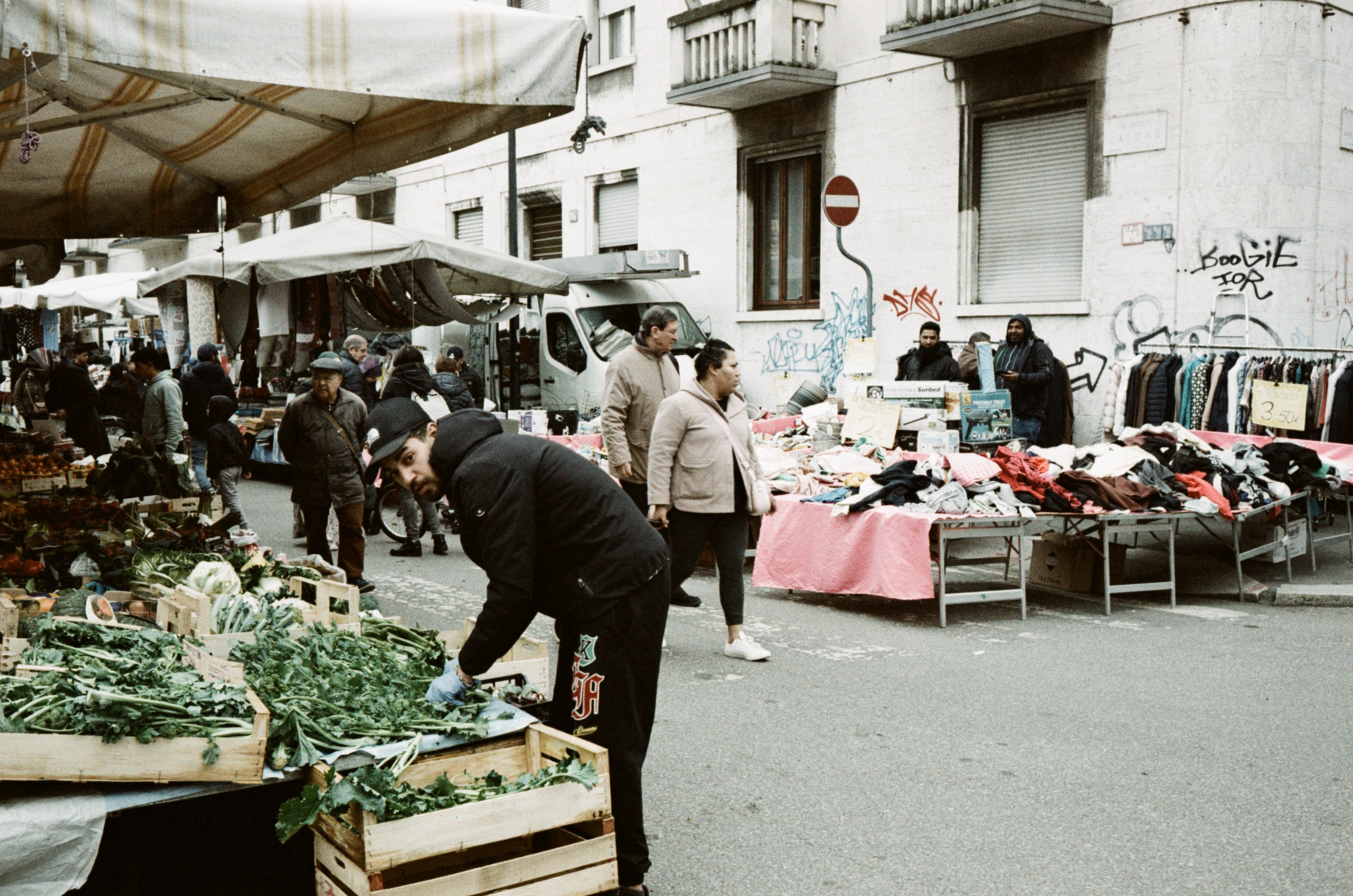
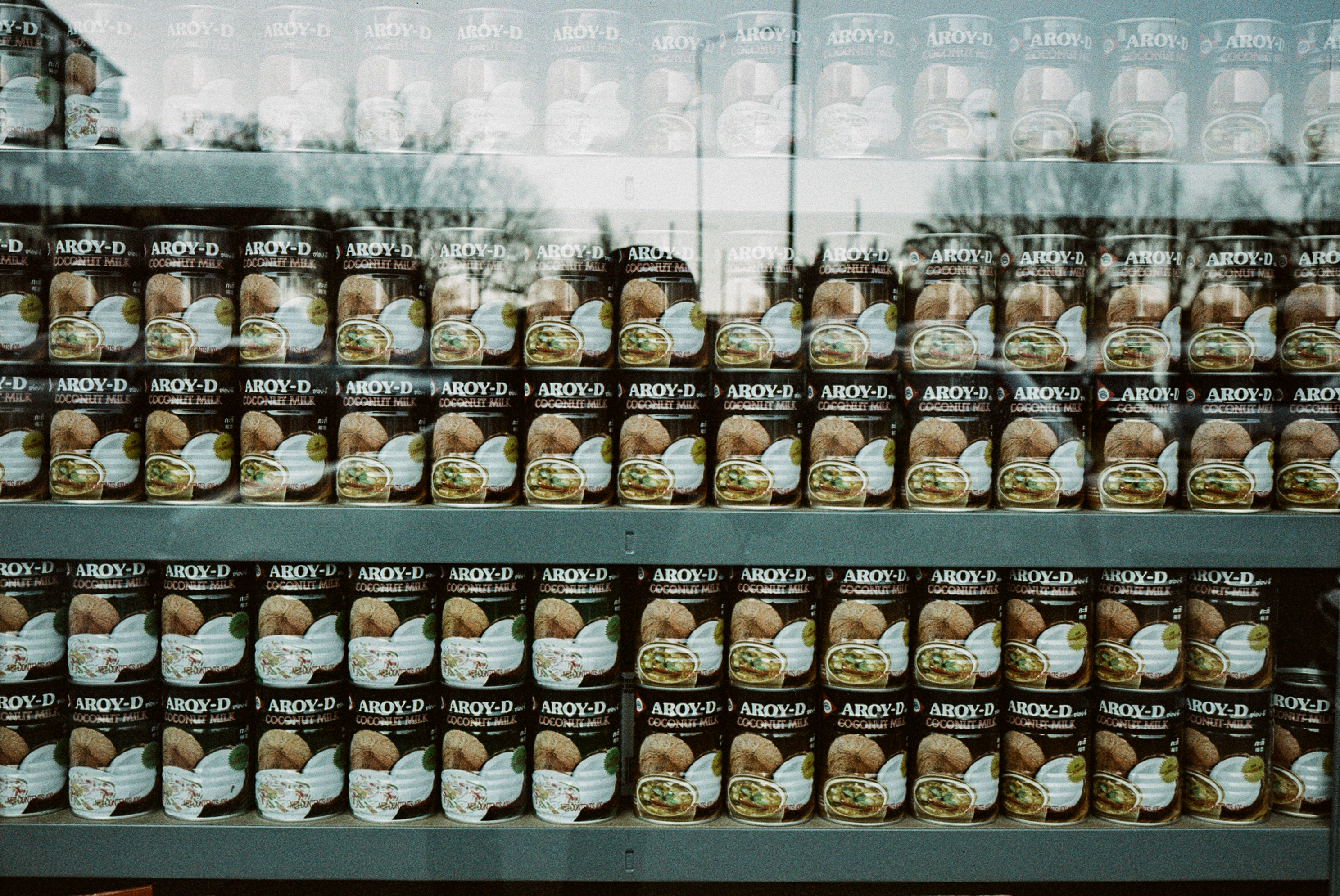
We are staying in the Bovisa neighborhood of Milan and there is an old school film lab around the corner from the flat, “Speed Foto” that maintains a nice selection of used analog cameras they display in the window and a great selection of different films. After sorting out important health obligations I eagerly headed over to peruse what vintage cams they had and most importantly, buy a few rolls of film to shoot. I picked to something weird, Lomography “lomochrome” film in a three pack. Each roll has it’s own color funk, turquoise, metropolis, and purple. The process is C41 but I after shooting with them, I surmised they are a slide film (positive) that are maximized for C41 process making them negatives. The formula and process makes odd color shifts in different spectrums. The results are weird as you can see from the below work. 

I resolved to finish those rolls in the 12 days between flights. I felt the first roll was getting into form and getting used to the camera which is requires lots of work for urban street photography. The camera is fully manual exposure and focus. Due to its compact size, changing aperture is difficult and the view finder for these old eyes is challenging. I brought shoe mount meter, but the on switch stayed on during the flight and the button battery was dead. I resolved to go meter less and use my years of intuition to guess the exposure. A few days in I wanted to see how accurate I was and downloaded the Lux app on the iPhone. 9 times out ten I nailed it. 

The above parameters made for a very exciting photography distraction. I got to make some work, challenge my skills and focus on photography in a total way. I have a new found appreciation for how good the modern Nikon Z series cameras are. The Nikon S rangefinder system is 1950’s, my Z9 and Zf are post covid tech- 2022, a whopping 70 years of photography progress! It shows in every aspect, but I have a saying, “you have to know where you came from to know where you’re going”. The mini project fulfilled that in a profound way. I’m also happy to report that Mom is recovered and doing well. She has a bionic enhancement of a pacemaker, but her body is 1930’s. She’s like the Nikon SP and Nikon Z9 combined!

Working a Subject & Scene To ‘Score a Banger’

A natural inclination of photographers, when seeing an interesting subject or scene, is to take one shot and move on. In most cases there was a good photograph in there, but by casually investing in only one shot, the full potential is missed. When you find something interesting you stand a better chance of “scoring a banger”, (meaning making a great image), simply by taking a few more shots and zeroing in on what you saw in the first place. Even if the first shot ends up being the best, at least you got a few to choose from.

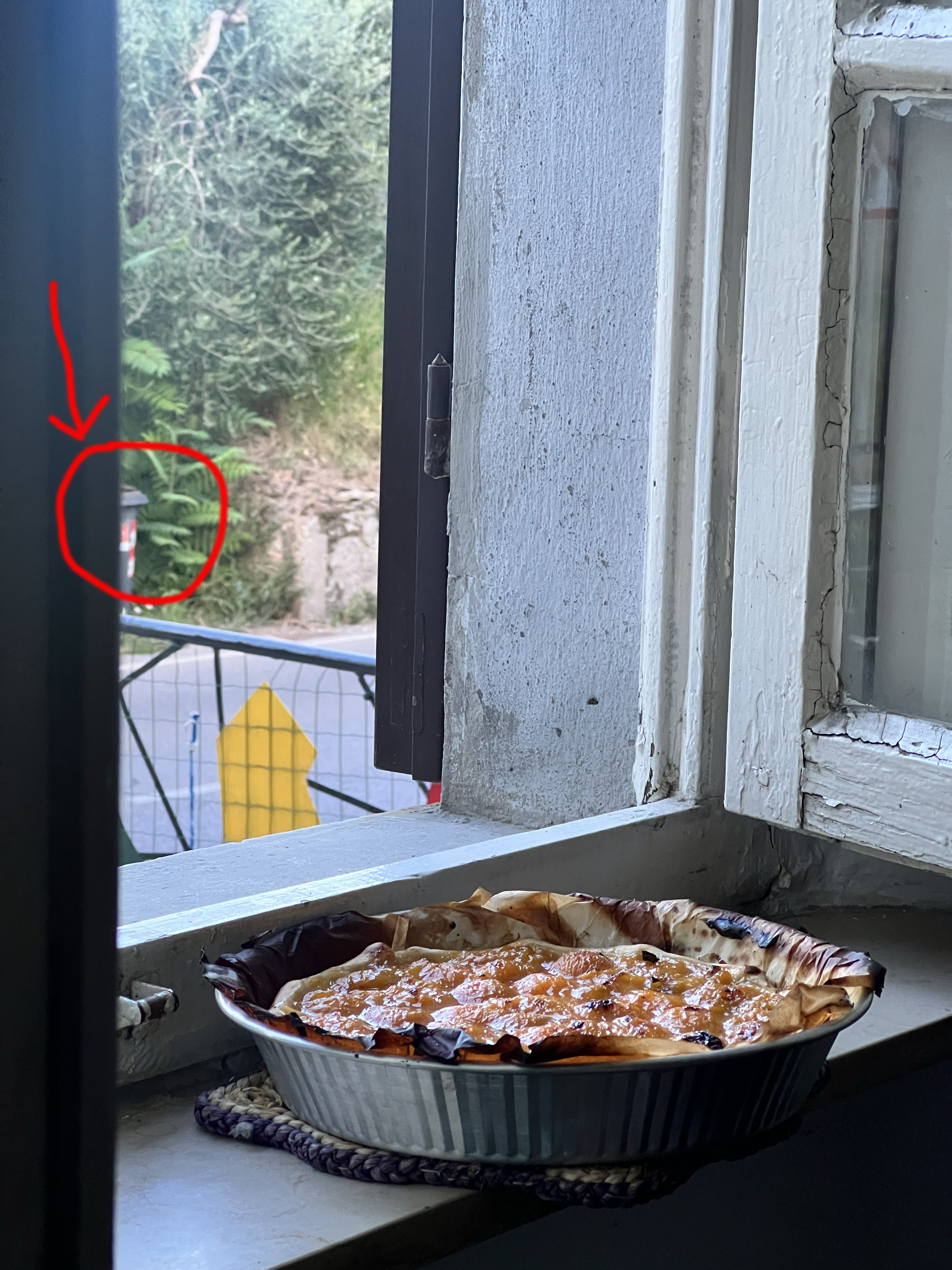
A country classic: a pie straight out of the oven cooling off on a pastoral window sill.

What at first sight would seem an easy-peasy composition, needs constant compositional adjustment. Below are the shots in sequence, shown raw out of an iPhone 13 Summer 2023.

I love the shot, but the red car just kills it for me. Way too intrusive, we need to crop it out.

I try to compose the car out, but then a garbage can enters the scene. No one ever said photography was easy. Keep working.

Car is out, but that garbage can is just annoyingly a tad bit in the view middle left.

How about we just fix it in post? Quickly cloned out now but… I feel dirty solving the problem in post rather than in view finder in the moment. Do you feel dirty using cloning tools and generative fill? Tell the truth now.

This the final image. I was bouncing around the kitchen to make sure the background was not distracting and retained a sense of place. I miss the fields, but at least have a slice of them. Now how about a slice of that pie?

“You are responsible for every centimeter of your view finder”

Jay Maisels

What’s the lesson?

There are a few lessons here, but two stand out. First: watch out for the background. Second, and really equally important as the previous: keep working the scene & subject. Put more effort into making the image and you will be rewarded with better photographs.

This is my final edit on the image. I decided to stay in my style of dominant black and white and ran the file through the raw convertor in photoshop.

Upcoming Workshops Info Click Here

Upcoming Workshops Info Click Here

Main Media Workshop just announced new workshop: Finding and Developing Photographic Style taking place on campus in Camden Maine. Learn more here.

-David

Zen, Zones, and Focal Lengths are now the new drugs.

Fuji X Pro 1, 18mm, Snapseed processed

The sublime pleasure of seeing space surrounding the self as a trained photographer is our greatest gift and pleasure. Shape, lines, shadows, highlights, objects, nuances of patterns, both similar and interrupted, the delicate ballet of balanced forms, transitions of contrast defined in air and matter while viewed in whole, then fractured and selected inside a frame, bounded by our souls perspective focal length. It is sublime when in the zone, when all those take prioritization in you vision, the camera clicks, and its done.

Fuji X Pro 1, 18mm 1/200 f 8 200 iso jpg

The sometimes and not-often secret peak of the photograph making experience is felt in a tremor of the shutter release and can be drawn out for 3 seconds or more after the exposure, this is the satisfaction sensation. You did it. You got that shot amongst a special plane of non-interest.
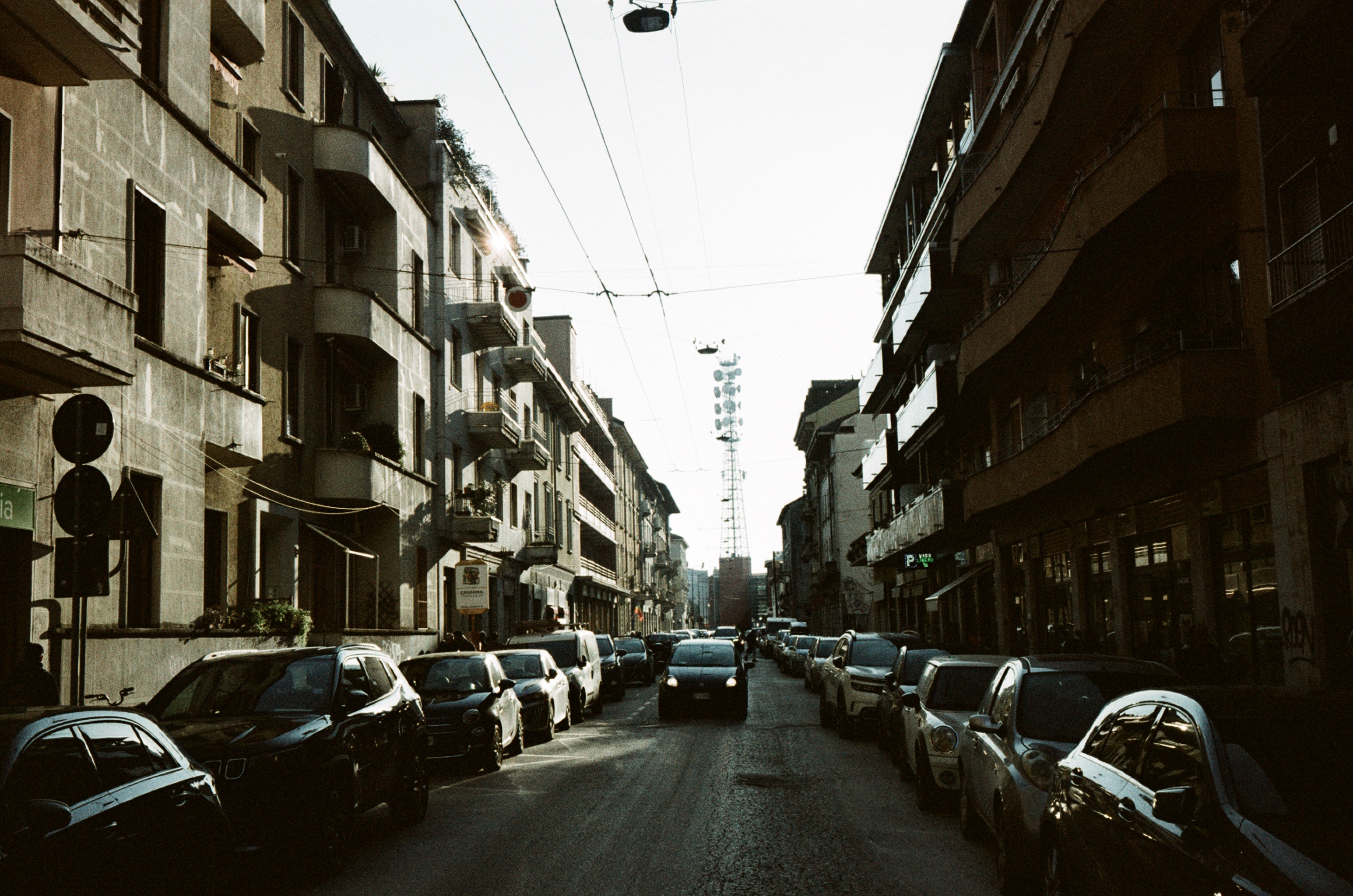
Fuji X Pro 1, 18mm Snapseed processed
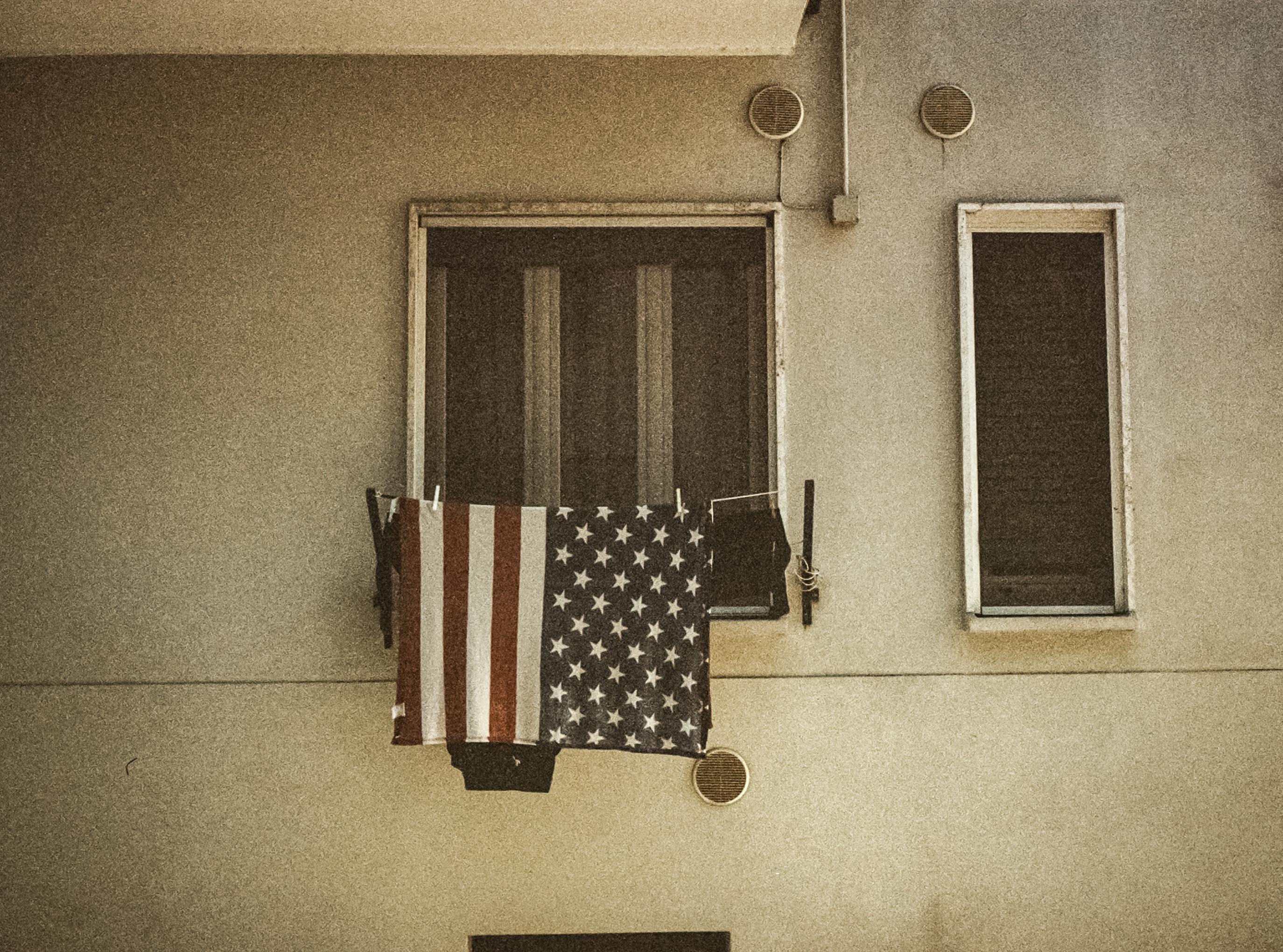
Shooting and seeing is akin to seeking. What it is you seek may not be known to you, walking about armed with your camera and having no particular agenda. Space will reveal what is interesting, time will put your body in the right temporal position and you just might make an interesting photograph. Or you can exert heavy control and manufacture the perfect storm to capture that superlative image. Shooting in a studio makes you the great creator of light, like Lucifer and Prometheus you can encase your image with brilliant photons, be the master of the subject and set. Photographers that create in a studio assume the aspect of gods.

Fitness bill boards

Fuji X Pro 1, 18mm Snapseed processed

How can you shorten the length of mediocre image making from the creating of greater images? There is one way, and that is to make lots of images on an almost daily basis. Live in the margin of seeing, be ready to take the viewfinder as a macroscope for living in this space, here, breathing these sights, and feeling those reflections. Incorporate “often” as way of answering the question, “when do you take pictures”. Raise the camera and make exposures often.

Fuji X Pro 1 18mm 1/30 f 4 iso 400 jpg

A click is a drug and the resulting image the high. Multiple clicks lead to visible euphoria and in that fog of stimulus better images lie. Do it enough and you will find a reliable friend in f8 and a fickle friend at f 1.4. Stay shooting and 1/15 second all of sudden seems like a month. ¼  second and a year shoots by a like the Silver Surfer on speed.

Sean Kernan told me Tidd Hido said, “I think I’m addicted to the feeling of having just taken what I think is a good photograph.” Feed your addiction and makes lots of images. Embrace the “studium” and don’t bogart the camera.