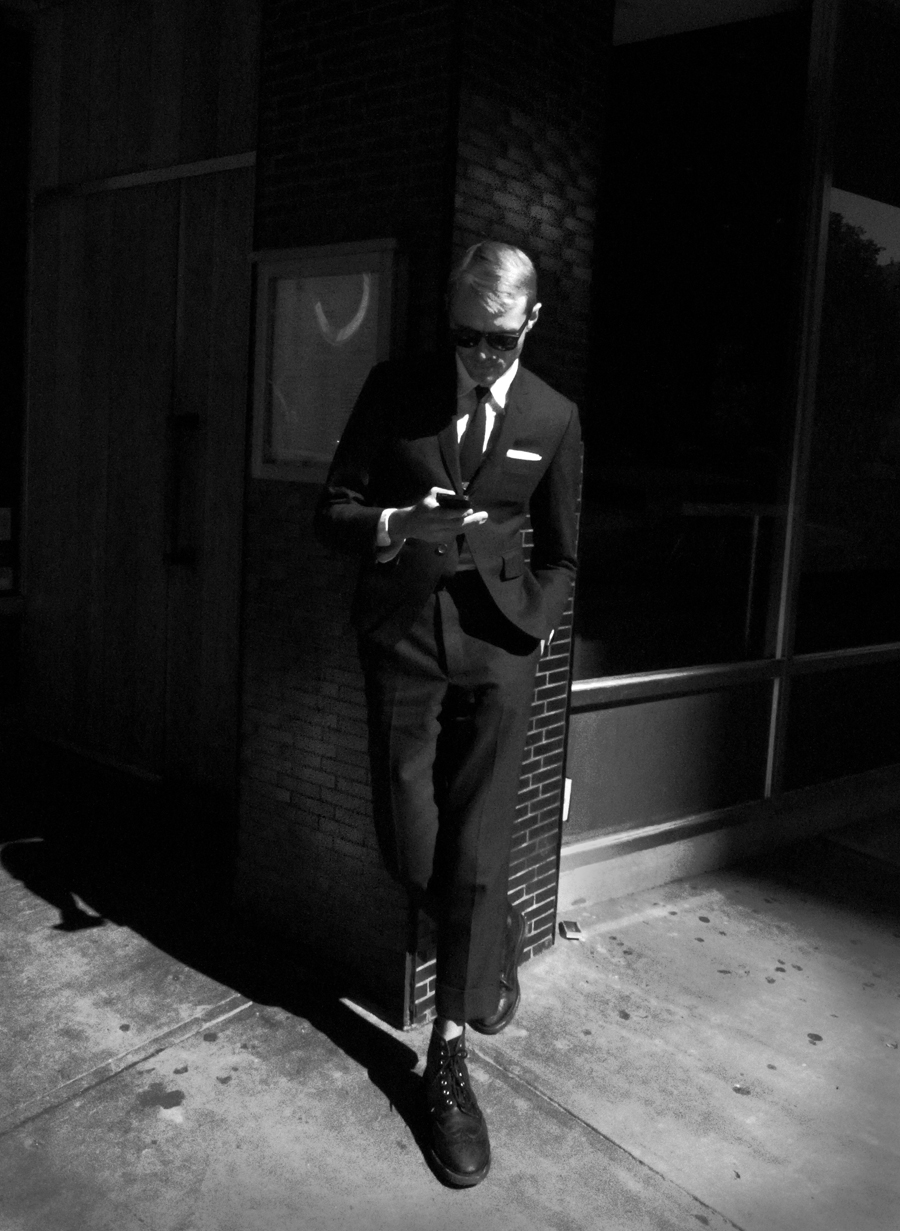
Suspect Photography

words and images from david george brommer

Category: Gear Reviews

30 Minutes With The New Fujifilm 23mm f1.4

Best of the West Deli Man

Best of the West Deli Man

Since this lens was announced I have begged and cajoled my Fujifilm contact for a test ride to no avail.  Man, I have known better crack dealers that take better care of their clients! Evidently there was a glass gag order to keep the lens under wraps until they could provide the blogosphere at large with samples. Bah I say! I have had to be content with my 12mm 2.8, 18 f2.0, and the awesome 35mm 1.4.


A insiders view of Espositos on 9th ave.

A insiders view of Espositos on 9th ave.

Now if you do the focal conversion this makes my collection of lenses the trifecta of an 18mm, 28mm and 50mm. What’s missing? Well my favorite focal length is 35mm. I little bit wider than the eye perceives, yet extremely natural. While I got used to the 18mm it was always just a tad too wide for tastes. I yearned for the 23 mm focal length.

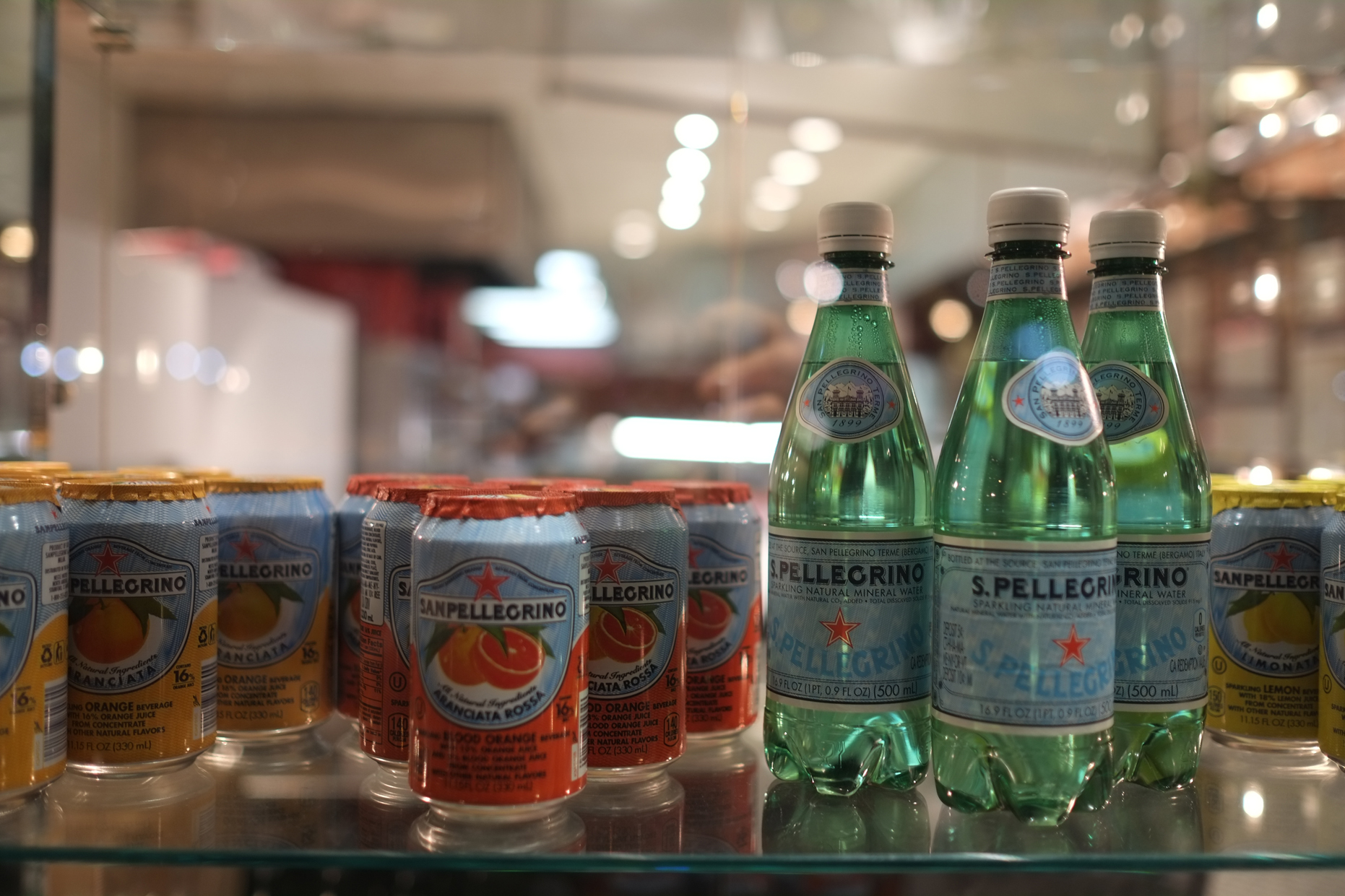
Taken through a glass window but man, look at those out of focus blurring in the background!

Taken through a glass window but man, look at those out of focus blurring details in the background!

So today I had the opportunity to grab the 23 1.4 which translates to 35mm for a fast half hour. Yup, you heard that right, it was mine! For a half hour at least.  I threw my coat on and walked up 9th Ave around the corner from B&H. You can’t keep a good man from his 23mm, no matter the time constraints. Here are my findings. Oh and one more note, I pretty much shot everything wide open at f 1.4 because that’s how I roll. I love bokeh, and this lens as you can see delivers spectacular bokeh.

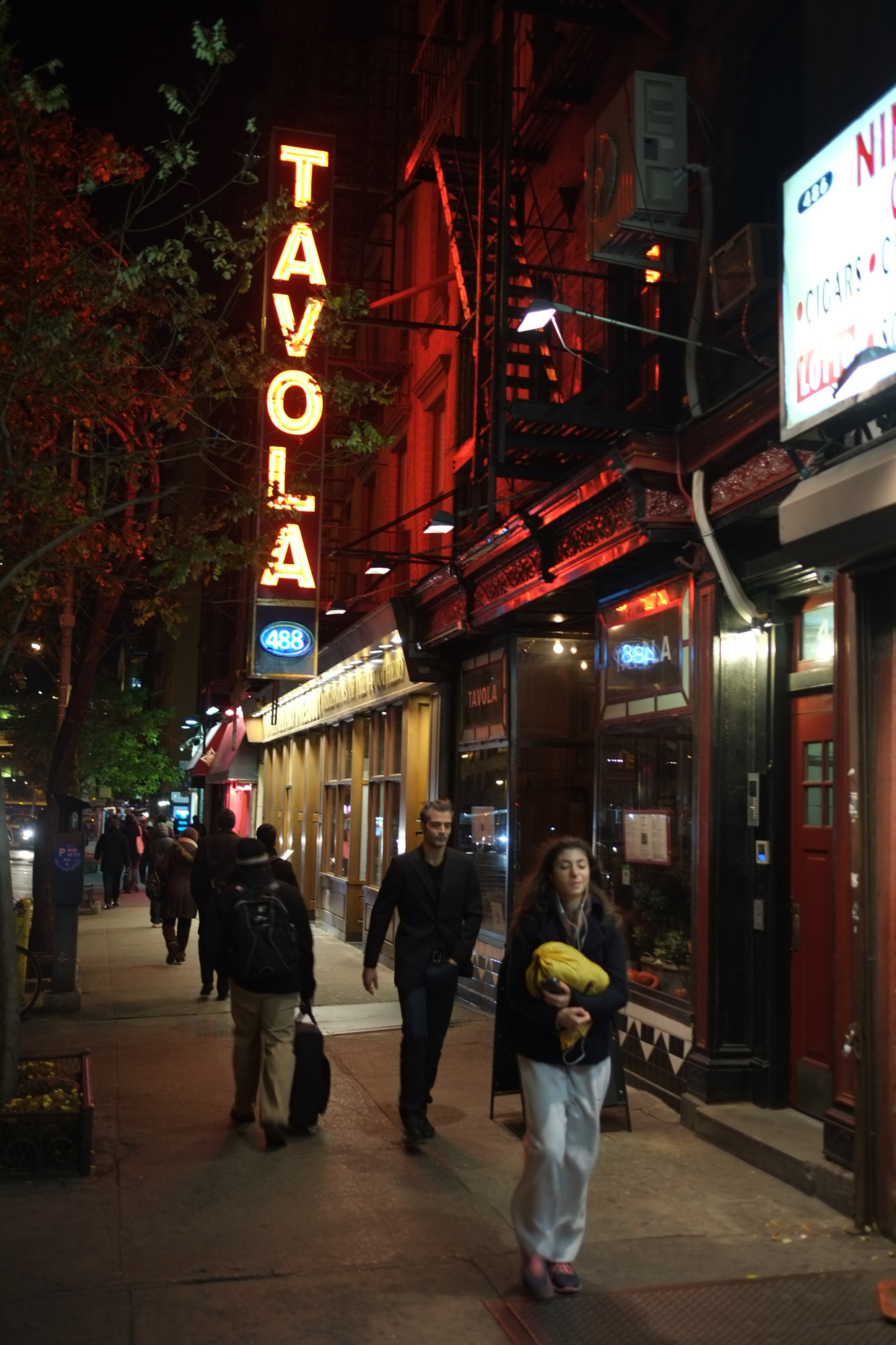
1/40 second at 1.4 ISO 320. Now thats low light love.

1/40 second at 1.4 ISO 320. Now thats low light love.

It’s a bit of large lens, but then again, it’s a 1.4 so who can complain. It has a depth of field scale. Lots of you young’ probably don’t know what that is in the age of digital zoomy slacker glass. It’s a scale that tells you what will be in focus based upon the f-stop. A analog scale. Sweet.

Snap! Sharp and zippy this lens simply rocks!

Snap! Sharp and zippy this lens simply rocks!

Very nice to shoot manual focus, you pull the lens back to you and then you access to that DOF scale and it has a good feel, a little loosey goosey, but still better than other AF lenses. I confess, I shot in AF during my short test. I don’t have any problems with the XPro1’s focus.

The legendary Hershel of B&H. Ever wonder who edits the comments on our You Tube videos, well wonder no more. A gentleman among gentleman. Notice the lights in the background, yum.

The legendary Hershel of B&H. Ever wonder who edits the comments on our You Tube videos, well wonder no more. A gentleman among gentleman. Notice the lights in the background, yum.

I’m like Goldilocks, 18 mm to wide, 50 mm to tight, but 35 mm… just right.

Very narrow depth of field, notice his arm out of focus? This lens might just need to be shot at f4.0 or 5.6 if you need a little front and back details to be in the shot.

Very narrow depth of field, notice his arm out of focus? This lens might just need to be shot at f4.0 or 5.6 if you need a little front and back details to be in the shot.

I’m sorry if I didn’t have the time to really put the lens through a more thorough test in different light with more varrying apertures. Truth is, I was just happy to get the short time I had with it. Am I getting one? Yea. Not tomorrow though. I will have to get used to the size, I like to keep it on the smaller tighter side, but dang, I do love me the 35mm effective focal length. I think that this lens will be the lens that sits on the camera 96% of the time once I own it.

Hope you enjoyed this post as much as I did shooting it.

~David


Fujifilm X Pro 1 Predictions – No more pro Mirrorless Cameras?

Lady Liberty

It’s Fujifilm X series prediction time. I have my photo tarot cards out and here is what they say. One word first, yes I have industry connections and I respect any NDA and or personal confidential info that comes my way. However this info is just my personal prediction and is not based on any confidential intell I’m privy to. I came down to these conclusions with Moose Peterson and Gabe Biderman in conversations this week.

With Photo Plus East just around the corner, we’re going to see lots of announcements in the upcoming days of October. I’m only interested in what Fujifilm has up thier sleeves, since I believe they are the currently the most interesting and principal driver of new and cool photo gear. Yup, I just said that. Sorry Big C (the good kind) and the camera company who used to “take the worlds greatest pictures”. It’s all about the Fujifilm X system. Here we go…

We won’t see a XPro 2. I don’t think ever. But we will see a XE2. I think that the hybrid finder on the Xpro1 is going to be the last Mirrorless camera made that has it. It’s what set the Xpro1 apart from pretty much the whole rest of the Mirrorless world but it’s going to be a feature of photo goodness past.  Here is a question to all the current users, do you still use the OVF as much as the days when you first had the Xpro? Or do you find yourself using the EVF more? Lets face it, the EVF is not accurate, I’d say it has about a 10% minus factor on what you see as to what you get. Also, two words, Focus Peaking. Yea, I’m using the OVF less these days. And it hurt to just say that. Seems like analog is just slipping further and further away from me. Next I’ll just be like Neo in the Matrix.

The future is fuzzy… and this is just what I feel in my bones and read in the cards so take it with a grain of salt and look forward to more weather proofing and enhanced EVF functions (manual exposure wysiwig and clearer view).

The Above photography is Lady Liberty shot on the Moose Cruise II with Fujifilm Xpro1 w/ 35 1.4 @ 1/64 F 2.0 ISO 200 and processed in Camera Raw (pretty heavily I may add).

~David

The Exhibition at the old Hospital and the Zeiss Touit 12mm for X-Pro1

View of Val di Chiana from the Old Hospital

View of Val di Chiana from the Old Hospital

I’ll be honest, I’m not that much of a super wide guy. My preferred focal length is just a little wider than normal view. The 28mm to 35mm is pretty perfect for me. Back in May, I got two lenses from Zeiss to try out, the 35 1.8 and 12mm 2.8 Touit lenses. I walked with the 35 1.8 around NYC for a few weeks testing the lens before I passed it on to Gabe from Ruinism and wrote about it on my “Part 1” of the Zeiss Touit tests which can be found here in this earlier blog. I then began to shoot with the 12mm and actually had trouble making images I was excited about. It wasn’t that the gorgeous lens was anything less than a great optic, it was I who had issue with the lens. For those who follow my blog, its not just words, the images have to back up what I’m saying. The environments that I was testing the lens in were just not coexisting and the lens wasn’t working for me. Well, all that changed yesterday when I took the 12mm and mounted it on my trusty Fujifilm X-Pro1 with the aim of checking out some exhibitions at the Cortona On the Move Photo Festival in Italy. All of the images are shot using the 12mm 2.8 at ISO Auto 1600, color shots are Velvia Film Sim Mode unless I chose the B&W Y mode (I used film sim bracketing so I was able to capture it all).

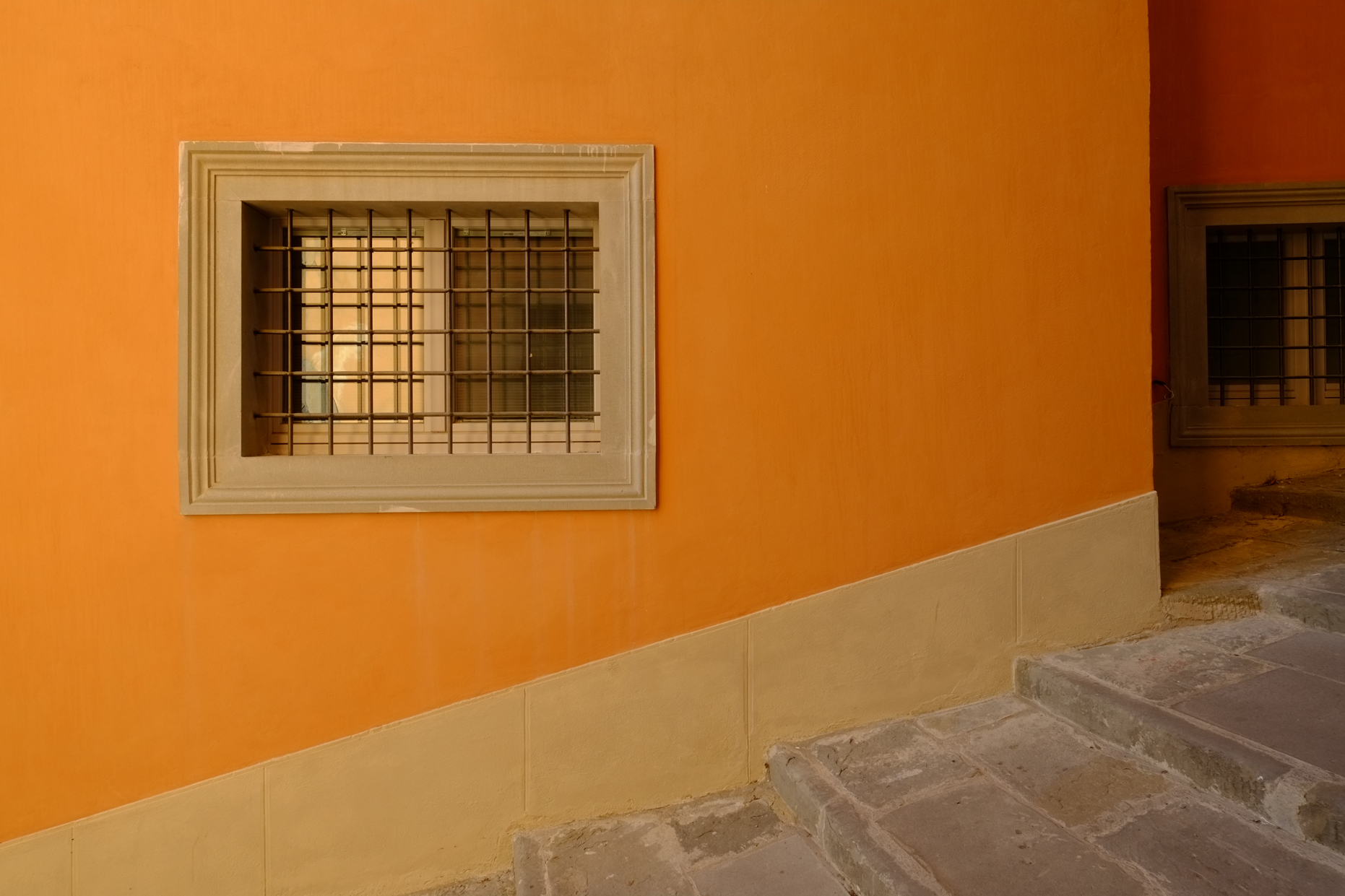
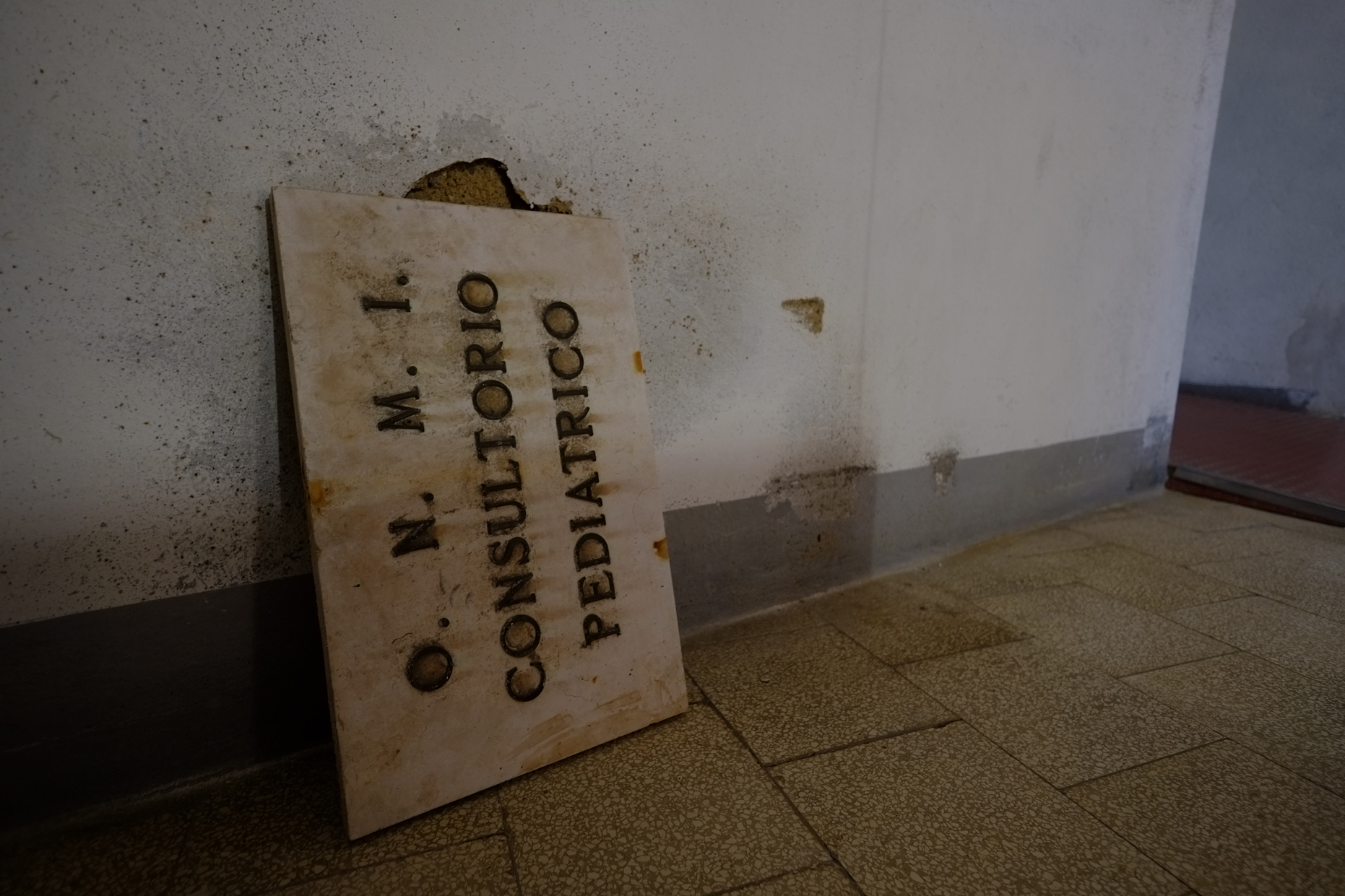
Study in the geometry of Composition in Tuscany

Study of the geometry of Composition in Tuscany

This photo festival is really unlike any other that ever existed before. Taking place is Cortona Italy, a hilltop medieval city made famous lately by the Frances Mayes book, “Under the Tuscan Sun” (Mayes tells the tale of being an expat American and finding herself while rebuilding a Tuscan villa) the festival consists of a series of exhibitions that are found in odd locations throughout the city. By using spaces that are currently unused or abandonded, the festival curates photography with a theme of movement, travel and exploration. It’s a super cool way to explore the old city and see some photography and also, gain entry to spaces that would otherwise not be available.

The festival for the second time was able to procure the old hospital and transform it to a gallery featuring edgy and stimulating photographers as well as a retrospective look at the now defunct Newsweek magazine. For me, hospitals are associated with death, and I found it fitting that Newsweek (which ended publication in December of 2012) a perfect fit to showcase multiple news themes that it was known for, along with some of the brightest documentary shooters. Indeed, the exhibition is aptly titled, “An Autopsy”. RIP Newsweek.

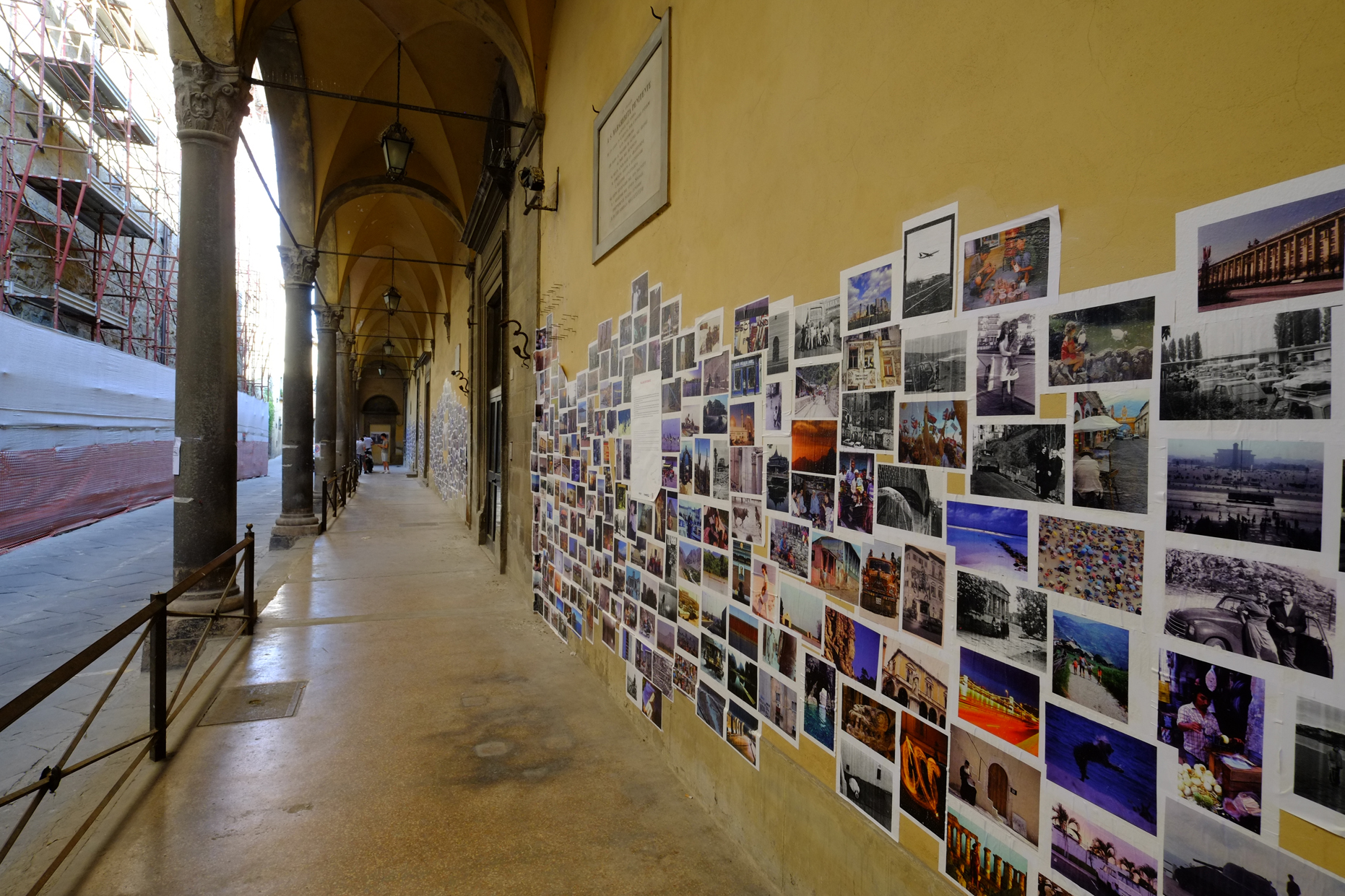
Crowd sourced installation where readers of La Republica were asked to submit photos taken prior to 1999

Crowd sourced installation where readers of La Republica were asked to submit photos taken prior to 1999

I have a new hero, Zed Nelson, who over 5 years shot in 18 countries across 5 continents the diaspora of western concepts of beauty being exported as a new manifestation of aesthetic globalization. His work is akin to Lauren Greenfield and Erwin Olaf but has a technical savvy and execution I was moved by. The room that Zed is displayed in has wide-open windows that over look the city and the valley below. Visitors are torn between looking at glass jar containing fat taken during a liposuction procedure and a view to die for. The dichotomy is exquisite.

Sol Neelman is a North West photographer who couldn’t cut it as a jock, and became a photographer. His are larger than life shots of extreme and weird sports. The subject matter is instantly interesting and his timing for the camera frame impeccable. I look forward to purchasing his book of the complete project, the exhibition left me wanting more.

Salvatore Santoro documentary of his childhood home and despotic local of Campania was what I felt the weakest of the exhibitions, yet still the spirit of the festival pervades the curation of work. While Salvatore’s work is solid, the subject matter is sad and the locations simply run down from the effects of mafia and pollution. I preferred to look at weird sports and go back in history with the covers of Newsweek.

The 12mm super wide lets you explore space unlike a normal view.

The 12mm super wide lets you explore space unlike a normal view.

The crazy Italian photographer I met at Photo Show Milan, Antonio Manta led a workshop at the opening of the festival. This wild spirit and master printer always works with a quirky twist on his portraiture and his workshop embodided that spirt. He set up a red carpet with an inspired throne in front of the signature building in Cortona, the Palazo del Comune and had his class photograph tourists and while choosing the theatre location for the Cortonesi (locals) to be photographed. A selection from his class is on exhibit and shows the organic nature of the festival, work from students attending on display.

Charlatan

I loved how with the use of Newsweek large proofs the festival was able to make a political commentary on thier home country and the world at large. Seeing a Tim Hetherington print as well reminded me what a genius we lost in Libya and I lament that we can’t have Tim’s eye look at current events any longer.

fallensign

Walking the corridors of old hospital and looking at great examples of photography is inspiring, but doing so with the super wide 12mm Zeiss Touit was the icing on the cake. I wanted to take it all in, not just a slice. What better way to examine it all than with a larger than life lens? After all the trying with the lens, I found its home in my bag, as I travel. All the shots in the blog entry are shot with the 12mm, I’ll let the images do the talking.

View3

The super wide is great at taking it all in, and perhaps if Cortona On The Move festival is about travel going places, then its official lens should be the Touit 12mm.

B&W  w/ Yellow Filter Film Sim mode

B&W w/ Yellow Filter Film Sim mode

David Brommer on August 22nd and 23rd will be conducting a Composition seminar in Cortona that is part classroom, part portfolio review, and part photo walk. A trip to the old hospital will be in order!

Steps leading to multiple levels of the exhibition

Steps leading to multiple levels of the exhibition

Do it, Touit! New Zeiss Lenses for the Fujifilm X & Sony NEX Mount Part 1

Detail with tree of Orly Genger's Red, Blue and Yellow installation in Madison Sq. Park, NYC. 32 mm lens

Detail with tree of Orly Genger’s Red, Blue and Yellow installation in Madison Sq. Park, NYC. 32 mm lens

Last week I was privileged by Zeiss to test out a new line of lenses made for two Mirrorless digital camera systems; the Fujifilm X, and Sony NEX mounts. Being keen to mount Zeiss lenses on my XPro1 from my experience as both a Contax shooter in the 90’s and a Hassalblad shooter in the 2000’s is an understatement. I love Zeiss. Carl Zeiss was a German who pioneered lens manufacture in the 1840’s and is responsible for classic groupings of optics that would advance the image resolution of photography. It would be a truism to say, photography owes something Zeiss.

at the Zeiss Touit launch, Standard Hotel, NYC. Iphone.

at the Zeiss Touit launch, Standard Hotel, NYC. Iphone.

The new lenses have the silly and catchy name of Touit, named after a tropical parrot. Thus far they have released two lenses, a 32 mm f 1.8 and 12 mm f2.8. The plans to expand the system with a third lens, a 50 mm f2.8 macro are eminent. Further lenses will certainly follow. By this time, many blogs and review sites have posted info on the Zeiss Touits and I don’t want to repeat what has already been published, so I’ll just take you through my observations and work while I put the lenses to the task. As Richard Schleuning from Zeiss explained, these lenses were targeted towards “those that make photographs as opposed to those that take photographs”. I’m sure we could geek out on what that’s supposed to mean, but can agree that we most likely want to make photographs. By nature I’m a giver not a taker so that sits well with me. Thank you Richard, and Carl.

Spring afternoon in Madison Sq. Park. 32 mm

Spring afternoon in Madison Sq. Park. 32 mm

The lenses can be categorized as “luxury” lenses. They are made with a tactile consideration befitting a high end product. Beautiful matte black metal barrels and rubberized and recessed focus and aperture rings. Not bulky like the Fujifilm lenses and much more solid than the NEX system lenses, you can feel the quality build in your hands as well as in your wallet.

Matt Hill onstage at Paper Burlesque. 32 mm

Matt Hill onstage at Paper Burlesque. 32 mm

The 32 mm 1.8 Planar is the standard lens providing you with a 50 mm view on the APS-C size sensors. Counter that to the Fujifilm 35 mm 1.4. As I said before, the lens feels and looks great on the camera. I found the focus to be as fast if not slightly faster than the Fujifilm lens. The 32 mm comes with a large plastic lens hood, I prefer the slick and small Fujifilm metal hood to the Zeiss. Richard explained they chose plastic to keep weight down. When I tested the lens I went sans hood, the hood adds about 2.5 inches and I feel if your going Mirrorless, then go small.

Detail of stall on St. Marks Place NYC. 32 mm lens

Detail of stall on St. Marks Place NYC. 32 mm lens

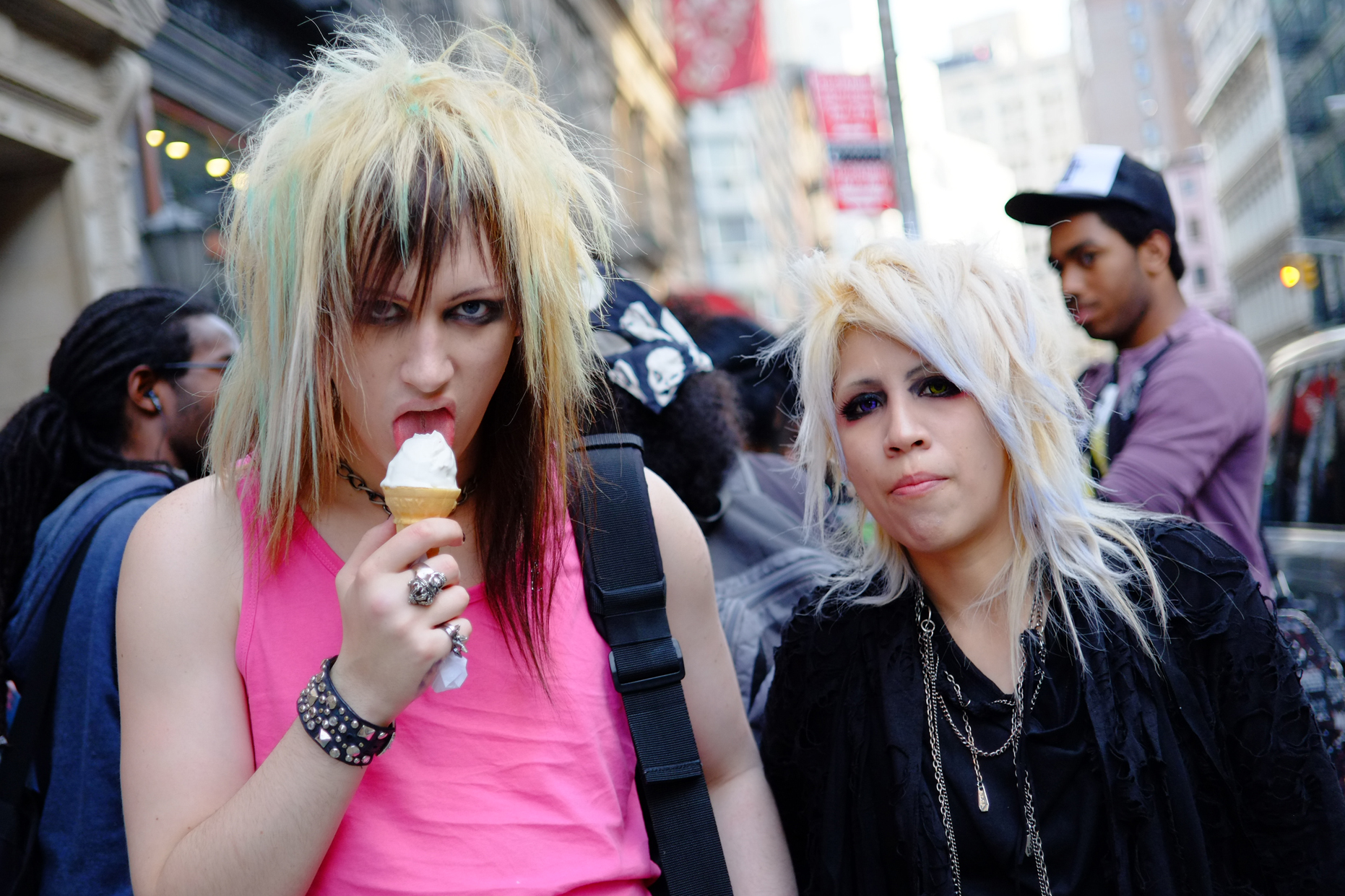
After I made this image I really found the figure in the baseball cap off to the right annoying visually. I shot it at 1.8 and figured what if I had made that image with the Fujifilm lens that is a 2/3 stop faster. Would I have gotten more pleasing bokeh and thus have “blurred out” the unwanted figure?

NYWraiths

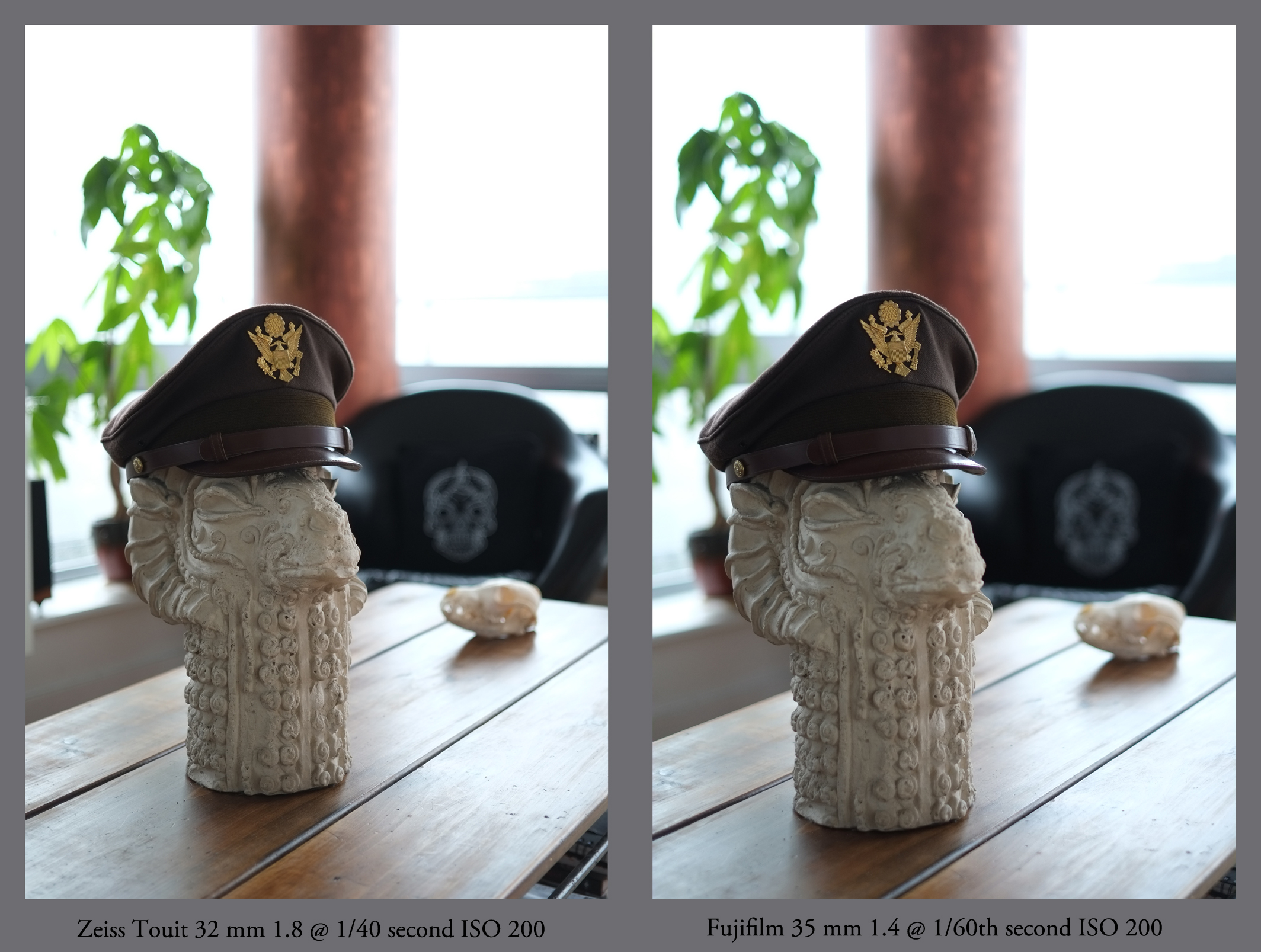
So I conducted a test by putting the camera on my trusty Oben carbon fiber tripod and shooting this still life in my apartment between the two lenses. I have uploaded a very large image so feel free to pixel peep. Also please feel free to comment which of the two lenses produced the look you like the most. Me, I have to say I love more blur that is attainable with the Fujifilm 35 1.4, but the 9 blade aperture on the Zeiss certainly does have a smooth and pleasant blur. Notice the harder edges of the green plant in the back ground as well as the embroidered skull. I do like the slightly wider field of view on the 32 mm. I also notice a color shift between the two lenses. I had a Lastolite 30″ 5 in 1 silver gold reflector off to camera right acting as a warm fill. The Fujifilm 35 mm seemed to

lens_comparison

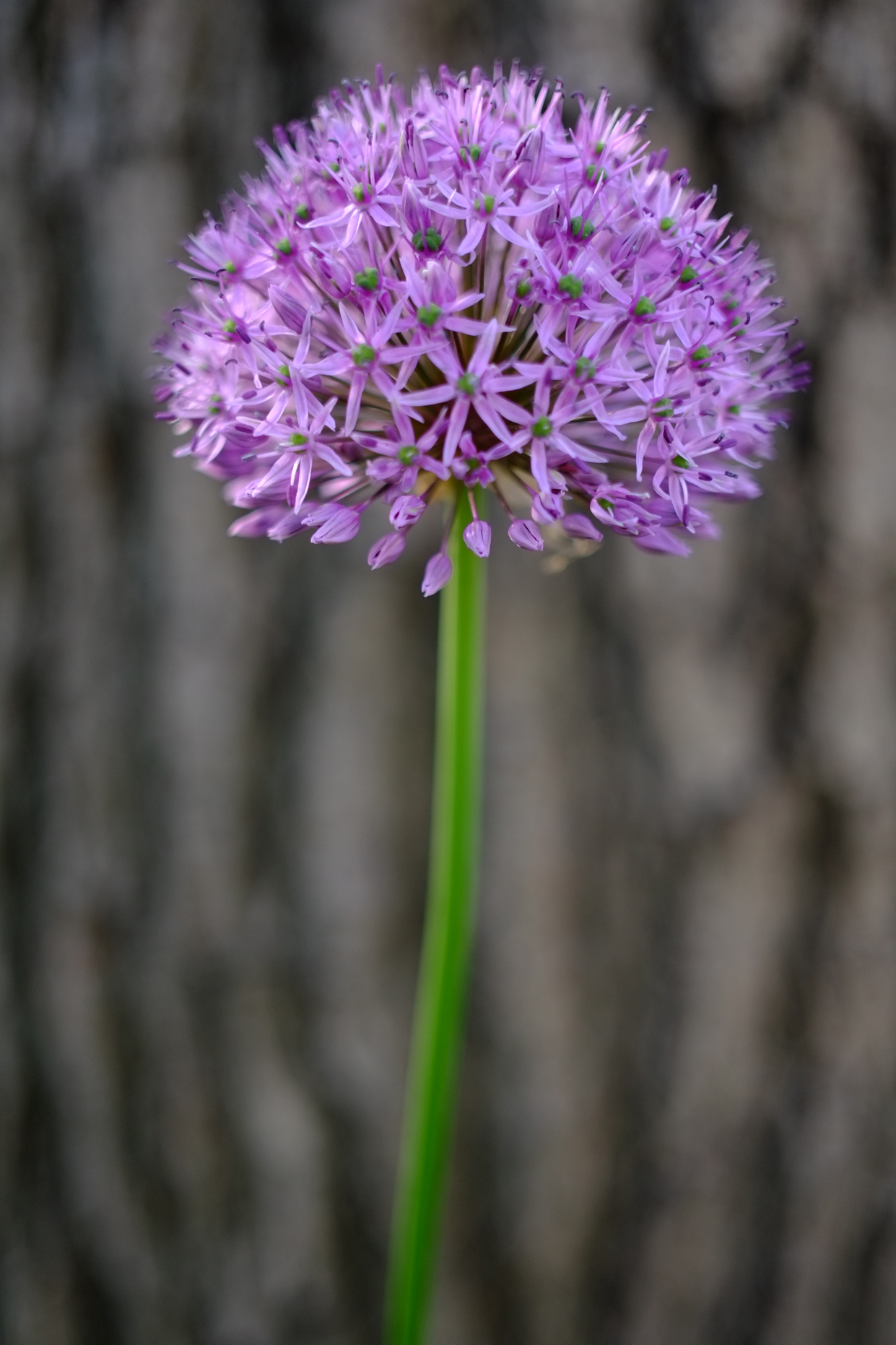
Macro is superb with-out really being a macro lens. The 32 mm can focus down to 1.21 feet. Please consider the background of a macro shot, I think it is easy to get all caught up in the subject and then make a mistake in the background. I saw this purple flower in front of the pattern like bark of the tree and really concentrated on filling the background with the texture of the bark and being careful to not get anything but the tree in the background. The flower was easy, but man, look at that soft out of focus mottling of the bark. Yum.

Great rendition in macro range.

Great rendition in macro range.

The 1.8 rocks in low light when combined with the amazing low light capability of the Xpro1.

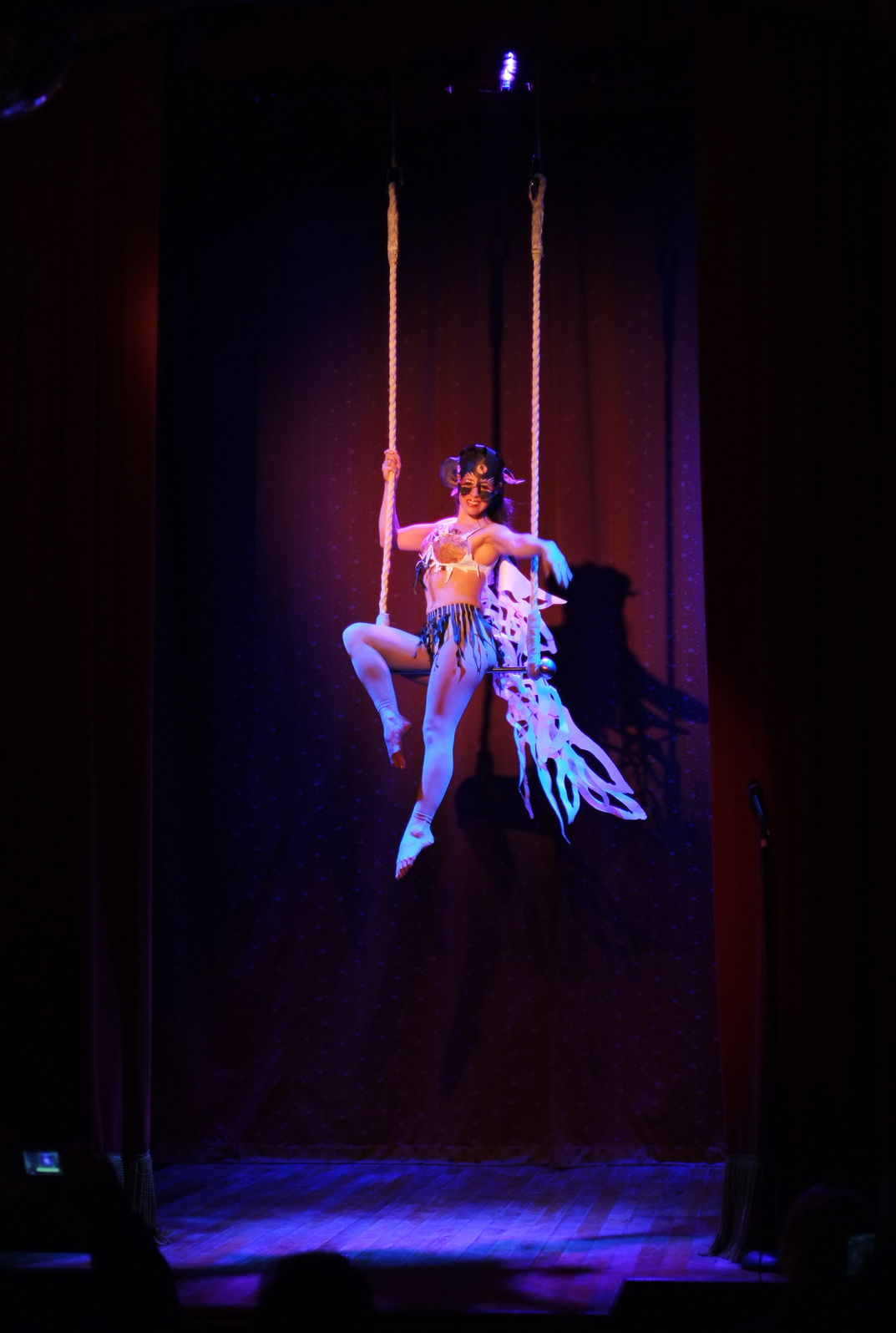
Paper Bulesque by Mat Hill. Dancer- Rosabelle Selavy. 32 mm f1.8 - 1/50 sec. ISO 1000 Center Meter, Tungsten

Paper Bulesque by Mat Hill. Dancer- Rosabelle Selavy. 32 mm f1.8 – 1/50 sec. ISO 1000 Center Meter, Tungsten

Thus far I’m impressed with the lenses. They do cost about 1/3 more than the all ready fairly expensive Fujifilm X lenses. Are they worth it? Stay tuned for part two, where we will see more of the 12 mm lens and some low light tests. Please don’t forget to add your comments on the 35 mm Fuji vs. the 32 mm Zeiss comparison.

~David

Ricoh GR Digital IV: Thoughts, Trials, and Tests. But No Tribulations.

Dog is a much better skater than I.

Dog is a much better skater than I.

Ricoh and DPA (Digital Photo Academy) surprised me with a Ricoh GR Digital recently. My good buddy Gabe Biderman has always be a devotee and I knew it was a serious camera, but I never really gave it much thought. However, when UPS drops off a jewel such as the GR Digital IV at your doorstep, it merits giving it a shot or two, or three.

The original Film GR and the Digital GR D side by side. Brothers or Lovers?

The original Film GR and the Digital GR D side by side. Brothers or Lovers?

For those unfamiliar with this camera it is based on the Ricoh GR1, a high end point and shoot from 1996. The camera quickly achieved a cult like following, and pretty much was about as good as it got for its size. When the digital age arrived the high end point and shoot film cams pretty much went the way of the dodo bird and Ricoh took a big hit. In the US, they retreated from the camera market and had poor distribution. In 2005 they introduced the GR Digital, an updated yet surprisingly similar looking camera to its analog father. Once again, it attained a almost cult like following, but due to distribution issues, was still a bit of a hassle to find in the USA. A few years ago Ricoh decided that it was time to return to the US market enforce and attract more dealers thus making their cameras easier to find and purchase. This year, Ricoh attained Pentax corporation and this Japanese power horse is once again fully invested in world wide photography. The GR Digital is now in its fourth version, and a newer one is actually going to start shipping very soon. Enough history, lets get to the camera.

Ruinism in pointtilism

Ruinism in Pointillism

The Ricoh GR Digital 4 is a small compact digital point and shoot with a super sharp 28 mm f 1.9 prime lens. No zoom, and don’t even think about engaging the digital zoom feature. The Sensor is relatively small by todays standards at 1.7″ and 10 megapixel, however I wouldn’t be too concerned with that, considering the camera is actually very small. If the sensor was larger, so would the camera and you could forget about putting it in a jean or shirt pocket. After spending a day with the GR riding in my tight Levi 510 black jeans I opted to get the matching leather case and roll the cam on my belt like Batman would have it. For me, it’s either off the shoulder and I’m noticing it is there, or on the hip where I mostly don’t notice it, mostly. The GR has its own ergonomics, one designed in the mid 90’s. It’s a thin rectangle with a “bump” on the right side that acts as both grip and battery holder. The GR is housed in a magnesium shell reinforced with cushy rubber. For a cam of its size, it actually has a bit of heft, it feels well made and it is. The buttons and dials have solid clicks and are appealing in a tactile sense. When you turn the camera on the lens pops out and retracts on power off. Start up time I’d say is middling, not super fast, yet not terribly slow. From pocket to ready to shoot is about 1.2 seconds.
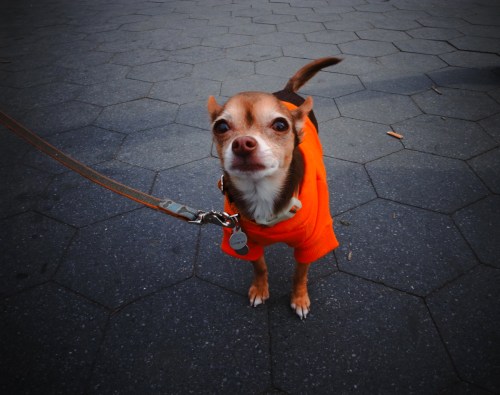
GR reacts swiftly and focuses fast close up.

GR reacts swiftly and focuses fast close up.

The camera has a bit of a sense of humor, where on a film camera you would have a sliding latch to open the film door, this camera uses a similar looking mechanism in the same place, but it pops the flash. The menu system is very MS DOS like, it’s not a pretty GUI, and you can’t assign specific wallpaper to it. There are three main menus, and they are fairly long. The camera does just about anything, from interval shooting, HDR bracketing, AE Bracketing, Raw Capture (but not RAW + Jpeg weird huh), passive and active AF (GR focuses fast and nice), a killer macro mode (1.7mm), a hot shoe, a nice bright 3″ LCD screen and to top it off with, a non-HD video mode (640) which says, “I’m a camera not a video camera thank you”. However, it does have HDMI out so go figure. Now this one little feature may just be completely unique, I have never seen anything like this before, when you turn the camera off it gives you a daily shot count. Yes, it tells you how many images in total you have made for that calender day. Its like having your Dad tell you to brush your teeth before you go sleep. I think this is a useful tool to understand how you photograph and to help you to shoot more or less by having a record.
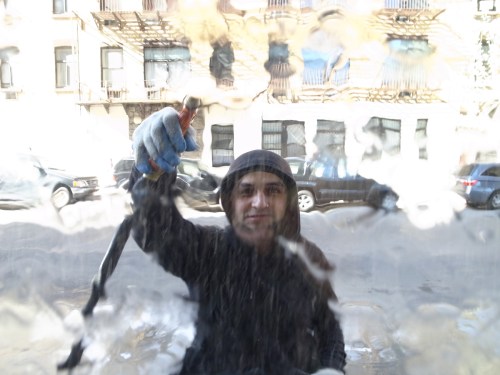
Washing Windows in Contrasty Light

Washing Windows in Contrasty Light

On the negative side, don’t shoot over 400 ISO in color. This camera is not made for low light. The ISO does go to 3200 but its got noise the size of square marbles. The camera has all the modes you would expect such as Shift P, S, M and my favorite, A mode or Aperture priority. However since the sensor is so small, the camera inherently has a ton of depth of field, so no bukeh for you and a top aperture of F 9.0. I could also site as a negative, the price. The camera is not inexpensive at $550.00, but I must also recall my fathers favorite motto, “Good things are not cheap-cheap things are not good”. This is not a casual camera, it is a deliberate photographers tool. It’s not available in blue nor red, its matt black and business.
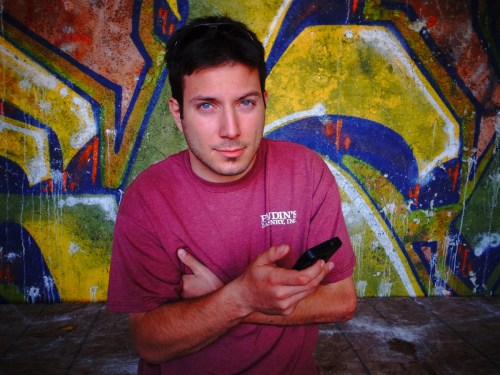
Look into those eyes... love the camera's 28 mm lens for an enviriomental portrait

Look into those eyes… love the camera’s 28 mm lens for an environmental portrait

The camera has 3 custom modes called MY1, MY2 and MY3. You can access these on the top master control. The menu system allows for control of many variables, from exposure modes, focus modes, style modes, ISO, file settings and such. The idea is to really master these three shooting preferences and toggle easily between them. I especially like the film sim modes, which include a nice submenu to customize the style. Say if you were to choose B&W, you can adjust the contrast, sharpness (remember that 28 mm 1.9 prime lens?…Oh yea its sharp), vignette strength, vividness (why not)?, and a very tightly adjusted sepia tone. If you follow my blog, you know that I am a huge fan of in camera stylistic choices, and the GR in this case not only gives them to you, it makes it easy to save them and use them when you need that particular look. I took most of my test image in Positive Film, a color saturated film similar to Fujifilm Provia. I also chose to use a heavy vignette, and I upped the saturation and contrast. This was MY3, MY1 was a contrasty sharp B&W, MY 2 P with a boost of vivid. The camera came with a letter from Pentax’s Jim Malcolm and in it, he wrote extensively describing what he had assigned his three “MY” settings. Asking your MY is akin to asking what film you have loaded. Sweet.
MY1: B&W Contrast & Sharpness Boost

MY1: B&W Contrast & Sharpness Boost

MY 2: Vivid, P Mode

MY 2: Vivid, P Mode

MY 3: Positive Film, boost Vivid, Sharpness, and light boost of Contrast.Vignetting High. P Mode

MY 3: Positive Film, boost Vivid, Sharpness, and light boost of Contrast.Vignetting High. P Mode

Which of MY settings do you prefer? Please comment.

Using these very specific style choices on Jpeg images will enhance the final result of both your photographic body of work and aid you in fine tuning  your own photographic voice.
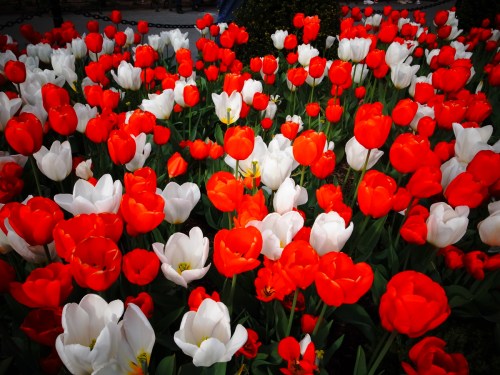
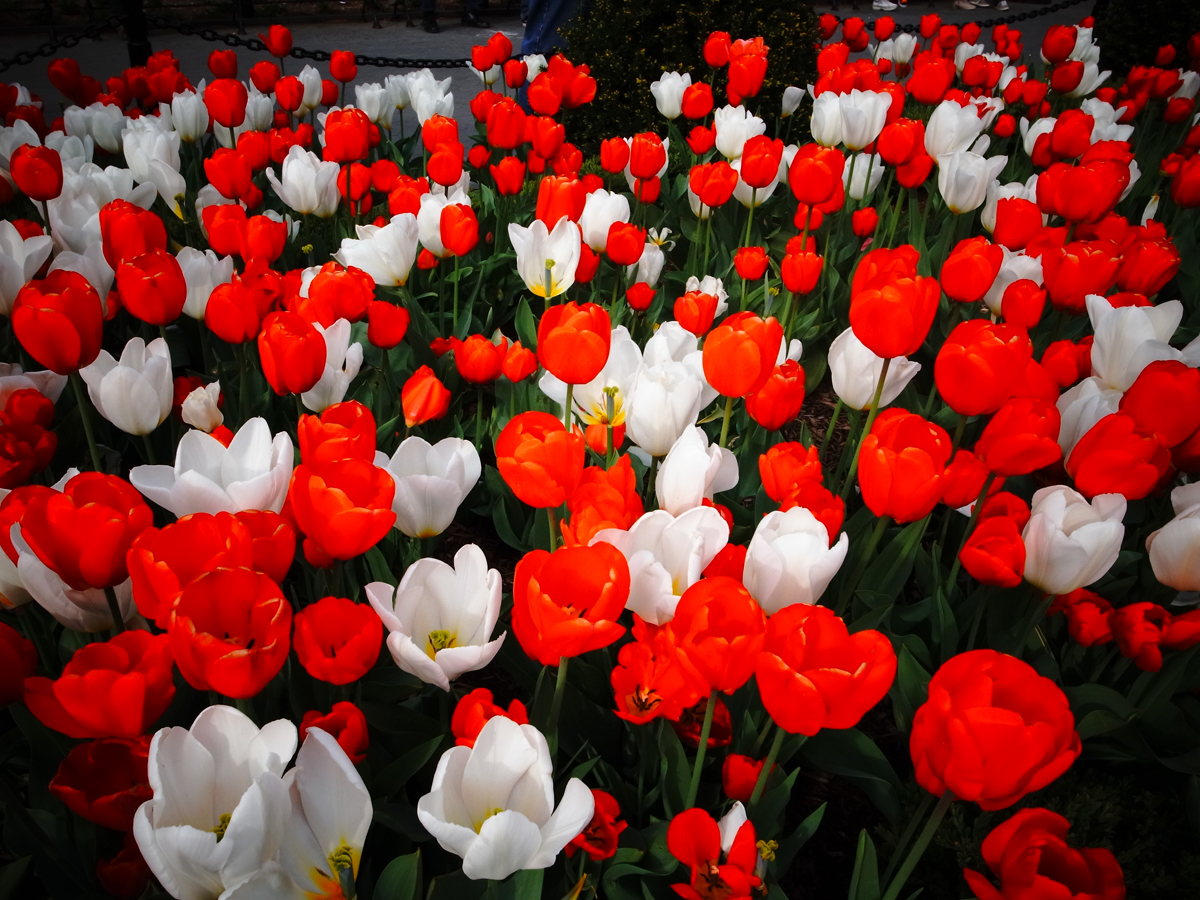
MY 3 Tulips on acid shot

MY 3 Tulips on acid shot

The camera considering its price point is very oddly placed and if I was to be asked, would I spend $550 on this camera I would have to look deep into my cam-soul to answer that yes. It is a solid performing, prime lens shooting, well built, advanced camera. However, there are others in the market similar to the GR and dare I say better? One comes to mind, the Sony X100 which features a great 1″ 20 mp sensor for a hundred bucks more. However, there is still something very attractive to the GR. It might be the grip, or the familiar look to the design, or perhaps its just little nuances, such as when you turn the camera off, it gives you a shot count for that calendar day.  That last little tidbit has big consequences, I believe the more you shoot, the better a photographer you get. You will see compositions emerge from the tangle of complicated backgrounds. Subjects will appear more interesting if you master photography and one sure way to fast track to master is shoot a lot. How much is a lot? Well, this camera will tell you every darn time you turn it off. I like that. The GR digital is a photographers camera. A very particular photographer.

The camera makes cool images, the meter rocks, and the lens is a performer.

The camera makes cool images, the meter rocks, and the lens is a performer.

UPDATE 9/24/2013 :

this image was updated into a short post about the camera here.
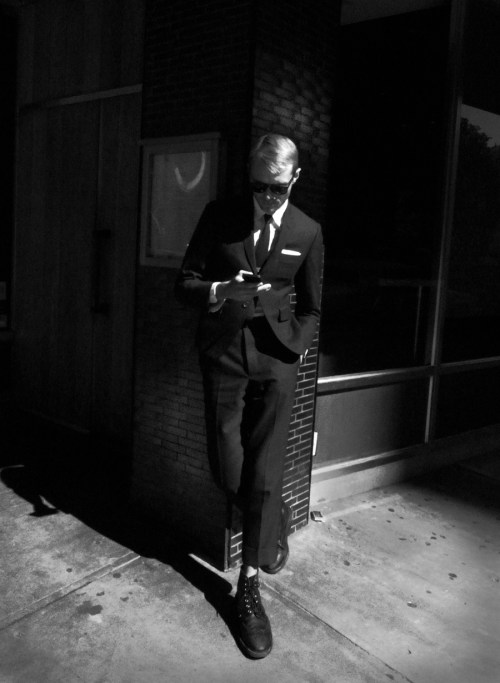
Message Man in Chelsea